Image sourcing: see credits & licences
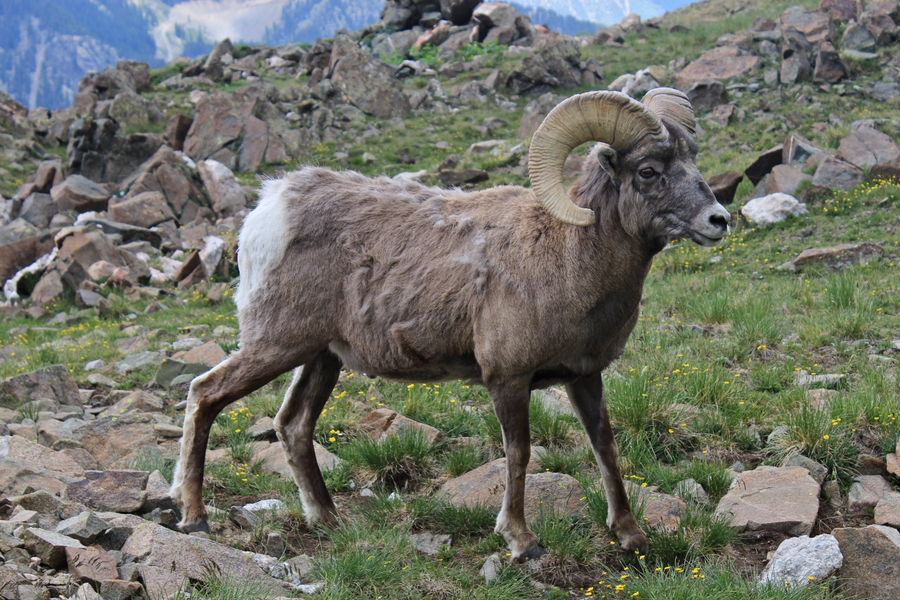
The bighorn sheep (Ovis canadensis) is a mammal of the family Bovidae, in the order Artiodactyla.
Quick answer
Bighorn sheep (Ovis canadensis) are mountain sheep of western North America whose rams grow massive curling horns used in ritual clashes. They graze alpine meadows and desert cliffs from Canada to Mexico, weigh around 100 kg for large rams, and are listed Least Concern, though pneumonia outbreaks linked to domestic sheep still devastate herds.
Top questions about the Bighorn Sheep
Bighorn Sheep facts at a glance
- Weight 100 kg
- Length 1.7 m
- Top speed 30 km/h
- Lifespan 12 years
| Scientific name | Ovis canadensis |
|---|---|
| Diet | Herbivore |
| Habitat | Alpine meadows, cliffs, and desert mountains |
| Lifespan | Around 12 years in the wild (varies by population and captivity). |
| Weight | About 100 kg typical adult mass (sex and region vary). |
| Top speed | Up to roughly 30 km/h when moving at speed. |
| Conservation status | Least Concern (IUCN) |
| Kingdom | Animalia |
|---|---|
| Phylum | Chordata |
| Class | Mammalia |
| Order | Artiodactyla |
| Family | Bovidae |
| Genus | Ovis |
Where it lives
The bighorn sheep (Ovis canadensis) is native to Rocky Mountains and desert ranges from Canada through the western United States into Mexico. — recorded across North America in this guide’s range summary.
For occurrence records, see GBIF species search and sources below.
How big is a bighorn sheep?
An adult bighorn sheep measures 1.7 m long — about 98% of the height of an average adult person (1.73 m) — and weighs around 100 kg, about 1.4× an average adult’s body weight (70 kg).
Length vs an average adult’s height (to scale)
What is a group of bighorn sheep called?
Group name (collective noun)
A group of Bighorn Sheep is called a herd.
Baby name
A baby Bighorn Sheep is called a lamb.
Explore more animal collective nouns and baby animal names .
Curl horns and cliff agility
Rams' horns can weigh more than the rest of the skeleton; clashes establish dominance before the rut. Split hooves and rough pads grip near-vertical rock. Ewes have shorter, slenderer horns.
Alpine and desert grazer
Diet is grasses, sedges, and forbs in summer; browse increases in winter. Mineral licks draw herds to canyon walls. Across its range it is tied to alpine meadows, cliffs, and desert mountains, and field accounts emphasise this species’ distinctive ecology rather than generic habitat labels.
Rockies to desert ranges
Alpine meadows, cliffs, and desert mountains from Canada through the western United States into Mexico, including iconic herds in the Rockies and Southwest.
Disease from domestic sheep
Reintroductions rebuilt many herds after market hunting, keeping the species Least Concern, but respiratory disease spilled from domestic sheep and goats remains a leading cause of die-offs.
Explore the Bighorn Sheep
Close relatives
- Domestic Sheep Same genus
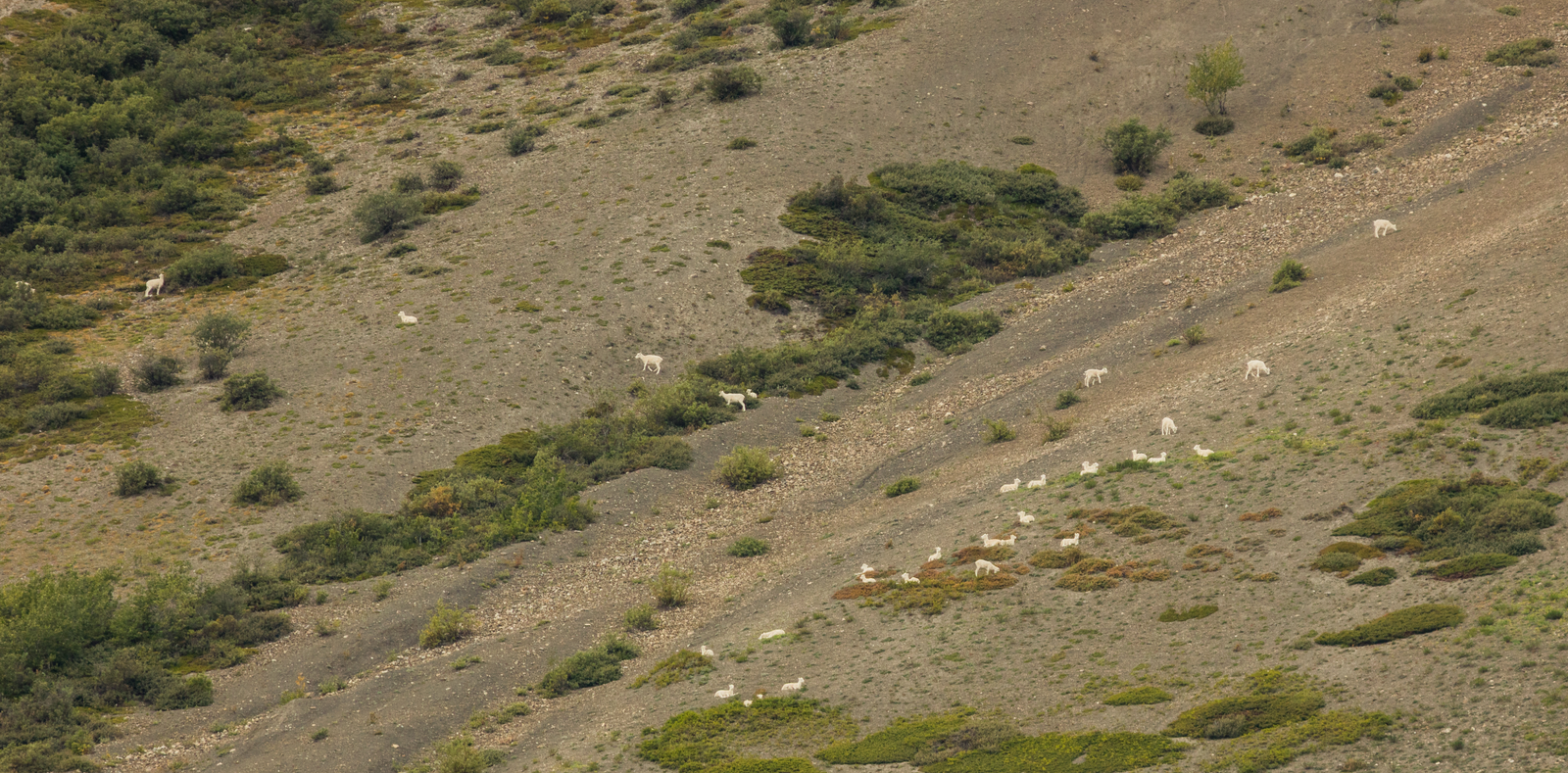
- Dall Sheep Same genus
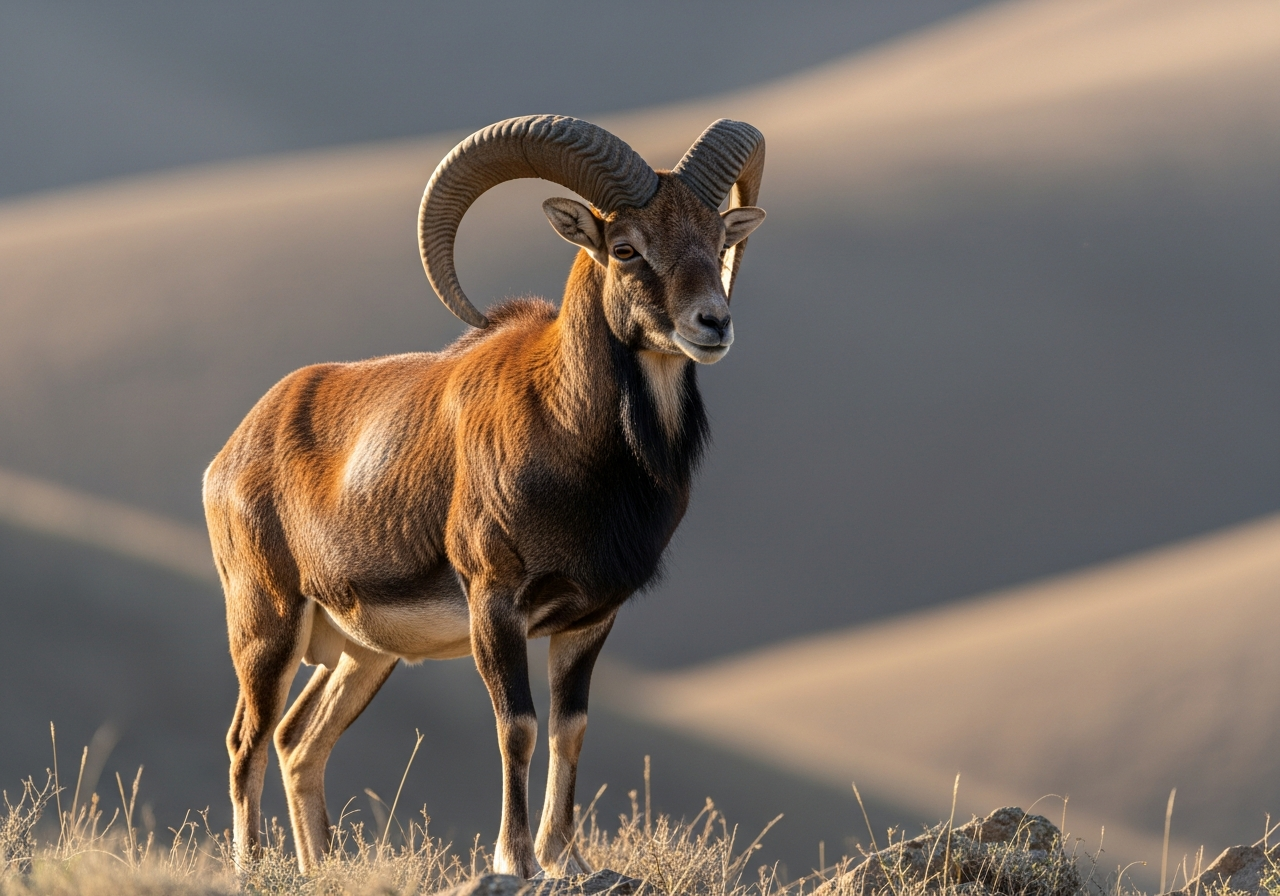
- Urial Same genus
- Cow Same family
Range & geography
Conservation status of the Bighorn Sheep
The bighorn sheep (Ovis canadensis) is listed as Least Concern on the IUCN Red List. Least Concern (LC) is the IUCN's lowest-risk category, assigned to widespread, abundant species that have been evaluated and found not to be threatened. It does not mean a species faces no pressures — only that it is not currently at risk of extinction.
The bighorn sheep (Ovis canadensis) is assessed on the IUCN Red List. Look up on the IUCN Red List .
Frequently asked questions about the Bighorn Sheep
Why do bighorn rams ram each other?
Horn clashes settle dominance hierarchies that influence mating access during the rut.
How much do bighorn horns weigh?
A full-curl ram's horns can exceed 14 kg in large individuals — a substantial fraction of body mass.
Can bighorn sheep climb cliffs?
Yes — specialised hooves let them traverse steep rock that predators struggle to follow.
What kills bighorn sheep herds today?
Pneumonia complexes associated with contact with domestic sheep are a major modern threat.
Where do bighorn sheep live?
Rocky Mountains and desert ranges from Canada through the western United States into Mexico.
What is a group of bighorn sheep called?
A group of Bighorn Sheep is called a herd.
What is a baby bighorn sheep called?
A baby Bighorn Sheep is called a lamb.
Sources & references
This guide is compiled and reviewed against established zoological and conservation references. Key sources for the Bighorn Sheep:
-
IUCN Red List of Threatened Species
Conservation status (Least Concern) reflects the IUCN Red List category for Ovis canadensis.
-
iNaturalist — observations & photos
Search citizen-science observations and community IDs for Ovis canadensis. Useful for range checks and recent sightings — not a substitute for formal Red List status.
-
GBIF — occurrence data
Global Biodiversity Information Facility species search for Ovis canadensis. Explore published occurrence records used in range research.
-
Global Animal Guide editorial standards
How we research, source, review, and update every guide for accuracy.