Image sourcing: see credits & licences
The dall sheep (Ovis dalli) is a mammal of the family Bovidae, in the order Artiodactyla.
Quick answer
Dall sheep (Ovis dalli) are white mountain sheep of Alaska and northwestern Canada whose rams carry curling horns. Adults weigh about 80 kg, climb alpine crags, and are listed Least Concern.
Top questions about the Dall Sheep
Dall Sheep facts at a glance
- Weight 80 kg
- Length 1.4 m
- Top speed 50 km/h
- Lifespan 14 years
| Scientific name | Ovis dalli |
|---|---|
| Diet | Herbivore |
| Habitat | Alpine ridges and meadows |
| Lifespan | 12–16 years |
| Weight | 50–100 kg |
| Top speed | up to 50 km/h |
| Conservation status | Least Concern (IUCN) |
| Kingdom | Animalia |
|---|---|
| Phylum | Chordata |
| Class | Mammalia |
| Order | Artiodactyla |
| Family | Bovidae |
| Genus | Ovis |
Where it lives
The dall sheep (Ovis dalli) is native to Alpine ranges of Alaska and northwestern Canada. — recorded across North America in this guide’s range summary.
For occurrence records, see GBIF species search and sources below.
How big is a dall sheep?
An adult dall sheep measures 1.4 m long — about 81% of the height of an average adult person (1.73 m) — and weighs around 80 kg, about 1.1× an average adult’s body weight (70 kg).
Length vs an average adult’s height (to scale)
What is a group of dall sheep called?
Group name (collective noun)
A group of Dall Sheep is called a herd.
Baby name
A baby Dall Sheep is called a lamb.
Explore more animal collective nouns and baby animal names .
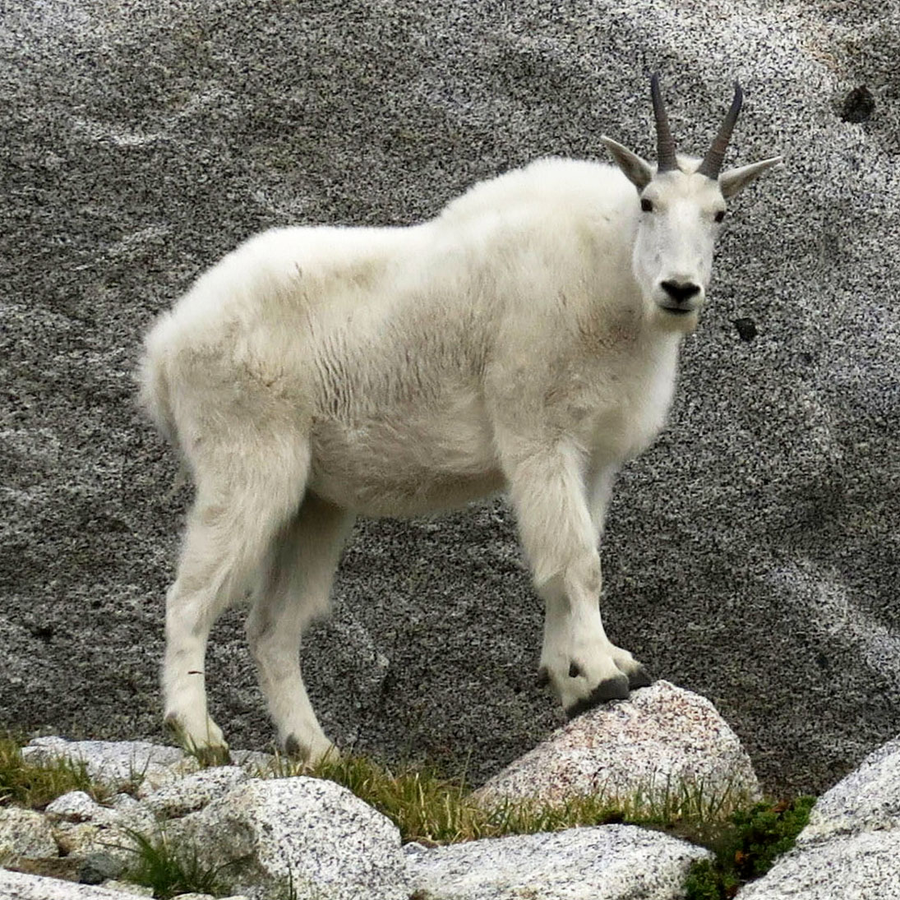
White sheep of the alpine
Rams develop thick, curling horns used in head-butting contests; ewes carry shorter, slimmer horns. Winter coats are pure white; some populations show darker summer tones.
Grasses and sedges above treeline
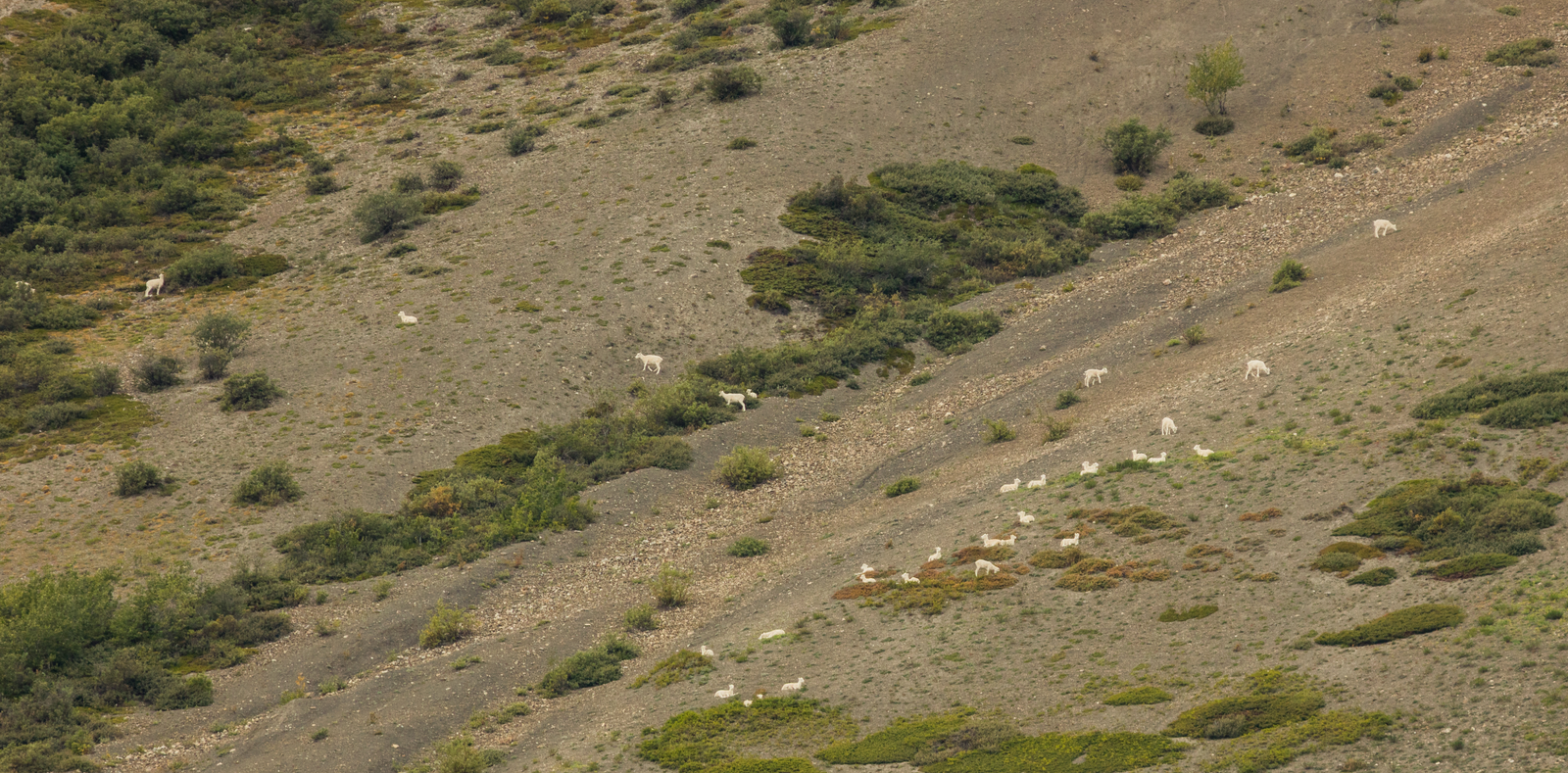
Summer grazing on alpine meadows and windswept ridges; winter survival depends on windswept slopes where snow is shallow.
Alaska Range and Yukon peaks
Alpine ranges from Alaska through the Yukon and western Northwest Territories. Denali and Kluane are classic viewing areas.
Hunting and highway corridors
Least Concern with regulated harvest. Mineral licks along roads attract sheep, increasing vehicle strikes and habituation near park highways.
Explore the Dall Sheep
Close relatives
- Domestic Sheep Same genus
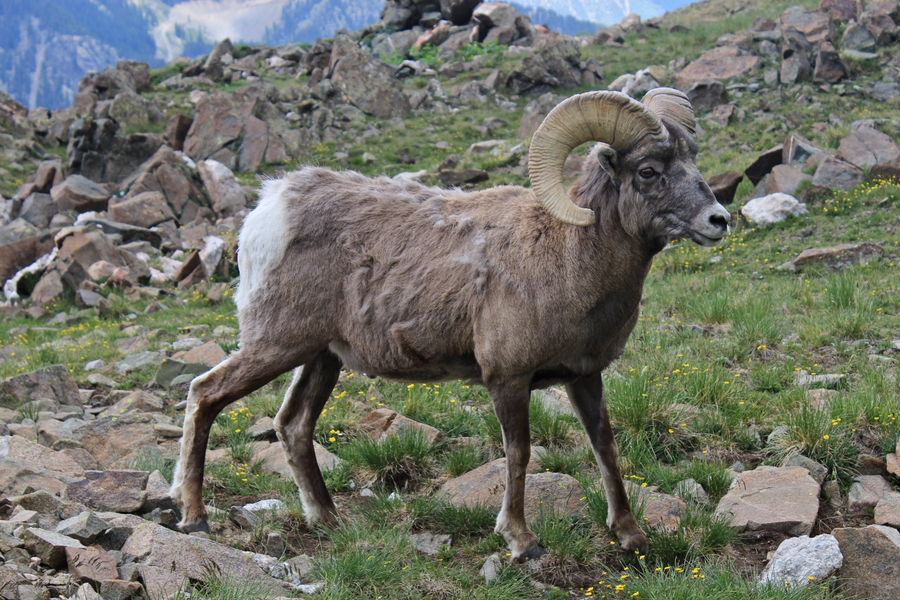
- Bighorn Sheep Same genus
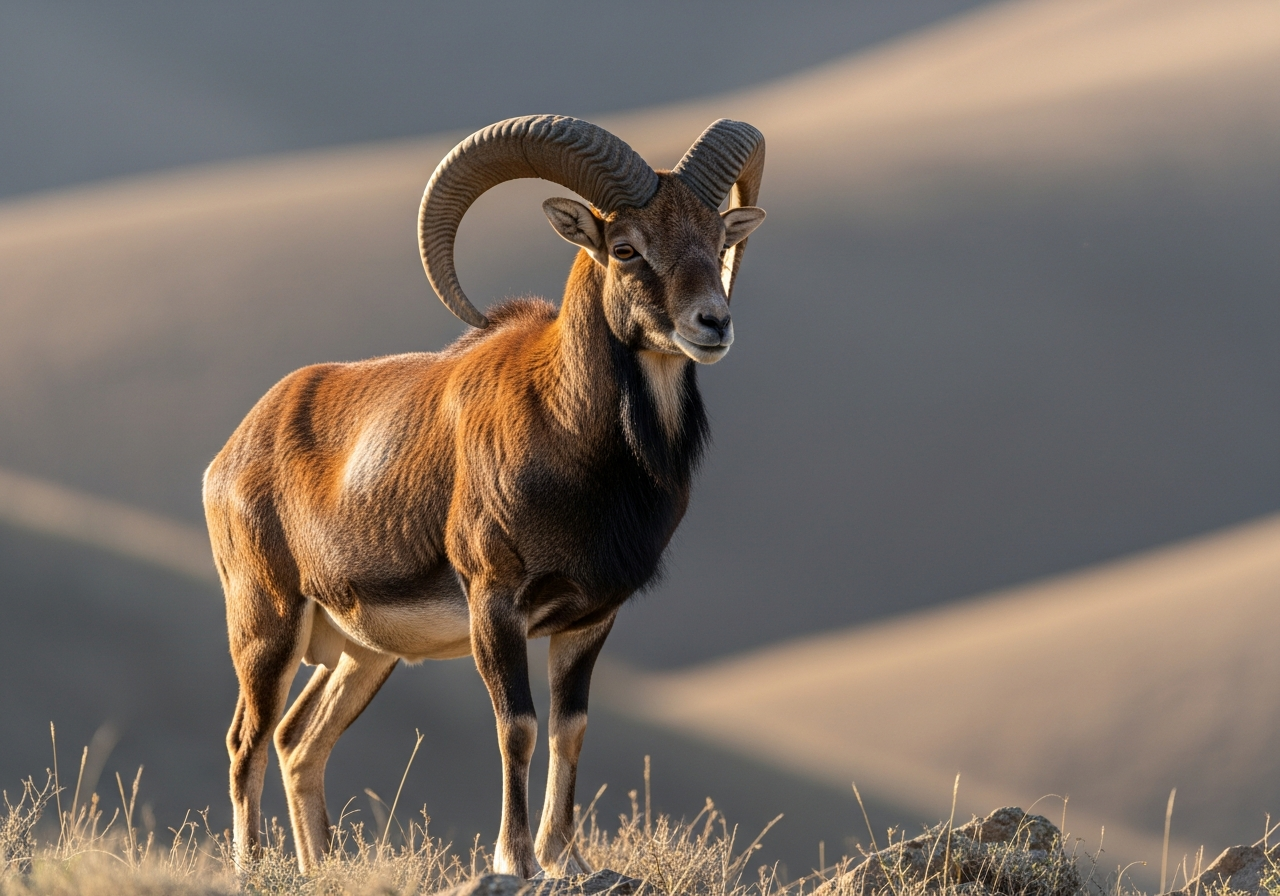
- Urial Same genus
- Cow Same family
Range & geography
Conservation status of the Dall Sheep
The dall sheep (Ovis dalli) is listed as Least Concern on the IUCN Red List. Least Concern (LC) is the IUCN's lowest-risk category, assigned to widespread, abundant species that have been evaluated and found not to be threatened. It does not mean a species faces no pressures — only that it is not currently at risk of extinction.
The dall sheep (Ovis dalli) is assessed on the IUCN Red List. Look up on the IUCN Red List .
Frequently asked questions about the Dall Sheep
How do Dall sheep horns differ by sex?
Rams grow massive curling horns; ewes have shorter, thinner horns that curve less.
Where is the best place to see Dall sheep?
Denali National Park and alpine highways in Alaska and Yukon.
Are Dall sheep the same as bighorn sheep?
They are closely related North American mountain sheep; Dall sheep are white and occupy northern alpine ranges.
What do Dall sheep eat in winter?
Dry grasses and sedges on windswept ridges where snow cover is thin.
Do Dall rams fight with their horns?
Yes — autumn clashes determine breeding access; horn rings age males.
What is a group of dall sheep called?
A group of Dall Sheep is called a herd.
What is a baby dall sheep called?
A baby Dall Sheep is called a lamb.
Sources & references
This guide is compiled and reviewed against established zoological and conservation references. Key sources for the Dall Sheep:
-
IUCN Red List of Threatened Species
Conservation status (Least Concern) reflects the IUCN Red List category for Ovis dalli.
-
iNaturalist — observations & photos
Search citizen-science observations and community IDs for Ovis dalli. Useful for range checks and recent sightings — not a substitute for formal Red List status.
-
GBIF — occurrence data
Global Biodiversity Information Facility species search for Ovis dalli. Explore published occurrence records used in range research.
-
Global Animal Guide editorial standards
How we research, source, review, and update every guide for accuracy.