Image sourcing: see credits & licences
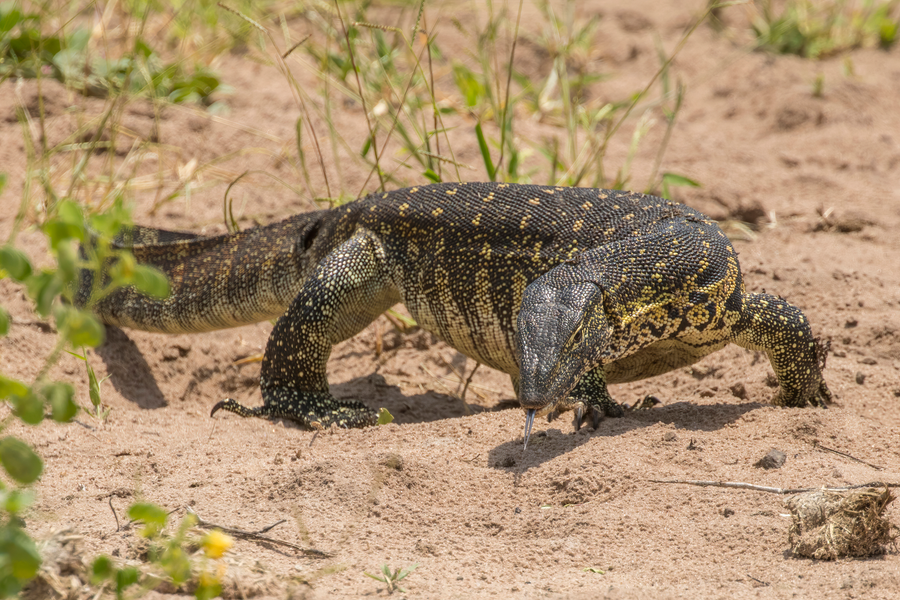
The Nile monitor (Varanus niloticus) is a reptile of the family Varanidae, in the order Squamata.
Quick answer
The Nile monitor (Varanus niloticus) is a large African water monitor that raids crocodile and bird nests for eggs and also takes fish, frogs, and carrion. Adults often weigh around 15 kg and reach nearly 2 m. Native across sub-Saharan wetlands — and invasive in Florida — it is listed Least Concern.
Top questions about the Nile Monitor
Nile Monitor facts at a glance
- Weight 15 kg
- Length 1.8 m
- Top speed 20 km/h
- Lifespan 15 years
| Scientific name | Varanus niloticus |
|---|---|
| Diet | Carnivore (eggs, fish, carrion) |
| Habitat | Rivers, lakeshores, and wetlands |
| Lifespan | Around 15 years in the wild (varies by population and captivity). |
| Weight | About 15 kg typical adult mass (sex and region vary). |
| Top speed | Up to roughly 20 km/h when moving at speed. |
| Conservation status | Least Concern (IUCN) |
| Kingdom | Animalia |
|---|---|
| Phylum | Chordata |
| Class | Reptilia |
| Order | Squamata |
| Family | Varanidae |
| Genus | Varanus |
Where it lives
The nile monitor (Varanus niloticus) is native to Rivers and wetlands across much of sub-Saharan Africa; also invasive in Florida. — recorded across Africa in this guide’s range summary.
For occurrence records, see GBIF species search and sources below.
How big is a nile monitor?
An adult nile monitor measures 1.8 m long — about 1.0× the height of an average adult person (1.73 m) — and weighs around 15 kg, about 21% of an average adult’s body weight (70 kg).
Length vs an average adult’s height (to scale)
What is a group of nile monitors called?
Group name (collective noun)
A group of Nile Monitors is called a bank.
Baby name
A baby Nile Monitor is called a hatchling.
Explore more animal collective nouns and baby animal names .
Powerful aquatic monitor
Long claws, a muscular flattened tail for swimming, and forked tongues for scent-tracking mark Nile monitors. They bask on banks, climb trees when young, and can sprint short distances on land.
Eggs, fish, and carrion
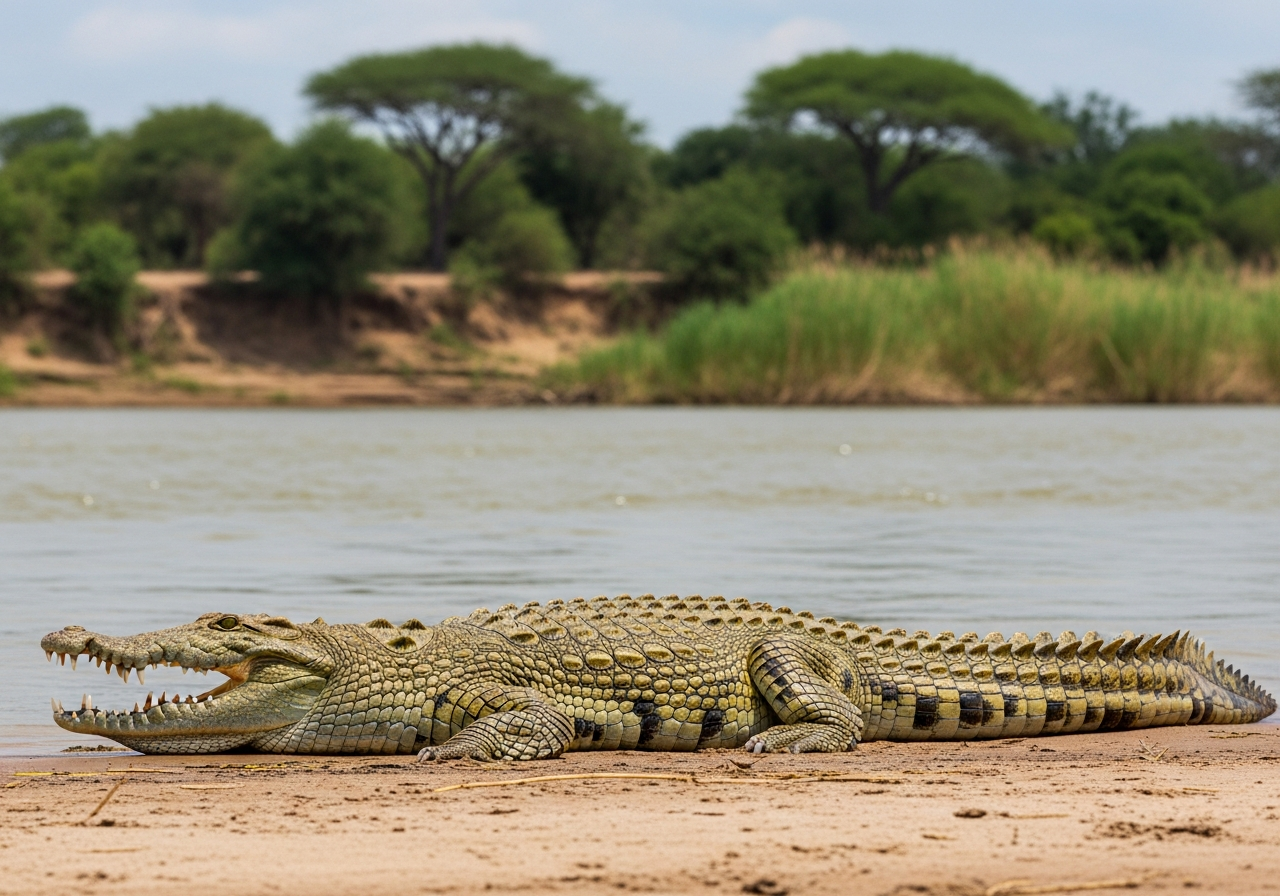
Famous nest predators of crocodiles and ground-nesting birds, they also eat fish, amphibians, crabs, rodents, and carrion. Strong jaws crush shells and bones.
Rivers across Africa — and Florida
Rivers, lakeshores, and wetlands across much of sub-Saharan Africa. Escaped or released pets established breeding populations in Florida, where they threaten native wildlife.
Invasive risk beyond Africa
In native range they remain Least Concern. In Florida, managers work to limit spread because monitors prey on eggs of turtles, alligators, and birds.
Explore the Nile Monitor
Close relatives
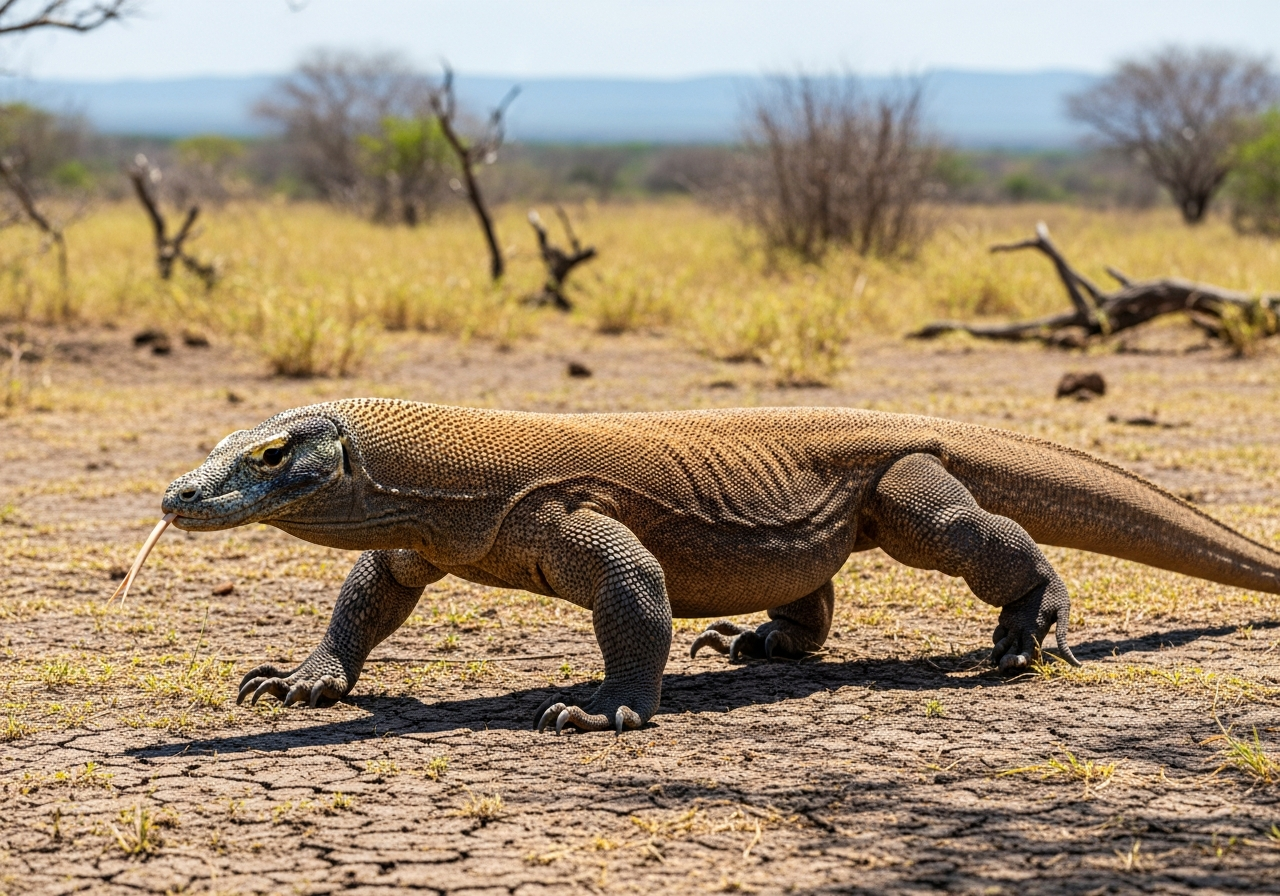
- Komodo Dragon Same genus
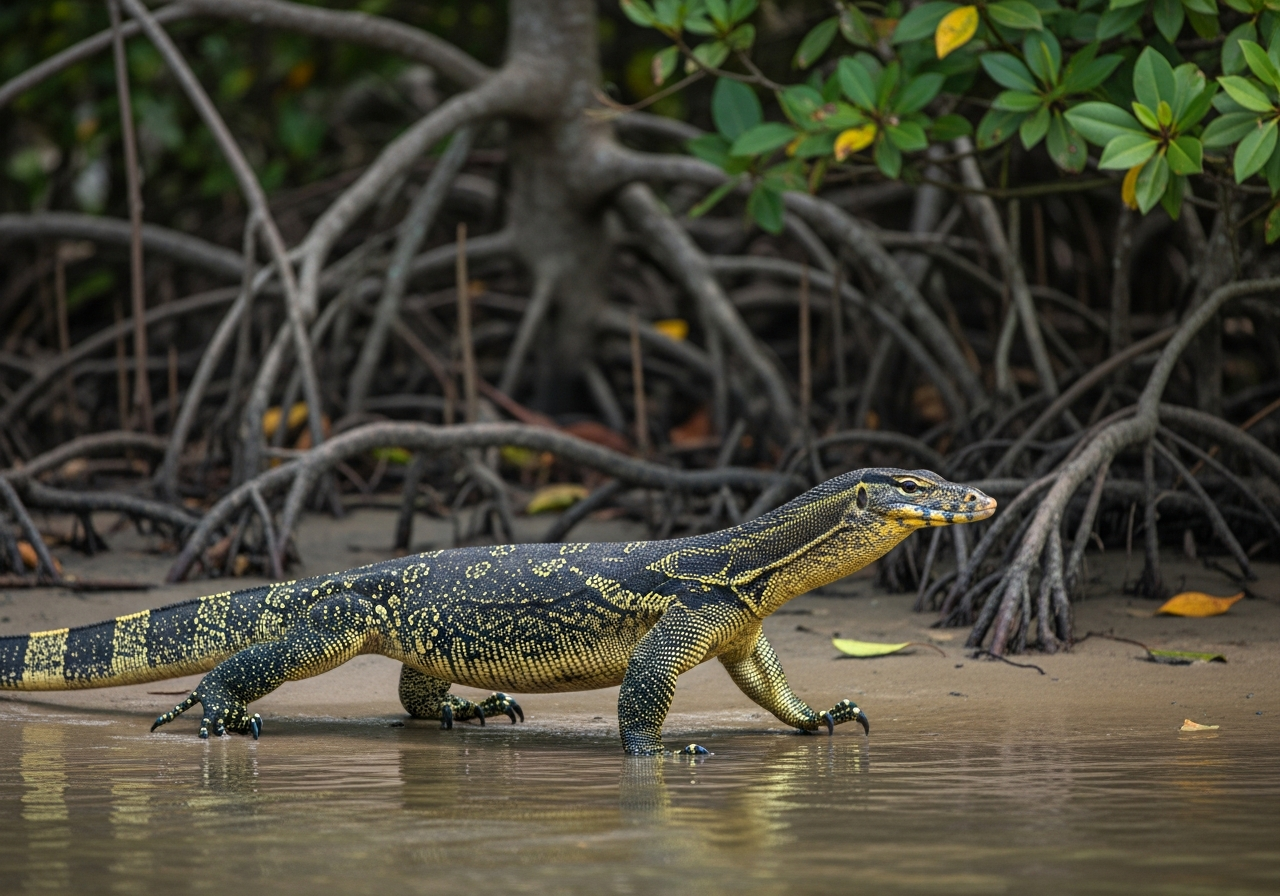
- Asian Water Monitor Same genus
- Black Mamba Same order
- Inland Taipan Same order
Range & geography
Conservation status of the Nile Monitor
The nile monitor (Varanus niloticus) is listed as Least Concern on the IUCN Red List. Least Concern (LC) is the IUCN's lowest-risk category, assigned to widespread, abundant species that have been evaluated and found not to be threatened. It does not mean a species faces no pressures — only that it is not currently at risk of extinction.
The nile monitor (Varanus niloticus) is assessed on the IUCN Red List. Look up on the IUCN Red List .
Frequently asked questions about the Nile Monitor
Do Nile monitors eat crocodile eggs?
Yes — they are adept nest raiders and can significantly affect local crocodile nesting success.
How big do Nile monitors get?
Large adults commonly approach 1.5–2 m in total length and around 15 kg.
Are Nile monitors venomous?
Monitors have oral glands that produce toxins, but bites mainly cause mechanical injury and infection risk; medical care is advised.
Why are Nile monitors in Florida?
Released or escaped pets founded invasive populations in warm wetlands.
Where do Nile monitors live naturally?
Rivers and wetlands across much of sub-Saharan Africa. Native range summary: Rivers and wetlands across much of sub-Saharan Africa; also invasive in Florida.
What is a group of nile monitors called?
A group of Nile Monitors is called a bank.
What is a baby nile monitor called?
A baby Nile Monitor is called a hatchling.
Sources & references
This guide is compiled and reviewed against established zoological and conservation references. Key sources for the Nile Monitor:
-
IUCN Red List of Threatened Species
Conservation status (Least Concern) reflects the IUCN Red List category for Varanus niloticus.
-
iNaturalist — observations & photos
Search citizen-science observations and community IDs for Varanus niloticus. Useful for range checks and recent sightings — not a substitute for formal Red List status.
-
GBIF — occurrence data
Global Biodiversity Information Facility species search for Varanus niloticus. Explore published occurrence records used in range research.
-
Global Animal Guide editorial standards
How we research, source, review, and update every guide for accuracy.