Image sourcing: see credits & licences
The urial (Ovis vignei) is a mammal of the family Bovidae, in the order Artiodactyla.
Quick answer
The urial is a wild sheep of Central and South Asia, recognized by the reddish coat and the dark neck ruff of mature males, which also grow large curved horns. Urials live in dry mountains and grasslands, graze in herds, and are considered an ancestor of domestic sheep.
Top questions about the Urial
Urial facts at a glance
- Weight 90 kg
- Length 1.5 m
- Top speed 60 km/h
- Lifespan 12 years
| Scientific name | Ovis vignei |
|---|---|
| Diet | Herbivore |
| Habitat | Dry hills, mountains, and grassland |
| Lifespan | Around 12 years |
| Weight | 40–90 kg (88–198 lb) |
| Top speed | Up to 60 km/h (37 mph) |
| Conservation status | Vulnerable (IUCN) |
| Kingdom | Animalia |
|---|---|
| Phylum | Chordata |
| Class | Mammalia |
| Order | Artiodactyla |
| Family | Bovidae |
| Genus | Ovis |
Where it lives
The urial (Ovis vignei) is native to Dry hills, mountains, and grasslands of Central and South Asia, including Iran, Pakistan, and Central Asia. — recorded across Asia in this guide’s range summary.
For occurrence records, see GBIF species search and sources below.
How big is a urial?
An adult urial measures 1.5 m long — about 87% of the height of an average adult person (1.73 m) — and weighs around 90 kg, about 1.3× an average adult’s body weight (70 kg).
Length vs an average adult’s height (to scale)
What is a group of urials called?
Group name (collective noun)
A group of Urials is called a herd.
Baby name
A baby Urial is called a lamb.
Explore more animal collective nouns and baby animal names .
A true wild sheep
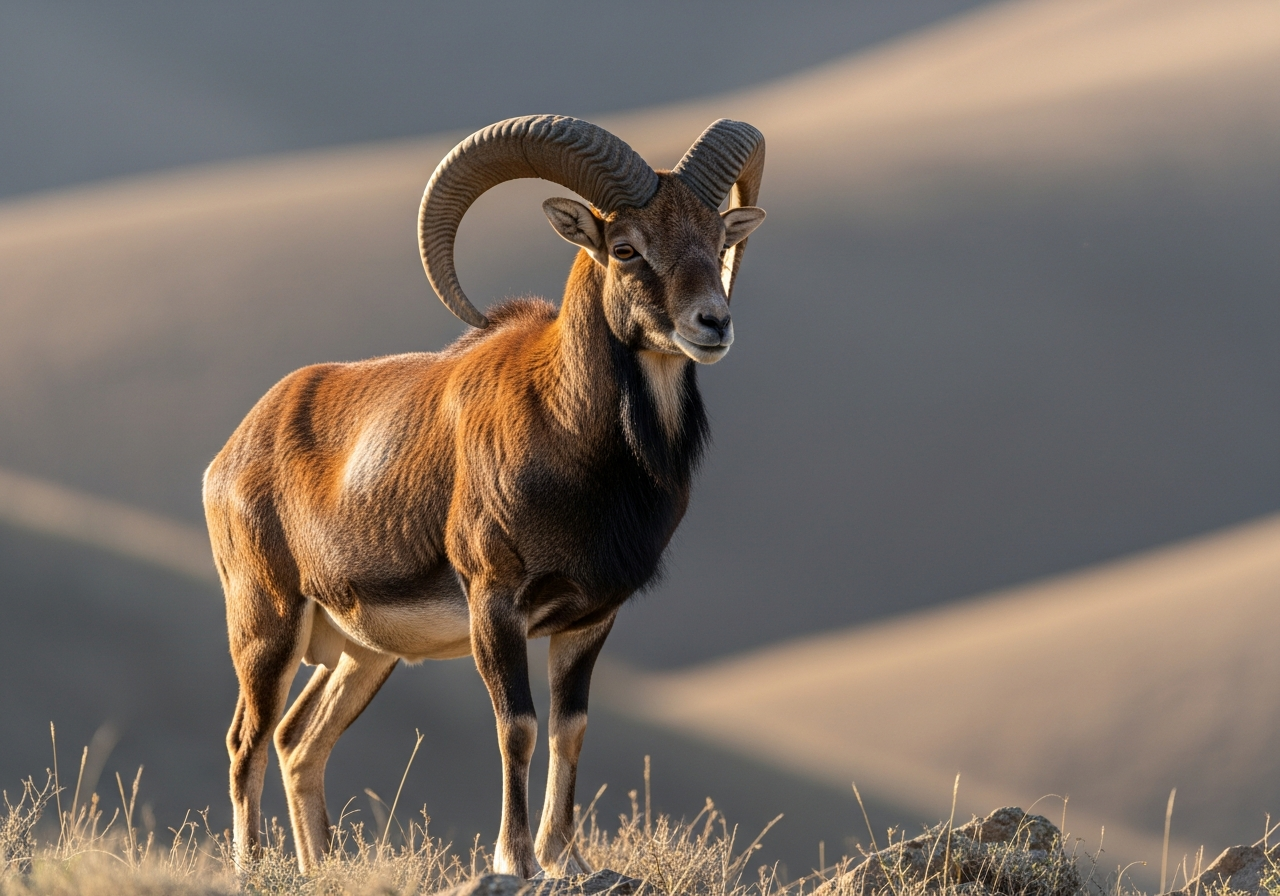
The urial is one of the wild sheep from which domestic sheep are thought to descend. Males are striking, with curved horns that can sweep back over a meter and a long bib of dark hair on the throat and chest during the breeding season.
Herds and rams' contests
Urials live in herds, often separated by sex outside the rut. In the breeding season rams compete for ewes with charging clashes of their heavy horns, a contest of stamina and strength that decides which males get to mate.
Habitat and diet
Urials favor open, dry country, from rolling grasslands to rugged foothills below the treeline. They are grazers that feed mainly on grasses and herbs, relying on keen eyesight and speed across open ground to escape wolves and other predators.
Pressure and protection
Urials are listed as Vulnerable, with populations reduced by hunting for their impressive horns and by competition with domestic livestock for grazing. Protected areas and regulated conservation programs are important to their survival.
Dig deeper into the Urial
- Are Urials Endangered?
Are urials endangered? Status Vulnerable, main threats, and what protection means.
- How Long Do Urials Live?
Urial lifespan is typically Around 12 years. What shortens or extends life, life stages, and status (Vulnerable).
- What Do Urials Eat?
What urials eat: Herbivore, foraging style, and seasonal shifts in Dry hills, mountains, and grassland.
- Where Do Urials Live?
Where urials live: Dry hills, mountains, and grassland, native range cues, and human overlap. Status Vulnerable.
Explore the Urial
Close relatives
- Domestic Sheep Same genus
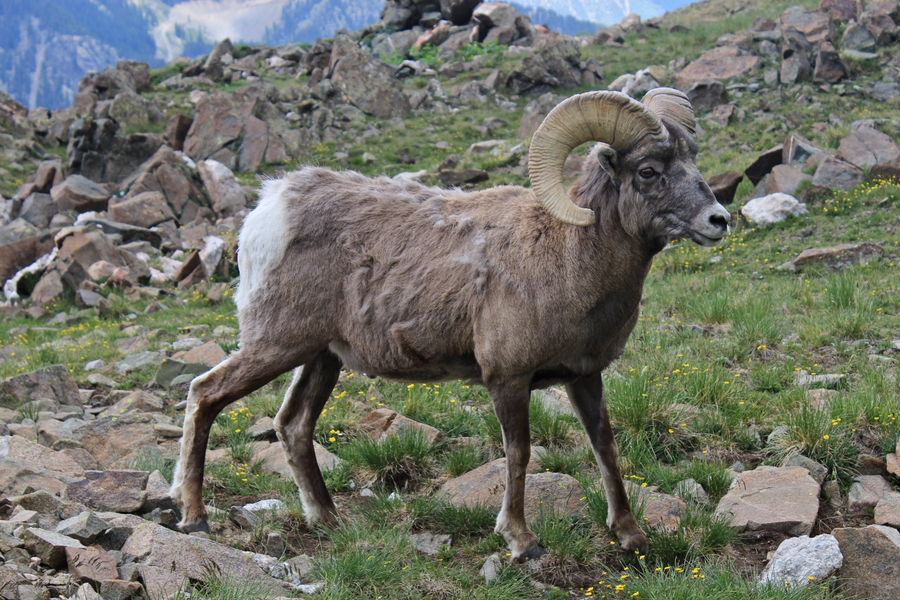
- Bighorn Sheep Same genus
- Dall Sheep Same genus
- Cow Same family
Collections
Range & geography
Did you know? Urial facts
- The urial is a wild sheep of Central and South Asia, recognized by the reddish coat and the dark neck ruff of mature males, which also grow large curved horns.
- A urial is a species of wild sheep native to Central and South Asia, with a reddish coat, curved horns in males, and a distinctive dark neck ruff.
- Yes. The urial is one of the wild sheep considered to be among the ancestors of today's domestic sheep.
- Urials live across dry hills, mountains, and grasslands of Central and South Asia, including parts of Iran, Pakistan, and neighboring countries.
- Urials are listed as Vulnerable, mainly because of hunting and competition with livestock for grazing land.
- Conservation: Vulnerable (IUCN).
Diet & feeding
Urial feeds primarily as a herbivore. Urials favor open, dry country, from rolling grasslands to rugged foothills below the treeline. They are grazers that feed mainly on grasses and herbs, relying on keen eyesight and speed across open ground to escape wolves and other predators.
Adaptations
- The urial is one of the wild sheep from which domestic sheep are thought to descend. Males are striking, with curved horns that can sweep back over a meter and a long bib of dark hair on the throat and chest during the breeding season.
- Urials live in herds, often separated by sex outside the rut. In the breeding season rams compete for ewes with charging clashes of their heavy horns, a contest of stamina and strength that decides which males get to mate.
Behaviour & ecology
- The urial is one of the wild sheep from which domestic sheep are thought to descend. Males are striking, with curved horns that can sweep back over a meter and a long bib of dark hair on the throat and chest during the breeding season.
- Urials live in herds, often separated by sex outside the rut. In the breeding season rams compete for ewes with charging clashes of their heavy horns, a contest of stamina and strength that decides which males get to mate.
- Urials favor open, dry country, from rolling grasslands to rugged foothills below the treeline. They are grazers that feed mainly on grasses and herbs, relying on keen eyesight and speed across open ground to escape wolves and other predators.
Communication
- Urial uses scent, posture, and vocal signals to mark territory and coordinate social behaviour.
- Communication intensity often peaks during breeding seasons and territorial disputes.
Habitat & range
Dry hills, mountains, and grassland
Ecological role
Urial shapes vegetation through grazing or browsing and serves as prey for larger predators where ranges overlap.
Conservation status of the Urial
The urial (Ovis vignei) is listed as Vulnerable on the IUCN Red List. Vulnerable (VU) means a species faces a high risk of extinction in the medium-term future. It is the lowest-risk of the three 'threatened' IUCN categories — one step below Endangered, which is itself below Critically Endangered — and is often an early warning that a population is in trouble.
The urial (Ovis vignei) is assessed on the IUCN Red List. Look up on the IUCN Red List .
Frequently asked questions about the Urial
What is a urial?
A urial is a species of wild sheep native to Central and South Asia, with a reddish coat, curved horns in males, and a distinctive dark neck ruff.
Are urials related to domestic sheep?
Yes. The urial is one of the wild sheep considered to be among the ancestors of today's domestic sheep.
Where do urials live?
Urials live across dry hills, mountains, and grasslands of Central and South Asia, including parts of Iran, Pakistan, and neighboring countries.
Are urials endangered?
Urials are listed as Vulnerable, mainly because of hunting and competition with livestock for grazing land.
How big are urial horns?
Mature male urials grow large, backward-curving horns that can exceed 1 m (3 ft), used in head-to-head fights during the breeding season.
What is a group of urials called?
A group of Urials is called a herd.
What is a baby urial called?
A baby Urial is called a lamb.
Sources & references
This guide is compiled and reviewed against established zoological and conservation references. Key sources for the Urial:
-
IUCN Red List of Threatened Species
Conservation status (Vulnerable) reflects the IUCN Red List category for Ovis vignei.
-
iNaturalist — observations & photos
Search citizen-science observations and community IDs for Ovis vignei. Useful for range checks and recent sightings — not a substitute for formal Red List status.
-
GBIF — occurrence data
Global Biodiversity Information Facility species search for Ovis vignei. Explore published occurrence records used in range research.
- IUCN Red List — Ovis vignei.
Conservation status (Vulnerable) and population trends.
- Animal Diversity Web — Ovis vignei. University of Michigan Museum of Zoology.
Life history, morphology, and range.
- Wikipedia — Urial.
General taxonomy and overview (cross-check primary sources).
-
Global Animal Guide editorial standards
How we research, source, review, and update every guide for accuracy.