Image sourcing: see credits & licences
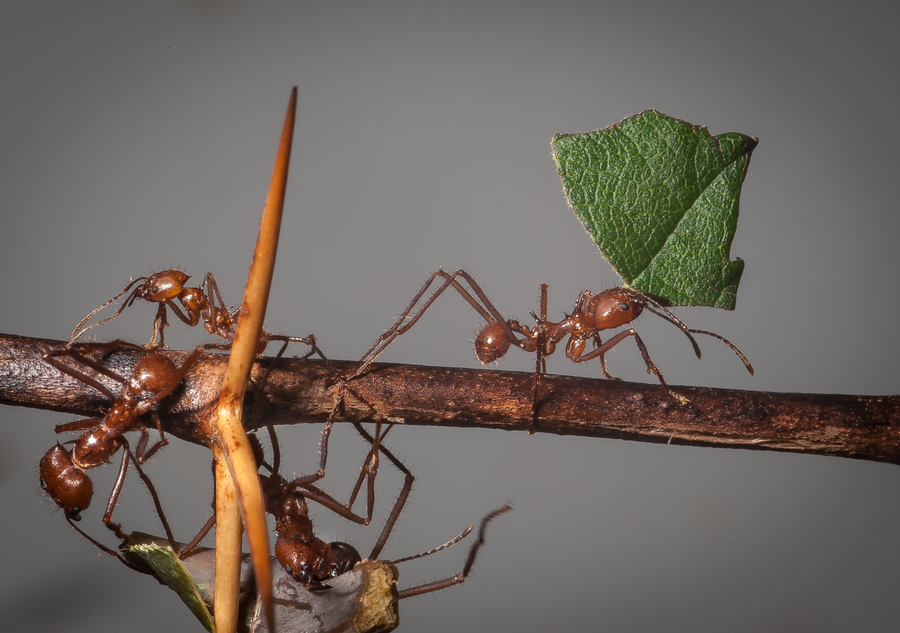
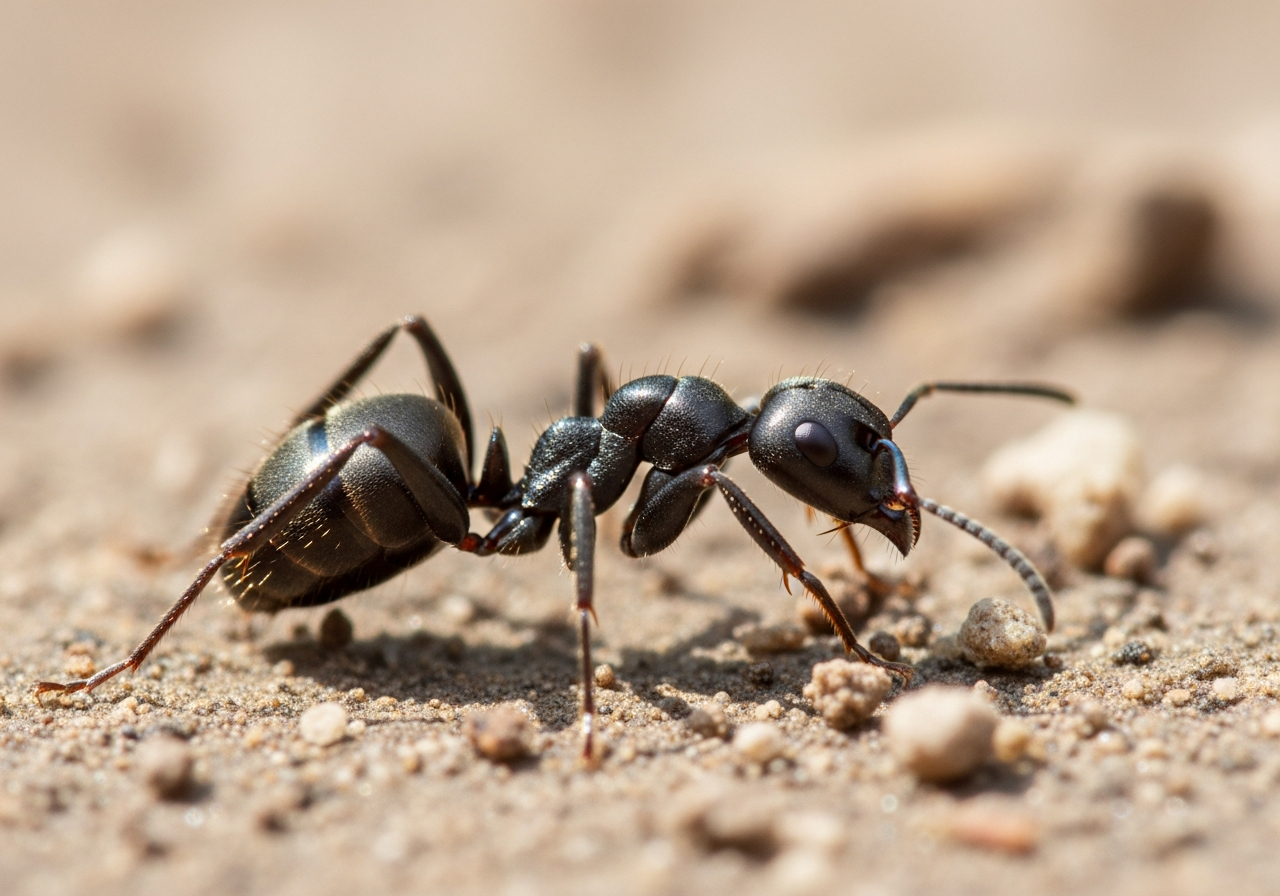
The army ant (Eciton burchellii) is an insect of the family Formicidae, in the order Hymenoptera.
Quick answer
Army ants (Eciton burchellii) are nomadic Neotropical ants that form vast raiding swarms across rainforest floors from Mexico to Brazil and Peru. They lack permanent nests, instead making living bivouacs of linked workers, and eat arthropods flushed by the swarm. Listed Least Concern, they create a moving ecosystem of antbirds and butterflies.
Top questions about the Army Ant
Army Ant facts at a glance
- Weight 0 g
- Length 1 cm
- Top speed 2 km/h
- Lifespan 5 years
| Scientific name | Eciton burchellii |
|---|---|
| Diet | Carnivore (arthropods) |
| Habitat | Tropical rainforest floor |
| Lifespan | Around 5 years in the wild (varies by population and captivity). |
| Weight | About 3e-05 kg typical adult mass (sex and region vary). |
| Top speed | Up to roughly 2 km/h when moving at speed. |
| Conservation status | Least Concern (IUCN) |
| Kingdom | Animalia |
|---|---|
| Phylum | Arthropoda |
| Class | Insecta |
| Order | Hymenoptera |
| Family | Formicidae |
| Genus | Eciton |
Where it lives
The army ant (Eciton burchellii) is native to Neotropical forests from Mexico to Brazil and Peru. — recorded across North America, South America in this guide’s range summary.
For occurrence records, see GBIF species search and sources below.
How big is a army ant?
An adult army ant measures 1 cm long — about 1% of the height of an average adult person (1.73 m) — and weighs around 0 g, a small fraction of an average adult’s body weight (70 kg).
Length vs an average adult’s height (to scale)
What is a group of army ants called?
Group name (collective noun)
A group of Army Ants is called a colony.
Baby name
A baby Army Ant is called a larva.
Explore more animal collective nouns and baby animal names .
Living nests on the march
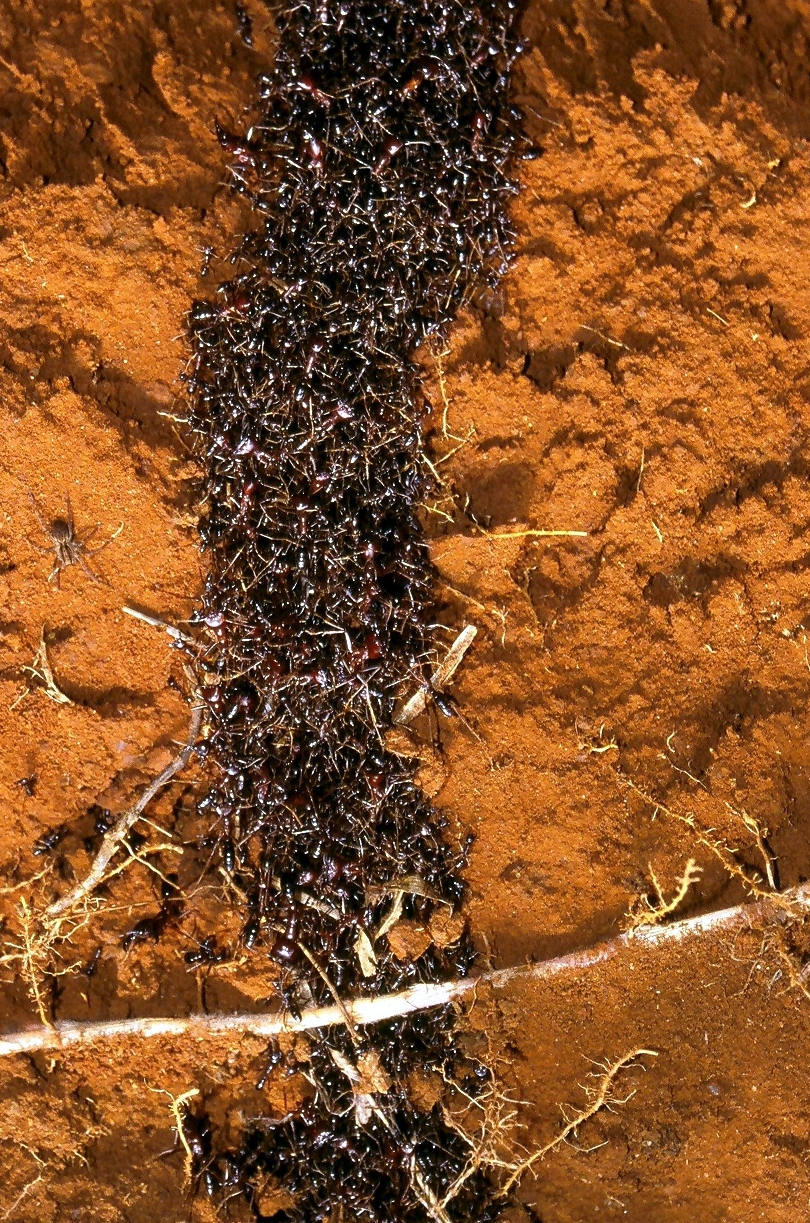
Colonies alternate nomadic and stationary phases. During stops, workers cling together into a bivouac sheltering the queen and brood. Raids form fan-shaped fronts of hundreds of thousands of ants.
Arthropod wave front
Prey includes cockroaches, spiders, scorpions, and other ants flushed from leaf litter — not leaf-cutting agriculture. Specialist antbirds follow swarms to snatch escapees.
Neotropical rainforest floor
Tropical forests from Mexico through Central America to Brazil and Peru. Columns dominate trails and clearings during peak raid hours. Across its range it is tied to tropical rainforest floor, and field accounts emphasise this species’ distinctive ecology rather than generic habitat labels.
Keystone movers
Least Concern and ecologically influential: raids redistribute nutrients and support attendant bird species. Habitat clearing removes the continuous forest they need for long raid cycles.
Explore the Army Ant
Close relatives
- Leafcutter Ant Same family
- Ant Same family
- Honey Bee Same order
- Carpenter Bee Same order
Conservation status of the Army Ant
The army ant (Eciton burchellii) is listed as Least Concern on the IUCN Red List. Least Concern (LC) is the IUCN's lowest-risk category, assigned to widespread, abundant species that have been evaluated and found not to be threatened. It does not mean a species faces no pressures — only that it is not currently at risk of extinction.
The army ant (Eciton burchellii) is assessed on the IUCN Red List. Look up on the IUCN Red List .
Frequently asked questions about the Army Ant
Do army ants have a permanent nest?
No — Eciton colonies form temporary living bivouacs and regularly relocate.
What do army ants eat?
Other arthropods flushed by the swarm — insects, spiders, and similar prey.
Why do birds follow army ants?
Antbirds and others catch insects fleeing the raid front.
Can army ants kill large animals?
Swarms can overrun small vertebrates unable to flee, but large mammals simply move aside; sensational claims are overstated.
Where do Eciton army ants live?
Neotropical rainforests from Mexico to Brazil and Peru. Native range summary: Neotropical forests from Mexico to Brazil and Peru.
What is a group of army ants called?
A group of Army Ants is called a colony.
What is a baby army ant called?
A baby Army Ant is called a larva.
Sources & references
This guide is compiled and reviewed against established zoological and conservation references. Key sources for the Army Ant:
-
IUCN Red List of Threatened Species
Conservation status (Least Concern) reflects the IUCN Red List category for Eciton burchellii.
-
iNaturalist — observations & photos
Search citizen-science observations and community IDs for Eciton burchellii. Useful for range checks and recent sightings — not a substitute for formal Red List status.
-
GBIF — occurrence data
Global Biodiversity Information Facility species search for Eciton burchellii. Explore published occurrence records used in range research.
-
Global Animal Guide editorial standards
How we research, source, review, and update every guide for accuracy.