Image sourcing: see credits & licences
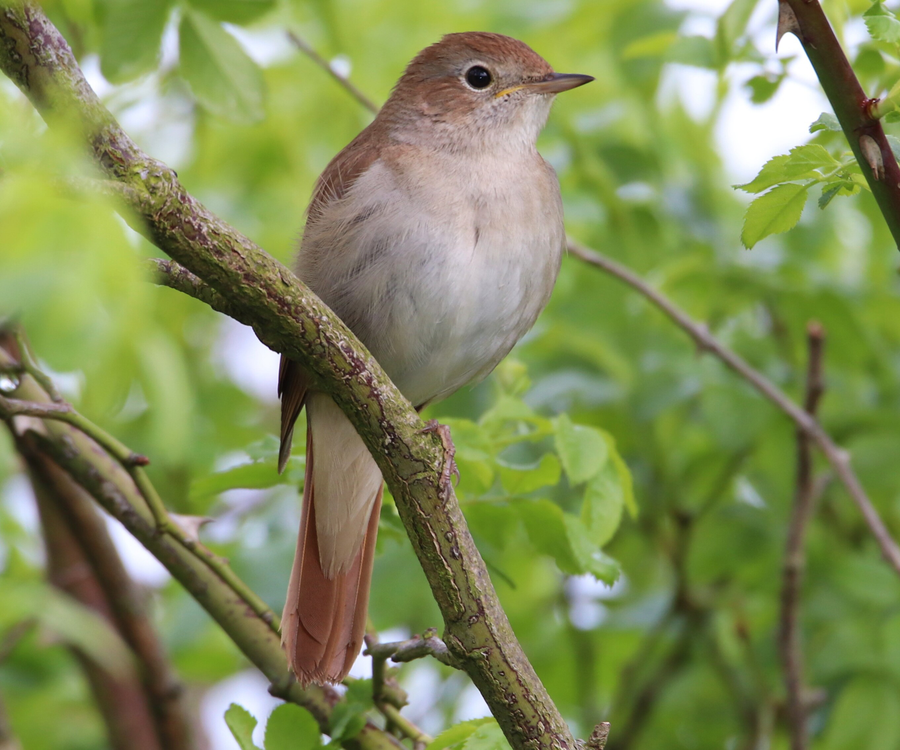
The nightingale (Luscinia megarhynchos) is a bird of the family Muscicapidae, in the order Passeriformes.
Quick answer
The nightingale (Luscinia megarhynchos) is a plain brown chat famed for its powerful, varied nocturnal song in European and western Asian thickets. It winters in Africa, eats insects and spiders, weighs about 20 g, and is listed Least Concern, though UK breeding numbers have fallen sharply with scrub loss.
Top questions about the Nightingale
Nightingale facts at a glance
- Weight 20 g
- Length 16 cm
- Top speed 30 km/h
- Lifespan 5 years
| Scientific name | Luscinia megarhynchos |
|---|---|
| Diet | Insectivore |
| Habitat | Scrub, woodland edge, and dense thickets |
| Lifespan | Around 5 years in the wild (varies by population and captivity). |
| Weight | About 0.02 kg typical adult mass (sex and region vary). |
| Top speed | Up to roughly 30 km/h when moving at speed. |
| Conservation status | Least Concern (IUCN) |
| Kingdom | Animalia |
|---|---|
| Phylum | Chordata |
| Class | Aves |
| Order | Passeriformes |
| Family | Muscicapidae |
| Genus | Luscinia |
Where it lives
The nightingale (Luscinia megarhynchos) is native to Breeds in thickets across Europe and western Asia; winters in Africa. — recorded across Europe, Asia, Africa in this guide’s range summary.
For occurrence records, see GBIF species search and sources below.
How big is a nightingale?
An adult nightingale measures 16 cm long — about 9% of the height of an average adult person (1.73 m) — and weighs around 20 g, a small fraction of an average adult’s body weight (70 kg).
Length vs an average adult’s height (to scale)
What is a group of nightingales called?
Group name (collective noun)
A group of Nightingales is called a watch.
Baby name
A baby Nightingale is called a chick.
Explore more animal collective nouns and baby animal names .
Voice bigger than plumage
Males sing rich phrases of whistles, trills, and crescendos, often at night when fewer birds compete acoustically. Daytime song continues in dense cover where the bird itself is hard to see.
Insects in the undergrowth
Diet is mainly beetles, ants, caterpillars, spiders, and other invertebrates gleaned from leaf litter and low shrubs; berries may be taken in autumn.
European thickets to African winters
Breeds in scrub, woodland edge, and dense thickets across Europe and western Asia; winters in Africa. In Britain it favours coppice and coastal scrub in the southeast.
UK scrub specialist in trouble
Globally Least Concern, but UK pairs have crashed as dense breeding scrub was cleared. Conservation focuses on restoring young woodland and scrub mosaics.
Explore the Nightingale
Close relatives
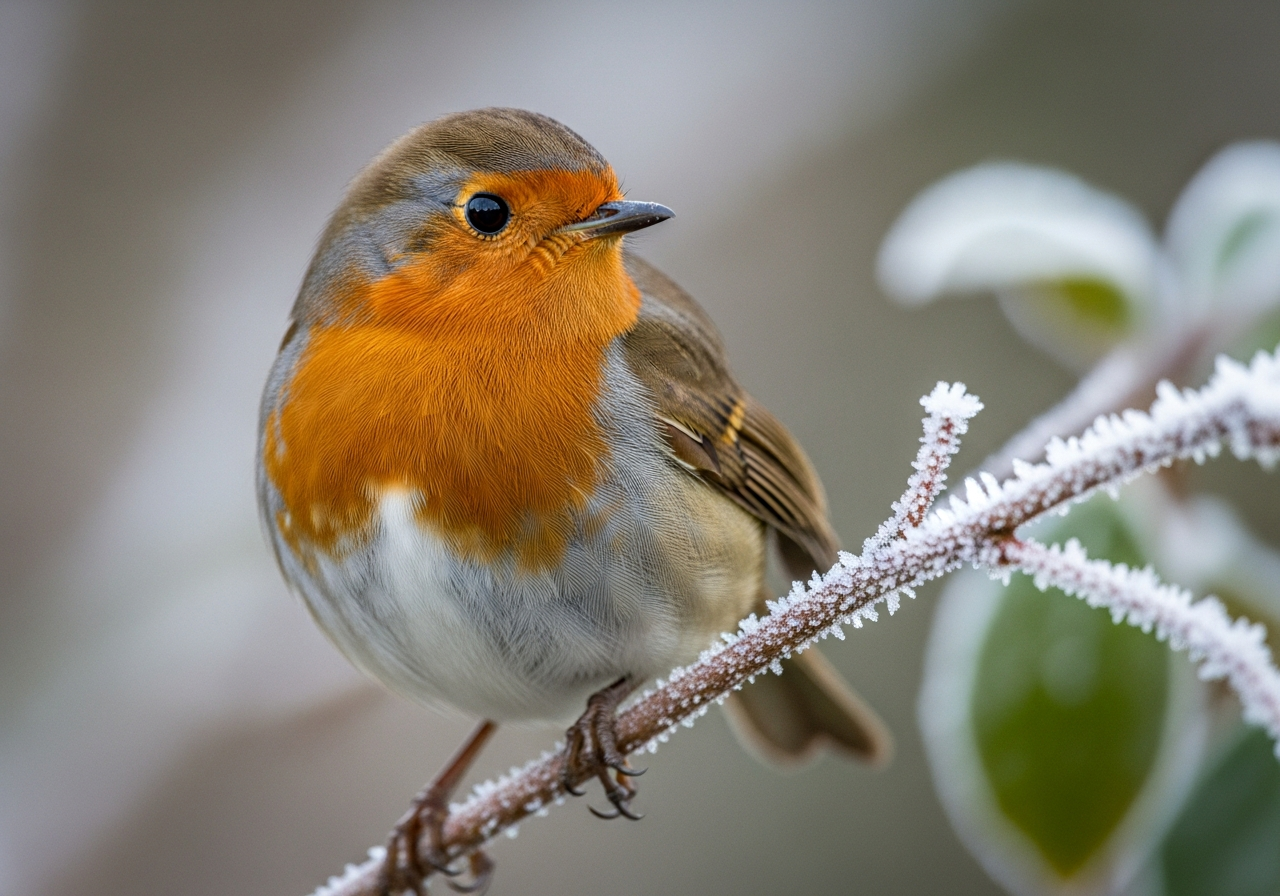
- European Robin Same family
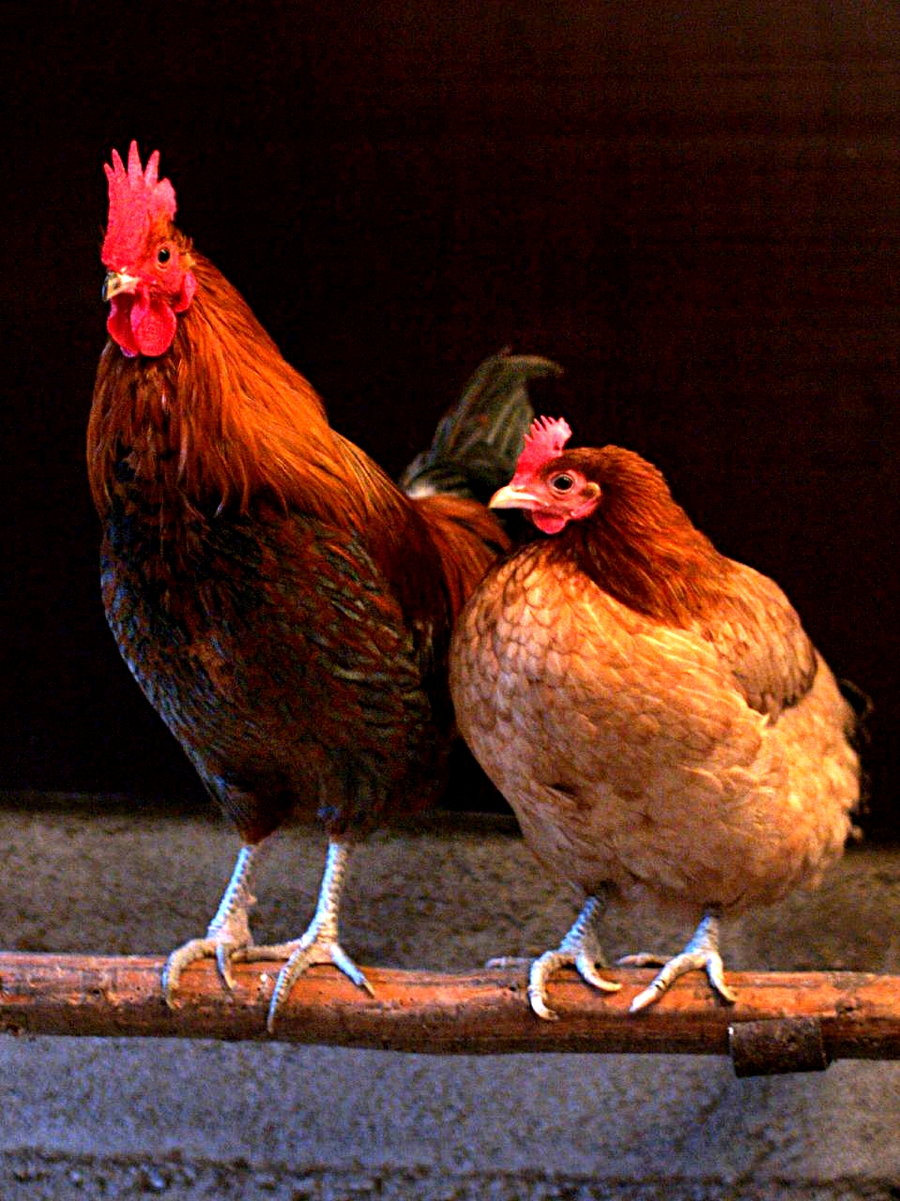
- Canary Same order
- House Sparrow Same order
- Superb Lyrebird Same order
Range & geography
Conservation status of the Nightingale
The nightingale (Luscinia megarhynchos) is listed as Least Concern on the IUCN Red List. Least Concern (LC) is the IUCN's lowest-risk category, assigned to widespread, abundant species that have been evaluated and found not to be threatened. It does not mean a species faces no pressures — only that it is not currently at risk of extinction.
The nightingale (Luscinia megarhynchos) is assessed on the IUCN Red List. Look up on the IUCN Red List .
Frequently asked questions about the Nightingale
Do nightingales only sing at night?
No — they sing by day too, but night song is especially noticeable and culturally famous.
Why is the nightingale's plumage so plain?
Cryptic brown feathers help a ground-foraging bird hide in thickets; the song, not colour, drives mate attraction.
Where do UK nightingales go in winter?
They migrate to Africa for the non-breeding season. Native range summary: Breeds in thickets across Europe and western Asia; winters in Africa.
What do nightingales eat?
Mostly insects and other invertebrates found in leaf litter and low vegetation.
Are nightingales rare in Britain?
They have become scarce breeders, mainly in southeast England, even though the species is Least Concern globally.
What is a group of nightingales called?
A group of Nightingales is called a watch.
What is a baby nightingale called?
A baby Nightingale is called a chick.
Sources & references
This guide is compiled and reviewed against established zoological and conservation references. Key sources for the Nightingale:
-
IUCN Red List of Threatened Species
Conservation status (Least Concern) reflects the IUCN Red List category for Luscinia megarhynchos.
-
iNaturalist — observations & photos
Search citizen-science observations and community IDs for Luscinia megarhynchos. Useful for range checks and recent sightings — not a substitute for formal Red List status.
-
GBIF — occurrence data
Global Biodiversity Information Facility species search for Luscinia megarhynchos. Explore published occurrence records used in range research.
-
eBird — bird observations
Cornell Lab eBird target search for Nightingale. Check recent checklists and seasonal abundance where birders report this species.
-
Global Animal Guide editorial standards
How we research, source, review, and update every guide for accuracy.