Image sourcing: see credits & licences
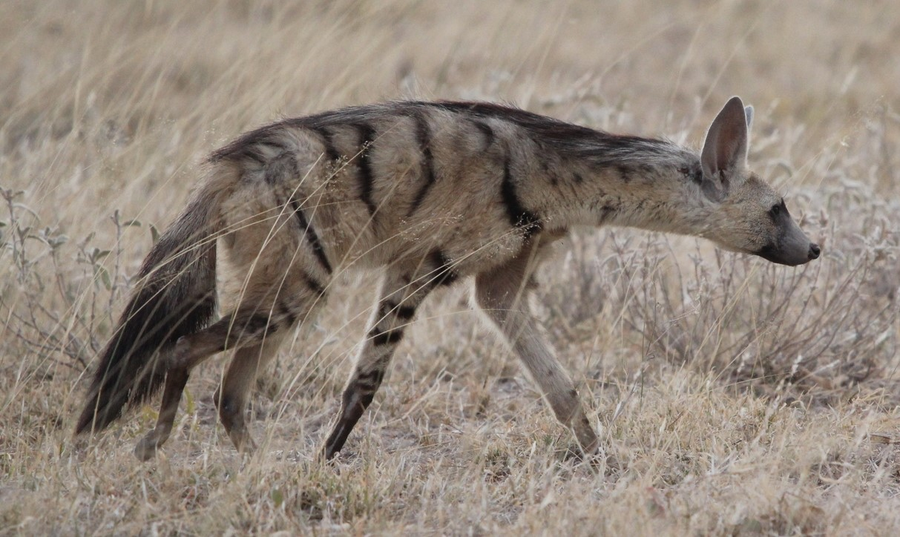
The aardwolf (Proteles cristata) is a mammal of the family Hyaenidae, in the order Carnivora.
Quick answer
The aardwolf (Proteles cristata) is a termite-eating hyena relative of eastern and southern African grasslands. It looks like a small striped hyena but has weak jaws and a sticky tongue for harvesting Trinervitermes termites by night. Adults weigh about 10 kg and are listed Least Concern.
Top questions about the Aardwolf
Aardwolf facts at a glance
- Weight 10 kg
- Length 80 cm
- Top speed 40 km/h
- Lifespan 10 years
| Scientific name | Proteles cristata |
|---|---|
| Diet | Insectivore (termites) |
| Habitat | Savanna and open plains |
| Lifespan | Around 10 years in the wild (varies by population and captivity). |
| Weight | About 10 kg typical adult mass (sex and region vary). |
| Top speed | Up to roughly 40 km/h when moving at speed. |
| Conservation status | Least Concern (IUCN) |
| Kingdom | Animalia |
|---|---|
| Phylum | Chordata |
| Class | Mammalia |
| Order | Carnivora |
| Family | Hyaenidae |
| Genus | Proteles |
Where it lives
The aardwolf (Proteles cristata) is native to Eastern and southern Africa in open grassland and scrub. — recorded across Africa in this guide’s range summary.
For occurrence records, see GBIF species search and sources below.
How big is a aardwolf?
An adult aardwolf measures 80 cm long — about 46% of the height of an average adult person (1.73 m) — and weighs around 10 kg, about 14% of an average adult’s body weight (70 kg).
Length vs an average adult’s height (to scale)
What is a group of aardwolves called?
Group name (collective noun)
A group of Aardwolves is called a pack.
Baby name
A baby Aardwolf is called a cub.
Explore more animal collective nouns and baby animal names .
Hyena that gave up meat
Aardwolves belong to the hyena family (Hyaenidae) but lack bone-crushing teeth. A long, sticky tongue laps termites from soil surface. Manes erect when alarmed.
Harvester termite nights
Diet is almost entirely nasute harvester termites active on the surface after dark; they may take other insects opportunistically but do not hunt large prey.
East and southern Africa plains
Savanna and open plains of eastern and southern Africa with suitable termite densities. Across its range it is tied to savanna and open plains, and field accounts emphasise this species’ distinctive ecology rather than generic habitat labels.
Misidentified as jackals
Least Concern, though poisoned baits and mistaken persecution as livestock predators (which they are not) cause local losses. Termite poison on farms can remove their food base.
Explore the Aardwolf
Close relatives
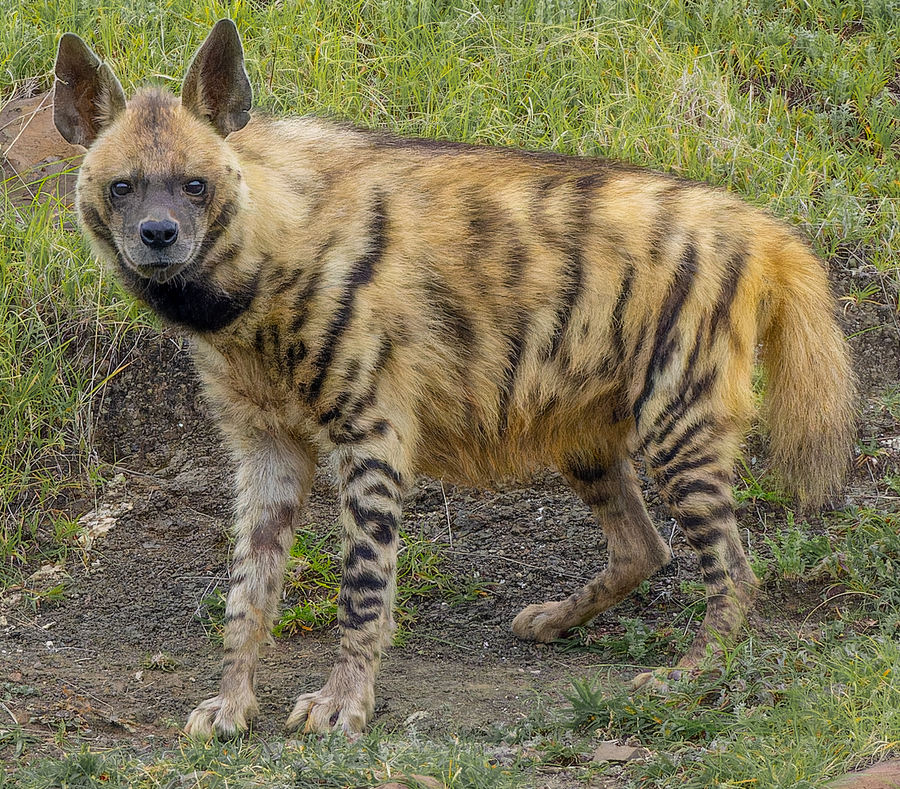
- Striped Hyena Same family
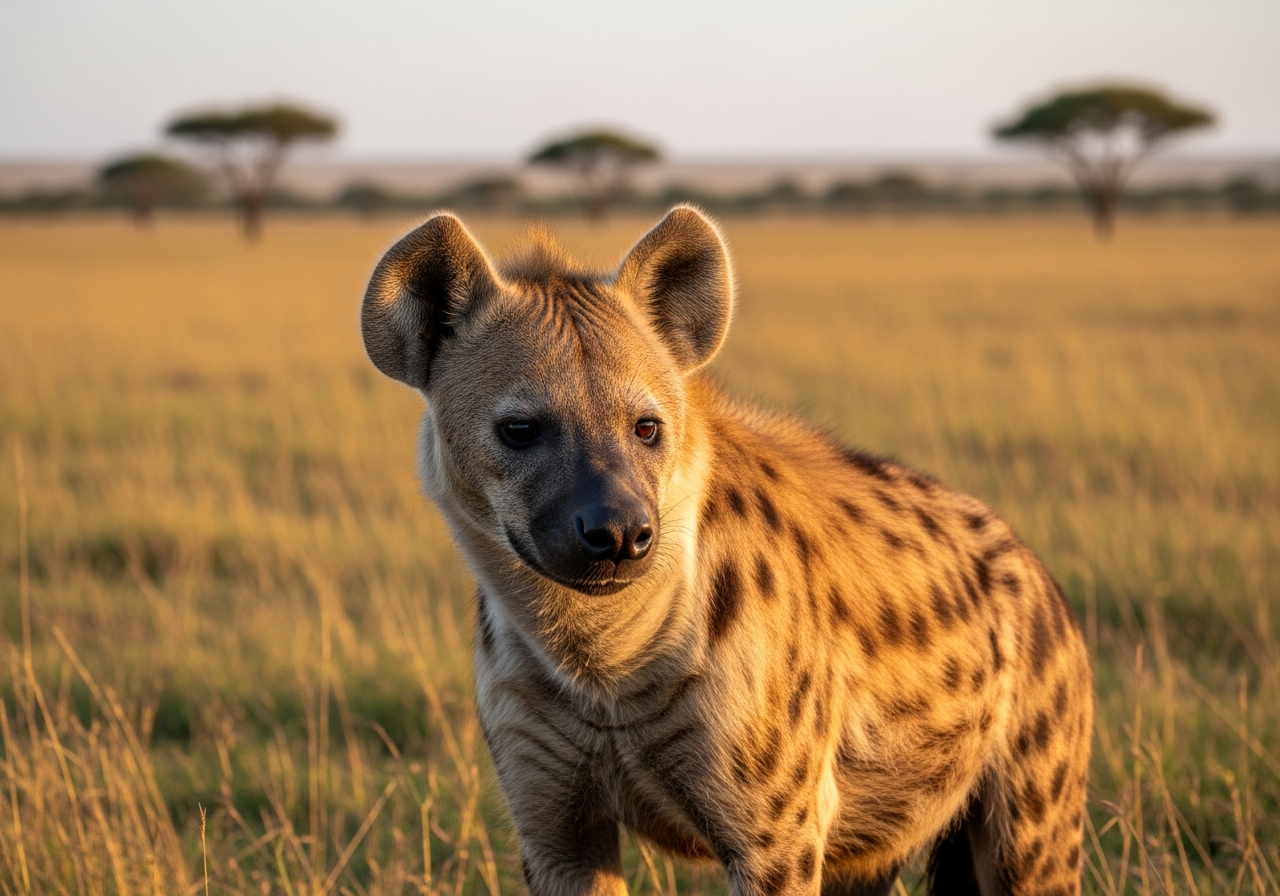
- Spotted Hyena Same family
- Lion Same order
- Dog Same order
Range & geography
Conservation status of the Aardwolf
The aardwolf (Proteles cristata) is listed as Least Concern on the IUCN Red List. Least Concern (LC) is the IUCN's lowest-risk category, assigned to widespread, abundant species that have been evaluated and found not to be threatened. It does not mean a species faces no pressures — only that it is not currently at risk of extinction.
The aardwolf (Proteles cristata) is assessed on the IUCN Red List. Look up on the IUCN Red List .
Frequently asked questions about the Aardwolf
Is an aardwolf a hyena?
Yes — it is a member of Hyaenidae, but a specialised insectivore rather than a scavenger or bone-cracker.
Do aardwolves eat carrion or livestock?
No — they are termite specialists and do not take sheep or cattle.
How many termites can an aardwolf eat?
A single animal may consume tens of thousands of termites in a night when foraging is good.
When are aardwolves active?
Mainly nocturnal and crepuscular, matching termite surface activity.
Where do aardwolves live?
Open grassland and scrub in eastern and southern Africa. Native range summary: Eastern and southern Africa in open grassland and scrub.
What is a group of aardwolves called?
A group of Aardwolves is called a pack.
What is a baby aardwolf called?
A baby Aardwolf is called a cub.
Sources & references
This guide is compiled and reviewed against established zoological and conservation references. Key sources for the Aardwolf:
-
IUCN Red List of Threatened Species
Conservation status (Least Concern) reflects the IUCN Red List category for Proteles cristata.
-
iNaturalist — observations & photos
Search citizen-science observations and community IDs for Proteles cristata. Useful for range checks and recent sightings — not a substitute for formal Red List status.
-
GBIF — occurrence data
Global Biodiversity Information Facility species search for Proteles cristata. Explore published occurrence records used in range research.
-
Global Animal Guide editorial standards
How we research, source, review, and update every guide for accuracy.