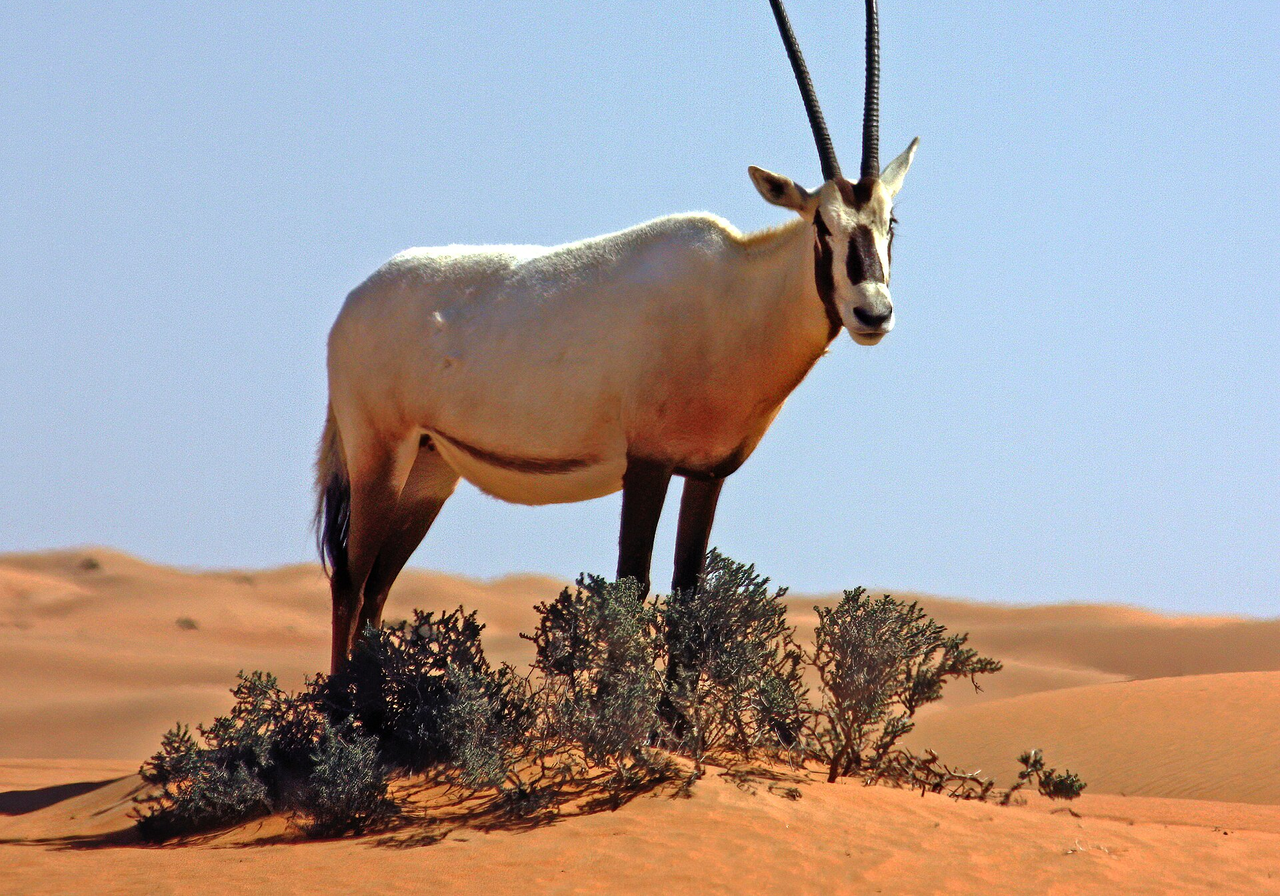
The Arabian oryx (Oryx leucoryx) is a mammal of the family Bovidae, in the order Artiodactyla.
Quick answer
The Arabian oryx (Oryx leucoryx) is a white desert antelope with long, nearly straight horns, native to the Arabian Peninsula. It weighs 100–210 kg. The last wild animals were killed in 1972, but captive-bred oryx were released in Oman from 1982 and later in Jordan and Saudi Arabia. It is now listed as Vulnerable on the IUCN Red List (assessed 2016), with a stable population.
Top questions about the Arabian Oryx
Arabian Oryx facts at a glance
- Weight 150 kg
- Length 1.9 m
- Lifespan 20 years
| Scientific name | Oryx leucoryx |
|---|---|
| Diet | Desert grasses and shrubs; melons and bulbs for moisture |
| Habitat | Arid gravel plains and sand desert |
| Shoulder height | 90–140 cm |
| Weight | 100–210 kg |
| Horns | 60–150 cm, in both sexes |
| Lifespan | 20.8 years recorded in captivity |
| Conservation status | Vulnerable (IUCN Red List, assessed 2016) |
| Kingdom | Animalia |
|---|---|
| Phylum | Chordata |
| Class | Mammalia |
| Order | Artiodactyla |
| Family | Bovidae |
| Genus | Oryx |
Where it lives
The arabian oryx (Oryx leucoryx) is native to Reintroduced in Oman, Jordan and Saudi Arabia; formerly across the Arabian Peninsula north to Syria and Iraq. — recorded across Asia in this guide’s range summary.
For occurrence records, see GBIF species search and sources below.
How big is a arabian oryx?
An adult arabian oryx measures 1.9 m long — about 1.1× the height of an average adult person (1.73 m) — and weighs around 150 kg, about 2.1× an average adult’s body weight (70 kg).
Length vs an average adult’s height (to scale)
What is a group of arabian oryxes called?
Group name (collective noun)
A group of Arabian Oryxes is called a herd.
Baby name
A baby Arabian Oryx is called a calf.
Explore more animal collective nouns and baby animal names .
Made for the desert
Arabian oryx feed on the grasses and shrubs of their arid home. When there is no free water they get moisture from melons and succulent bulbs. They can detect rain from a great distance and move towards the fresh growth, and they dig shallow hollows under shrubs to rest in.
Appearance
Both sexes carry fairly straight horns 60–150 cm long. A mane runs from the head to the shoulders, the tail is tufted and males have a tuft of hair on the throat.
Extinct in the wild, then returned
The species once ranged from Syria and Iraq through Jordan and Sinai to the Arabian Peninsula. The last known wild animals were killed in 1972. Captive herds set up from the 1950s and 1960s provided the animals released in Oman in 1982, Jordan in 1983 and central Saudi Arabia in 1990.
Status today
The IUCN Red List classes the Arabian oryx as Vulnerable, with a stable population. Animal Diversity Web put the wild population at about 500 when its account was written.
Explore the Arabian Oryx
Close relatives
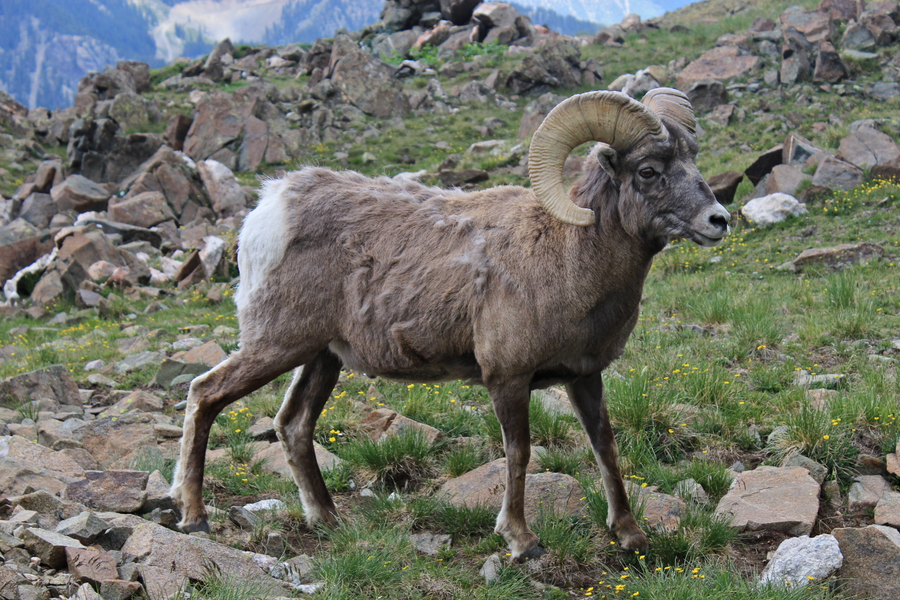
- Cow Same family
- Wildebeest Same family
- Domestic Goat Same family
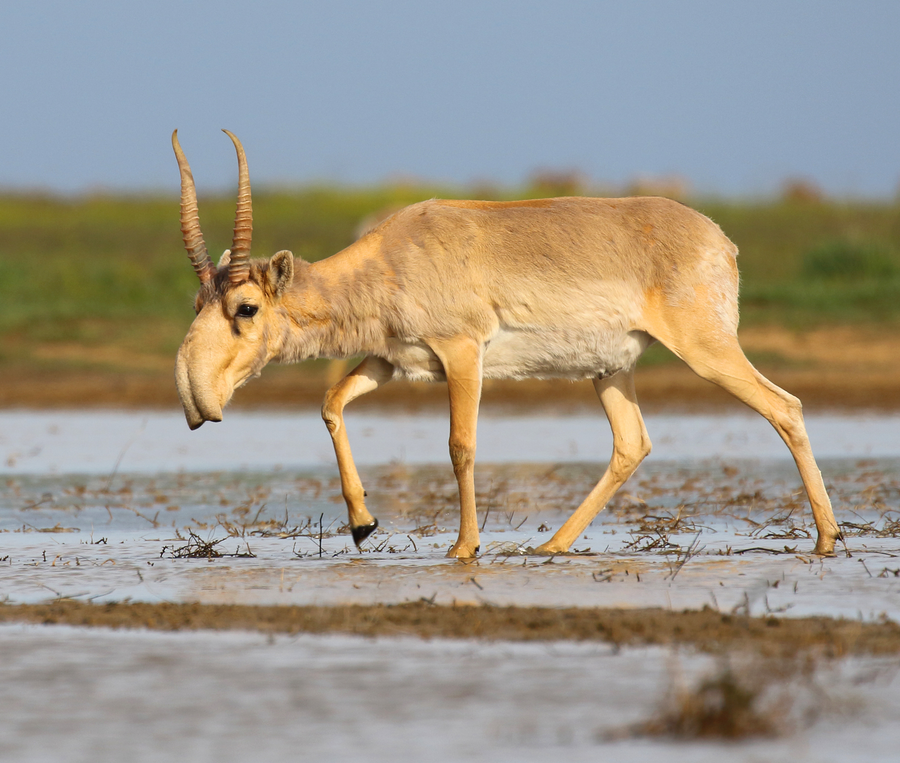
- Saiga Antelope Same family
Collections
Range & geography
Did you know? Arabian Oryx facts
- Arabian oryx can detect rainfall from a great distance and move towards it.
- Reintroductions began in Oman in 1982.
Conservation status of the Arabian Oryx
The Arabian oryx (Oryx leucoryx) is listed as Vulnerable on the IUCN Red List. Vulnerable (VU) means a species faces a high risk of extinction in the medium-term future. It is the lowest-risk of the three 'threatened' IUCN categories — one step below Endangered, which is itself below Critically Endangered — and is often an early warning that a population is in trouble.
Arabian Oryx (Oryx leucoryx) was most recently assessed for the IUCN Red List in 2016. View the full IUCN assessment .
Frequently asked questions about the Arabian Oryx
Did the Arabian oryx go extinct?
It became extinct in the wild: the last wild animals were killed in 1972. Captive-bred oryx were released from 1982 and the species now lives wild again.
How does an Arabian oryx survive without water?
It gets moisture from desert plants, including melons and succulent bulbs, and moves towards areas where rain has fallen.
Is the Arabian oryx endangered?
It is listed as Vulnerable on the IUCN Red List (assessed 2016), with a stable population.
What is a group of arabian oryxes called?
A group of Arabian Oryxes is called a herd.
What is a baby arabian oryx called?
A baby Arabian Oryx is called a calf.
Sources & references
This guide is compiled and reviewed against established zoological and conservation references. Key sources for the Arabian Oryx:
-
IUCN Red List of Threatened Species
Conservation status (Vulnerable) reflects the IUCN Red List category for Oryx leucoryx, most recently assessed in 2016.
-
iNaturalist — observations & photos
Search citizen-science observations and community IDs for Oryx leucoryx. Useful for range checks and recent sightings — not a substitute for formal Red List status.
-
GBIF — occurrence data
Global Biodiversity Information Facility species search for Oryx leucoryx. Explore published occurrence records used in range research.
- IUCN Red List of Threatened Species: Oryx leucoryx (assessed 2016). Checked 16 November 2026.
IUCN Red List category Vulnerable, assessed 2016; population trend stable; native range.
- Animal Diversity Web: Oryx leucoryx. University of Michigan Museum of Zoology.
Size, lifespan, range, diet and behaviour.
-
Global Animal Guide editorial standards
How we research, source, review, and update every guide for accuracy.