Quick ID workflow
- Estimate the size: Compare to a house sparrow (small), robin (medium), or crow (large) as your reference point.
- Study the head and breast: Bright red on a crested bird points to a cardinal; all-yellow males are goldfinches; black bibs and caps mark male house sparrows.
- Check the bill: Heavy conical bills crack seeds; slender pointed bills suit insects; short stout bills on woodpeckers chisel bark.
- Watch where it feeds: Ground doves, platform-cardinal visitors, hanging finches, and trunk-clinging woodpeckers each prefer different stations.
- Listen for the call: Distinctive songs and chips confirm ID — chickadees say their name; cardinals whistle a clear 'cheer-cheer'.
10 common US feeder birds
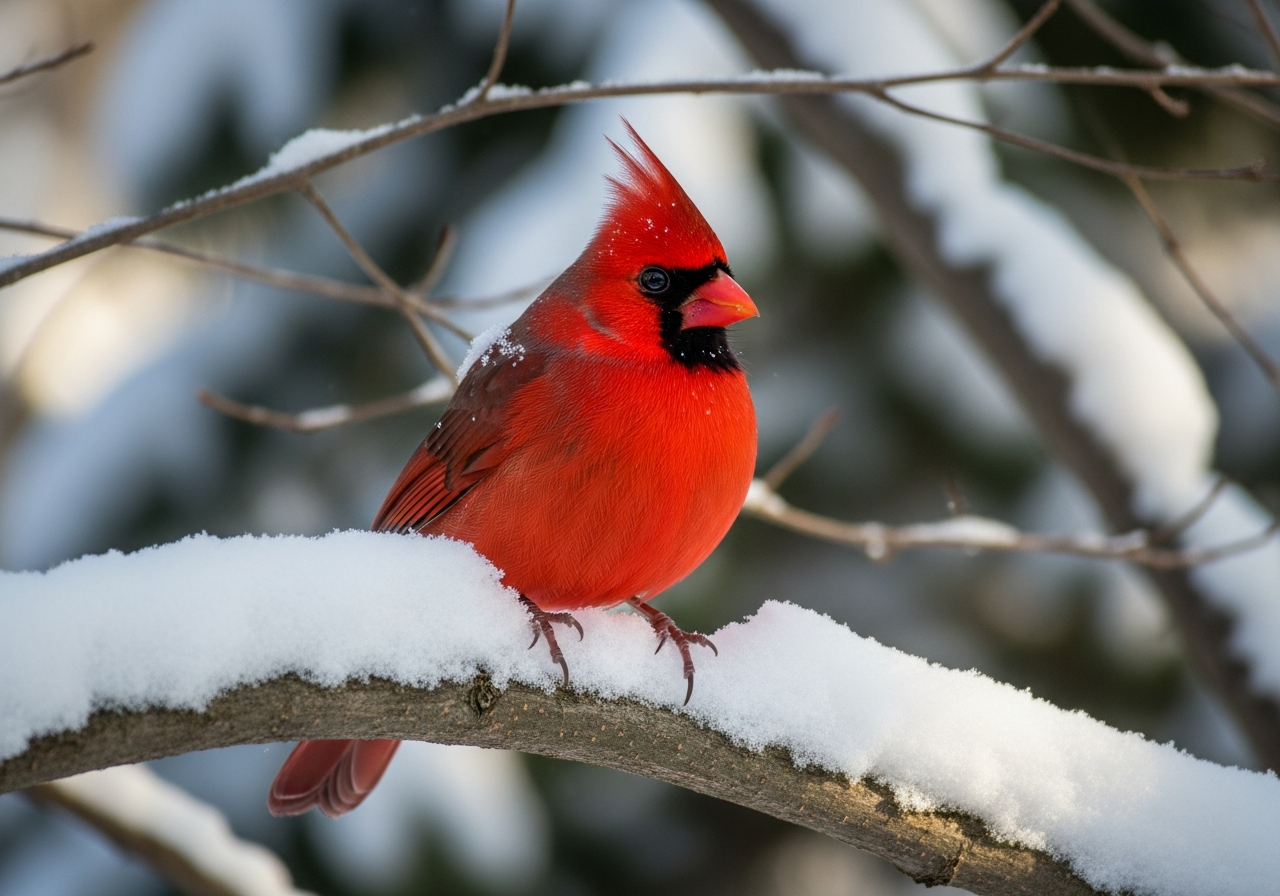
Northern Cardinal
Cardinalis cardinalis- Size
- Medium (~21 cm)
- Key marks
- Male all red with black face mask and crest; female warm brown with red wings, tail, and crest
- Sound
- Clear whistled 'cheer-cheer-cheer' or 'birdie-birdie-birdie'
- When
- Year-round across eastern and central US; pairs defend territory
- Food at feeders
- Sunflower seeds, safflower, cracked corn — visits platform and hopper feeders
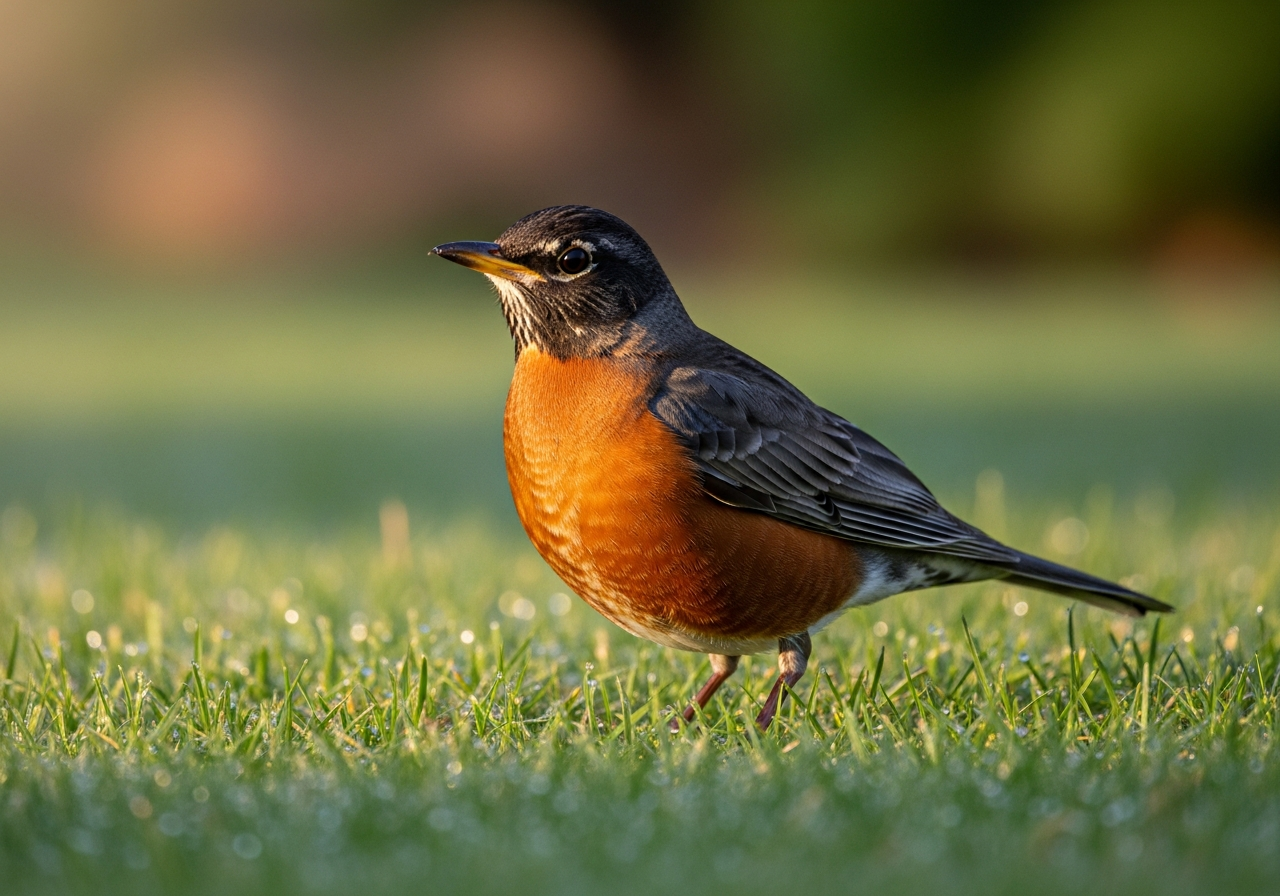
American Robin
Turdus migratorius- Size
- Medium (~25 cm)
- Key marks
- Orange-red breast, dark head, yellow bill, grey-brown back; often seen hopping on lawns
- Sound
- Cheerful caroling at dawn; sharp 'yeek' alarm call
- When
- Year-round in much of the US; northern birds migrate south in winter
- Food at feeders
- Worms and fruit on lawns; rarely visits seed feeders but drinks from bird baths
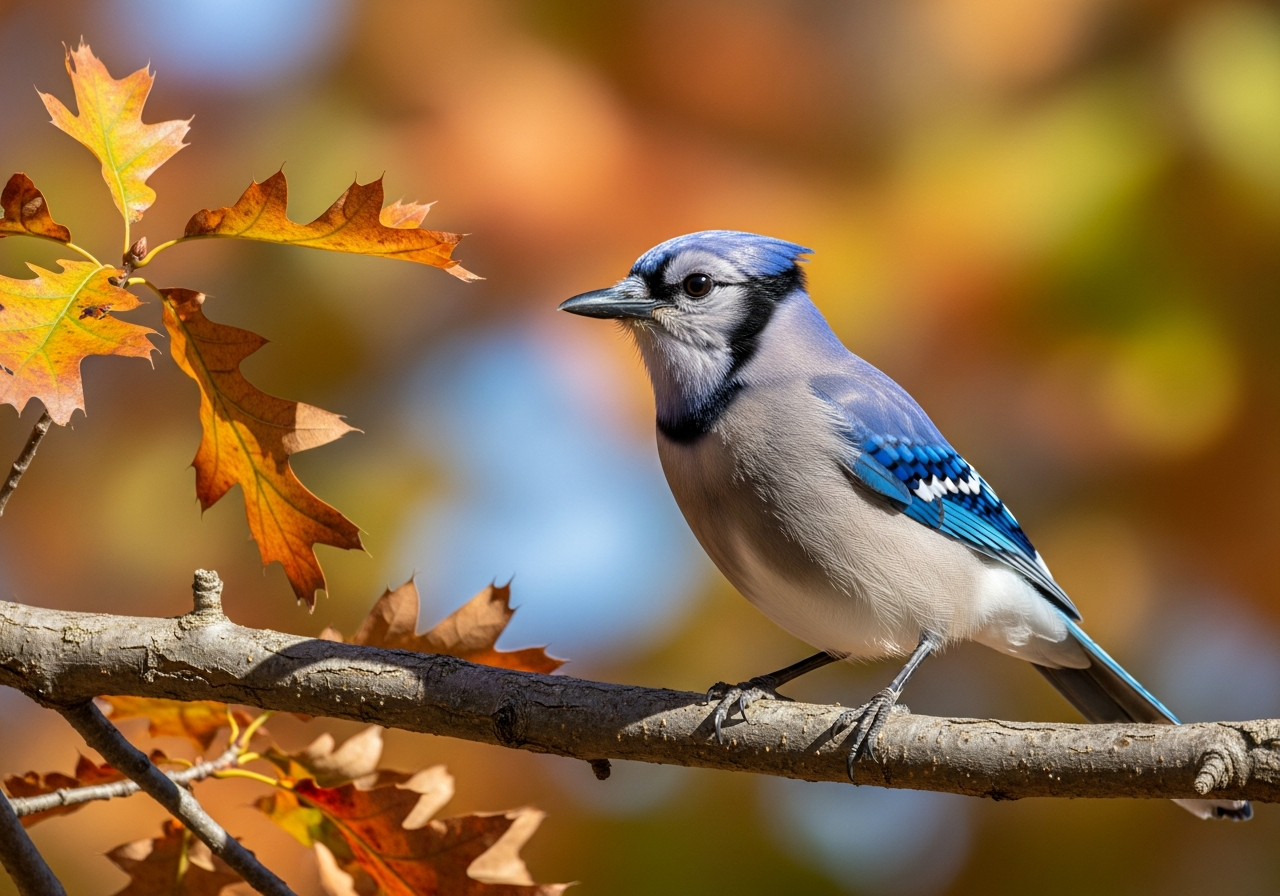
Blue Jay
Cyanocitta cristata- Size
- Large (~30 cm)
- Key marks
- Bright blue above, white face and throat, black collar, blue crest; white wing and tail spots in flight
- Sound
- Harsh 'jay-jay' scream; quiet whistled notes and mimicry
- When
- Year-round in eastern and central US; flocks roam in fall
- Food at feeders
- Peanuts, sunflower seeds, acorns — bold at platform feeders
House Finch
Haemorhous mexicanus- Size
- Small (~14 cm)
- Key marks
- Male rosy-red head and breast (streaky on flanks); female streaky brown with thick conical bill
- Sound
- Warbling song ending in a rising 'zree'; sharp 'cheep' calls
- When
- Year-round across most of the US; common at suburban feeders
- Food at feeders
- Nyjer, sunflower hearts, millet — perches on tube and sock feeders
Mourning Dove
Zenaida macroura- Size
- Medium (~30 cm)
- Key marks
- Slim tan-grey body, small head, long pointed tail with white outer feathers; soft appearance
- Sound
- Mournful cooing 'coo-OO-oo-oo-oo'
- When
- Year-round in most of the US; pairs nest in shrubs and evergreens
- Food at feeders
- Millet and cracked corn on ground trays and beneath hanging feeders
Downy Woodpecker
Dryobates pubescens- Size
- Small (~17 cm) — smallest US woodpecker
- Key marks
- Black-and-white barred back; male has red nape patch; short bill (shorter than head width)
- Sound
- Rapid 'pik' calls; descending whinny
- When
- Year-round across most of the US; visits suet in winter
- Food at feeders
- Suet, peanuts, sunflower — clings to feeders and tree trunks
Black-capped Chickadee
Poecile atricapillus- Size
- Very small (~13 cm)
- Key marks
- Black cap and bib, white cheeks, soft grey back; often hangs upside down
- Sound
- Namesake 'chick-a-dee-dee-dee'; sweet 'fee-bee' song
- When
- Year-round in northern and central US; southern limit roughly mid-Appalachia
- Food at feeders
- Sunflower seeds, suet, peanuts — takes one seed and flies off to hammer it open
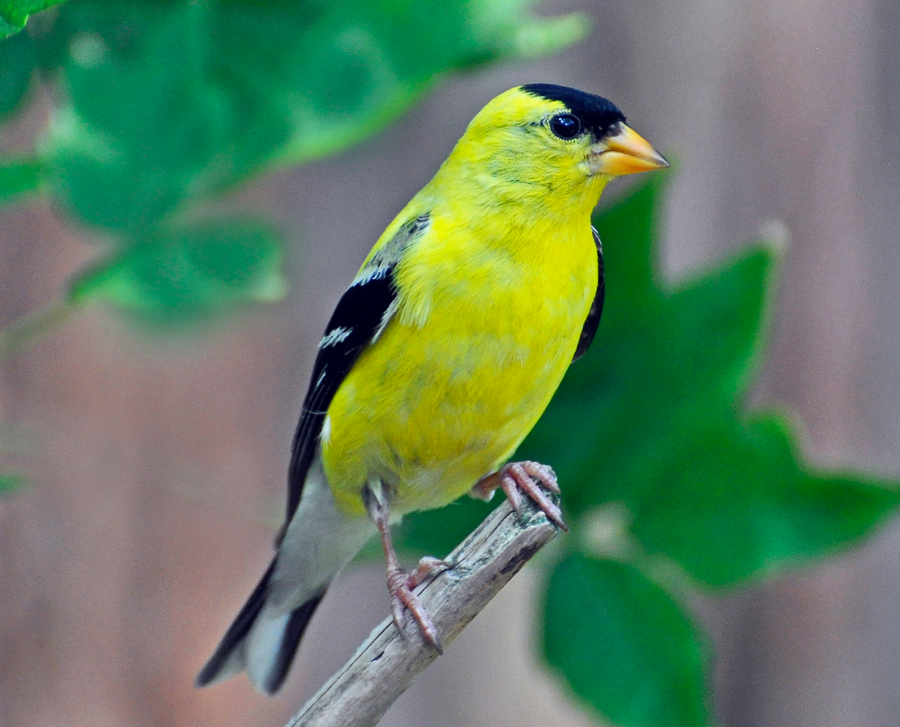
American Goldfinch
Spinus tristis- Size
- Small (~12 cm)
- Key marks
- Breeding male bright yellow with black cap and wings; winter birds dull olive-brown with wing bars
- Sound
- Sweet 'per-chick-o-ree' flight call; twittering song in summer
- When
- Year-round in much of the US; northern birds move south in winter; moults to yellow in spring
- Food at feeders
- Nyjer and sunflower hearts — acrobatic on finch socks and perches
Red-winged Blackbird
Agelaius phoeniceus- Size
- Medium (~22 cm)
- Key marks
- Male glossy black with red-and-yellow shoulder patches (epaulets); female streaky brown
- Sound
- Conk-la-ree! song from cattails and shrubs; sharp 'check' calls
- When
- Year-round in southern US; migrates north in spring to breed in wetlands and suburbs
- Food at feeders
- Cracked corn and millet on ground feeders; also forages in open yards
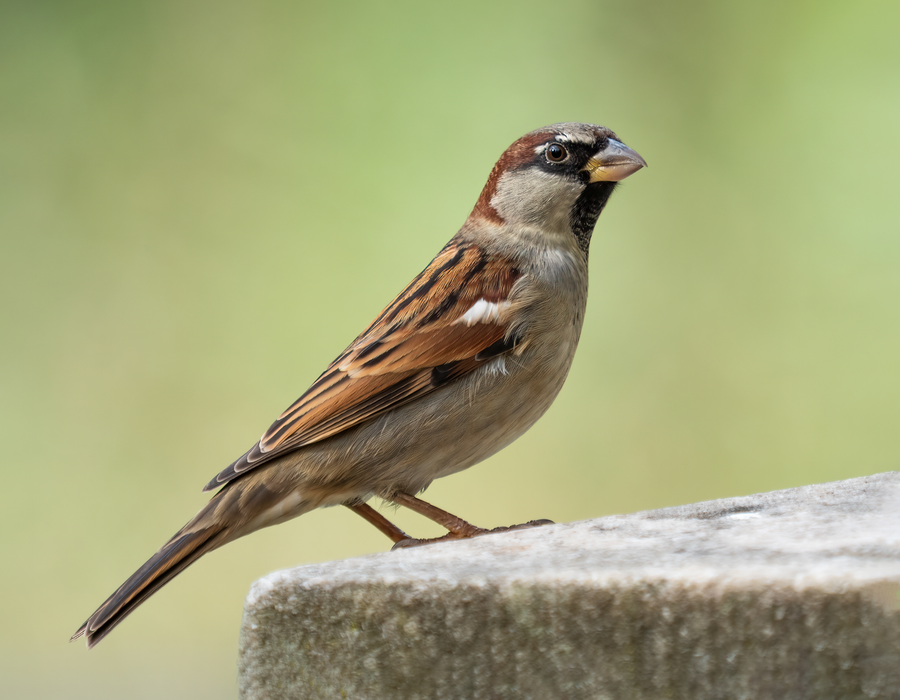
House Sparrow
Passer domesticus- Size
- Small (~16 cm)
- Key marks
- Chunky; male grey cap, black bib, chestnut nape; female plain buff-brown with pale eyebrow
- Sound
- Noisy chirping from bushes and eaves
- When
- Year-round across the US; introduced species, common near buildings
- Food at feeders
- Millet, crumbs, sunflower — prefers low feeders and ground scatter
Similar species — don't mix them up
- House finch vs purple finch: House finches have streaky flanks and a more curved bill; purple finches look raspberry-red overall with less streaking below.
- Downy vs hairy woodpecker: Downies are smaller with a short bill; hairies are larger with a bill as long as the head.
- Chickadee vs titmouse: Black-capped chickadees have a black bib; tufted titmice are grey above with a crest and no bib.
- Mourning dove vs Eurasian collared dove: Collared doves are larger and paler with a narrow black neck ring; mourning doves have pointed tails with white edges.
Attract and help backyard birds
Native plants such as coneflower, serviceberry, and oak provide natural food and cover. Keep cats indoors at dawn and dusk, offer a heated bird bath in winter, and join citizen science projects like Project FeederWatch to help track population trends across North America.
Backyard bird ID: FAQs
What are the most common birds at US feeders?
Project FeederWatch and backyard surveys regularly record northern cardinals, mourning doves, house finches, downy woodpeckers, and house sparrows among the top visitors. Exact rankings shift by region and season, but these five appear at most suburban feeders stocked with sunflower and suet.
How can I tell a male cardinal from a female?
Males are vivid red all over with a black face mask and crest. Females are mostly warm brown with red accents on the wings, tail, and crest — still unmistakably cardinals once you notice the thick orange-red bill and crest shape.
Is it a downy or a hairy woodpecker?
Downy woodpeckers are smaller with a bill shorter than the head is wide. Hairy woodpeckers are noticeably larger with a longer, chisel-like bill roughly equal to head length. At a feeder, downies are far more common in backyards.
Why do goldfinches look dull in winter?
American goldfinches moult into olive-brown plumage for winter, keeping only faint wing bars. By late spring males turn bright yellow again — one of the latest nesting birds in North America, often waiting until thistle seeds ripen.
What should I feed backyard birds?
Sunflower hearts, nyjer for finches, suet for woodpeckers and chickadees, and cracked corn for doves work well. Avoid bread and salty scraps. Provide fresh water year-round and scrub feeders every one to two weeks to reduce salmonella spread.
Sources & references
Identification marks and calls are compiled from established field guides and ornithological references for North America.
-
RSPB wildlife guides
UK and international bird identification.
-
Cornell Lab — All About Birds
Photos, calls, and ID tips for North American species.
-
iNaturalist
Community-verified species observations worldwide.
- Global Animal Guide editorial standards