Quick ID workflow
- Estimate the size: Compare to a chickadee (very small), robin (medium), or raven (large).
- Note the season: Many Canadian birds look different in winter — juncos arrive, waxwings wander, and goldfinches moult to olive-brown.
- Check head pattern: Black-capped chickadees have a black bib; Canada jays are grey with no crest; dark-eyed juncos have hoods.
- Watch feeding style: Chickadees grab one seed and fly off; jays store food; waxwings swallow berries whole in flocks.
- Listen for the call: Chickadees say their name; ravens croak deeply; waxwings trill softly in flocks.
10 common Canadian feeder birds
Black-capped Chickadee
Poecile atricapillus- Size
- Very small (~13 cm)
- Key marks
- Black cap and bib, white cheeks, grey back; hangs upside down at feeders
- Sound
- Namesake 'chick-a-dee-dee-dee'; sweet 'fee-bee' song
- When
- Year-round across Canada; provincial bird of New Brunswick
- Food at feeders
- Sunflower seeds, suet, peanuts — takes one seed and flies off to open it
Canada Jay
Perisoreus canadensis- Size
- Medium (~30 cm)
- Key marks
- Soft grey above, lighter grey below; no crest; bold and quiet in boreal forest and mountain camps
- Sound
- Soft whistles and chucks; less raucous than blue jay
- When
- Year-round in Canadian boreal and mountain forests; also called gray jay or whisky jack
- Food at feeders
- Berries, insects, scraps — caches food in bark crevices
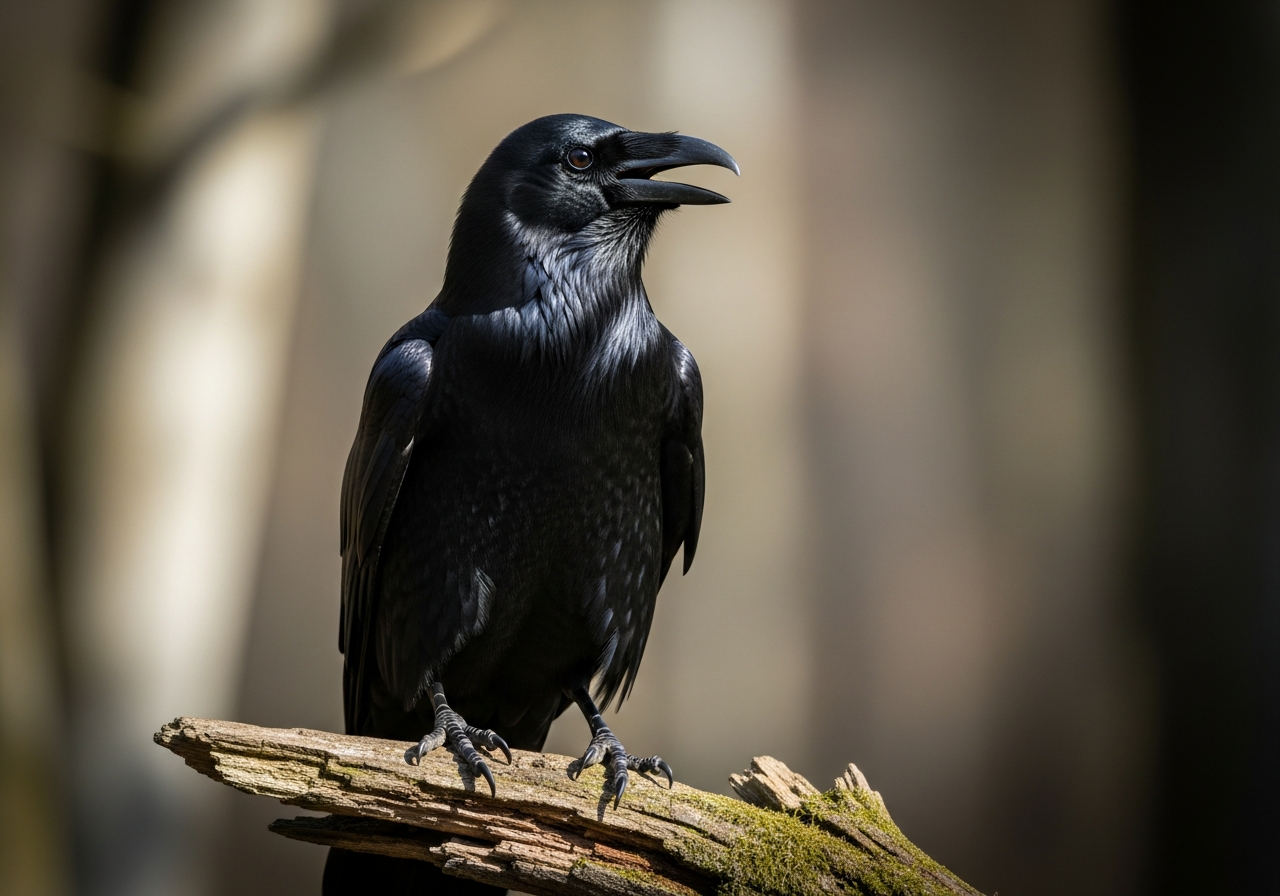
Common Raven
Corvus corax- Size
- Very large (~63 cm)
- Key marks
- All black with wedge-shaped tail and thick neck; soars on flat wings; much larger than crow
- Sound
- Deep resonant 'kraa' — lower and hoarser than crow
- When
- Year-round across Canada; pairs defend large territories
- Food at feeders
- Omnivorous — carrion, eggs, scraps; rarely at feeders but visits campsites
Dark-eyed Junco
Junco hyemalis- Size
- Small (~16 cm)
- Key marks
- Slate-grey hood and back, white belly, pink bill; flashes white outer tail feathers in flight
- Sound
- Hard 'tick' calls; trilling song on breeding grounds
- When
- Breeds in Canadian forests; winters at southern feeders across Canada and US
- Food at feeders
- Millet and cracked corn on ground trays — 'snowbirds' of winter feeders
Cedar Waxwing
Bombycilla cedrorum- Size
- Medium (~18 cm)
- Key marks
- Sleek brown-grey with black mask, crest, yellow tail tip, and red waxy wing tips
- Sound
- High thin trills; no song — flocks are quiet until calling in flight
- When
- Year-round in southern BC; summer breeder across Canada; irruptive in winter
- Food at feeders
- Berries and fruit — visits mountain ash and crabapple; rarely takes seed
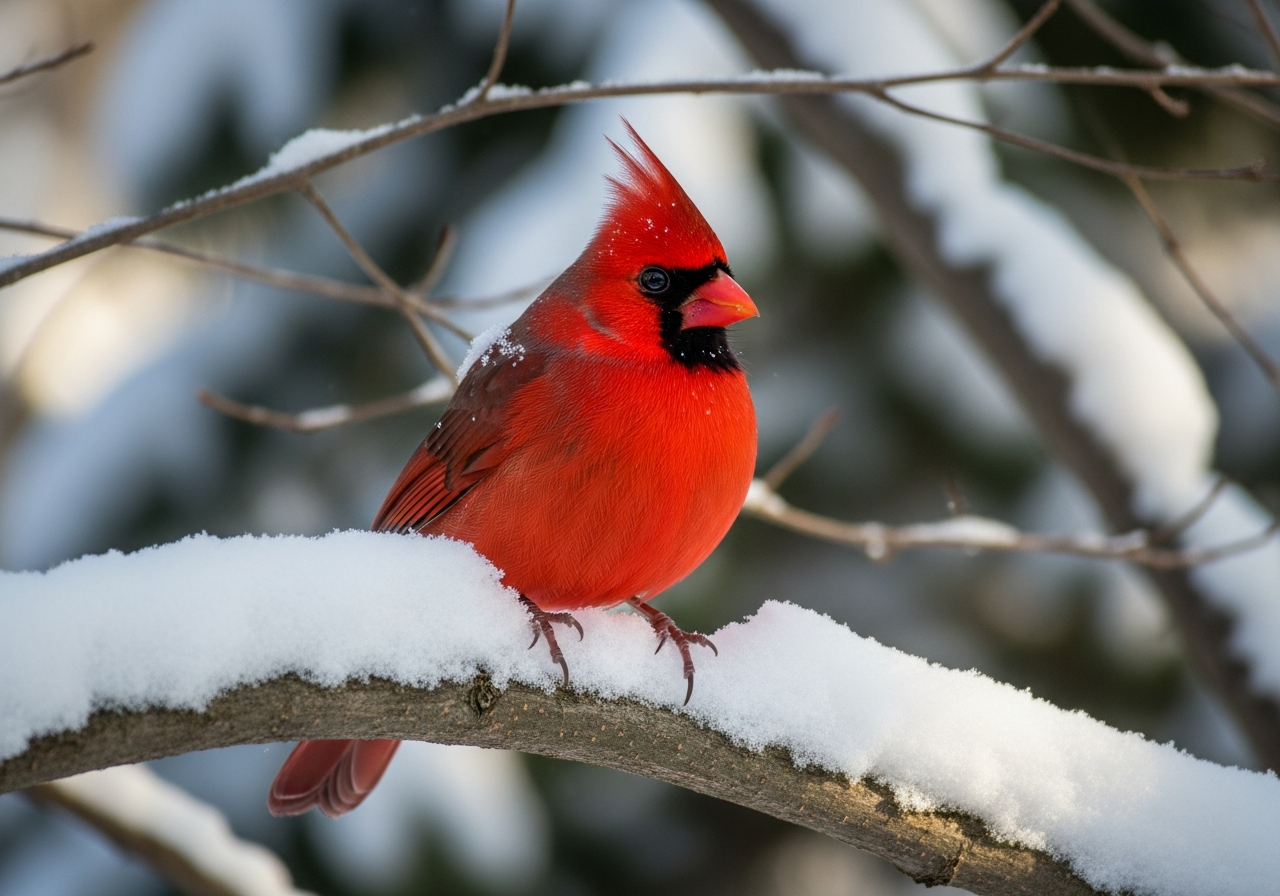
Northern Cardinal
Cardinalis cardinalis- Size
- Medium (~21 cm)
- Key marks
- Male bright red with crest and black face; female warm brown with red accents
- Sound
- Clear whistled 'cheer-cheer-cheer'
- When
- Year-round in southern Ontario and east; north edge of range in Canada
- Food at feeders
- Sunflower and safflower on platform feeders
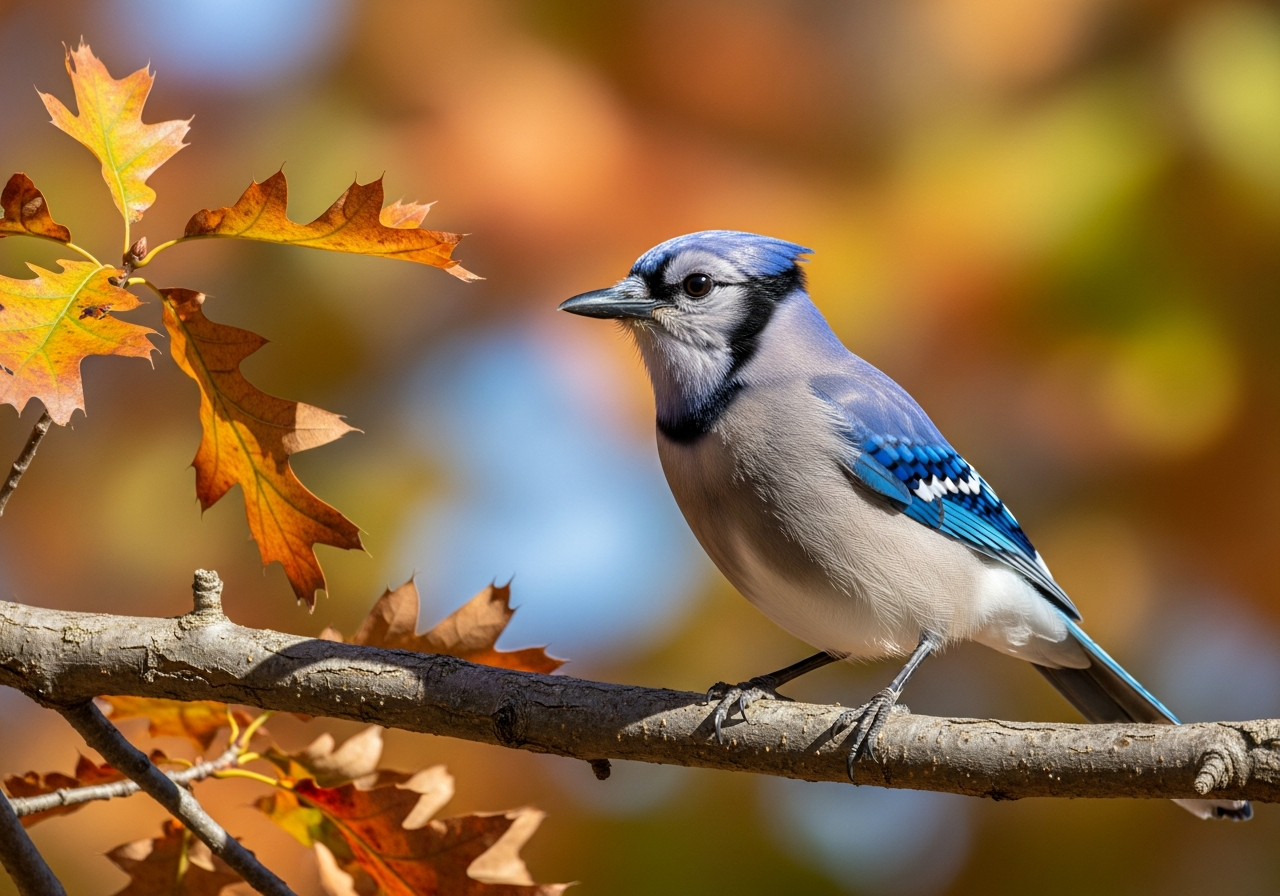
Blue Jay
Cyanocitta cristata- Size
- Large (~30 cm)
- Key marks
- Bright blue, white face, black collar, blue crest; white wing spots in flight
- Sound
- Harsh 'jay-jay' scream; quiet whistled notes
- When
- Year-round across southern Canada; migratory in far north
- Food at feeders
- Peanuts, sunflower, acorns — bold at platform feeders
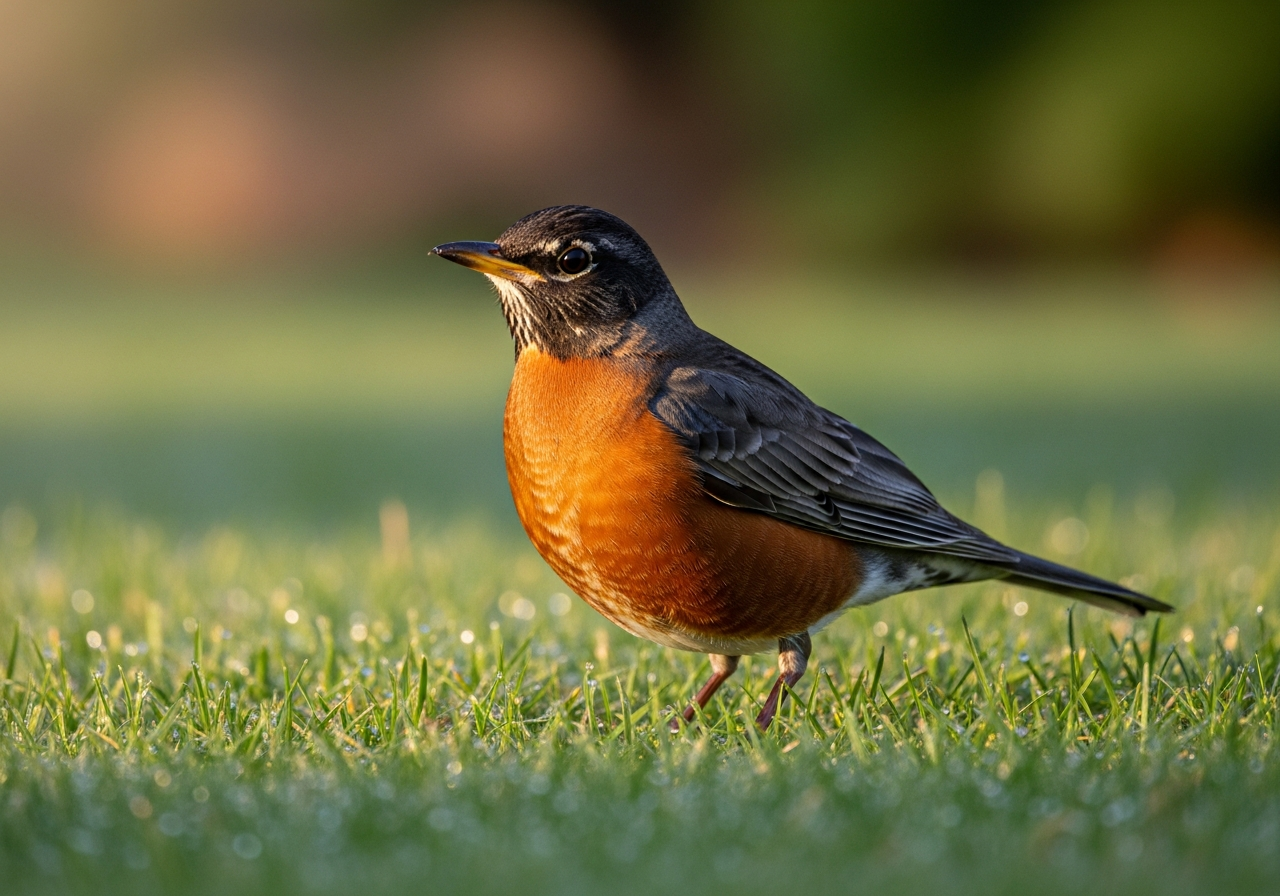
American Robin
Turdus migratorius- Size
- Medium (~25 cm)
- Key marks
- Orange-red breast, dark head, yellow bill; hops on lawns after rain
- Sound
- Cheerful caroling at dawn; sharp 'yeek' alarm
- When
- Year-round in southern Canada; northern breeders migrate south
- Food at feeders
- Worms and fruit on lawns — drinks from bird baths
Red-winged Blackbird
Agelaius phoeniceus- Size
- Medium (~22 cm)
- Key marks
- Male glossy black with red-and-yellow shoulder patches; female streaky brown
- Sound
- Conk-la-ree! song from cattails and shrubs
- When
- Summer breeder across Canada; winters in southern Canada and US
- Food at feeders
- Cracked corn on ground feeders; forages in wetlands
Pine Grosbeak
Pinicola enucleator- Size
- Medium-large (~20 cm)
- Key marks
- Plump finch; males rose-red, females olive-yellow; thick bill; tame in winter
- Sound
- Soft whistled notes; slow undulating flight
- When
- Year-round in Canadian boreal forest; irrupts south in harsh winters
- Food at feeders
- Seeds and buds — visits fruit trees and sunflower feeders in irruption years
Canadian backyard bird ID: FAQs
What birds are most common at Canadian feeders?
Black-capped chickadees appear at feeders in every province. Dark-eyed juncos dominate winter feeding stations in much of Canada, while blue jays, nuthatches, and woodpeckers are regular visitors where suet is offered.
What is a whisky jack?
Whisky jack is a traditional name for the Canada jay (formerly gray jay) — a bold, soft-grey bird of boreal and mountain forests that caches food and approaches campsites.
How do I tell a raven from a crow in Canada?
Ravens are much larger with a wedge-shaped tail, shaggy throat feathers, and a deep croak. American crows are smaller with a fan-shaped tail and higher 'caw' — common in southern Canada only.
Why do juncos only appear in winter?
Dark-eyed juncos breed in Canadian forests and move to suburban feeders when snow covers ground food. Their arrival is a classic sign of winter for many Canadian backyards.
Sources & references
Identification marks and calls are compiled from established field guides and ornithological references for Canada.
-
RSPB wildlife guides
UK and international bird identification.
-
Cornell Lab — All About Birds
Photos, calls, and ID tips for North American species.
-
iNaturalist
Community-verified species observations worldwide.
- Global Animal Guide editorial standards