Quick ID workflow
- Note the size: Compare to a house sparrow (small), blackbird (medium), or wood pigeon (large) as your yardstick.
- Check the beak: Thin pointed beaks suit insects and seeds; heavy conical beaks crack seeds; slender curved beaks probe flowers.
- Look at the tail and wings: White wing bars, forked tails, and red patches on wings or breast are strong field marks.
- Watch behaviour: Ground-feeding blackbirds, acrobatic tits on feeders, and hovering goldfinches on teasels each behave distinctively.
- Listen for the call: Song and contact calls confirm ID — robins sing year-round; great tits shout a loud 'teacher-teacher'.
10 common UK garden birds
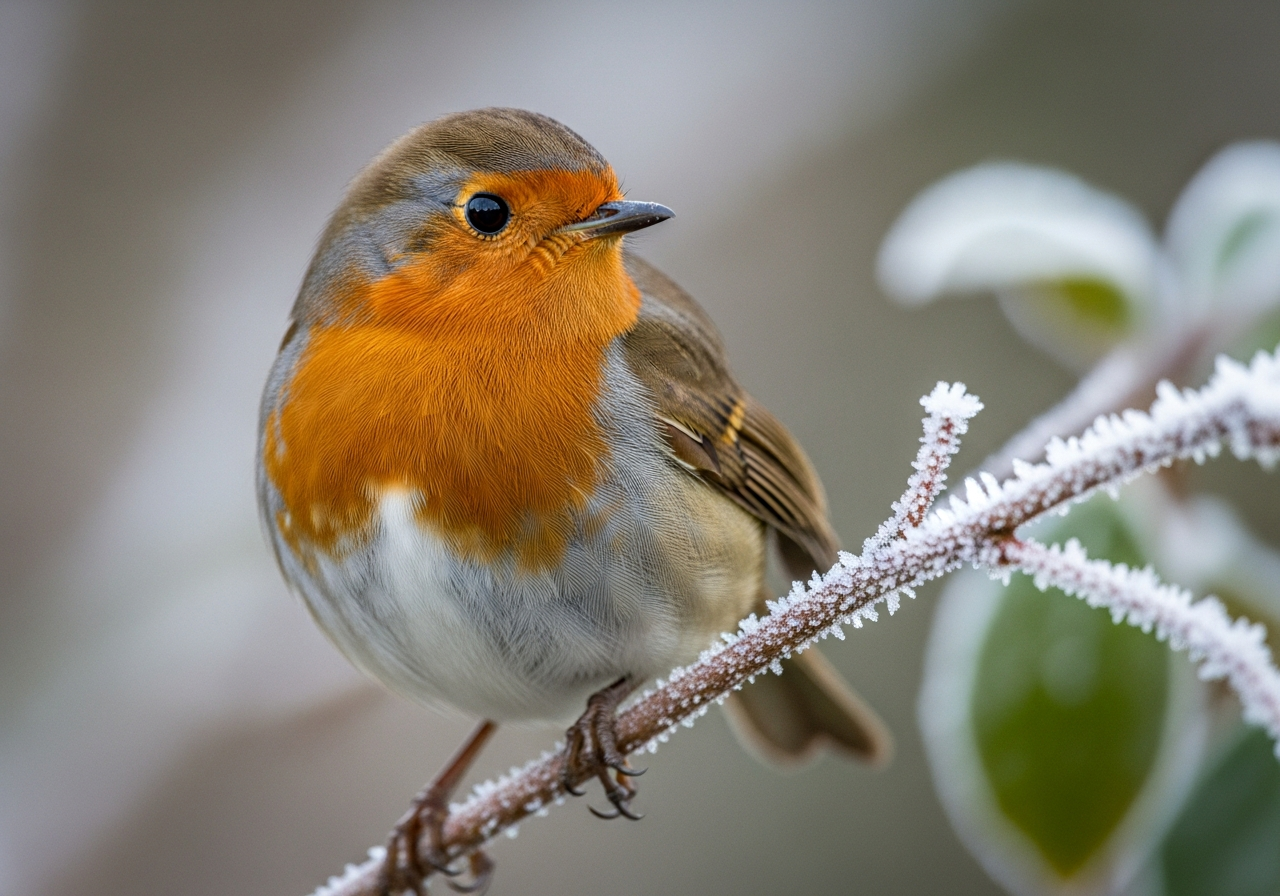
Robin
Erithacus rubecula- Size
- Small (~14 cm)
- Key marks
- Orange-red breast and face; brown upperparts; often tame on lawns and paths
- Sound
- Melodic, wistful song year-round; sharp 'tic' call
- When
- All year — one of the few birds singing in winter
- Food in gardens
- Worms, insects, berries; visits mealworm trays
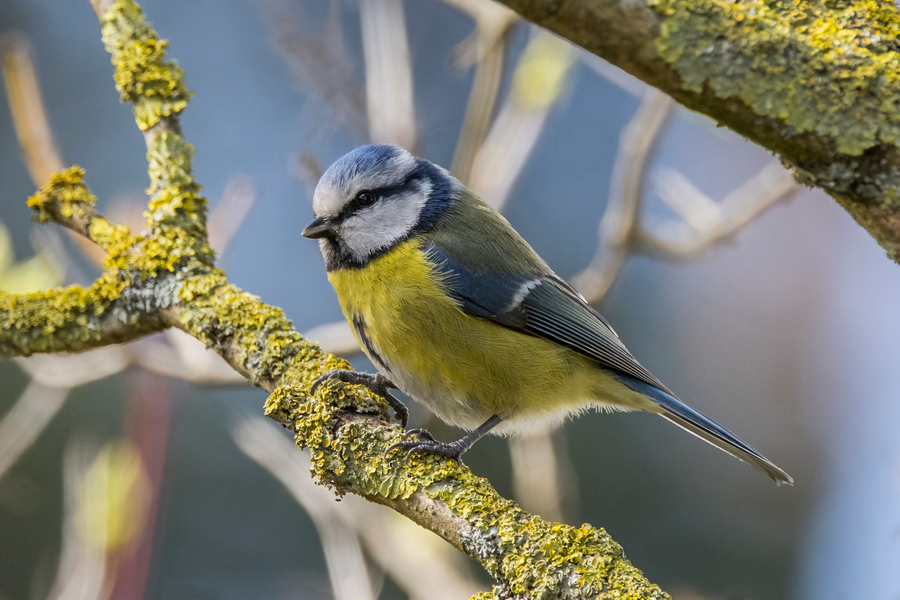
Blue Tit
Cyanistes caeruleus- Size
- Very small (~12 cm)
- Key marks
- Blue cap, white face with dark eye-stripe, yellow breast, blue wings and tail
- Sound
- High 'tsee-tsee'; trilling song in spring
- When
- All year; nests in boxes and holes
- Food in gardens
- Insects, seeds, fat balls — agile on hanging feeders
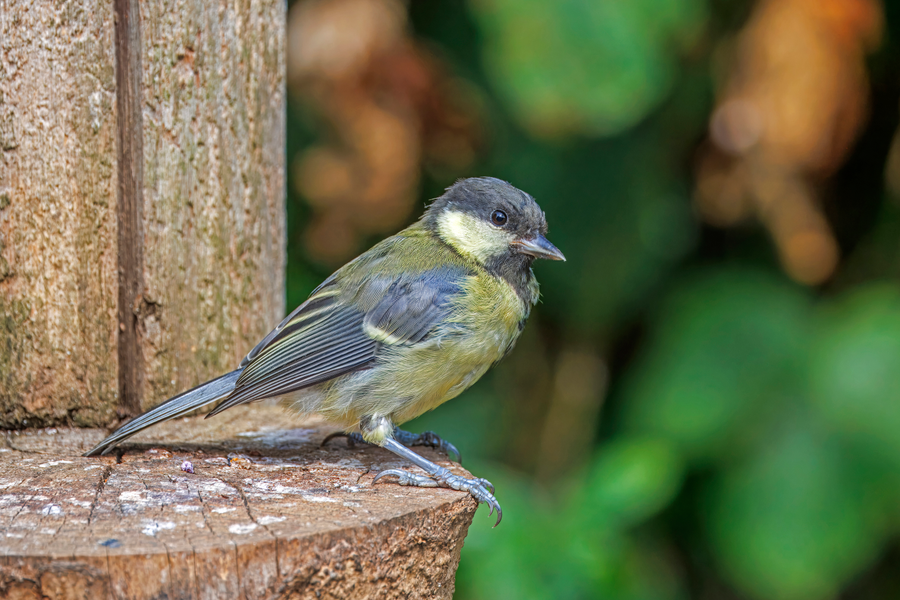
Great Tit
Parus major- Size
- Small (~14 cm) — largest UK tit
- Key marks
- Black head with white cheeks, green back, yellow breast with black stripe down centre
- Sound
- Loud 'teacher-teacher' song; varied calls
- When
- All year; common in woodland edge gardens
- Food in gardens
- Insects, seeds, nuts — strong bill opens peanuts
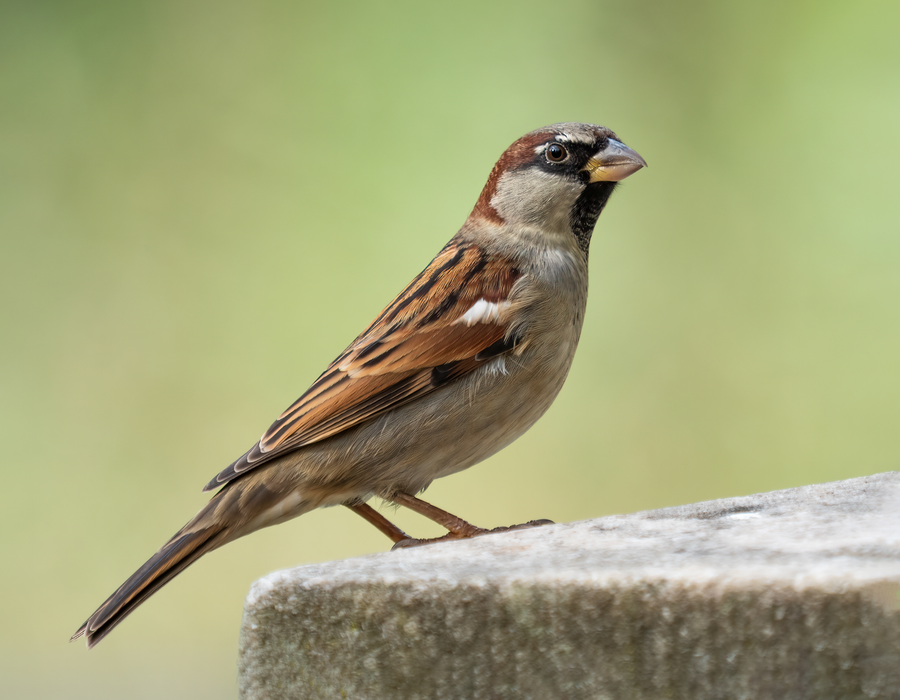
House Sparrow
Passer domesticus- Size
- Small (~14 cm)
- Key marks
- Chunky; male has grey cap, black bib, brown back; female streaky brown
- Sound
- Noisy chirping from bushes and rooflines
- When
- All year; sociable in flocks
- Food in gardens
- Seeds, crumbs, insects — prefers low feeders and ground
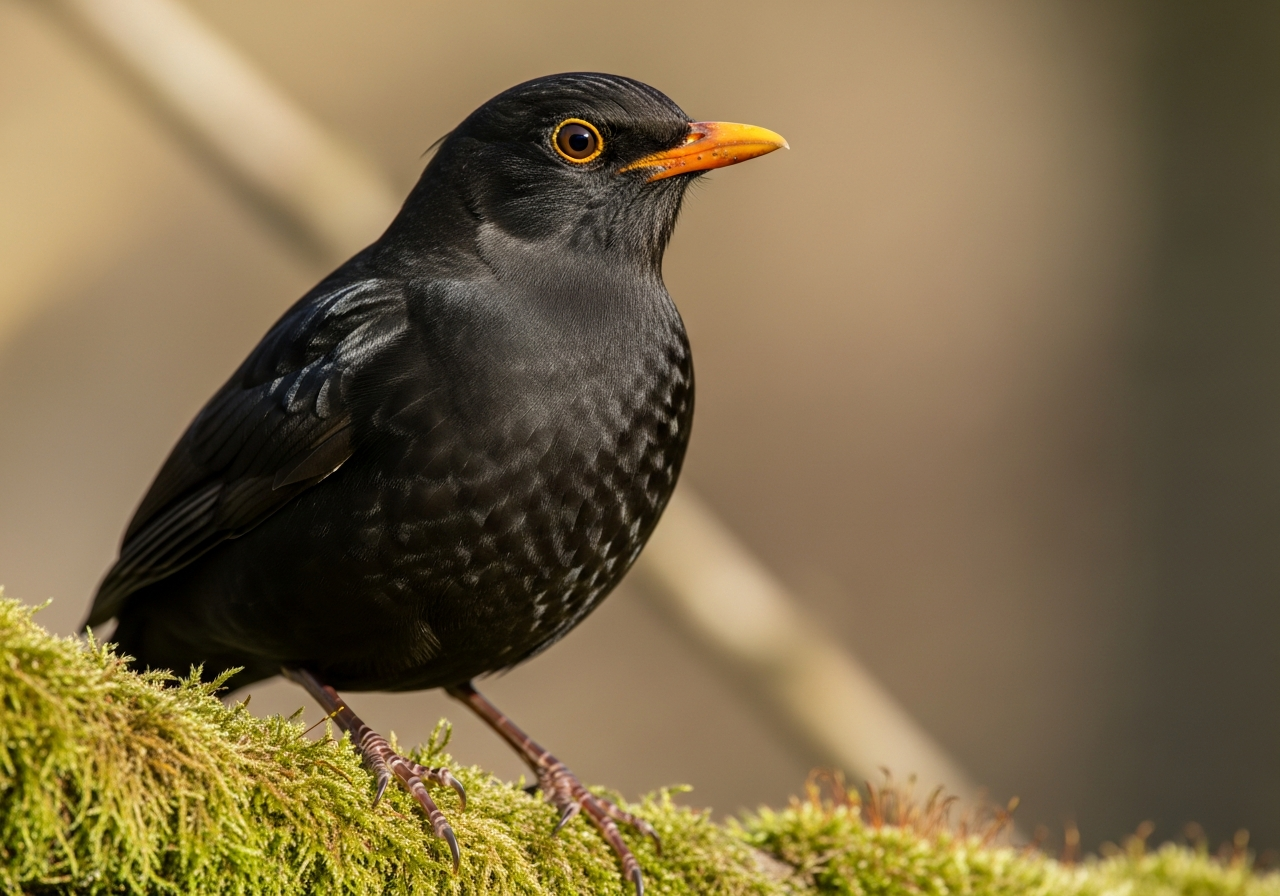
Blackbird
Turdus merula- Size
- Medium (~25 cm)
- Key marks
- Male all black with yellow-orange bill and eye-ring; female dark brown
- Sound
- Rich fluting song at dusk; loud alarm 'cluck-cluck'
- When
- All year; nests in hedges and climbers
- Food in gardens
- Worms and fruit — runs then pauses on lawns
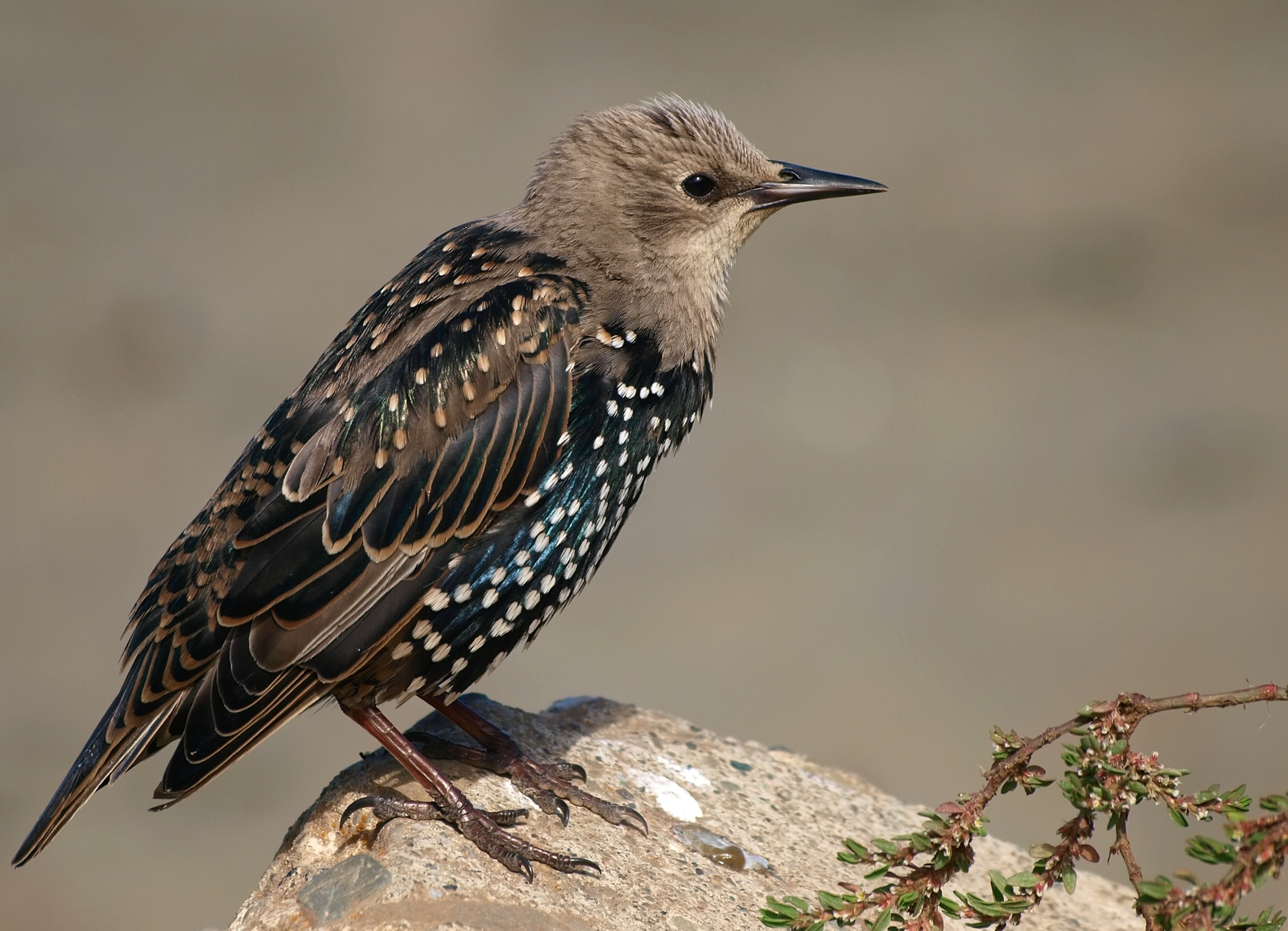
Starling
Sturnus vulgaris- Size
- Medium (~22 cm)
- Key marks
- Dark with speckled winter spots; iridescent purple-green sheen in summer; short tail, pointed wings
- Sound
- Whistles, clicks, and mimicry — noisy murmurations in winter
- When
- All year; flocks swell in autumn and winter
- Food in gardens
- Insects, fruit, suet — gregarious on lawns
Goldfinch
Carduelis carduelis- Size
- Small (~12 cm)
- Key marks
- Red face, black-and-white head, gold wing bars, buff underparts
- Sound
- Liquid 'tswitt-witt-witt' flight call
- When
- All year; more visit gardens in winter
- Food in gardens
- Nyjer and sunflower hearts — hangs on seed heads
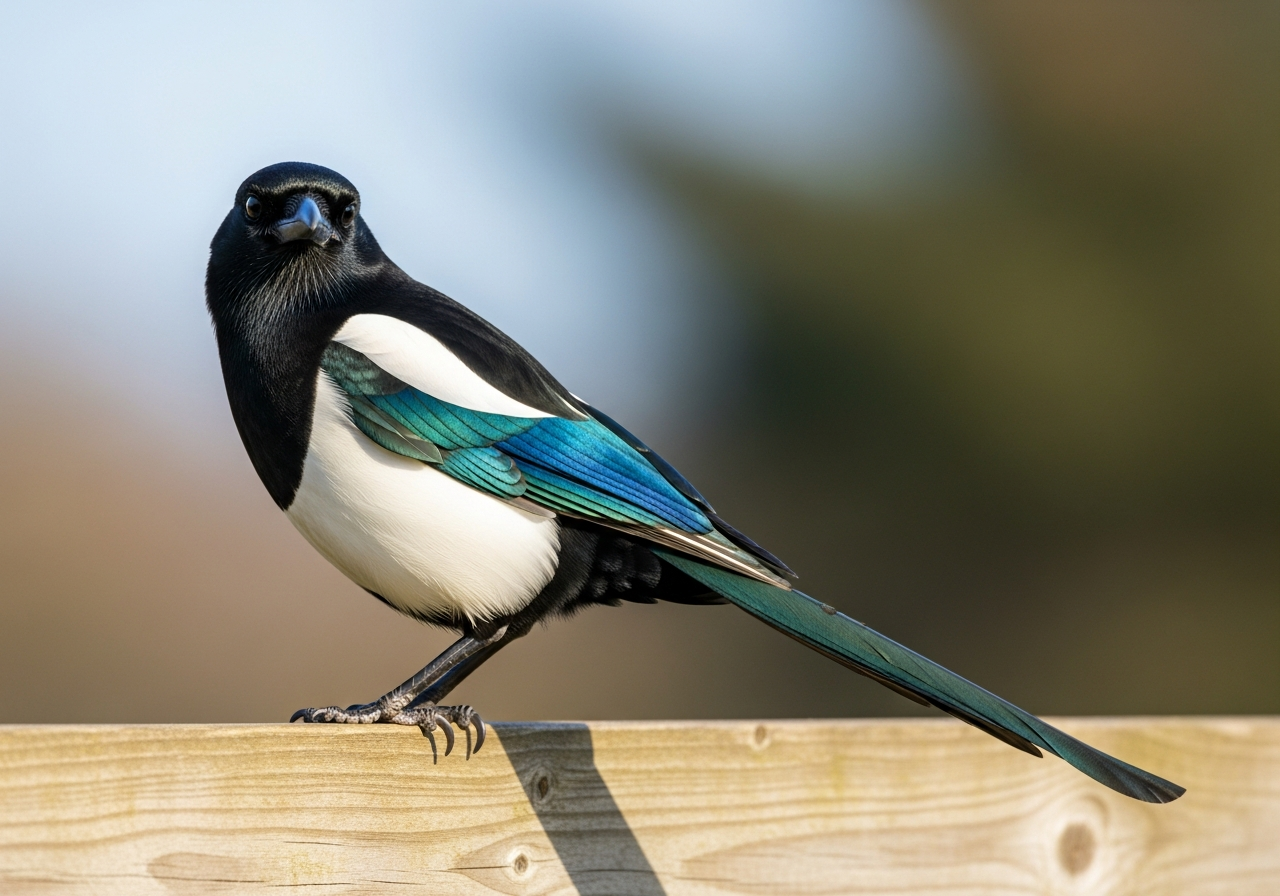
Magpie
Pica pica- Size
- Large (~46 cm including long tail)
- Key marks
- Bold black-and-white with iridescent blue-green tail; very long tail
- Sound
- Harsh 'chack-chack'; quiet subsong
- When
- All year; nests in tall trees
- Food in gardens
- Omnivorous — insects, eggs, scraps; visits ground and tables
Wood Pigeon
Columba palumbus- Size
- Large (~41 cm)
- Key marks
- Grey with white neck patch and white wing bars in flight; clumsy landing
- Sound
- Repetitive 'take two cows Taffy' cooing
- When
- All year; commonest UK pigeon
- Food in gardens
- Crops, buds, grain — visits platform feeders
Collared Dove
Streptopelia decaocto- Size
- Medium (~32 cm)
- Key marks
- Pale pink-brown; narrow black collar on nape; slender build
- Sound
- Soft 'coo-COO-coo' three-note song
- When
- All year; spread across UK since 1950s
- Food in gardens
- Seeds on ground and tables
Similar species — don't mix them up
- Robin vs chaffinch: Chaffinches have a pink breast and white shoulder patches; robins have a full orange-red front.
- Blue tit vs great tit: Great tits are larger with a black head stripe running down the yellow breast.
- Collared dove vs wood pigeon: Collared doves are smaller, paler, with a narrow neck collar; wood pigeons have a white neck patch and white wing bars.
- Starling vs blackbird: Starlings are smaller, shorter-tailed, and walk rather than hop; blackbirds are sleek black (males) with yellow bills.
Attract and help garden birds
Native shrubs such as hawthorn, ivy, and rowan provide cover and berries. Clean feeders weekly, offer water even in winter, and keep cats indoors at dawn when birds feed heavily. Taking part in citizen science counts like the RSPB Big Garden Birdwatch helps track population trends across the UK. House sparrow and starling declines are a habitat story as much as a feeder story — WARN’s habitat appeal funds partner landscape work, which is a different lever from filling a seed hopper.
Garden bird ID: FAQs
What are the most common birds in UK gardens?
The RSPB Big Garden Birdwatch regularly records house sparrows, blue tits, starlings, wood pigeons, blackbirds, and robins among the top visitors. Exact rankings vary by region and year — treat the latest Birdwatch table as the census, and this page as the field marks. Suburban gardens with feeders or shrubs usually see these six; farmland and coastal gardens differ.
How can I tell a male house sparrow from a female?
Breeding males have a grey crown, chestnut nape, black bib, and grey cheeks. Females and juveniles are streaky brown with a pale eyebrow and no black bib — often mistaken for finches until you notice the thick seed-eating bill.
Why do starlings look speckled in winter?
Winter plumage wears white spots at the feather tips, giving a speckled look. By spring breeding season, those tips wear off to reveal glossy purple-green iridescence.
Is it a song thrush or a mistle thrush?
Song thrushes are smaller with warm orange-buff underparts and neat round spots (not arrow-shaped). Mistle thrushes are larger, greyer, with bolder spotting and a white underwing flash in flight. Both are garden visitors but mistle thrushes often feed on lawns in open areas.
What should I feed garden birds?
Good options include sunflower hearts, unsalted peanuts in mesh feeders, fat balls, and mealworms. Avoid bread, which fills birds without proper nutrition. Provide fresh water year-round and clean feeders weekly to reduce disease spread.
Sources & references
Identification marks and calls are compiled from established field guides and ornithological references for the UK.
-
RSPB wildlife guides
UK and international bird identification.
-
Cornell Lab — All About Birds
Photos, calls, and ID tips for North American species.
-
iNaturalist
Community-verified species observations worldwide.
- Global Animal Guide editorial standards