Quick ID workflow
- Estimate the size: Compare to a house sparrow (small), magpie (medium-large), or sulphur-crested cockatoo (large).
- Note the bill and head: Brush-tipped tongues suit nectar feeders like lorikeets; heavy bills crack seeds; hooked bills mark carnivores like currawongs.
- Check the tail and wings: Crested pigeons have spiky crests; wagtails constantly pump their tails; cockatoos show yellow crests in flight.
- Listen for the call: Kookaburras laugh; magpies carol; miners chirr; lorikeets screech in flocks.
- Watch behaviour: Miners chase other birds from feeders; wagtails hawk insects from lawns; galahs feed on grass roots in pairs.
10 common Australian garden birds
Rainbow Lorikeet
Trichoglossus moluccanus- Size
- Medium (~25 cm)
- Key marks
- Green head and belly, blue head cap, orange breast, red beak; screeching flocks in flowering trees
- Sound
- High-pitched chattering and screeches
- When
- Year-round in eastern and northern Australia; nomadic with blossom
- Food
- Nectar, fruit, and pollen — visits flowering gums and bottlebrush
Australian Magpie
Gymnorhina tibicen- Size
- Large (~40 cm)
- Key marks
- Black and white with white nape; long legs; walks on lawns; swoops in spring breeding season
- Sound
- Rich carolling song — one of Australia's best-known bird calls
- When
- Year-round across most of Australia; territorial pairs
- Food
- Insects, worms, and scraps on lawns — rarely visits seed feeders
Laughing Kookaburra
Dacelo novaeguineae- Size
- Large (~42 cm)
- Key marks
- Stocky kingfisher; brown and cream with dark eye-stripe; heavy bill
- Sound
- Famous 'laughing' cackle at dawn and dusk
- When
- Year-round in eastern Australia; perches on wires and branches
- Food
- Insects, small reptiles, and scraps — not a typical feeder visitor
Galah
Eolophus roseicapilla- Size
- Medium (~35 cm)
- Key marks
- Pink chest and face, grey wings and back; crested cockatoo; feeds on ground in pairs
- Sound
- High 'chi-chi' contact calls; screeches in flight
- When
- Year-round across most of Australia; very common in suburbs
- Food
- Grass seeds and roots — forages on lawns and ovals
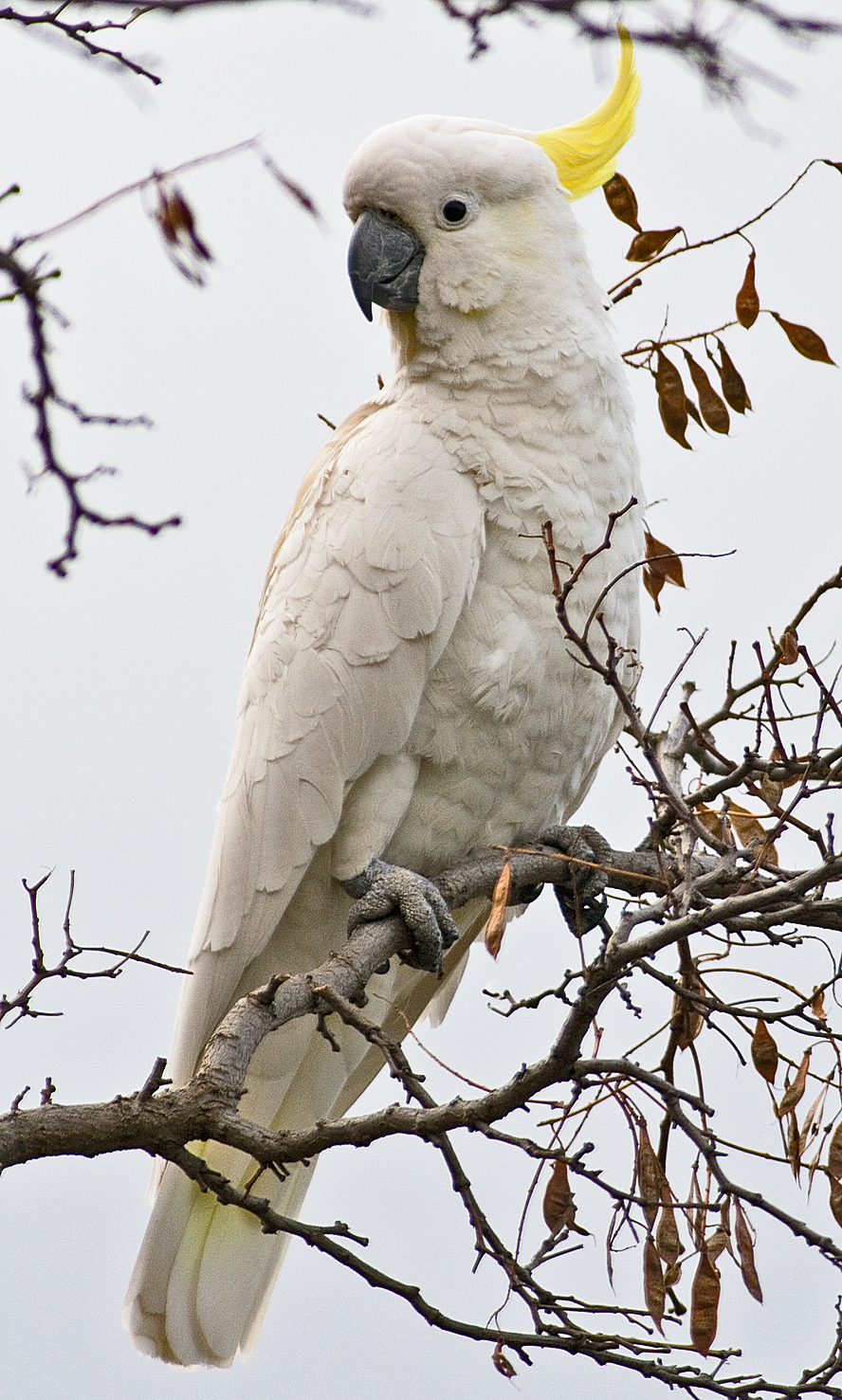
Sulphur-crested Cockatoo
Cacatua galerita- Size
- Large (~50 cm)
- Key marks
- All white with bright yellow crest; black bill; loud and conspicuous
- Sound
- Harsh screeching; raucous flock calls
- When
- Year-round in eastern and northern Australia; roosts in large flocks
- Food
- Seeds, nuts, and garden fruit — can damage timber fittings
Noisy Miner
Manorina melanocephala- Size
- Medium (~26 cm)
- Key marks
- Grey body, black cap, yellow bill and bare skin behind eye; aggressive at feeders
- Sound
- Piping 'pee-pee-pee' alarms; noisy colony chatter
- When
- Year-round in eastern and southern Australia; dominates suburban gardens
- Food
- Nectar, fruit, and insects — chases smaller birds from food sources
Pied Currawong
Strepera graculina- Size
- Large (~48 cm)
- Key marks
- Black with white rump and undertail; yellow eye; heavy hooked bill
- Sound
- Deep 'curra-wong' call; varied whistles
- When
- Year-round in eastern Australia; more common in cooler months in suburbs
- Food
- Fruit, insects, and nestlings — bold at fruiting trees
Crested Pigeon
Ocyphaps lophotes- Size
- Medium (~34 cm)
- Key marks
- Slim grey-brown pigeon with spiky crest; iridescent wing patches in flight
- Sound
- Soft 'whoop' display call; wing whistles on take-off
- When
- Year-round across mainland Australia; common in parks and gardens
- Food
- Seeds on ground — visits scattered seed and lawn edges
Willie Wagtail
Rhipidura leucophrys- Size
- Small (~20 cm)
- Key marks
- Black above, white below; constantly wags and fans tail; hawks insects from lawns
- Sound
- Sharp 'sweet pretty creature' song; chattering alarms
- When
- Year-round across Australia; fearless near people
- Food
- Flying insects — does not visit seed feeders
Australian Raven
Corvus coronoides- Size
- Very large (~50 cm)
- Key marks
- All black with throat hackles; wedge-shaped tail; hoarse deep call
- Sound
- Long drawn-out 'aah-aah-aah' — deeper than crow
- When
- Year-round in eastern and southern Australia; pairs defend territory
- Food
- Omnivorous — scraps, insects, and carrion
Australian garden bird ID: FAQs
What are the most common birds in Australian gardens?
Suburban surveys regularly record rainbow lorikeets, Australian magpies, noisy miners, galahs, and crested pigeons among the most seen species. Exact lists vary by city and season.
Why do magpies swoop people?
Male magpies defend their nest during breeding season (August–October in most areas). Walk calmly, wear a hat, and avoid the territory if possible — swooping usually stops once chicks fledge.
Are lorikeets and cockatoos good at feeders?
Lorikeets need nectar or wet mix, not dry seed. Cockatoos are entertaining but can damage feeders and timber. Native plants such as grevillea and banksia attract lorikeets naturally.
How do I tell a miner from a magpie?
Noisy miners are smaller and grey with a black cap and yellow bill. Magpies are larger black-and-white birds that walk rather than hop, with a very different carolling song.
Sources & references
Identification marks and calls are compiled from established field guides and ornithological references for Australia.
-
RSPB wildlife guides
UK and international bird identification.
-
Cornell Lab — All About Birds
Photos, calls, and ID tips for North American species.
-
iNaturalist
Community-verified species observations worldwide.
- Global Animal Guide editorial standards