Quick guide
- Buzzard — large; broad rounded wings; soars in circles; mewing call
- Red Kite — large; long forked tail (key mark); reddish-brown; soars effortlessly
- Kestrel — medium; hovers into the wind over open ground; chestnut back
- Sparrowhawk — medium; low dashing flight; short rounded wings; long barred tail
- Peregrine — medium-large; stocky; dark moustache; stoops at enormous speed
How to identify a UK bird of prey
Identify British raptors — buzzard, red kite, kestrel, sparrowhawk, and peregrine — by size, wing and tail shape, and flight style.
- 1
Judge size and silhouette. Most raptors are seen in flight, so start with overall size and shape: buzzards and red kites are large, kestrels and sparrowhawks are small to medium, and peregrines are stocky and broad-chested.
- 2
Check the wing and tail shape. A long, deeply forked tail means red kite; broad rounded wings with a short tail means buzzard; short rounded wings with a long barred tail means sparrowhawk.
- 3
Watch the flight style. Persistent hovering over a verge is a kestrel; effortless soaring in circles with a mewing call is a buzzard; fast, low, weaving flight through cover is a sparrowhawk; a spectacular high-speed stoop is a peregrine.
- 4
Note the habitat and listen. Birds over farmland and motorways are usually buzzards or red kites, garden ambushers are sparrowhawks, and city-cliff nesters are increasingly peregrines.
Species in detail
Common Buzzard
Large — ~51–57 cm; wingspan 110–130 cmButeo buteo
Key marks: Broad, rounded wings; short rounded tail; variable brown plumage — from pale to very dark; soars in circles with wings in slight 'V'
Flight: Long soaring glides, often very high; wings in a shallow V (dihedral) when soaring
Call: Mewing 'pee-uu' — the sound most people imagine when they think of a hawk
Habitat: Woodland edges, farmland, moorland; now widespread across the UK
Status: Most commonly seen UK raptor
Red Kite
Large — ~60–66 cm; wingspan 175–195 cmMilvus milvus
Key marks: Reddish-brown body; pale grey head; long forked tail — the forked tail is the key field mark
Flight: Effortless soaring; constantly twisting the forked tail for steering
Call: High, mewing whistle — similar to but more complex than buzzard
Habitat: Farmland, woodland valleys, hillsides; now widespread after reintroduction
Status: Recovered from near-extinction through reintroduction; now common in parts of Wales, Chilterns, Scotland, Yorkshire
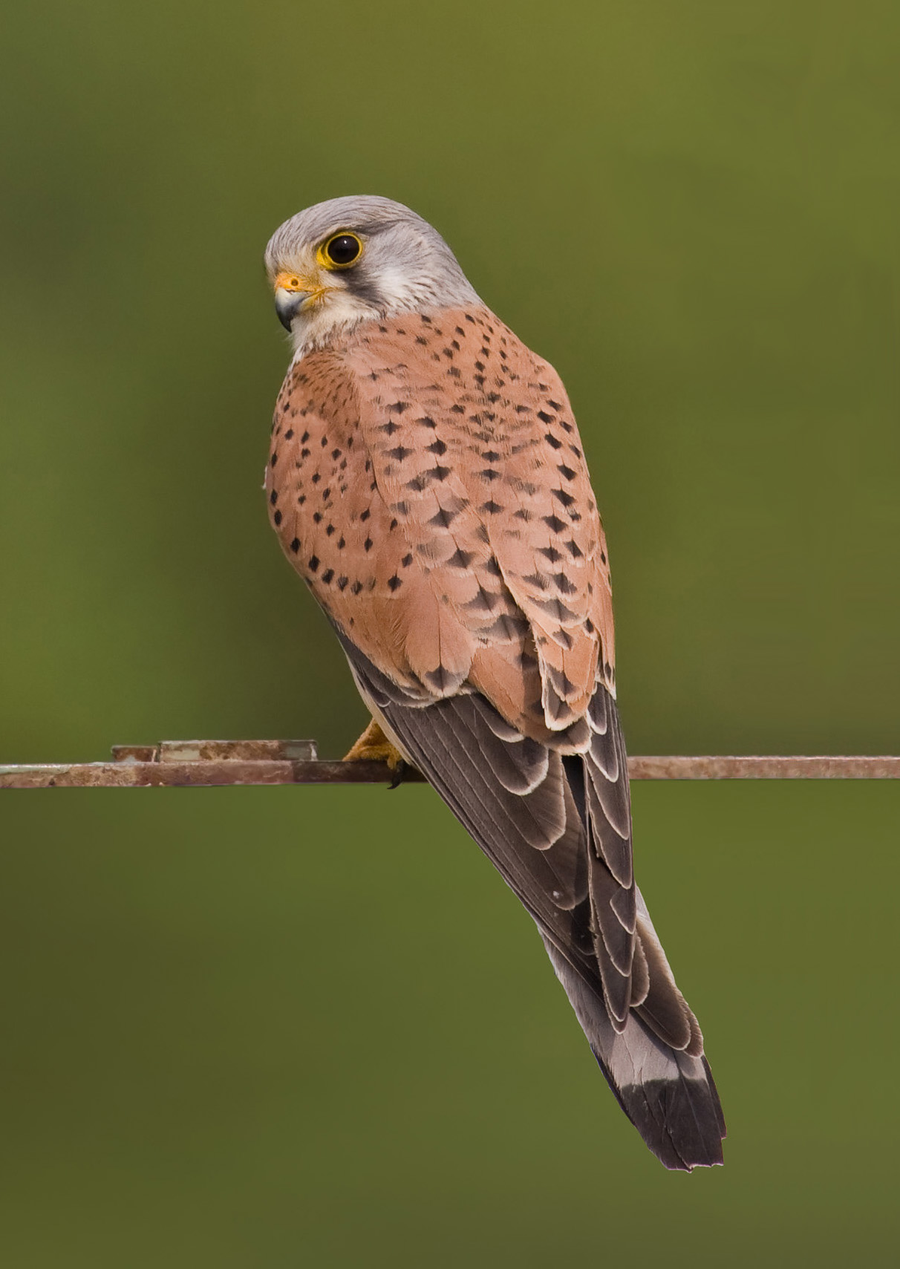
Kestrel
Medium — ~34–39 cm; wingspan 71–80 cmFalco tinnunculus
Key marks: The UK's only raptor that hovers in still air — holds position with rapidly beating wings; chestnut-brown back; male has grey head and tail
Flight: Regular hovering into the wind; pointed wings
Call: Shrill 'kee-kee-kee'
Habitat: Open country, roadside verges, farmland, moorland; often seen hovering over motorway embankments
Status: Formerly very common; declining — now Amber List
Sparrowhawk
Medium — female ~35–41 cm; male ~28–34 cm (notable size difference)Accipiter nisus
Key marks: Short rounded wings; long barred tail; dashing, low flight with flap-flap-glide pattern through woodland
Flight: Low, fast, agile — weaves through trees; never soars for long
Call: Fast, sharp 'kek-kek-kek'
Habitat: Woodland and gardens; specialist bird hunter that ambushes prey around feeders and hedgerows
Status: Common; the most frequent garden raptor in the UK
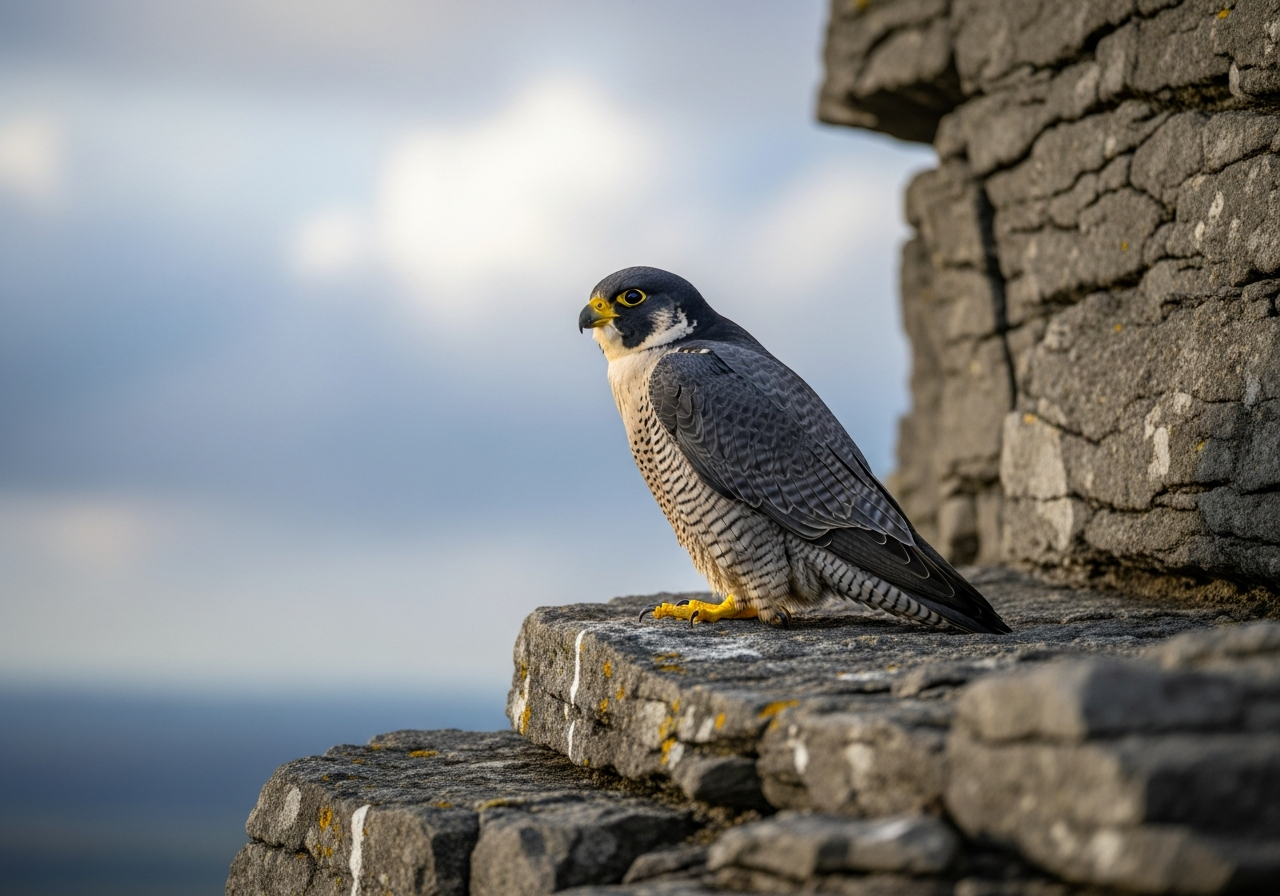
Peregrine
Medium-large — ~38–48 cm; wingspan 95–115 cmFalco peregrinus
Key marks: Dark blue-grey upperparts; pale barred underparts; distinctive dark 'moustache' stripe; stocky build with anchor-shaped silhouette in flight
Flight: The fastest animal on Earth in a stoop (dive) — recorded at over 320 km/h (200 mph); level flight strong and purposeful
Call: Loud, rasping 'kak-kak-kak'
Habitat: Sea cliffs, inland crags, increasingly on urban buildings (nests on tall structures in cities)
Status: Recovering well after pesticide-era declines; increasingly common in cities
UK birds of prey: FAQs
What is the most common bird of prey in the UK?
The Common Buzzard is now the most widely seen UK raptor — a result of decades of recovery since persecution was reduced and rabbit populations (a key prey) rebounded. On a drive through the English or Welsh countryside, you are very likely to see buzzards soaring or perched on telegraph poles.
How do you tell a buzzard from a red kite?
The tail is the quickest tell: the Red Kite has a long, deeply forked tail that it constantly twists in flight for steering — unmistakable from below. The buzzard's tail is short and rounded. Red Kites also have a noticeably rufous (reddish-brown) body and a pale grey head. Both soar frequently, but the kite's forked tail makes it identifiable even at distance.
What bird hovers over motorways?
Almost certainly a Kestrel. The kestrel is the only UK raptor that regularly and conspicuously hovers in still air — holding a fixed position while beating its wings rapidly, head down, scanning for small mammals below. Motorway embankments and roadside verges provide good hunting habitat with short grass and high vole numbers.
How fast can a peregrine dive?
Peregrines have been recorded at speeds exceeding 320 km/h (200 mph) in a full stoop — a dive with wings folded and body streamlined. This makes the peregrine the fastest animal on Earth by air speed. In level flight the speed is much lower, around 65–90 km/h.
Is there an eagle in the UK?
Yes — the Golden Eagle breeds in Scotland (and a small number have been reintroduced in England). The White-tailed Eagle (or sea eagle), Britain's largest bird of prey, was reintroduced to Scotland in the 1970s and more recently to England and Ireland; it has bred successfully and numbers are growing. Both are large, impressive birds found mainly in remote upland or coastal areas.
Sources & references
Identification marks and calls are compiled from established field guides and ornithological references for the UK.
-
RSPB wildlife guides
UK and international bird identification.
-
Cornell Lab — All About Birds
Photos, calls, and ID tips for North American species.
-
iNaturalist
Community-verified species observations worldwide.
- Global Animal Guide editorial standards