The white-tailed eagle (Haliaeetus albicilla) is a bird of the family Accipitridae, in the order Accipitriformes.
Quick answer
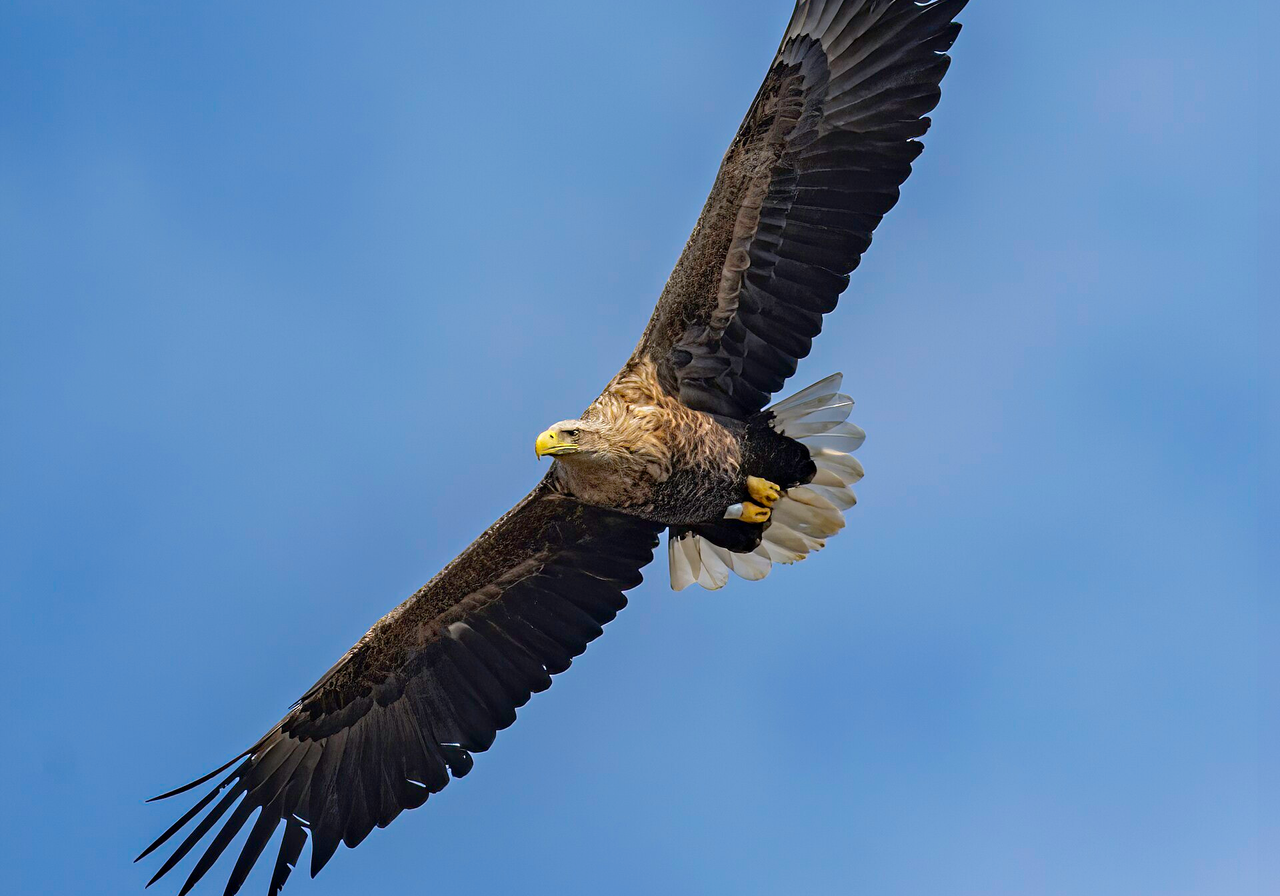
The white-tailed eagle (Haliaeetus albicilla) is a huge sea eagle of northern Europe and Asia, with broad 'barn door' wings, a pale head and a short, wedge-shaped white tail. It hunts fish and waterbirds along coasts, lakes and rivers and eats carrion. Wiped out in Britain by the early 1900s, it has been reintroduced there and is increasing across Europe. It is listed as Least Concern.
Top questions about the White-tailed Eagle
White-tailed Eagle facts at a glance
- Weight 4.7 kg
- Lifespan 20 years
| Scientific name | Haliaeetus albicilla |
|---|---|
| Other name | White-tailed sea eagle, erne |
| Diet | Fish, waterbirds, mammals and carrion |
| Habitat | Coasts, large lakes and river valleys with old trees or cliffs |
| Weight | Average about 4.7 kg; females larger |
| Lifespan | Typically about 20 years |
| Conservation status | Least Concern (IUCN Red List, assessed 2021) |
| Kingdom | Animalia |
|---|---|
| Phylum | Chordata |
| Class | Aves |
| Order | Accipitriformes |
| Family | Accipitridae |
| Genus | Haliaeetus |
Where it lives
The white-tailed eagle (Haliaeetus albicilla) is native to Coasts, lakes and rivers of northern and eastern Europe and northern Asia east to Japan, plus south-west Greenland; reintroduced to Scotland, Ireland and England. — recorded across Europe, Asia, North America in this guide’s range summary.
For occurrence records, see GBIF species search and sources below.
What is a group of white-tailed eagles called?
Group name (collective noun)
A group of White-tailed Eagles is called a convocation.
Baby name
A baby White-tailed Eagle is called an eaglet.
Explore more animal collective nouns and baby animal names .
Identification
Adults are brown with a paler, sandy head, a massive yellow bill and a short white tail shaped like a wedge. In flight the long, broad, plank-like wings with fingered tips explain the nickname 'flying barn door'. Young birds are darker all over and take about five years to gain adult plumage.
Hunting and diet
BirdLife describes its food as vertebrates from sea, freshwater and land: mainly fish, plus birds such as ducks, gulls and seabirds, and mammals. It snatches fish from the surface, steals prey from ospreys and otters, and eats carrion, especially in winter.
Return to Britain
Persecution made the species extinct in Britain in the early 20th century. Birds from Norway were released on the Scottish island of Rum from 1975, and later on the Scottish east coast and the Isle of Wight. Scotland now has a growing breeding population.
Status
BirdLife International lists the white-tailed eagle as Least Concern (2021), estimating 20,000 to 60,000 mature birds and an increasing trend. Recovery followed bans on DDT and other organochlorine pesticides and better legal protection; poisoning, lead and collisions with wind turbines remain threats.
Explore the White-tailed Eagle
Close relatives
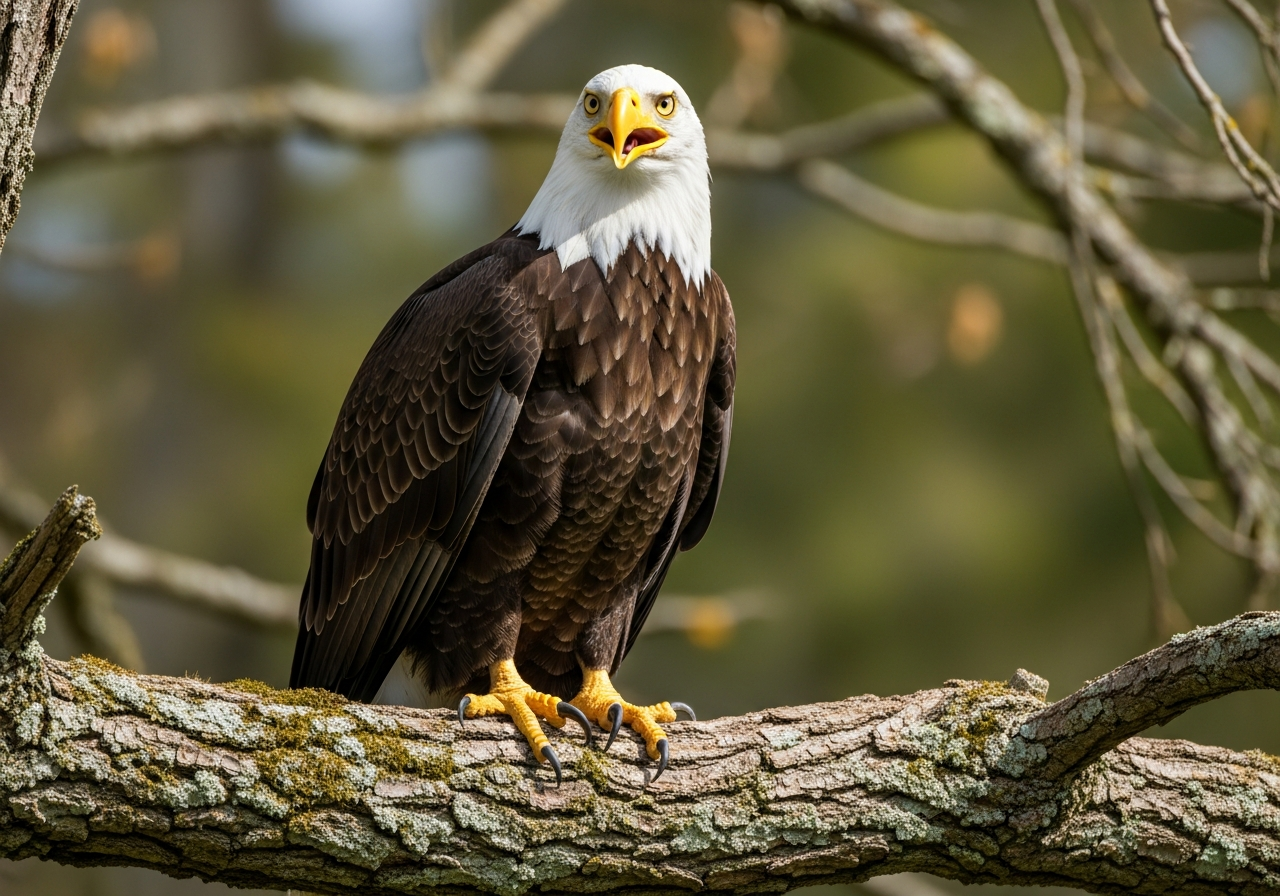
- Bald Eagle Same genus
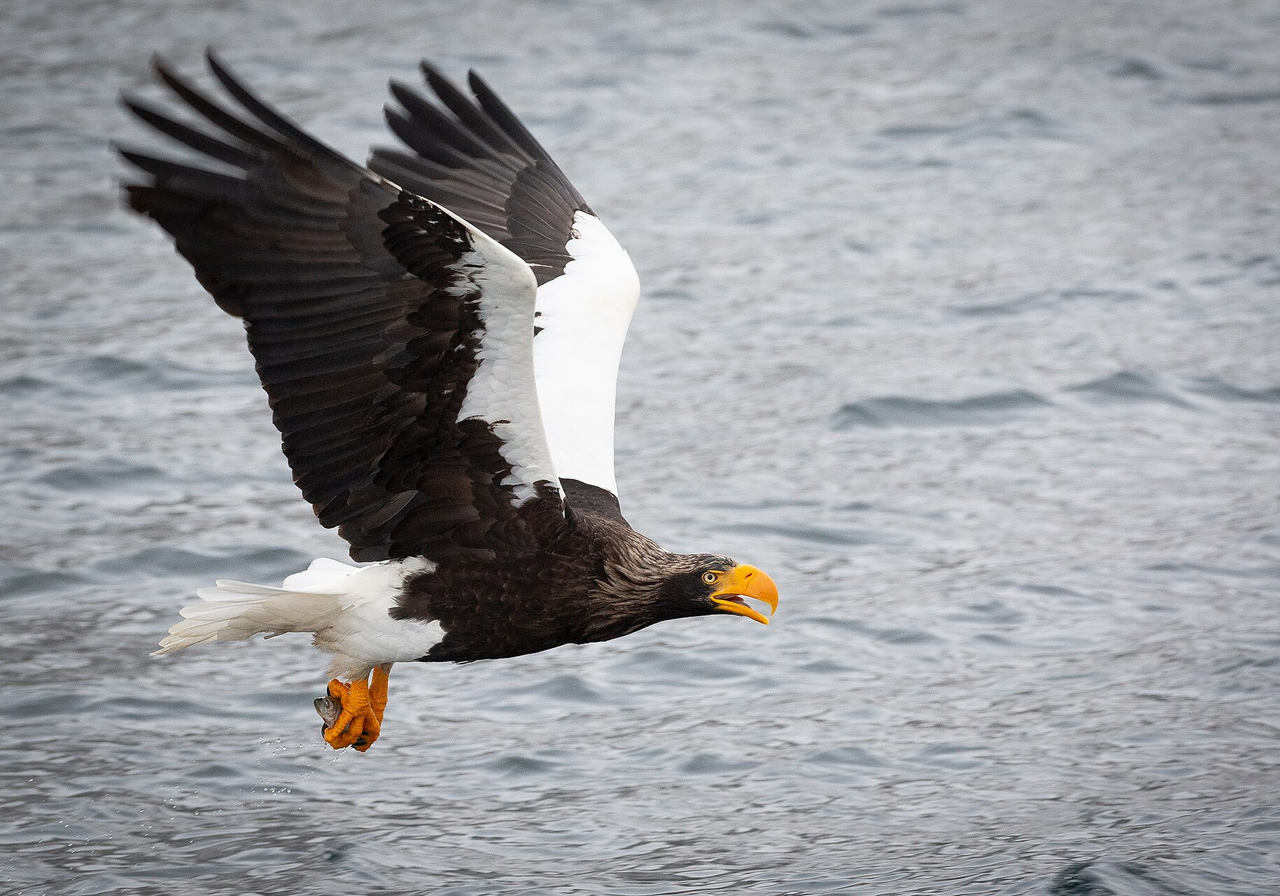
- Steller's Sea Eagle Same genus
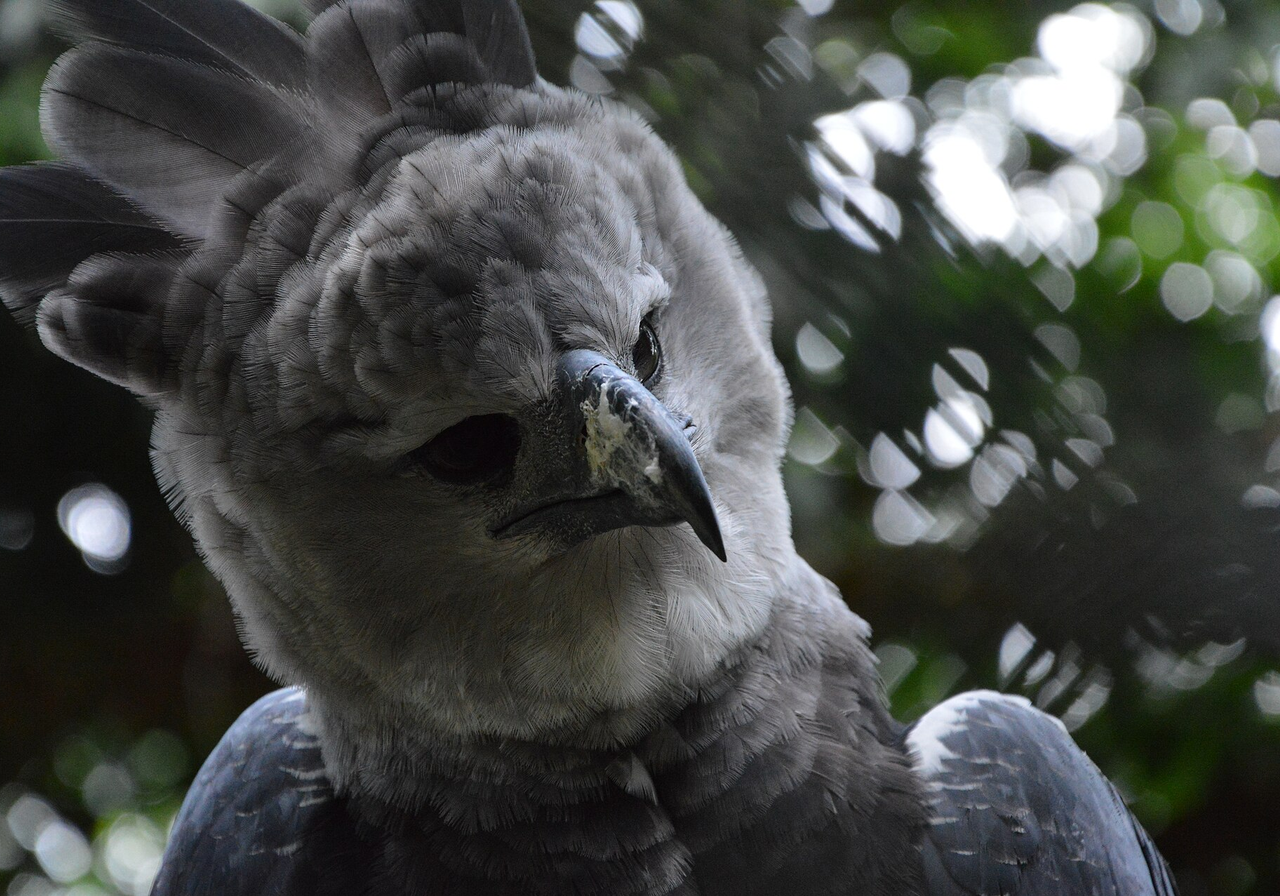
- Harpy Eagle Same family
- Northern Goshawk Same family
Did you know? White-tailed Eagle facts
- The species is also called the erne or white-tailed sea eagle.
- The oldest ringed white-tailed eagle recorded by the BTO in Britain lived 16 years and 9 months.
Conservation status of the White-tailed Eagle
The white-tailed eagle (Haliaeetus albicilla) is listed as Least Concern on the IUCN Red List. Least Concern (LC) is the IUCN's lowest-risk category, assigned to widespread, abundant species that have been evaluated and found not to be threatened. It does not mean a species faces no pressures — only that it is not currently at risk of extinction.
White-tailed Eagle (Haliaeetus albicilla) was most recently assessed for the IUCN Red List in 2021. Look up on the IUCN Red List .
Frequently asked questions about the White-tailed Eagle
Is the white-tailed eagle the largest eagle in Europe?
It is one of Europe's largest birds of prey by wingspan. The bearded vulture and griffon vulture are larger, and golden eagles can be similar in weight.
Where can you see white-tailed eagles in the UK?
Most live on the west coast and islands of Scotland, such as Mull and Skye. A small reintroduced population lives on and around the Isle of Wight.
What is the difference between a white-tailed eagle and a golden eagle?
White-tailed eagles have a pale head, a short white tail, a heavier bill and broader, more rectangular wings. Golden eagles have a longer dark tail and golden nape, and hunt mainly mammals and gamebirds inland.
How long do white-tailed eagles live?
BTO ringing data give a typical life expectancy of about 20 years for birds that reach breeding age.
What is a group of white-tailed eagles called?
A group of White-tailed Eagles is called a convocation.
What is a baby white-tailed eagle called?
A baby White-tailed Eagle is called an eaglet.
Sources & references
This guide is compiled and reviewed against established zoological and conservation references. Key sources for the White-tailed Eagle:
-
IUCN Red List of Threatened Species
Conservation status (Least Concern) reflects the IUCN Red List category for Haliaeetus albicilla, most recently assessed in 2021.
-
iNaturalist — observations & photos
Search citizen-science observations and community IDs for Haliaeetus albicilla. Useful for range checks and recent sightings — not a substitute for formal Red List status.
-
GBIF — occurrence data
Global Biodiversity Information Facility species search for Haliaeetus albicilla. Explore published occurrence records used in range research.
-
eBird — bird observations
Cornell Lab eBird target search for White-tailed Eagle. Check recent checklists and seasonal abundance where birders report this species.
- BirdLife International (2026). Species factsheet: White-tailed Sea-eagle Haliaeetus albicilla. BirdLife DataZone. Checked 1 November 2026.
IUCN Red List category Least Concern (assessed 2021), population estimate and trend.
- BTO BirdFacts: White-tailed Eagle. British Trust for Ornithology.
Typical lifespan, oldest ringed bird and UK body weight.
- Tobias, J. A. et al. (2022). AVONET: morphological, ecological and geographical data for all birds. Ecology Letters 25: 581–597. doi:10.1111/ele.13898
Average body mass.
- Gill, F., Donsker, D. & Rasmussen, P. (Eds). IOC World Bird List v15.2.
English and scientific name, classification and range.
-
Global Animal Guide editorial standards
How we research, source, review, and update every guide for accuracy.