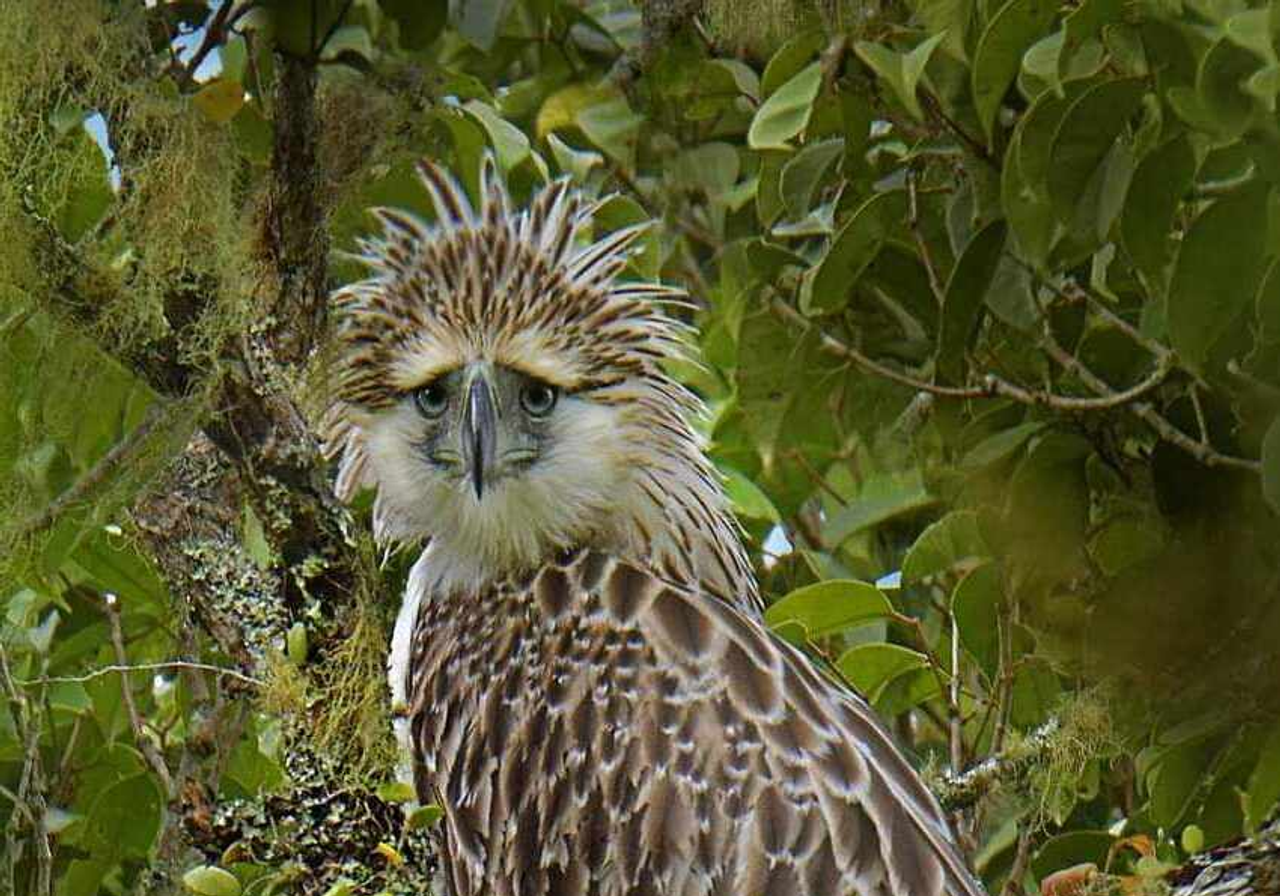
The Philippine eagle (Pithecophaga jefferyi) is a bird of the family Accipitridae, in the order Accipitriformes.
Quick answer
The Philippine eagle (Pithecophaga jefferyi) is one of the largest eagles on Earth, found only in the rainforests of Luzon, Samar, Leyte and Mindanao. Once called the monkey-eating eagle, it mostly hunts flying lemurs (colugos) and cloud rats. It is the national bird of the Philippines and is Critically Endangered, with BirdLife estimating only 128–924 mature birds (2025).
Top questions about the Philippine Eagle
Philippine Eagle facts at a glance
- Weight 5.2 kg
- Lifespan 40 years
| Scientific name | Pithecophaga jefferyi |
|---|---|
| Other name | Monkey-eating eagle (former) |
| Diet | Flying lemurs, cloud rats, monkeys, civets, birds |
| Habitat | Primary dipterocarp rainforest, lowlands to at least 1,800 m |
| Weight | Average about 5.2 kg |
| Lifespan | 30–60 years estimated; 41 years recorded in a zoo |
| Conservation status | Critically Endangered (IUCN Red List, assessed 2025) |
| Kingdom | Animalia |
|---|---|
| Phylum | Chordata |
| Class | Aves |
| Order | Accipitriformes |
| Family | Accipitridae |
| Genus | Pithecophaga |
Where it lives
The philippine eagle (Pithecophaga jefferyi) is native to Rainforest on Luzon, Samar, Leyte and Mindanao in the Philippines. — recorded across Asia in this guide’s range summary.
For occurrence records, see GBIF species search and sources below.
What is a group of philippine eagles called?
Group name (collective noun)
A group of Philippine Eagles is called a convocation.
Baby name
A baby Philippine Eagle is called an eaglet.
Explore more animal collective nouns and baby animal names .
A crested giant
The Philippine eagle has a dark brown back, white underparts and a shaggy crest of long cream and brown feathers that gives it a lion-like look. Its deep, arched blue-grey bill is one of the tallest of any eagle. Males and females look alike, though females are larger.
What it eats
BirdLife reports that on Mindanao the main prey is the Philippine flying lemur, a gliding mammal also called a colugo. On Luzon, where flying lemurs are absent, it takes cloud rats instead. Monkeys, palm civets, flying squirrels, snakes and large birds are also caught.
Breeding
Pairs nest in tall trees in steep forest and raise a single chick, which depends on its parents for well over a year. A pair therefore breeds only every second year, so even small losses of adults are hard for the population to replace.
Critically Endangered
BirdLife International lists the species as Critically Endangered (2025), with between 128 and 924 mature individuals and a decreasing trend. Clearance and fragmentation of lowland forest and shooting and trapping are the main threats. It was declared the national bird of the Philippines in 1995, and conservation breeding and forest protection programmes work to save it.
Explore the Philippine Eagle
Close relatives
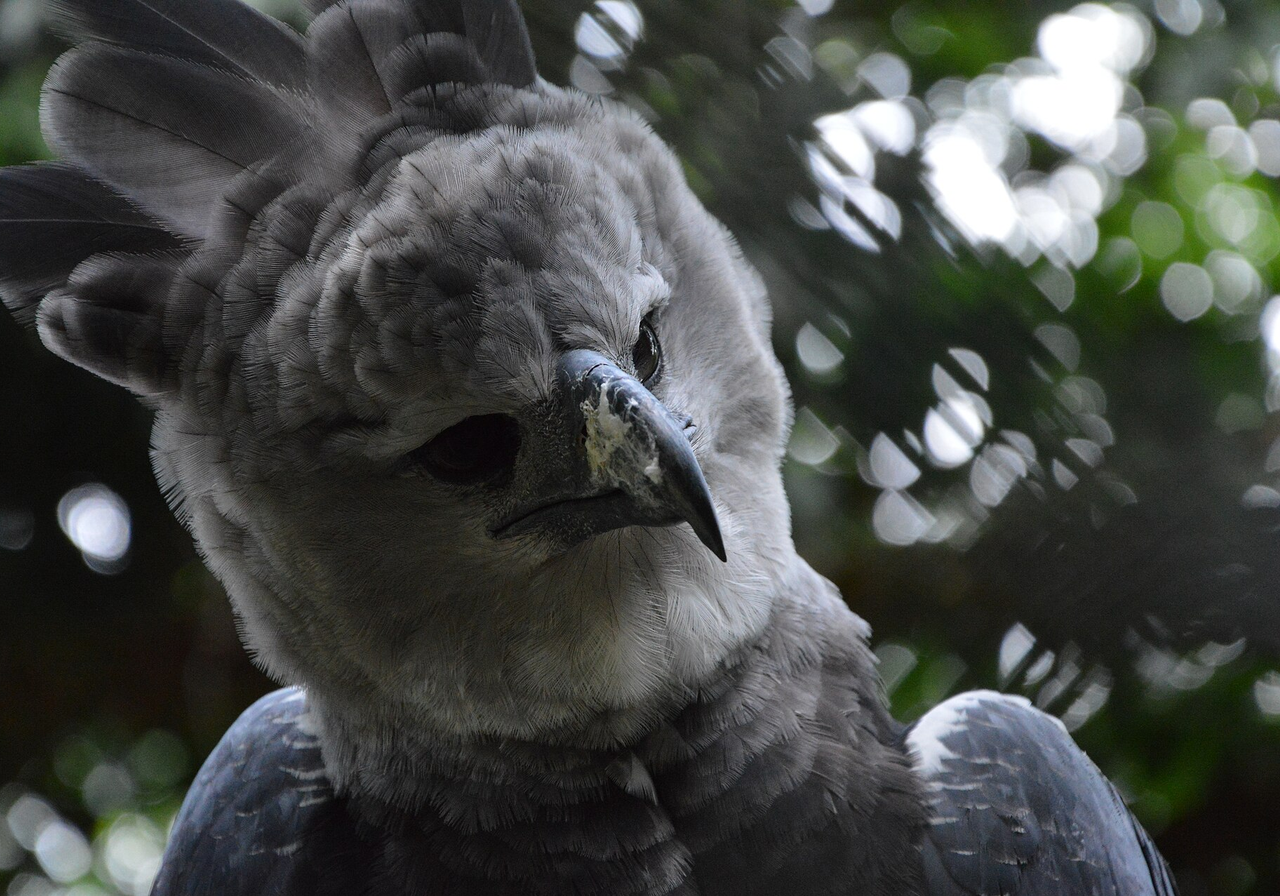
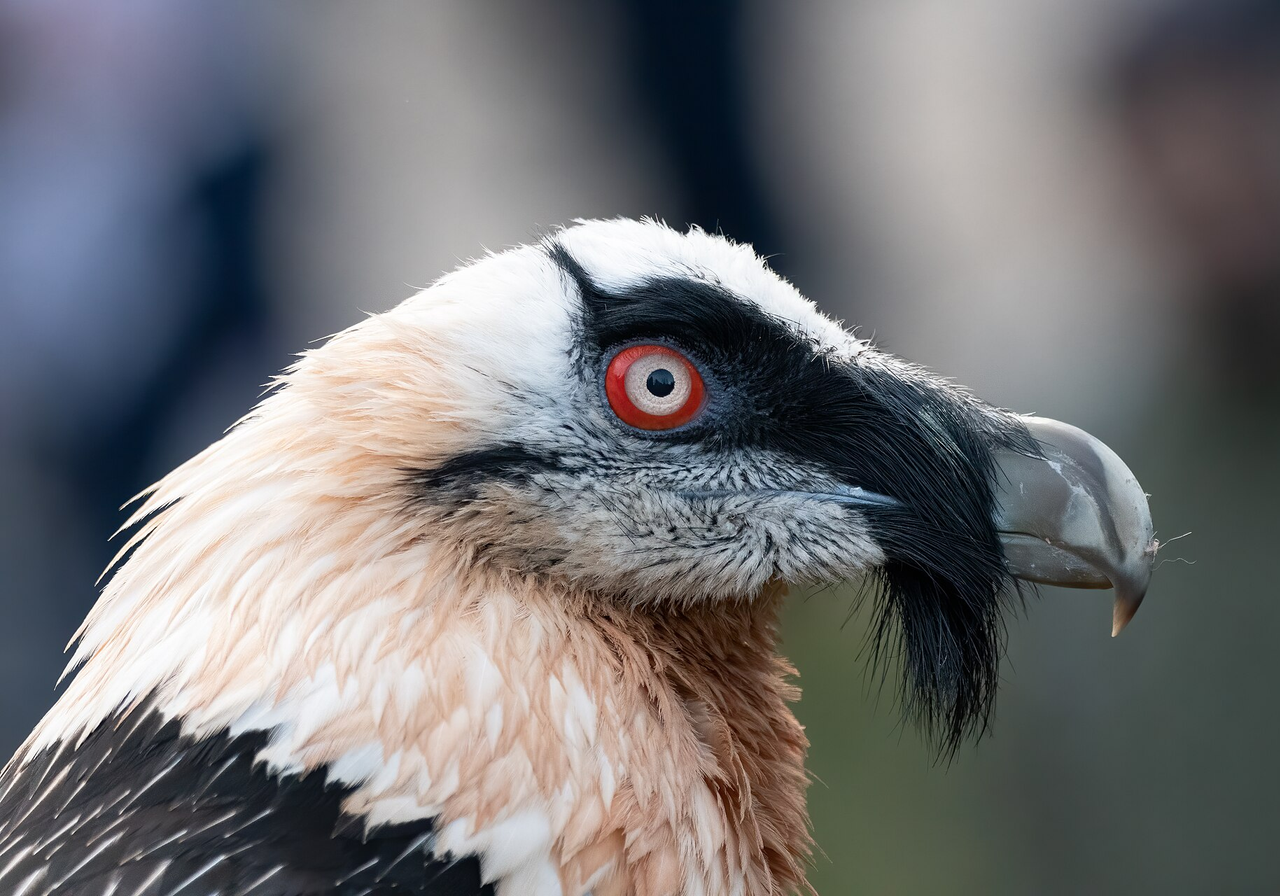
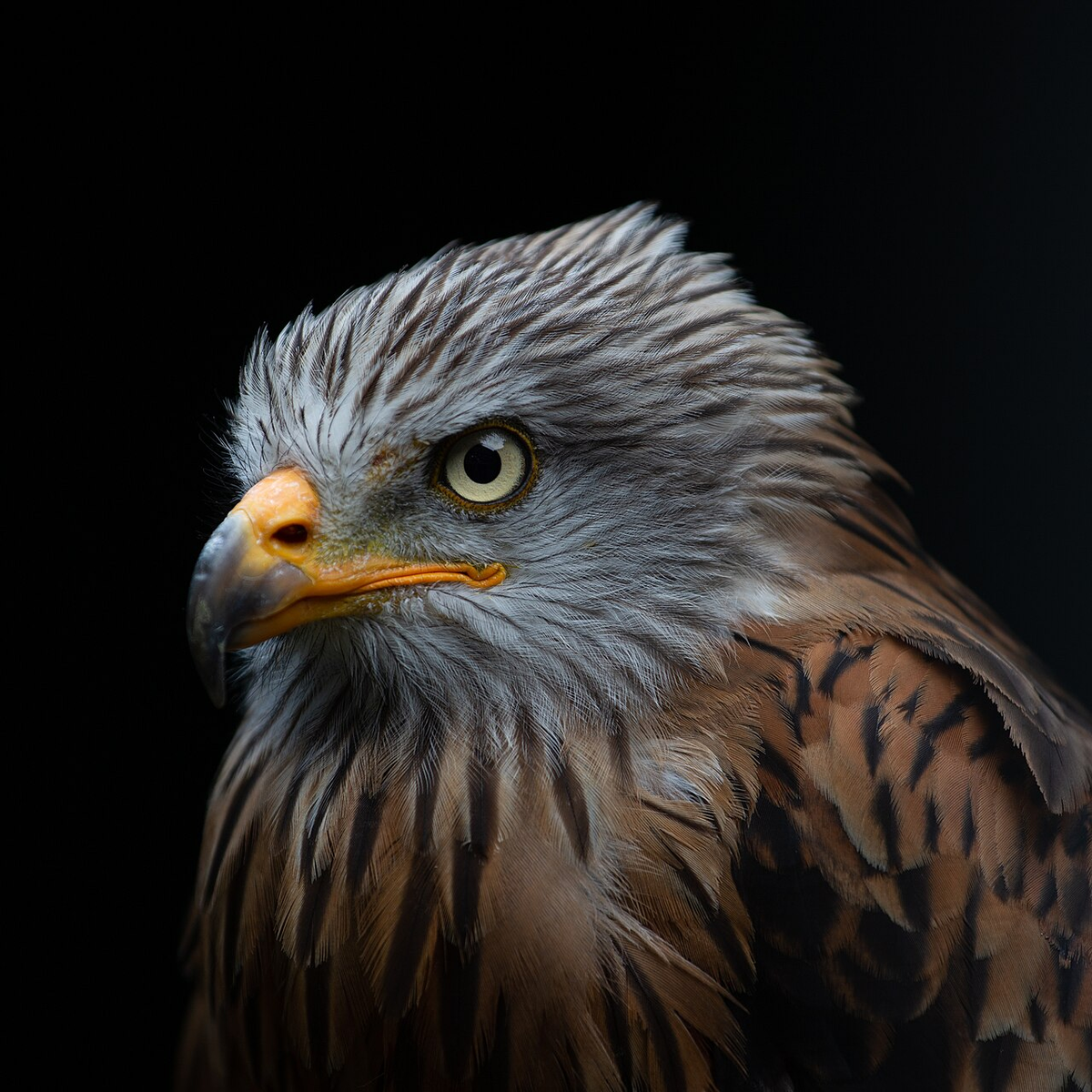
- Bald Eagle Same family
- Harpy Eagle Same family
- Northern Goshawk Same family
- Bearded Vulture Same family
Collections
Range & geography
Did you know? Philippine Eagle facts
- A captive Philippine eagle lived to 41 years old in a zoo in Rome.
- On Luzon it hunts cloud rats, because flying lemurs do not live on that island.
Conservation status of the Philippine Eagle
The Philippine eagle (Pithecophaga jefferyi) is listed as Critically Endangered on the IUCN Red List. Critically Endangered (CR) is the highest-risk category the IUCN Red List assigns to a wild species before Extinct in the Wild. It means a species faces an extremely high probability of extinction — usually because its population has collapsed, its range has shrunk drastically, or very few mature individuals remain. Species at this level typically depend on active conservation to survive.
Philippine Eagle (Pithecophaga jefferyi) was most recently assessed for the IUCN Red List in 2025. Look up on the IUCN Red List .
Frequently asked questions about the Philippine Eagle
Is the Philippine eagle the biggest eagle in the world?
It is one of the three largest, together with the harpy eagle and Steller's sea eagle. Measured by length it is often given as the longest living eagle.
Why was it called the monkey-eating eagle?
Early naturalists believed it fed mainly on monkeys, giving it the genus name Pithecophaga ('monkey eater'). Research has shown that flying lemurs and cloud rats are more important prey.
How many Philippine eagles are left?
BirdLife International's 2025 assessment estimates 128 to 924 mature individuals, and the population is declining.
Where does the Philippine eagle live?
Only in the Philippines, in forest on Luzon, Samar, Leyte and Mindanao. Mindanao holds the largest population.
What is a group of philippine eagles called?
A group of Philippine Eagles is called a convocation.
What is a baby philippine eagle called?
A baby Philippine Eagle is called an eaglet.
Sources & references
This guide is compiled and reviewed against established zoological and conservation references. Key sources for the Philippine Eagle:
-
IUCN Red List of Threatened Species
Conservation status (Critically Endangered) reflects the IUCN Red List category for Pithecophaga jefferyi, most recently assessed in 2025.
-
iNaturalist — observations & photos
Search citizen-science observations and community IDs for Pithecophaga jefferyi. Useful for range checks and recent sightings — not a substitute for formal Red List status.
-
GBIF — occurrence data
Global Biodiversity Information Facility species search for Pithecophaga jefferyi. Explore published occurrence records used in range research.
-
eBird — bird observations
Cornell Lab eBird target search for Philippine Eagle. Check recent checklists and seasonal abundance where birders report this species.
- BirdLife International (2026). Species factsheet: Philippine Eagle Pithecophaga jefferyi. BirdLife DataZone. Checked 1 November 2026.
IUCN Red List category Critically Endangered (assessed 2025), population estimate and trend.
- Animal Diversity Web: Pithecophaga jefferyi. University of Michigan Museum of Zoology.
Size, lifespan and diet.
- Tobias, J. A. et al. (2022). AVONET: morphological, ecological and geographical data for all birds. Ecology Letters 25: 581–597. doi:10.1111/ele.13898
Average body mass.
- Gill, F., Donsker, D. & Rasmussen, P. (Eds). IOC World Bird List v15.2.
English and scientific name, classification and range.
-
Global Animal Guide editorial standards
How we research, source, review, and update every guide for accuracy.