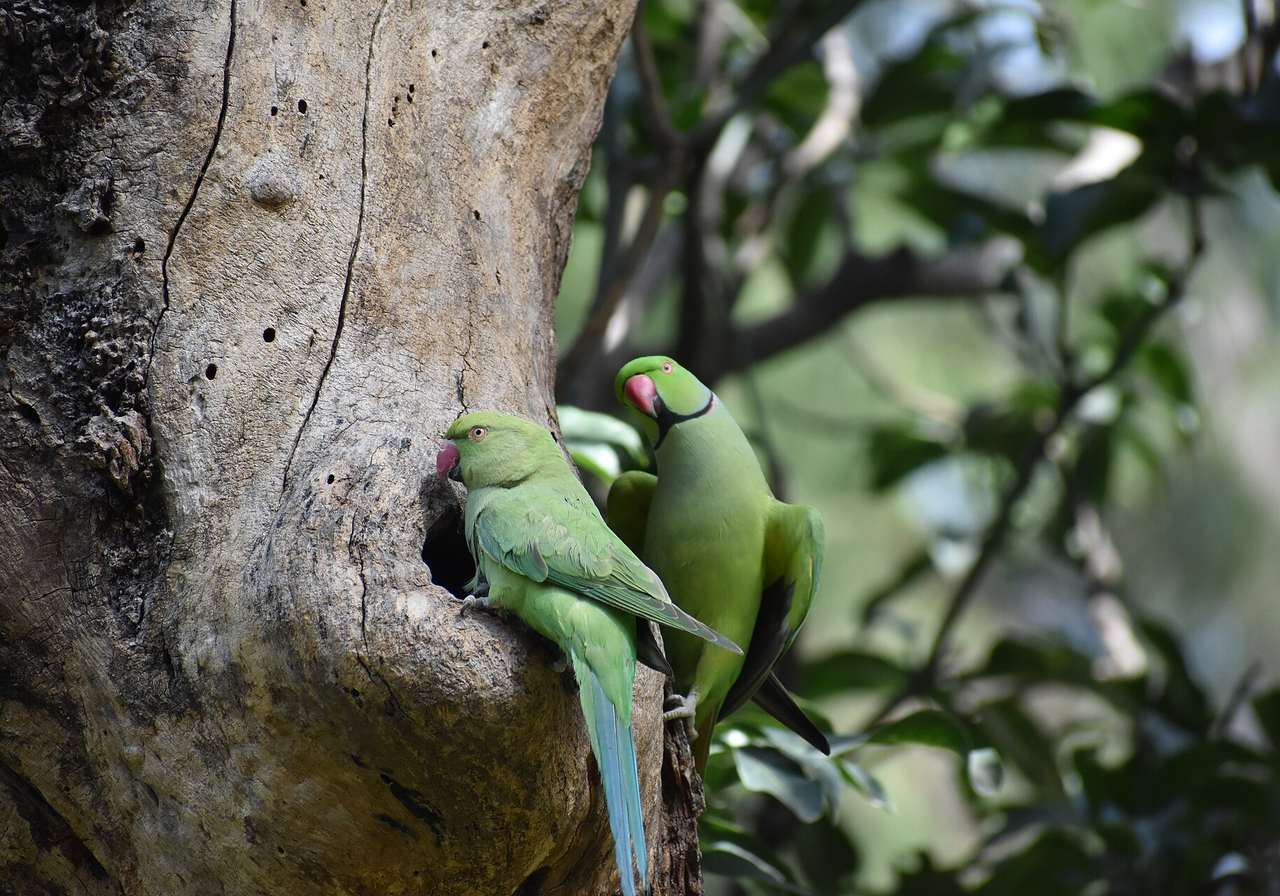
The rose-ringed parakeet (Psittacula krameri) is a bird of the family Psittaculidae, in the order Psittaciformes.
Quick answer
The rose-ringed parakeet (Psittacula krameri), also called the ring-necked parakeet, is a long-tailed green parrot native to a band of Africa south of the Sahara and to South Asia. Escaped and released pets have founded wild populations in many cities, including London, Amsterdam and Brussels. Males have a black and rose-pink neck ring. It is listed as Least Concern, with an increasing population.
Top questions about the Rose-ringed Parakeet
Rose-ringed Parakeet facts at a glance
- Weight 120 g
- Length 40 cm
| Scientific name | Psittacula krameri |
|---|---|
| Other name | Ring-necked parakeet |
| Diet | Seeds, fruit, buds, nectar and grain |
| Habitat | Light woodland, farmland, parks and gardens |
| Length | 38–42 cm, more than half of it tail |
| Weight | About 115–140 g |
| Conservation status | Least Concern (IUCN Red List, assessed 2024) |
| Kingdom | Animalia |
|---|---|
| Phylum | Chordata |
| Class | Aves |
| Order | Psittaciformes |
| Family | Psittaculidae |
| Genus | Psittacula |
Where it lives
The rose-ringed parakeet (Psittacula krameri) is native to A belt of Africa south of the Sahara from Senegal to Ethiopia and Uganda, and South Asia from Pakistan to Myanmar. Introduced populations live in many cities in Europe, the Middle East and elsewhere. — recorded across Africa, Asia in this guide’s range summary.
For occurrence records, see GBIF species search and sources below.
How big is a rose-ringed parakeet?
An adult rose-ringed parakeet measures 40 cm long — about 23% of the height of an average adult person (1.73 m) — and weighs around 120 g, a small fraction of an average adult’s body weight (70 kg).
Length vs an average adult’s height (to scale)
What is a group of rose-ringed parakeets called?
Group name (collective noun)
A group of Rose-ringed Parakeets is called a flock.
Baby name
A baby Rose-ringed Parakeet is called a chick.
Explore more animal collective nouns and baby animal names .
Native range
In the wild the species lives in two separate areas: a belt of Africa from Senegal east to Ethiopia and Uganda, and South Asia from Pakistan through India to Myanmar. It favours open woodland, savanna edges and farmland, and is a familiar bird of towns in India.
City parrots
Rose-ringed parakeets are popular cage birds, and escapes have established breeding populations in dozens of countries. Large flocks now roost in parks in London, Amsterdam, Brussels and other European cities, surviving cold winters with help from garden bird feeders.
Identification
It is bright green with a long, pointed tail and a deep red hooked bill. Adult males have a narrow black chin stripe that runs into a rose-pink collar; females and young birds lack the ring. The call is a loud, shrill screech, usually given in flight.
Status and impacts
BirdLife International lists the species as Least Concern (2024) with an increasing trend. Where it has been introduced it can compete with native hole-nesting birds and bats for cavities and can damage fruit and grain crops, so it is regarded as invasive in parts of Europe.
Explore the Rose-ringed Parakeet
Close relatives
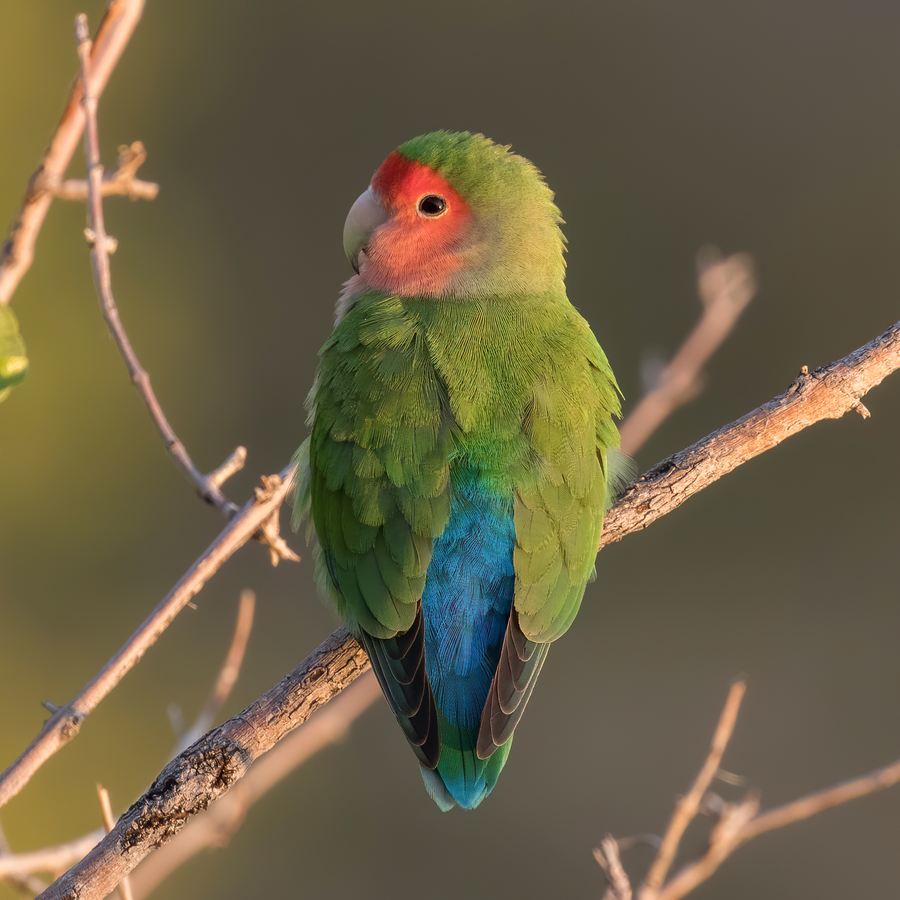
- Peach-faced Lovebird Same family
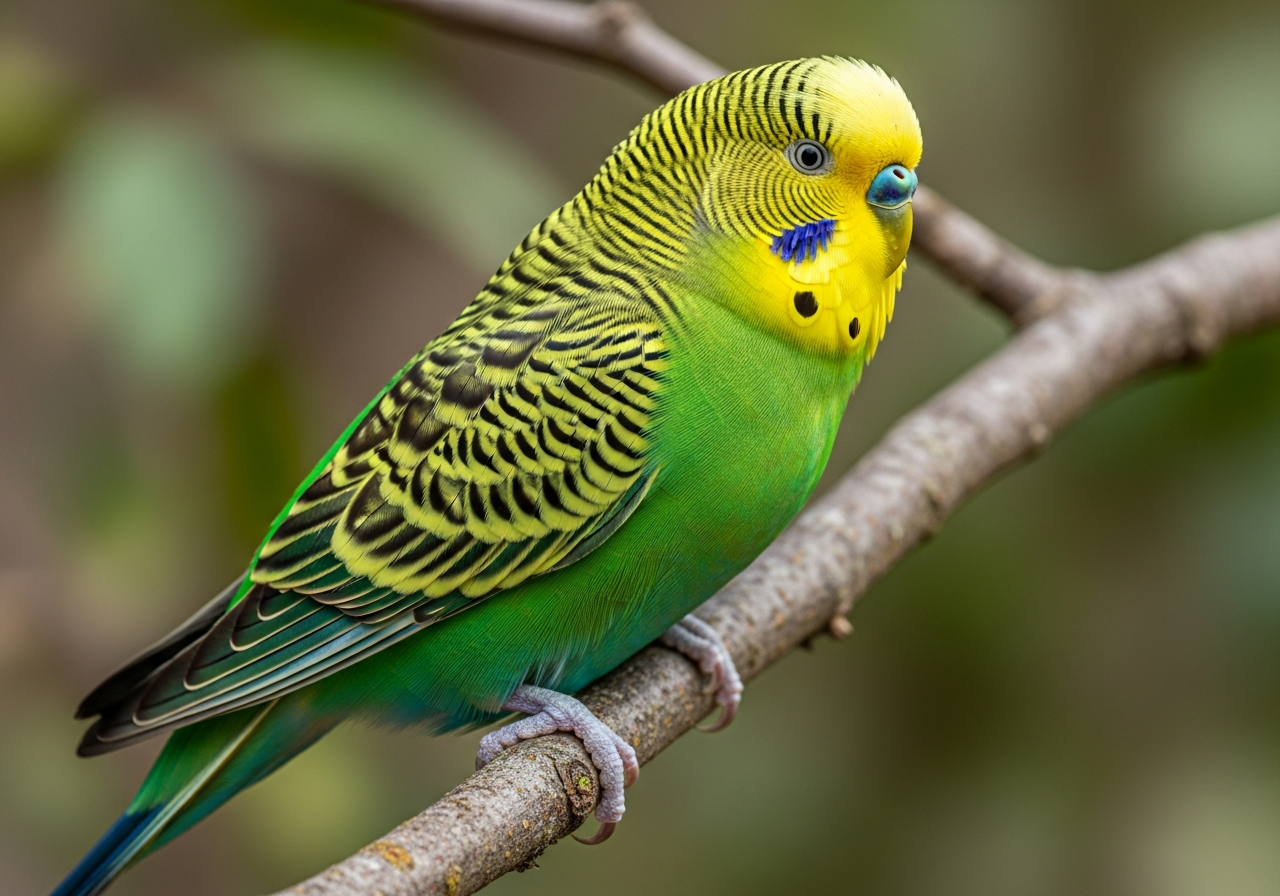
- Budgerigar Same family
- Kakapo Same order
- Scarlet Macaw Same order
Range & geography
Did you know? Rose-ringed Parakeet facts
- Only adult males have the black and rose-pink neck ring.
- It is one of the few parrots that live wild in cold European cities.
Conservation status of the Rose-ringed Parakeet
The rose-ringed parakeet (Psittacula krameri) is listed as Least Concern on the IUCN Red List. Least Concern (LC) is the IUCN's lowest-risk category, assigned to widespread, abundant species that have been evaluated and found not to be threatened. It does not mean a species faces no pressures — only that it is not currently at risk of extinction.
Rose-ringed Parakeet (Psittacula krameri) was most recently assessed for the IUCN Red List in 2024. Look up on the IUCN Red List .
Frequently asked questions about the Rose-ringed Parakeet
Why are there parakeets in London?
They descend from escaped or released pet birds. Since the 1970s the population has grown into thousands of birds that breed in parks and gardens.
Are rose-ringed and ring-necked parakeets the same?
Yes. Both names refer to Psittacula krameri. 'Ring-necked parakeet' is common in Britain and North America.
How long do rose-ringed parakeets live?
Wild lifespans are not well known; the oldest ringed bird in Britain was nearly 9 years old. Pets can live more than 30 years.
Can rose-ringed parakeets talk?
Captive birds can learn to mimic words and sounds, which is one reason they are popular pets.
What is a group of rose-ringed parakeets called?
A group of Rose-ringed Parakeets is called a flock.
What is a baby rose-ringed parakeet called?
A baby Rose-ringed Parakeet is called a chick.
Sources & references
This guide is compiled and reviewed against established zoological and conservation references. Key sources for the Rose-ringed Parakeet:
-
IUCN Red List of Threatened Species
Conservation status (Least Concern) reflects the IUCN Red List category for Psittacula krameri, most recently assessed in 2024.
-
iNaturalist — observations & photos
Search citizen-science observations and community IDs for Psittacula krameri. Useful for range checks and recent sightings — not a substitute for formal Red List status.
-
GBIF — occurrence data
Global Biodiversity Information Facility species search for Psittacula krameri. Explore published occurrence records used in range research.
-
eBird — bird observations
Cornell Lab eBird target search for Rose-ringed Parakeet. Check recent checklists and seasonal abundance where birders report this species.
- BirdLife International (2026). Species factsheet: Rose-ringed Parakeet Alexandrinus krameri. BirdLife DataZone. Checked 1 November 2026.
IUCN Red List category Least Concern (assessed 2024), population estimate and trend.
- Animal Diversity Web: Psittacula krameri. University of Michigan Museum of Zoology.
Size, lifespan and diet.
- BTO BirdFacts: Ring-necked Parakeet. British Trust for Ornithology.
Typical lifespan, oldest ringed bird and UK body weight.
- Tobias, J. A. et al. (2022). AVONET: morphological, ecological and geographical data for all birds. Ecology Letters 25: 581–597. doi:10.1111/ele.13898
Average body mass.
- Gill, F., Donsker, D. & Rasmussen, P. (Eds). IOC World Bird List v15.2.
English and scientific name, classification and range.
-
Global Animal Guide editorial standards
How we research, source, review, and update every guide for accuracy.