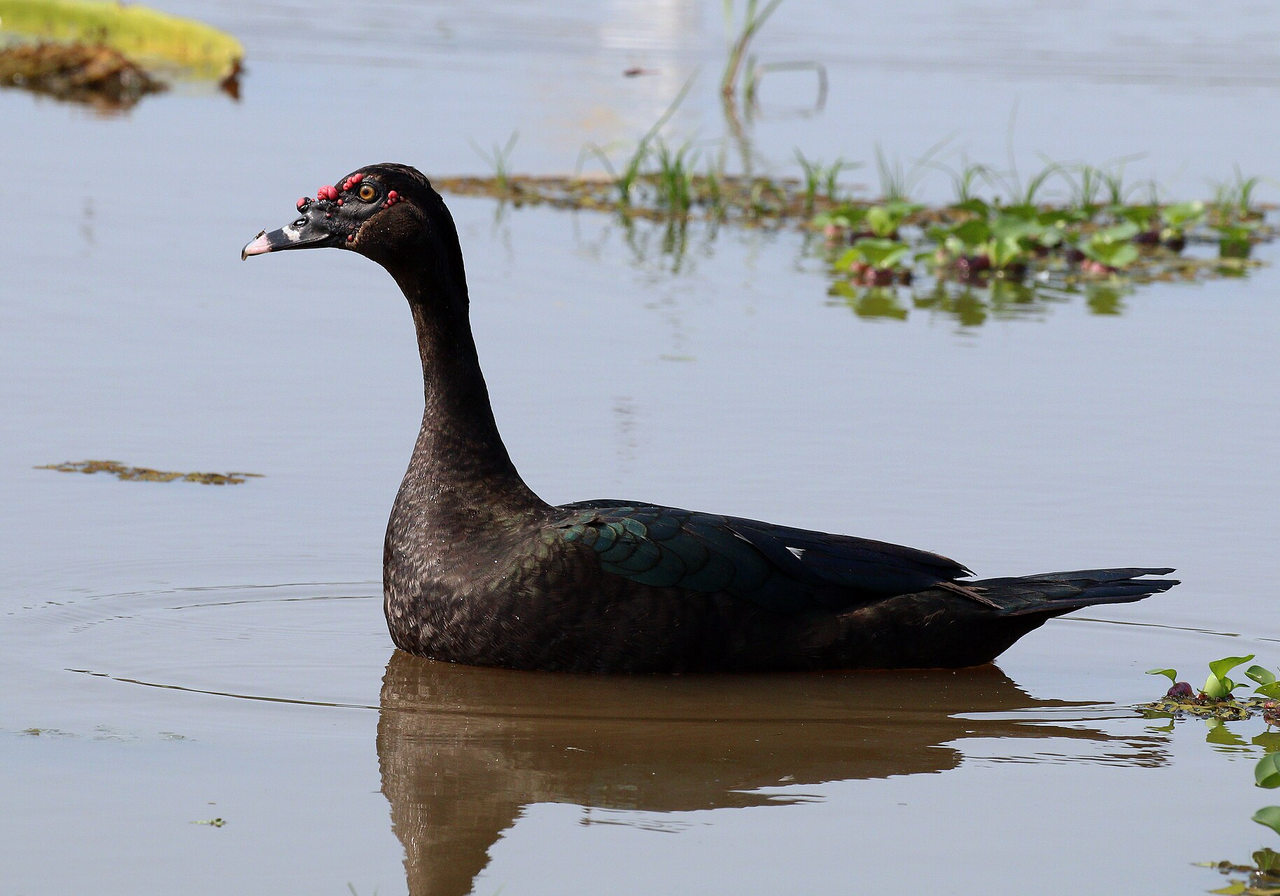
The Muscovy duck (Cairina moschata) is a bird of the family Anatidae, in the order Anseriformes.
Quick answer
The Muscovy duck (Cairina moschata) is a large duck native to Mexico, Central America and South America that perches in trees and nests in tree holes. Wild birds are glossy black with white wing patches; domestic Muscovies, kept for meat since before Columbus, come in many colours and have red, warty facial skin. It is listed as Least Concern, although wild numbers are falling.
Top questions about the Muscovy Duck
Muscovy Duck facts at a glance
- Weight 2.4 kg
- Length 80 cm
- Lifespan 7 years
| Scientific name | Cairina moschata |
|---|---|
| Diet | Omnivore: plants, seeds, insects, small fish |
| Habitat | Forested rivers, swamps and lagoons |
| Weight | Average about 2.4 kg; domestic males much heavier |
| Wingspan | 137–154 cm |
| Lifespan | Typically 7–8 years |
| Conservation status | Least Concern (IUCN Red List, assessed 2018) |
| Kingdom | Animalia |
|---|---|
| Phylum | Chordata |
| Class | Aves |
| Order | Anseriformes |
| Family | Anatidae |
| Genus | Cairina |
Where it lives
The muscovy duck (Cairina moschata) is native to Forested wetlands from southern Texas and Mexico through Central America to northern Argentina. Feral domestic birds live in many other countries. — recorded across North America, South America in this guide’s range summary.
For occurrence records, see GBIF species search and sources below.
How big is a muscovy duck?
An adult muscovy duck measures 80 cm long — about 46% of the height of an average adult person (1.73 m) — and weighs around 2.4 kg, about 3% of an average adult’s body weight (70 kg).
Length vs an average adult’s height (to scale)
What is a group of muscovy ducks called?
Group name (collective noun)
A group of Muscovy Ducks is called a raft. It is also known as a flock or a paddling.
Baby name
A baby Muscovy Duck is called a duckling.
Explore more animal collective nouns and baby animal names .
A duck that perches
Unlike most ducks, Muscovies have strong claws and often roost in trees. They nest in tree hollows near water, which is why wild birds need forest along rivers and swamps. The native range runs from southern Texas and Mexico through Central America to northern Argentina.
Wild and domestic
Wild Muscovies are black with a green and purple gloss and large white wing patches, and have little bare skin on the face. People in tropical America domesticated the species long before Europeans arrived. Domestic birds are heavier, often white or pied, and have large red caruncles around the eyes and bill.
Not a mallard
Almost all other farm ducks descend from the mallard. The Muscovy is a separate species, and crosses between Muscovies and mallard-derived ducks, called mule ducks, are sterile. Muscovies are also unusually quiet: males hiss and females give soft trills instead of quacking.
Status
BirdLife International lists the Muscovy duck as Least Concern (2018) but reports that wild populations are decreasing, mainly through hunting and loss of forested wetlands. Feral domestic birds now live in towns in the southern United States, Europe and elsewhere.
Explore the Muscovy Duck
Close relatives
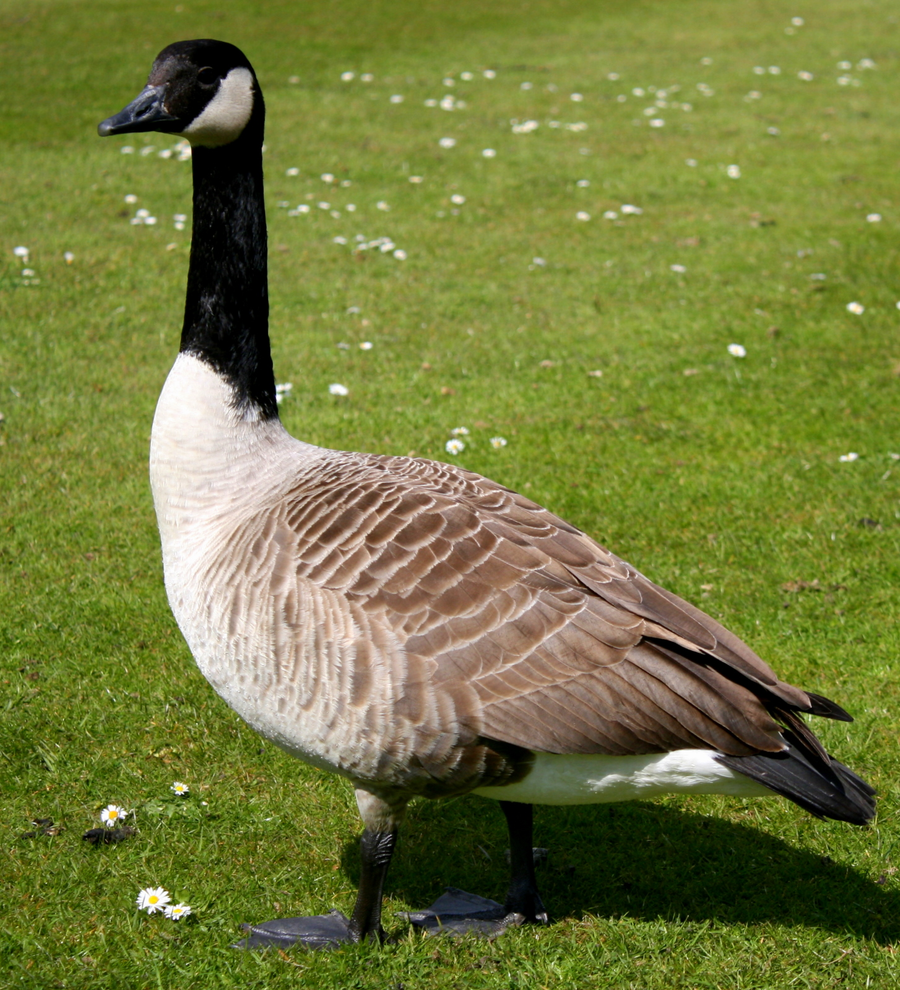
- Canada Goose Same family
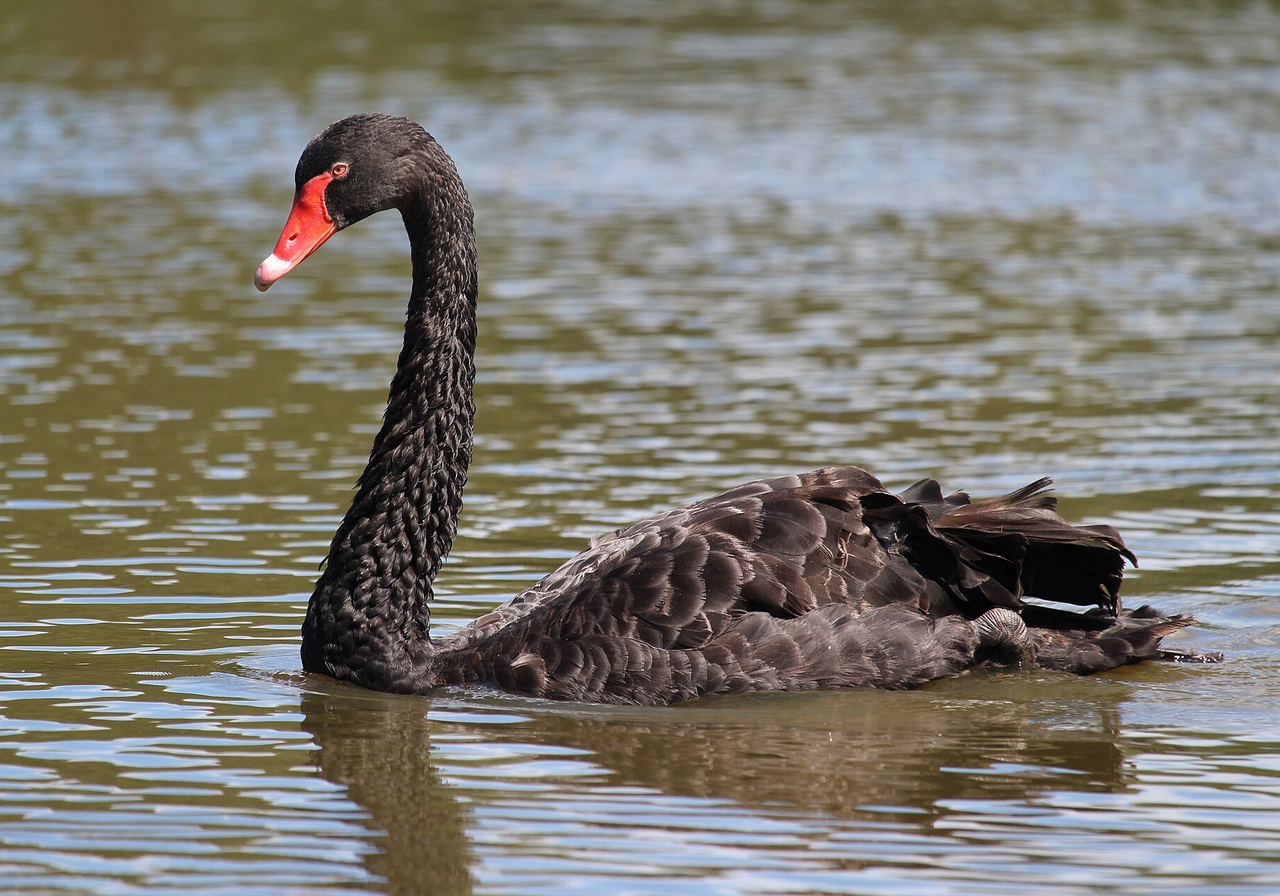
- Black Swan Same family
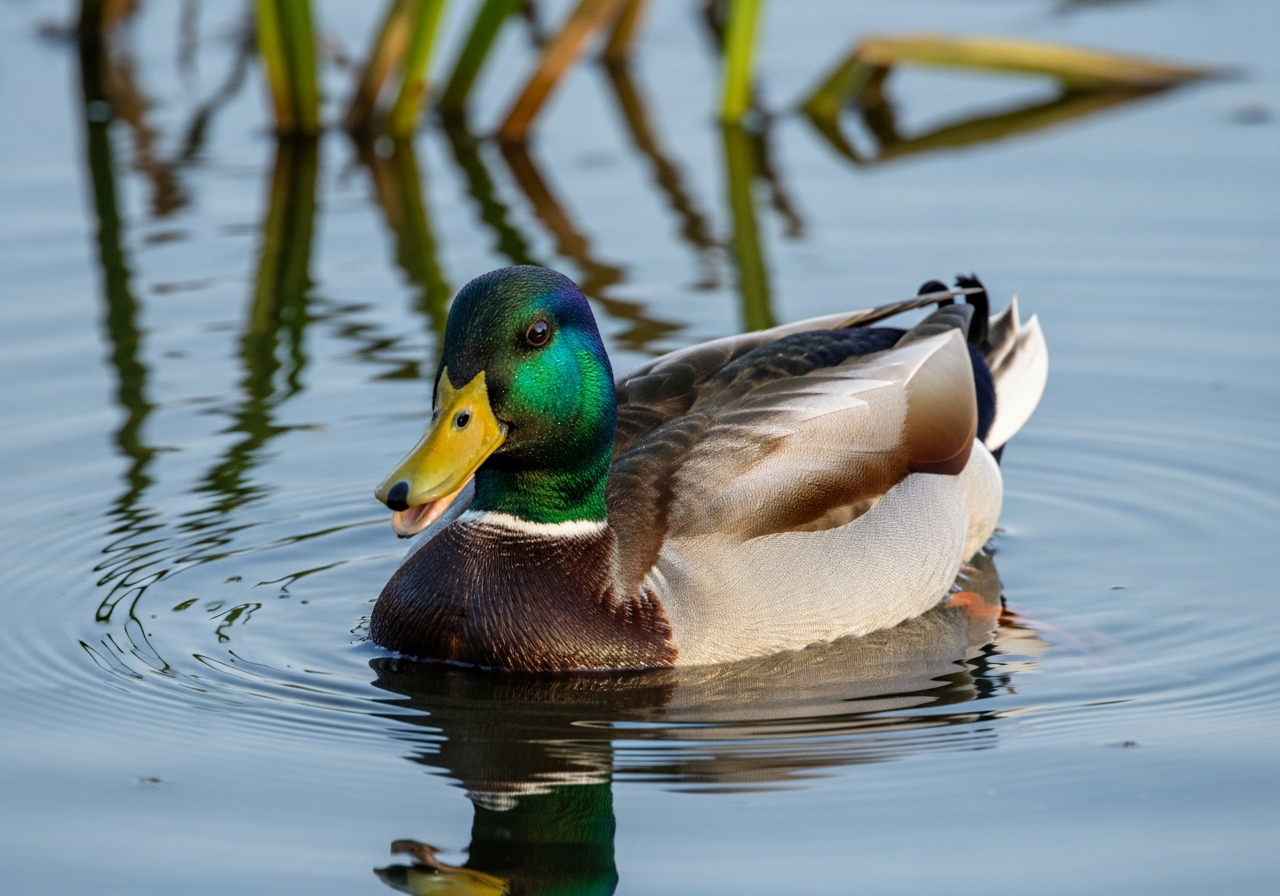
- Mandarin Duck Same family
- Swan Same family
Did you know? Muscovy Duck facts
- The Muscovy is the only domesticated duck that does not descend from the mallard.
- Domestic Muscovy males can be about twice the size of females.
Conservation status of the Muscovy Duck
The Muscovy duck (Cairina moschata) is listed as Least Concern on the IUCN Red List. Least Concern (LC) is the IUCN's lowest-risk category, assigned to widespread, abundant species that have been evaluated and found not to be threatened. It does not mean a species faces no pressures — only that it is not currently at risk of extinction.
Muscovy Duck (Cairina moschata) was most recently assessed for the IUCN Red List in 2018. Look up on the IUCN Red List .
Frequently asked questions about the Muscovy Duck
Why is it called a Muscovy duck?
The name does not come from Moscow. One theory links it to the musky smell of the birds; another to a trading company. Its origin is uncertain.
Do Muscovy ducks quack?
Rarely. Males make a breathy hiss and females a quiet trill.
Can Muscovy ducks fly?
Wild birds fly well and perch in trees. Heavy domestic males often struggle to fly far.
How long do Muscovy ducks live?
Typically 7–8 years.
What is a group of muscovy ducks called?
A group of Muscovy Ducks is called a raft. It is also known as a flock or a paddling.
What is a baby muscovy duck called?
A baby Muscovy Duck is called a duckling.
Sources & references
This guide is compiled and reviewed against established zoological and conservation references. Key sources for the Muscovy Duck:
-
IUCN Red List of Threatened Species
Conservation status (Least Concern) reflects the IUCN Red List category for Cairina moschata, most recently assessed in 2018.
-
iNaturalist — observations & photos
Search citizen-science observations and community IDs for Cairina moschata. Useful for range checks and recent sightings — not a substitute for formal Red List status.
-
GBIF — occurrence data
Global Biodiversity Information Facility species search for Cairina moschata. Explore published occurrence records used in range research.
-
eBird — bird observations
Cornell Lab eBird target search for Muscovy Duck. Check recent checklists and seasonal abundance where birders report this species.
- BirdLife International (2026). Species factsheet: Muscovy Duck Cairina moschata. BirdLife DataZone. Checked 1 November 2026.
IUCN Red List category Least Concern (assessed 2018), population estimate and trend.
- Animal Diversity Web: Cairina moschata. University of Michigan Museum of Zoology.
Size, lifespan and diet.
- Tobias, J. A. et al. (2022). AVONET: morphological, ecological and geographical data for all birds. Ecology Letters 25: 581–597. doi:10.1111/ele.13898
Average body mass.
- Gill, F., Donsker, D. & Rasmussen, P. (Eds). IOC World Bird List v15.2.
English and scientific name, classification and range.
-
Global Animal Guide editorial standards
How we research, source, review, and update every guide for accuracy.