Image sourcing: see credits & licences
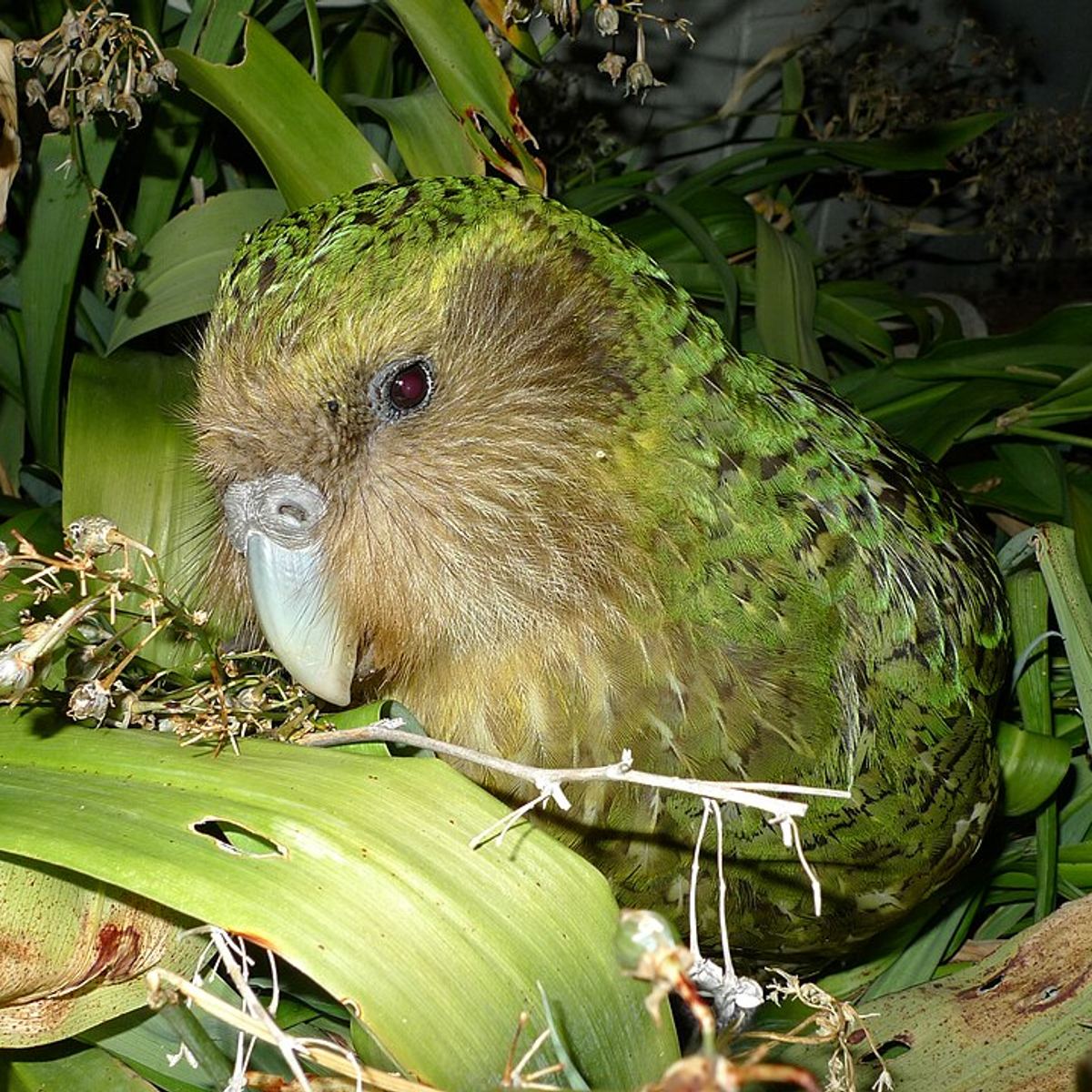
The kakapo (Strigops habroptilus) is a bird of the family Strigopidae, in the order Psittaciformes.
Quick answer
The kākāpō (Strigops habroptilus) is a flightless, nocturnal parrot endemic to New Zealand, smelling faintly of musty-sweet vegetation and booming from track-and-bowl courts in mast years. Adults weigh about 3 kg, eat leaves, fruits, and seeds on the forest floor, and are Critically Endangered — every bird is managed on predator-free islands.
Top questions about the Kakapo
Also available in Español (Kakapo)
Kakapo facts at a glance
- Weight 3 kg
- Length 60 cm
- Top speed 5 km/h
- Lifespan 60 years
| Scientific name | Strigops habroptilus |
|---|---|
| Diet | Herbivore |
| Habitat | Forest floor of New Zealand islands |
| Lifespan | Around 60 years in the wild (varies by population and captivity). |
| Weight | About 3 kg typical adult mass (sex and region vary). |
| Top speed | Up to roughly 5 km/h when moving at speed. |
| Conservation status | Critically Endangered (IUCN) |
| Kingdom | Animalia |
|---|---|
| Phylum | Chordata |
| Class | Aves |
| Order | Psittaciformes |
| Family | Strigopidae |
| Genus | Strigops |
Where it lives
The kakapo (Strigops habroptilus) is native to Predator-free islands of New Zealand under intensive conservation management. — recorded across Oceania in this guide’s range summary.
For occurrence records, see GBIF species search and sources below.
How big is a kakapo?
An adult kakapo measures 60 cm long — about 35% of the height of an average adult person (1.73 m) — and weighs around 3.0 kg, about 4% of an average adult’s body weight (70 kg).
Length vs an average adult’s height (to scale)
What is a group of kakapos called?
Group name (collective noun)
A group of Kakapos is called a company.
Baby name
A baby Kakapo is called a chick.
Explore more animal collective nouns and baby animal names .
Owl parrot of the night
Soft moss-green plumage, a facial disc of sensory feathers, and a stout bill for grinding plant fibre define the kākāpō. Flight muscles are reduced; birds climb trees then parachute down. Males dig shallow bowls and boom infrasound to attract females in breeding years.
Mast-year herbivore
Diet is leaves, shoots, fruits, seeds, and pollen — especially rimu and other native plants. Breeding typically follows heavy mast fruiting, so successful seasons are irregular.
Managed island refuges
Once widespread on mainland New Zealand, wild birds now live only on intensively managed predator-free islands. Every individual is named, radio-tagged, and monitored by the Kākāpō Recovery programme.
Critically Endangered icon
Stoats, rats, and cats drove near-extinction. Hand-rearing, supplementary feeding, and island eradications have lifted numbers from a few dozen to a few hundred — still Critically Endangered and entirely conservation-dependent.
Explore the Kakapo
Close relatives
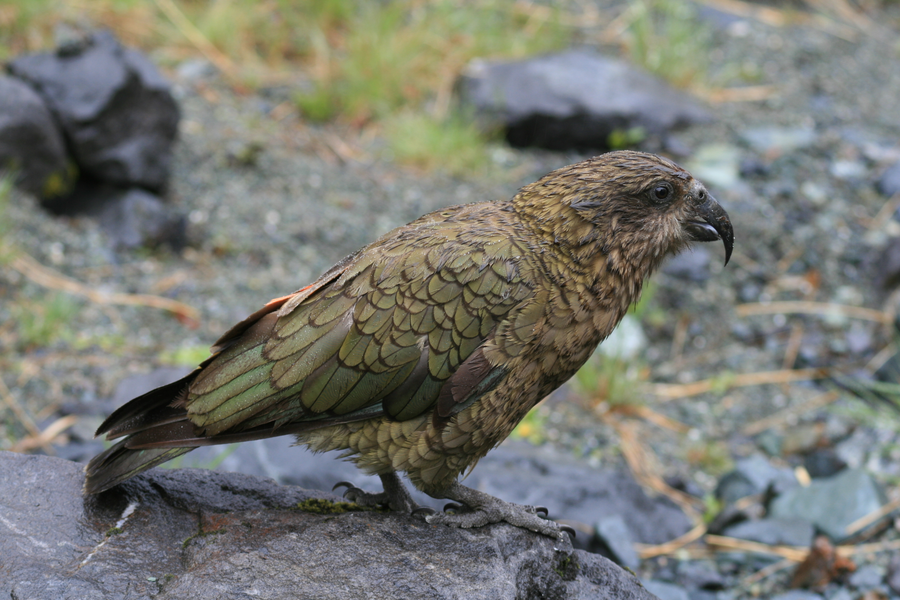
- Kea Same family
- Scarlet Macaw Same order
- Sulphur-crested Cockatoo Same order
- Peach-faced Lovebird Same order
Collections
Range & geography
Conservation status of the Kakapo
The kakapo (Strigops habroptilus) is listed as Critically Endangered on the IUCN Red List. Critically Endangered (CR) is the highest-risk category the IUCN Red List assigns to a wild species before Extinct in the Wild. It means a species faces an extremely high probability of extinction — usually because its population has collapsed, its range has shrunk drastically, or very few mature individuals remain. Species at this level typically depend on active conservation to survive.
Main threats to the kakapo
- Predation by introduced mammals (historically catastrophic)
- Low genetic diversity in a tiny population
- Disease in managed populations
- Dependence on intensive conservation management
Kakapo (Strigops habroptilus) was most recently assessed for the IUCN Red List in 2018. Look up on the IUCN Red List .
Frequently asked questions about the Kakapo
Why can't kākāpō fly?
Evolving without mammalian predators, they lost powered flight; heavy bodies and short wings suit climbing and gliding down, not sustained flight.
Why do kākāpō boom?
Males produce low-frequency booms from track-and-bowl courts to advertise to females over long distances, mainly in mast breeding years.
How many kākāpō are left?
Numbers remain in the low hundreds and change with each breeding season; all birds are individually managed.
What do kākāpō eat?
Native leaves, fruits, seeds, and pollen — they are herbivorous parrots of the forest floor and understorey.
Are kākāpō nocturnal?
Yes — they forage and display mainly at night, resting in cover by day.
What is a group of kakapos called?
A group of Kakapos is called a company.
What is a baby kakapo called?
A baby Kakapo is called a chick.
Sources & references
This guide is compiled and reviewed against established zoological and conservation references. Key sources for the Kakapo:
-
IUCN Red List of Threatened Species
Conservation status (Critically Endangered) reflects the IUCN Red List category for Strigops habroptilus, most recently assessed in 2018.
-
iNaturalist — observations & photos
Search citizen-science observations and community IDs for Strigops habroptilus. Useful for range checks and recent sightings — not a substitute for formal Red List status.
-
GBIF — occurrence data
Global Biodiversity Information Facility species search for Strigops habroptilus. Explore published occurrence records used in range research.
-
eBird — bird observations
Cornell Lab eBird target search for Kakapo. Check recent checklists and seasonal abundance where birders report this species.
-
Global Animal Guide editorial standards
How we research, source, review, and update every guide for accuracy.