Quick answer
IUCN lists polar bears (Ursus maritimus) as Vulnerable, not Endangered. Sea-ice loss is the main threat. The Polar Bear Specialist Group still cites about 26,000 globally (95% CI 22,000–31,000). They live in the Arctic, not Antarctica. Figures checked 13 August 2026.
Are polar bears Endangered or Vulnerable?
Vulnerable on the IUCN Red List (Wiig et al. 2015) — the lowest of the three “threatened” bands. The US lists them as threatened under the Endangered Species Act. Both labels are about forecast ice loss and a high risk of a >30% decline, not a claim that only a few hundred remain. Regional subpopulations can be safer or worse than the headline.
Why does sea ice decide the listing?
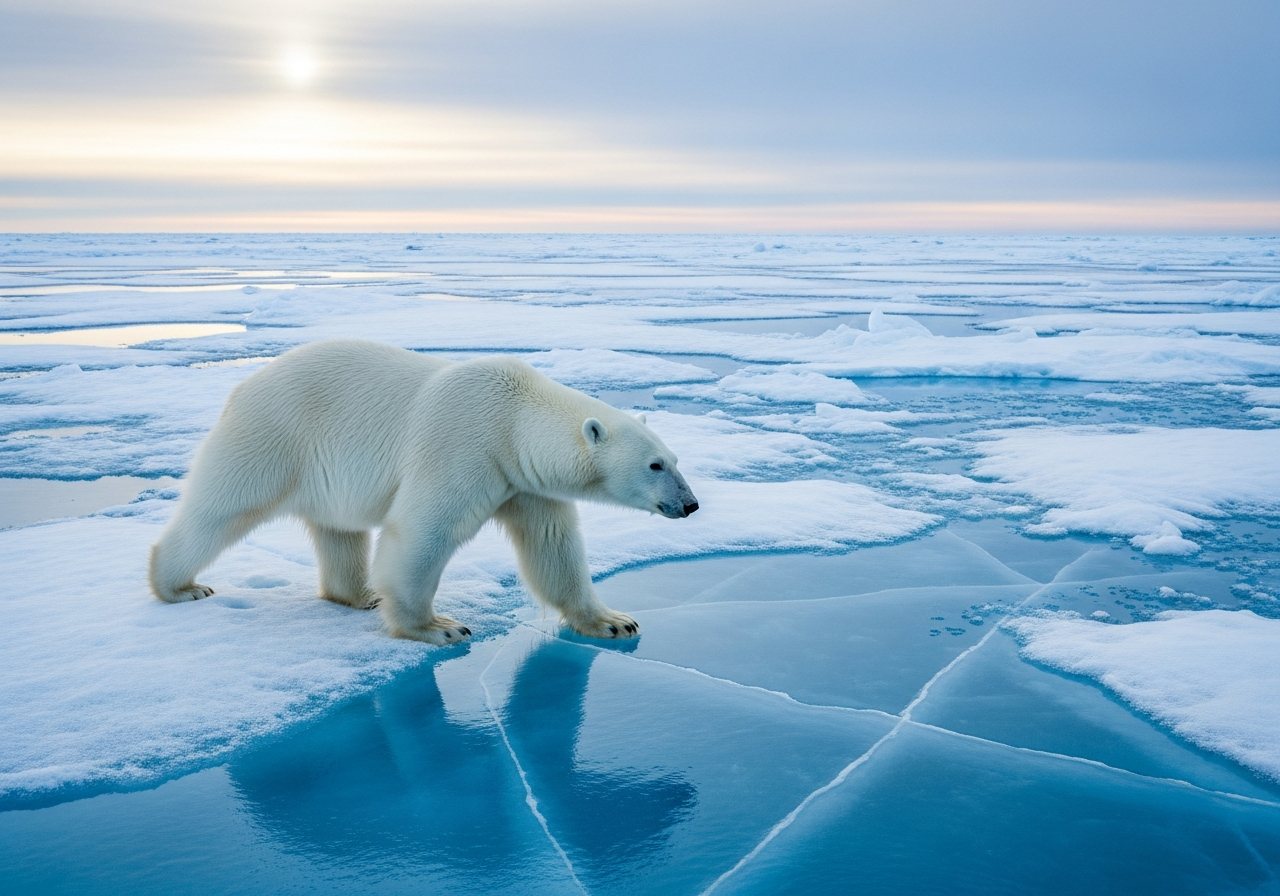
Polar bears hunt ringed and bearded seals from sea ice. Later freeze-up and earlier melt shorten the hunting season, cut body condition, and lower cub survival. Conflict kills rise when hungry bears spend longer on land near towns. Pollution and some harvest add pressure; they are not the equal of ice loss in the IUCN rationale.
Is the outlook the same everywhere?
No. PBSG now recognises 20 subpopulations. As of the 2024 meeting, some are likely decreasing, some likely stable, two likely increasing, and many remain data deficient. A tourism poster from Churchill is not the Chukchi Sea, and neither is southeast Greenland’s fjord ice group.
What actually helps?
Cut the emissions that melt hunting ice, and fund conflict reduction when bears come ashore. Selfie tourism and feeding do not. WARN’s habitat appeal funds partners.
Why are they classed as marine mammals?
They travel on ice and land but depend on the ocean for seals. They are strong long-distance swimmers. That classification is why sea-ice forecasts, not a fenced terrestrial reserve, sit at the centre of the Red List argument.
What does 22,000–31,000 actually mean?
It is the best global interval PBSG still cites (Regehr et al. 2016), not a proof that climate change is “over.” Some subpopulations lack recent surveys. Treat the range as an order of magnitude with wide uncertainty — then look at ice, not at a single viral photo.
Sources
Polar Bear FAQs
Are polar bears endangered?
IUCN lists polar bears (Ursus maritimus) as Vulnerable — a threatened category, but not Endangered and not Critically Endangered. The US Endangered Species Act lists them as threatened. Sea-ice loss is the main long-term threat. Global abundance is about 26,000 (95% CI 22,000–31,000; Regehr et al. 2016), still the figure the IUCN Polar Bear Specialist Group cites. Figures checked 13 August 2026.
How many polar bears are left?
PBSG’s October 2024 status report still uses ~26,000 (22,000–31,000). That is not a weekly census. There are now 20 subpopulations: some likely decreasing, some likely stable, some increasing, and many data deficient. A healthy-looking bear in a tourism ad is not a circumpolar trend.
Do polar bears live in Antarctica?
No. They are circumpolar Arctic — Canada, Greenland, Russia, Svalbard, Alaska — on sea ice and adjacent coasts. Penguins are the Antarctic icon. Mixing the poles is the most common habitat error on this species.
What actually helps polar bears?
Slowing the greenhouse emissions that melt hunting ice, plus cutting conflict kills when hungry bears come ashore. World Animal Rescue Network’s habitat appeal funds partners — WARN does not run Arctic field camps.
Who this page is for. This page explains IUCN-style status. Skip it if you need an emergency wildlife-rescue number.