Quick answer
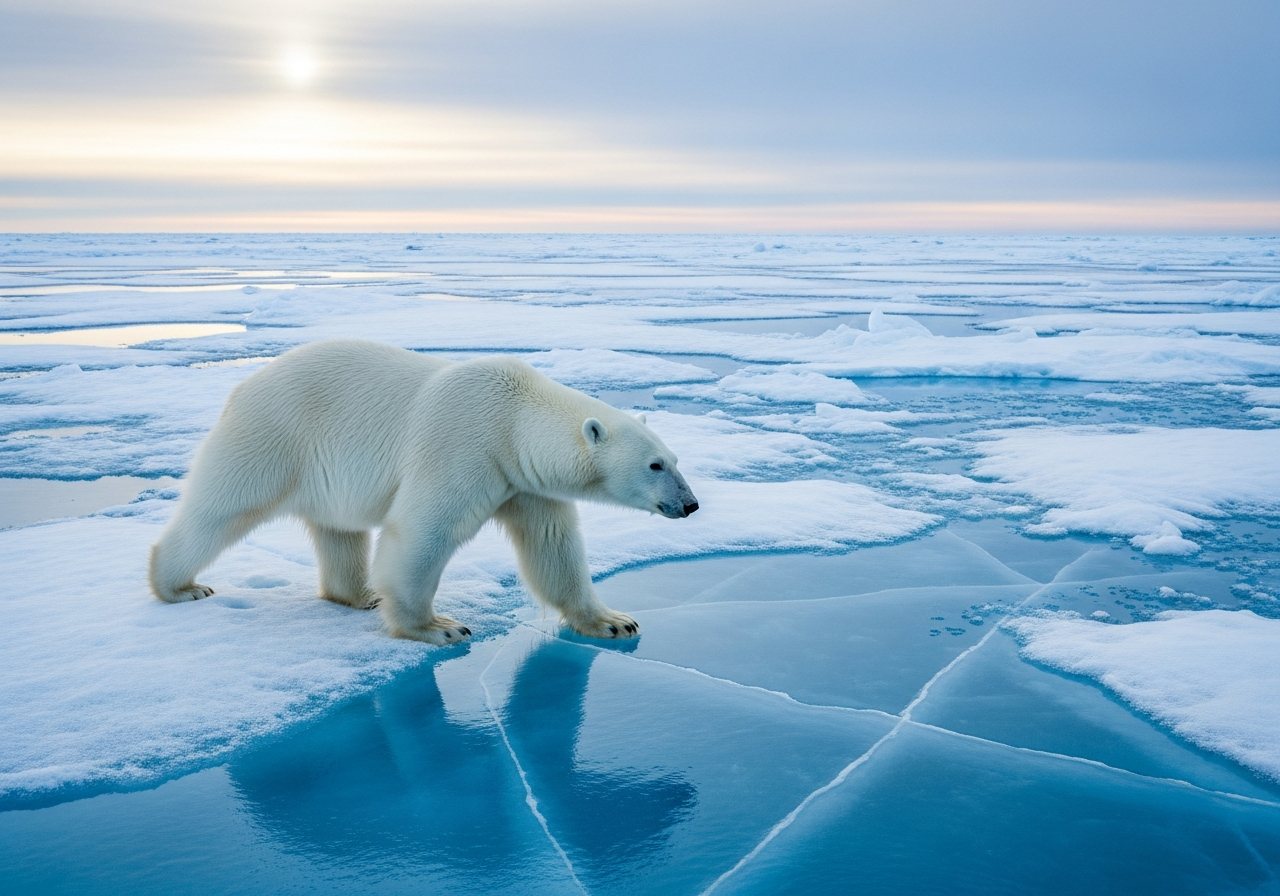
Polar bears are marine carnivores. They hunt ringed and bearded seals from sea ice, taking fat-rich blubber. Eggs, berries and rubbish on shore are poor substitutes when ice fails. They do not live in Antarctica and they do not eat penguins. Figures checked 13 August 2026.
What do polar bears actually eat?
Seals first — ringed and bearded especially — plus other marine mammals when they can. “Carnivore (mainly seals)” was the least wrong template line; the missing half is that the hunt happens on ice. IUCN lists the species Vulnerable because that ice is shrinking, not because they forgot how to chew.
How do polar bears find food?
Smell over long distances, then still-hunting at breathing holes or breaking into birth lairs. Cubs learn by following the female. Ice-free months force swimming and scavenging. That is not a seasonal “broader diet” success story; it is a fasting season that is getting longer.
What happens to the food web when ice fails?
Apex predators that cannot reach seals do not become harmless berry-eaters. They come ashore thinner, closer to people, and more likely to be shot in defence. Seal populations and ice together set carrying capacity — not a fenced terrestrial park.
Does feeding start conflict?
Yes. Never feed wild polar bears. Habituation raises injury risk and lethal management. Captive diets are a zoo problem, not a wild menu. Rubbish dumps are a conflict forecast, not a conservation plan.
Why does the body match blubber, not berries?
Thick fat, dense fur, and large paws for ice and swimming are paid for by seal fat. Fur looks white and is translucent; skin is black. That is Arctic engineering. It is a poor fit for an ice-free shore summer.
What does a still-hunt actually look like?
Waiting at a breathing hole, then a short rush. Access to ice is the diet. WARN’s habitat appeal funds partners — World Animal Rescue Network does not run Arctic field camps.
Sources
Polar Bear FAQs
What do polar bears eat?
Polar bears are marine carnivores. The diet that keeps them in condition is ringed and bearded seals, taken from sea ice — especially the fat-rich blubber. Bird eggs, berries, carcasses and rubbish are poor substitutes when ice fails. They do not hunt penguins; they do not live in Antarctica.
Can polar bears live on land foods?
Not as a long-term replacement for seals. Longer ice-free summers push bears onto shore, where they scavenge and sample plants. Those calories rarely match blubber. Poorer body condition and lower cub survival follow. That is the dietary half of the Vulnerable listing.
Do polar bears eat people?
Attacks are uncommon relative to Arctic overlap but they happen, especially when hungry bears spend more time near towns. Never feed wild polar bears. Habituation plus food is how conflict kills start — for the bear as well as for people.
How does diet link to conservation?
Protect hunting ice and you protect the seal-blubber economy polar bears are built for. World Animal Rescue Network’s habitat appeal funds partners; WARN does not run Arctic field camps.
Who this page is for. This page is about wild diet. Skip it if you need a captive feeding plan from a veterinarian.