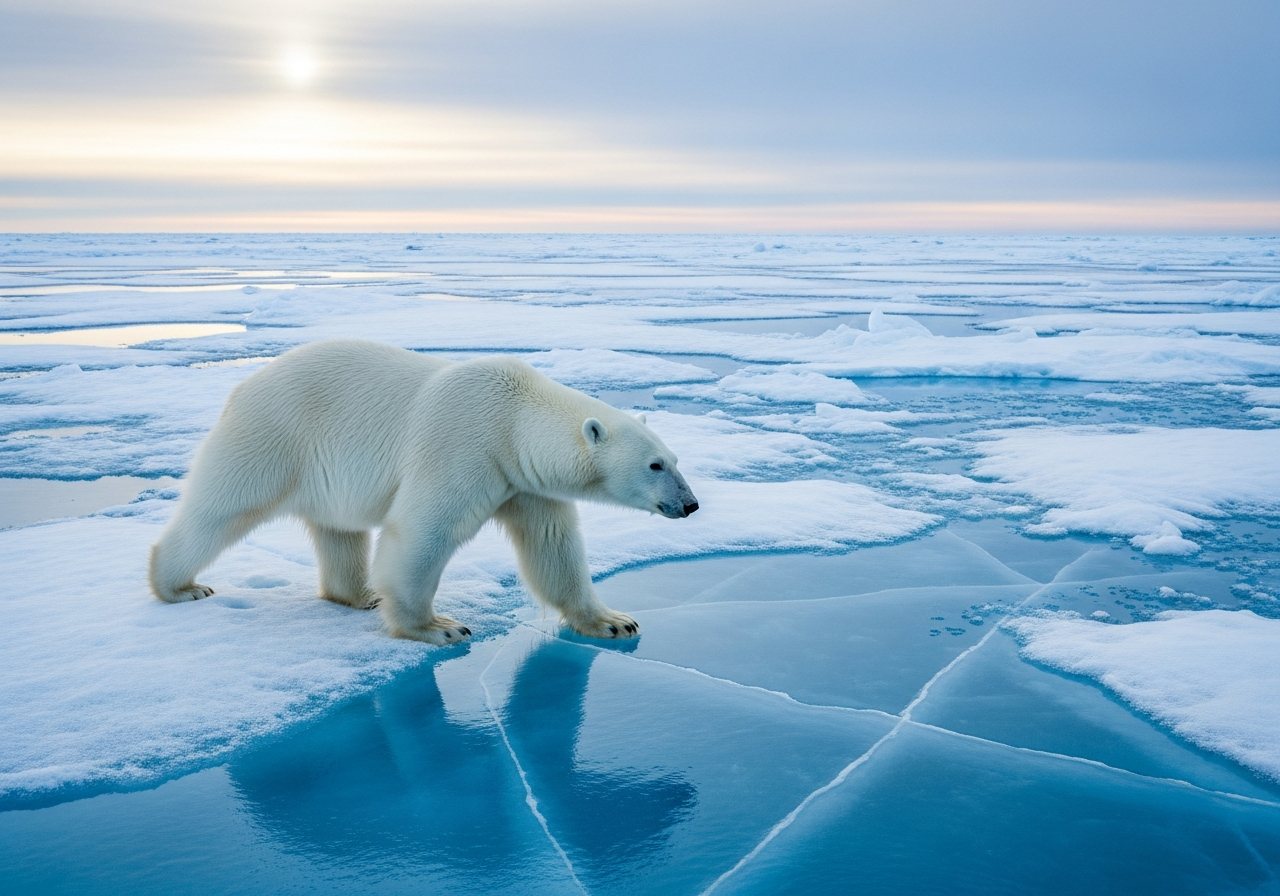
Quick answer
Wild polar bears often live about 15–25 years; some reach around 30. Ice-free fasting seasons cut cub survival and adult condition, so the average is already a climate number. IUCN lists Ursus maritimus as Vulnerable, not Endangered. Figures checked 13 August 2026.
How long do polar bears live in the wild?
Field records cluster around 15–25 years; a minority reach ~30. Treat that as a planning range. Adults weigh on the order of 300–700 kg. A single “~25 years” headline hid the lower tail, which is where cubs and poor ice years sit.
What shortens polar bear lives?
Failed seal hunts when ice forms late and melts early. Conflict kills when hungry bears spend longer near towns. Disease and injury matter; “roadkill wherever they share landscapes with people” was a template from terrestrial mammals. Ranking of threats follows ice, not suburbia.
What helps polar bears live longer?
Hunting ice that lasts, plus community programmes that keep people and bears apart on land. Captive veterinary care extends some lives; it is not a wild substitute. Never feed wild polar bears — snacks shorten lives via habituation.
How do life stages change the risk?
Cubs die more often than prime adults, especially after poor maternal hunting seasons. Older animals lose condition and teeth. Slow reproduction means each failed cohort is a multi-year hole in a subpopulation — which is why ice forecasts belong on a lifespan page.
Why does “marine mammal” belong on a lifespan page?
They age on ice and coasts but feed from the ocean. Long swims between ice floes cost energy that cubs and thin adults may not have. Range is Arctic only.
Why does Vulnerable status truncate averages?
The listing is a forecast of ice-driven decline, not a claim that only a few hundred remain (PBSG: 22,000–31,000). WARN’s habitat appeal funds partners — World Animal Rescue Network does not run Arctic field camps.
Sources
Polar Bear FAQs
How long do polar bears live?
Wild polar bears often live about 15–25 years; some reach around 30. Captive animals with veterinary care can live longer. Ice-free fasting seasons cut cub survival and adult condition, so “typical lifespan” is already a climate number. IUCN lists the species Vulnerable, not Endangered.
What shortens polar bear lives?
Failed hunting seasons when sea ice forms late and melts early, plus conflict kills when hungry bears come ashore near towns. Infectious disease and injury matter; roadkill is not the Arctic driver. Cubs die more often than prime adults.
Do they live in Antarctica while they age?
No. Range is circumpolar Arctic sea ice and coasts. Mixing poles is a habitat error, not a lifespan trivia extra. Global abundance remains on the order of 22,000–31,000, split among 20 subpopulations.
What actually helps polar bears live longer?
Hunting ice that lasts, and fewer defence kills on land. World Animal Rescue Network’s habitat appeal funds partners; WARN does not run Arctic field camps.
Who this page is for. This page is a species lifespan range. Skip it if you need a prognosis for one named animal.