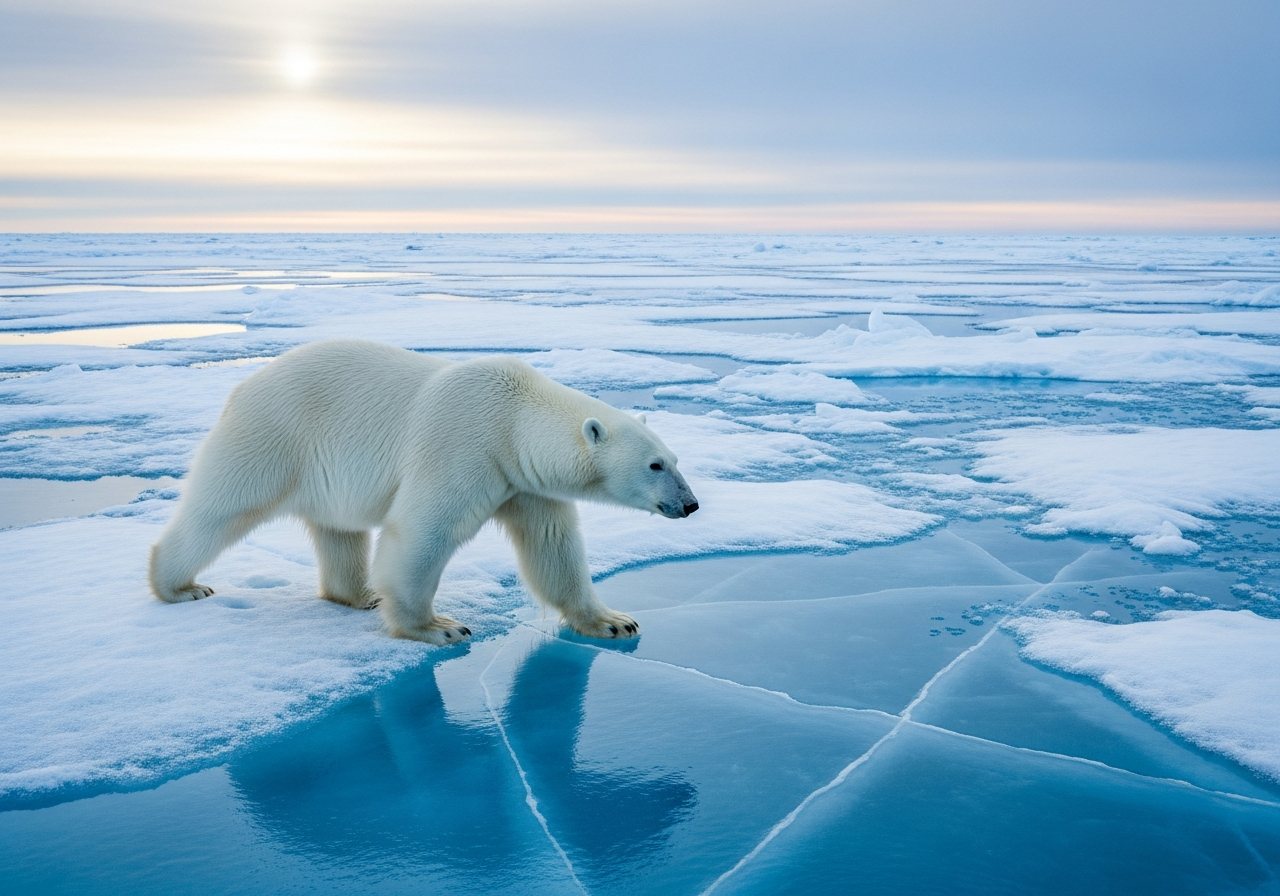
Quick answer
On land, short bursts are commonly cited around 40 km/h (25 mph). They overheat quickly, so it is not a distance pace. Swimming is slower but can last for kilometres. A human cannot outrun one. Arctic sea ice — not Antarctica. Figures checked 13 August 2026.
How fast on land — really?
Peak figures cluster around 40 km/h for a short rush on packed snow or tundra. That is a commonly cited estimate, not a weekly radar census of 20 subpopulations. Adults 300–700 kg do not hold cheetah mechanics. Treat viral single numbers as marketing.
Can they hold 40 km/h?
No. Still-hunting seals is patience, not a marathon. The burst is for a close rush or a conflict on land. Swimming between floes is the endurance gait — slower, longer, costly for thin cubs and poor-condition adults when ice gaps widen.
Why do they overheat if they are “built for cold”?
Fat and dense fur dump heat badly once muscle works hard. Large paws spread weight on ice and paddle in water. That is Arctic engineering for blubber hunting, not a racetrack. Overheating is why a long chase is a bad plan for the bear as well as for you.
How should you read a 25 mph claim?
Ask land or water, what distance, and whether anyone measured it. Do not run to “test” it. Running can trigger chase. Churchill and Svalbard protocols exist because hungry bears on land are not a sports fixture.
Does speed change the listing?
No. IUCN lists them Vulnerable because sea ice is shrinking, not because they got slower. PBSG still cites about 22,000–31,000 globally. WARN’s habitat appeal funds partners — WARN does not run Arctic field camps.
Why is ice the track?
They hunt seals from ice. Land speed only matters when ice fails and bears come ashore. That is the conflict half of the Vulnerable story — not a fenced terrestrial reserve, and not Antarctica.
Sources
Polar Bear FAQs
How fast is a polar bear?
On land, short bursts are commonly cited around 40 km/h (25 mph). They overheat quickly in that fur and fat, so it is not a distance pace. Swimming is slower — on the order of 10 km/h — but they can cover many kilometres of open water. A human cannot outrun a bear on ice or tundra. They live in the Arctic, not Antarctica.
Can a polar bear outrun a human?
Yes, over a short burst. Do not run: running can trigger chase. Back toward a vehicle or building if you have one. Never feed. Ice-free summers put more hungry bears near towns, which is a conflict forecast, not a race.
Are they faster in water than on land?
No. Land bursts are faster; water is the commuting gait when ice gaps open. Large paws paddle. That swimming ability is why they are classed as marine mammals even though they den on land.
What actually helps besides not racing one?
Hunting ice that lasts. World Animal Rescue Network’s habitat appeal funds partners; WARN does not run Arctic field camps. IUCN lists polar bears Vulnerable, not Endangered.
Who this page is for. Read the polar bear profile if you want the full biology; this page answers one question.