Image sourcing: see credits & licences
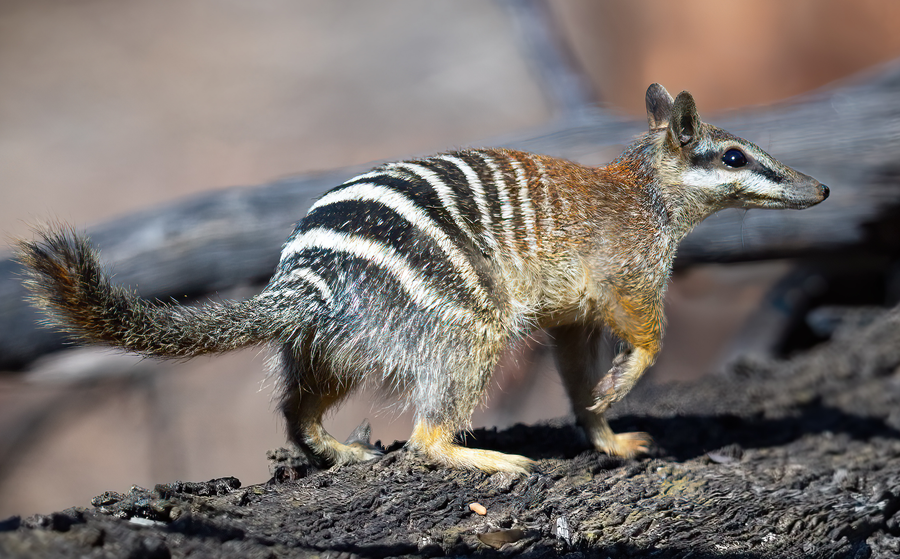
The numbat (Myrmecobius fasciatus) is a mammal of the family Myrmecobiidae, in the order Dasyuromorphia.
Quick answer
The numbat (Myrmecobius fasciatus) is a diurnal, termite-eating marsupial of southwest Western Australia, banded with white stripes and a long sticky tongue. Adults weigh about 0.5 kg and are Endangered — foxes, cats, and woodland clearing confined them to tiny remnants and fenced reintroduction sites.
Top questions about the Numbat
Numbat facts at a glance
- Weight 500 g
- Length 35 cm
- Top speed 20 km/h
- Lifespan 5 years
| Scientific name | Myrmecobius fasciatus |
|---|---|
| Diet | Termites |
| Habitat | Eucalypt woodland and wandoo forest |
| Lifespan | Around 5 years in the wild (varies by population and captivity). |
| Weight | About 0.5 kg typical adult mass (sex and region vary). |
| Top speed | Up to roughly 20 km/h when moving at speed. |
| Conservation status | Endangered (IUCN) |
| Kingdom | Animalia |
|---|---|
| Phylum | Chordata |
| Class | Mammalia |
| Order | Dasyuromorphia |
| Family | Myrmecobiidae |
| Genus | Myrmecobius |
Where it lives
The numbat (Myrmecobius fasciatus) is native to Southwest Western Australia remnant populations and reintroduction sites. — recorded across Oceania in this guide’s range summary.
For occurrence records, see GBIF species search and sources below.
How big is a numbat?
An adult numbat measures 35 cm long — about 20% of the height of an average adult person (1.73 m) — and weighs around 500 g, about 1% of an average adult’s body weight (70 kg).
Length vs an average adult’s height (to scale)
What is a group of numbats called?
Group name (collective noun)
A group of Numbats is called a colony.
Baby name
A baby Numbat is called a joey.
Explore more animal collective nouns and baby animal names .
Day-active termite hunter
Unlike most small Australian marsupials, numbats forage by day. Up to 50 tiny teeth and a long tongue flick termites from shallow soil galleries. They do not dig deep mounds like echidnas; they expose subsurface runs.
Termites by the thousand
A single numbat may eat roughly 15,000–20,000 termites daily. They rarely take ants in quantity — termites are the staple. Across its range it is tied to eucalypt woodland and wandoo forest, and field accounts emphasise this species’ distinctive ecology rather than generic habitat labels.
Wandoo woodland remnants
Eucalypt woodland and wandoo forest of southwest Western Australia, plus fenced reintroduction sites. Hollow logs provide critical shelter. Across its range it is tied to eucalypt woodland and wandoo forest, and field accounts emphasise this species’ distinctive ecology rather than generic habitat labels.
Endangered fox prey
Red foxes and feral cats drove catastrophic declines; IUCN lists numbats Endangered. Fox baiting, cat control, and predator-proof fences underpin recovery.
Explore the Numbat
Close relatives
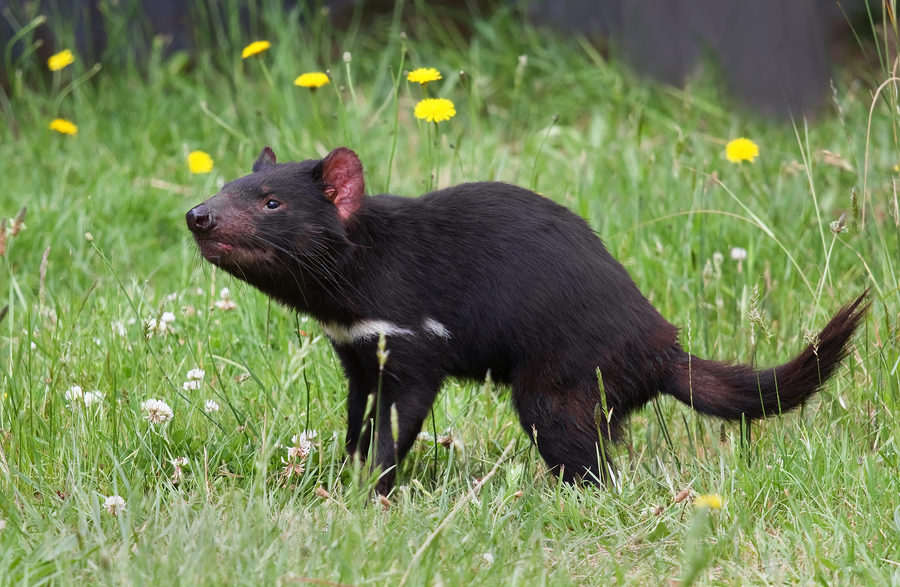
- Tasmanian Devil Same order
- Spotted-tailed Quoll Same order
- Eastern Quoll Same order
- Lion Same class
Collections
Range & geography
Conservation status of the Numbat
The numbat (Myrmecobius fasciatus) is listed as Endangered on the IUCN Red List. Endangered (EN) means a species faces a very high risk of extinction in the wild. Populations are usually declining sharply due to habitat loss, hunting, disease, or climate pressure. It sits one level below Critically Endangered on the IUCN Red List.
Main threats to the numbat
- Predation by introduced foxes and cats
- Habitat loss from land clearing
- Fire in woodland habitats
- Small, isolated populations
Numbat (Myrmecobius fasciatus) was most recently assessed for the IUCN Red List in 2016. Look up on the IUCN Red List .
Frequently asked questions about the Numbat
Why are numbats active during the day?
Termites are available in shallow soil by day, and diurnal foraging may reduce competition with nocturnal insectivores.
How many termites does a numbat eat?
Estimates often cite around 15,000–20,000 termites per day for an adult.
Are numbats related to bandicoots?
They are marsupials in their own family (Myrmecobiidae), specialised for termites rather than a bandicoot lifestyle.
Why are numbats Endangered?
Predation by foxes and cats plus clearing of hollow-rich woodland collapsed their range.
Where do numbats live now?
Small areas of southwest Western Australia and managed reintroduction sites.
What is a group of numbats called?
A group of Numbats is called a colony.
What is a baby numbat called?
A baby Numbat is called a joey.
Sources & references
This guide is compiled and reviewed against established zoological and conservation references. Key sources for the Numbat:
-
IUCN Red List of Threatened Species
Conservation status (Endangered) reflects the IUCN Red List category for Myrmecobius fasciatus, most recently assessed in 2016.
-
iNaturalist — observations & photos
Search citizen-science observations and community IDs for Myrmecobius fasciatus. Useful for range checks and recent sightings — not a substitute for formal Red List status.
-
GBIF — occurrence data
Global Biodiversity Information Facility species search for Myrmecobius fasciatus. Explore published occurrence records used in range research.
-
Global Animal Guide editorial standards
How we research, source, review, and update every guide for accuracy.