Image sourcing: see credits & licences
The magnificent frigatebird (Fregata magnificens) is a bird of the family Fregatidae, in the order Suliformes.
Quick answer
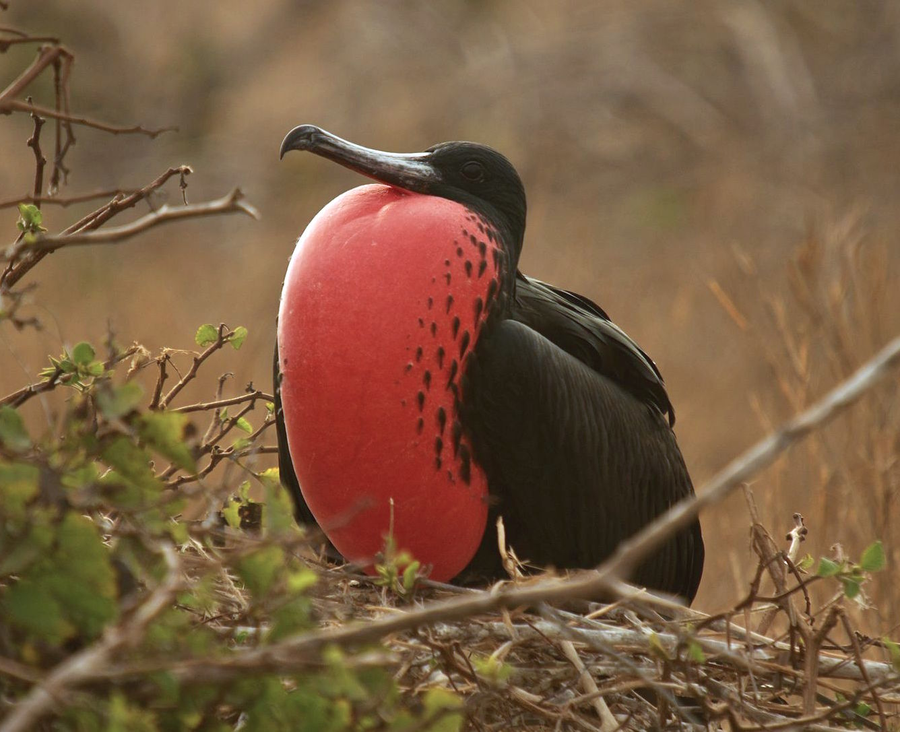
The magnificent frigatebird (Fregata magnificens) is a light-bodied seabird of tropical Atlantic and eastern Pacific coasts that soars for hours and steals fish from other birds. Breeding males inflate a scarlet throat pouch; adults weigh about 1.5 kg despite a 2 m wingspan. Listed Least Concern.
Top questions about the Magnificent Frigatebird
Magnificent Frigatebird facts at a glance
- Weight 1.5 kg
- Length 1 m
- Top speed 90 km/h
- Lifespan 25 years
| Scientific name | Fregata magnificens |
|---|---|
| Diet | Carnivore (fish and kleptoparasitism) |
| Habitat | Coastal skies and mangrove islands |
| Lifespan | Around 25 years in the wild (varies by population and captivity). |
| Weight | About 1.5 kg typical adult mass (sex and region vary). |
| Top speed | Up to roughly 90 km/h when moving at speed. |
| Conservation status | Least Concern (IUCN) |
| Kingdom | Animalia |
|---|---|
| Phylum | Chordata |
| Class | Aves |
| Order | Suliformes |
| Family | Fregatidae |
| Genus | Fregata |
Where it lives
The magnificent frigatebird (Fregata magnificens) is native to Tropical Atlantic and eastern Pacific coasts from Florida and the Caribbean to Brazil and the Galápagos. — recorded across North America, South America in this guide’s range summary.
For occurrence records, see GBIF species search and sources below.
How big is a magnificent frigatebird?
An adult magnificent frigatebird measures 1 m long — about 58% of the height of an average adult person (1.73 m) — and weighs around 1.5 kg, about 2% of an average adult’s body weight (70 kg).
Length vs an average adult’s height (to scale)
What is a group of magnificent frigatebirds called?
Group name (collective noun)
A group of Magnificent Frigatebirds is called a fleet.
Baby name
A baby Magnificent Frigatebird is called a chick.
Explore more animal collective nouns and baby animal names .
Pirate of tropical skies
Extremely high aspect-ratio wings and tiny feet mean frigatebirds cannot land on water without risking waterlogging. Males inflate a balloon-like red gular sac in courtship.
Fish and kleptoparasitism
They snatch fish and squid near the surface and chase boobies and gulls to force them to drop or disgorge prey — classic kleptoparasitism. Across its range it is tied to coastal skies and mangrove islands, and field accounts emphasise this species’ distinctive ecology rather than generic habitat labels.
Florida to Galápagos coasts
Tropical Atlantic and eastern Pacific mangrove islands and coasts from Florida and the Caribbean to Brazil and the Galápagos. Across its range it is tied to coastal skies and mangrove islands, and field accounts emphasise this species’ distinctive ecology rather than generic habitat labels.
Nest-tree dependence
Least Concern, but colonies need undisturbed mangrove or scrub nesting trees; coastal development can displace rookeries. Across its range it is tied to coastal skies and mangrove islands, and field accounts emphasise this species’ distinctive ecology rather than generic habitat labels.
Explore the Magnificent Frigatebird
Close relatives
- Blue-footed Booby Same order
- Northern Gannet Same order
- Chicken Same class
- Wandering Albatross Same class
Conservation status of the Magnificent Frigatebird
The magnificent frigatebird (Fregata magnificens) is listed as Least Concern on the IUCN Red List. Least Concern (LC) is the IUCN's lowest-risk category, assigned to widespread, abundant species that have been evaluated and found not to be threatened. It does not mean a species faces no pressures — only that it is not currently at risk of extinction.
The magnificent frigatebird (Fregata magnificens) is assessed on the IUCN Red List. Look up on the IUCN Red List .
Frequently asked questions about the Magnificent Frigatebird
Why can't frigatebirds land on the sea?
Their feathers wet easily and feet are tiny — water landings risk drowning.
What is the red pouch on male frigatebirds?
An inflatable gular sac used in courtship displays.
Do frigatebirds only steal food?
No — they also catch their own fish and squid, but kleptoparasitism is frequent.
How big is a frigatebird's wingspan?
Around 2 m, despite a relatively light body.
Where do magnificent frigatebirds live?
Tropical coasts of the Atlantic and eastern Pacific from Florida and the Caribbean to Brazil and the Galápagos.
What is a group of magnificent frigatebirds called?
A group of Magnificent Frigatebirds is called a fleet.
What is a baby magnificent frigatebird called?
A baby Magnificent Frigatebird is called a chick.
Sources & references
This guide is compiled and reviewed against established zoological and conservation references. Key sources for the Magnificent Frigatebird:
-
IUCN Red List of Threatened Species
Conservation status (Least Concern) reflects the IUCN Red List category for Fregata magnificens.
-
iNaturalist — observations & photos
Search citizen-science observations and community IDs for Fregata magnificens. Useful for range checks and recent sightings — not a substitute for formal Red List status.
-
GBIF — occurrence data
Global Biodiversity Information Facility species search for Fregata magnificens. Explore published occurrence records used in range research.
-
eBird — bird observations
Cornell Lab eBird target search for Magnificent Frigatebird. Check recent checklists and seasonal abundance where birders report this species.
-
Global Animal Guide editorial standards
How we research, source, review, and update every guide for accuracy.