Image sourcing: see credits & licences
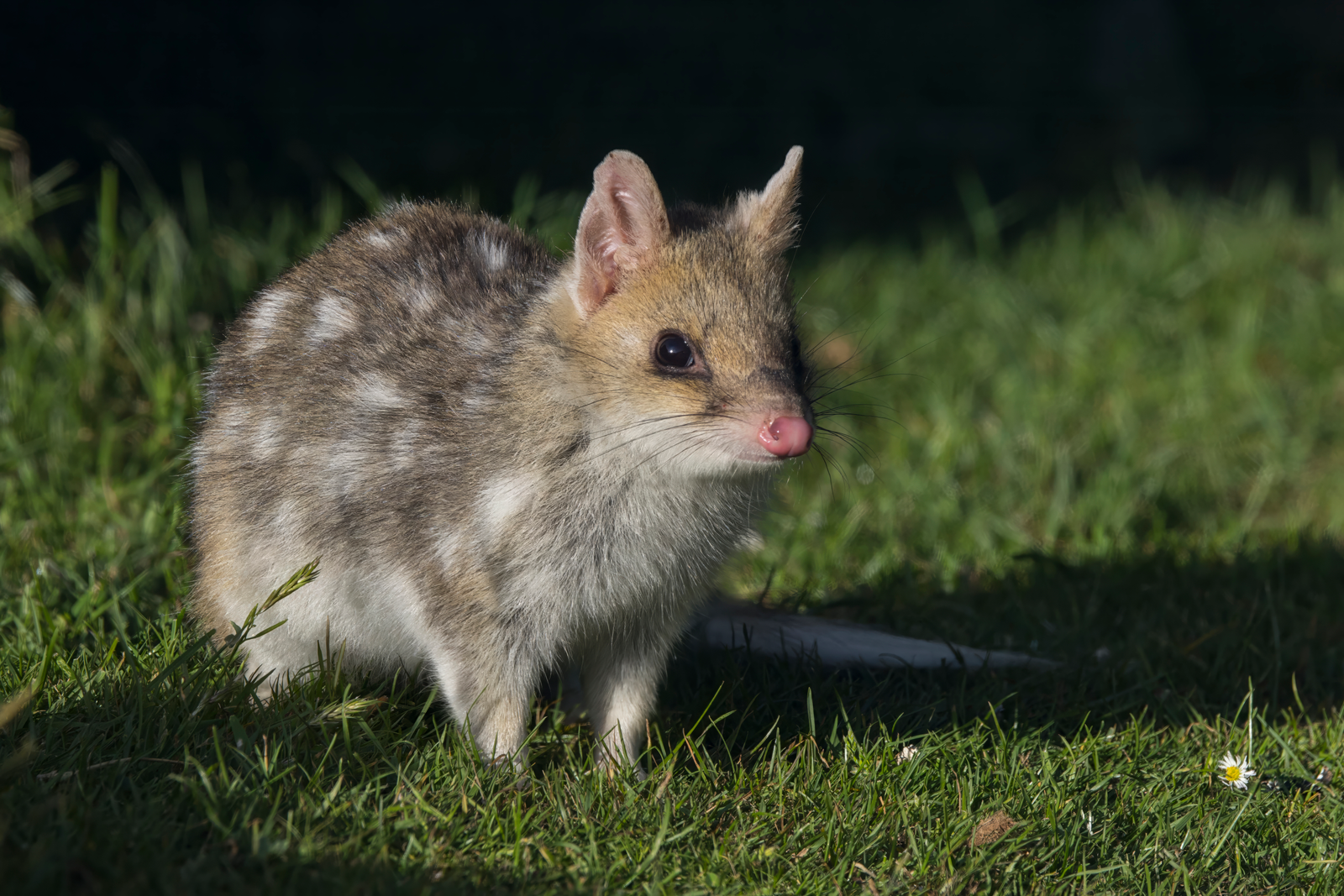
The eastern quoll (Dasyurus viverrinus) is a mammal of the family Dasyuridae, in the order Dasyuromorphia.
Quick answer
The eastern quoll (Dasyurus viverrinus) is a spotted marsupial predator now confined to Tasmania after mainland extinction. Adults weigh about 1.3 kg, hunt insects and small vertebrates, and are listed Endangered.
Top questions about the Eastern Quoll
Eastern Quoll facts at a glance
- Weight 1.3 kg
- Length 35 cm
- Top speed 30 km/h
- Lifespan 4 years
| Scientific name | Dasyurus viverrinus |
|---|---|
| Diet | Carnivore |
| Habitat | Grassland and woodland |
| Lifespan | 3–5 years |
| Weight | 1.0–1.5 kg |
| Top speed | up to 30 km/h |
| Conservation status | Endangered (IUCN) |
| Kingdom | Animalia |
|---|---|
| Phylum | Chordata |
| Class | Mammalia |
| Order | Dasyuromorphia |
| Family | Dasyuridae |
| Genus | Dasyurus |
Where it lives
The eastern quoll (Dasyurus viverrinus) is native to Tasmania; extinct on mainland Australia. — recorded across Oceania in this guide’s range summary.
For occurrence records, see GBIF species search and sources below.
How big is a eastern quoll?
An adult eastern quoll measures 35 cm long — about 20% of the height of an average adult person (1.73 m) — and weighs around 1.3 kg, about 2% of an average adult’s body weight (70 kg).
Length vs an average adult’s height (to scale)
What is a group of eastern quolls called?
Group name (collective noun)
A group of Eastern Quolls is called a colony.
Baby name
A baby Eastern Quoll is called a joey.
Explore more animal collective nouns and baby animal names .
Spotted marsupial hunter
Eastern quolls resemble small cats with white spots on brown or black coats. They are agile nocturnal predators with crushing teeth for insects and small mammals.
Insects, mice, and carrion
Beetles, cockroaches, and small mammals dominate the diet; carrion and fruit are taken opportunistically. Males are larger and more aggressive than females.
Tasmania after mainland loss
Once widespread in southeastern Australia, they vanished from the mainland by the 1960s. Tasmania's farmland and woodland now hold the only wild population.
Endangered by toxoplasmosis and roads
IUCN lists the eastern quoll Endangered. Feral cats spread toxoplasmosis; roadkill and habitat change compound declines. Reintroduction trials continue on mainland sanctuaries.
Explore the Eastern Quoll
Close relatives
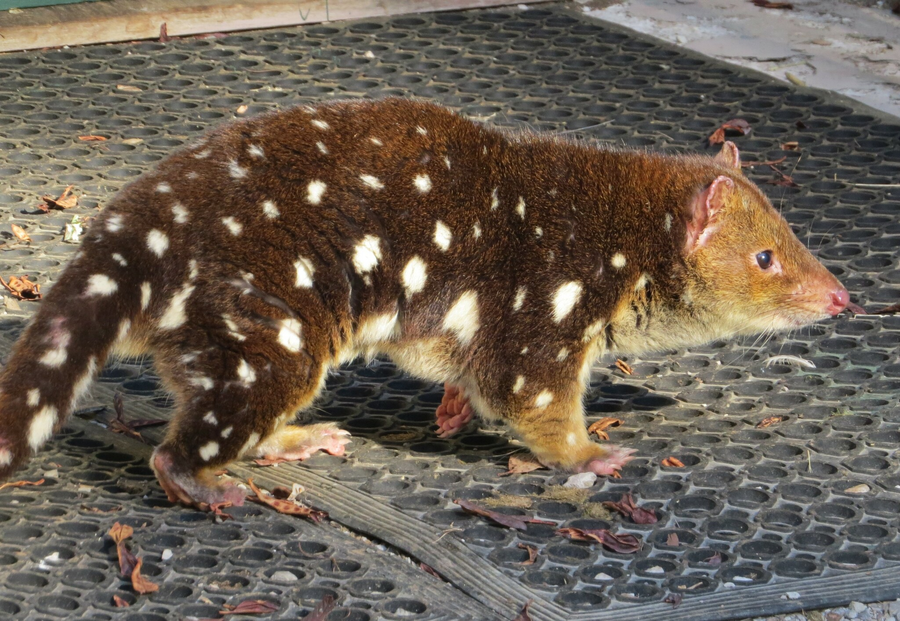
- Spotted-tailed Quoll Same genus
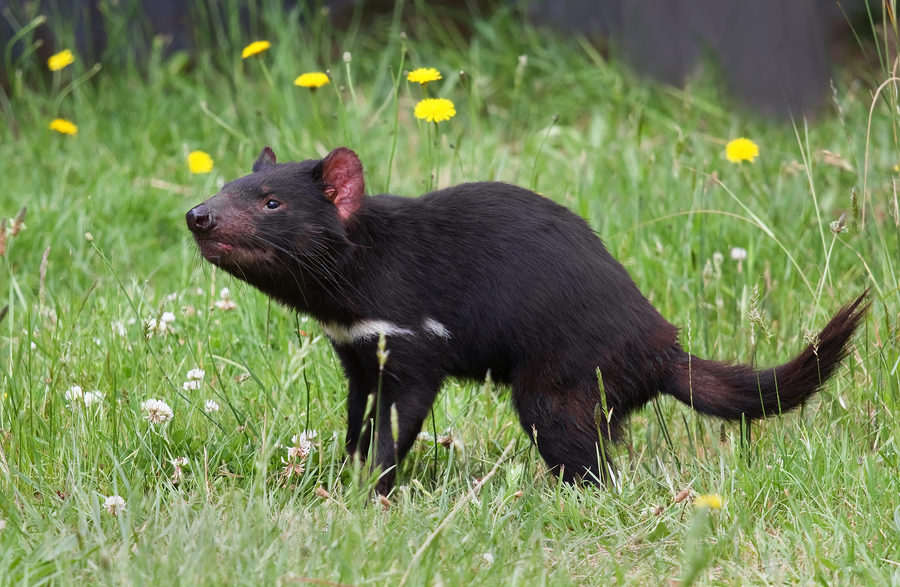
- Tasmanian Devil Same family
- Numbat Same order
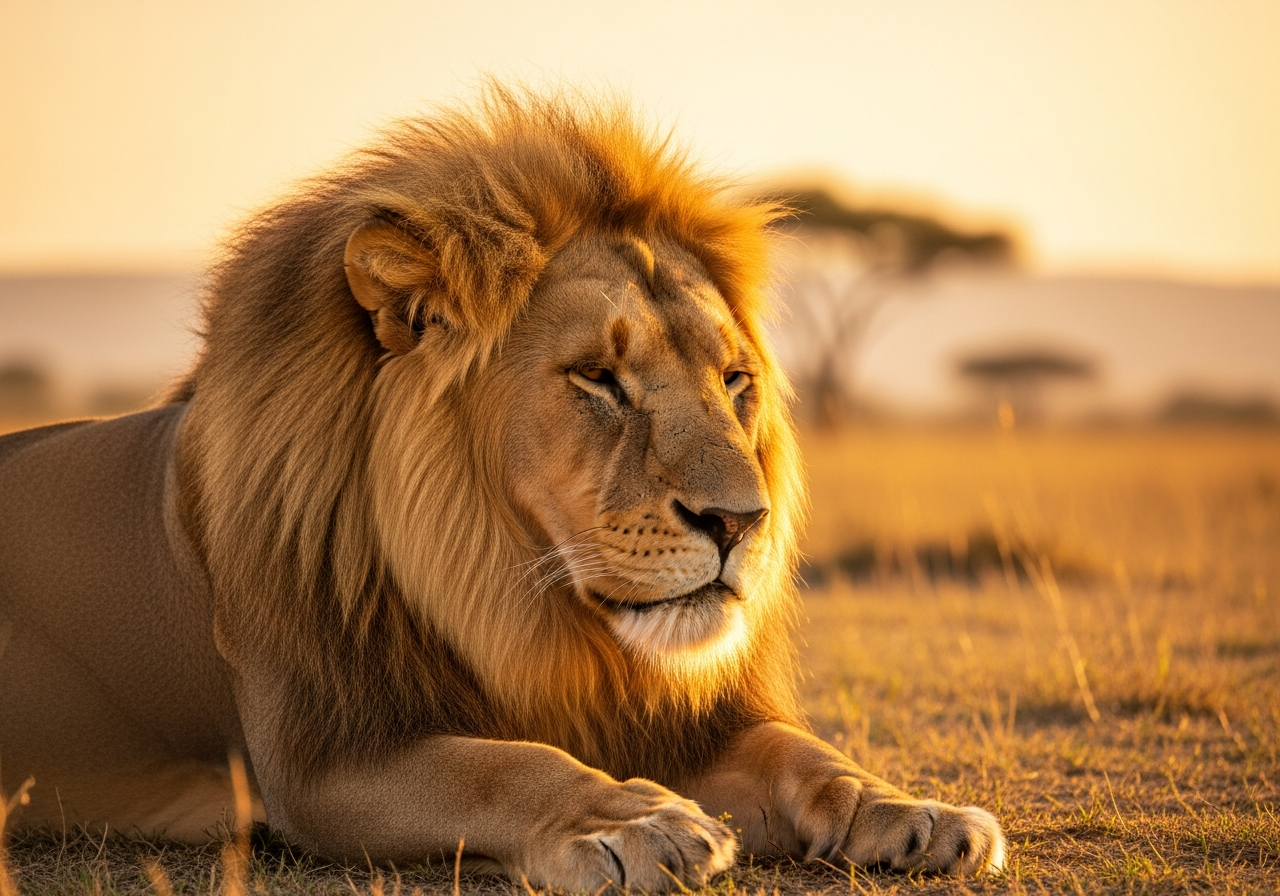
- Lion Same class
Collections
Range & geography
Conservation status of the Eastern Quoll
The eastern quoll (Dasyurus viverrinus) is listed as Endangered on the IUCN Red List. Endangered (EN) means a species faces a very high risk of extinction in the wild. Populations are usually declining sharply due to habitat loss, hunting, disease, or climate pressure. It sits one level below Critically Endangered on the IUCN Red List.
Main threats to the eastern quoll
- Predation by introduced foxes and cats
- Habitat loss and fragmentation
- Secondary poisoning from rodenticides
- Extinct on mainland Australia; Tasmania population declining
Eastern Quoll (Dasyurus viverrinus) was most recently assessed for the IUCN Red List in 2016. Look up on the IUCN Red List .
Frequently asked questions about the Eastern Quoll
Why did eastern quolls disappear from mainland Australia?
Foxes, habitat change, disease, and persecution likely combined to wipe them out on the mainland.
Are eastern quolls related to Tasmanian devils?
Yes — both are dasyurid marsupial carnivores, though quolls are smaller and more arboreal.
What do the white spots on a quoll mean?
They are species-specific markings for camouflage and recognition, not gender indicators alone.
Where can you see wild eastern quolls?
Tasmania — especially farmland edges and national parks at night.
Why is the eastern quoll Endangered?
Only Tasmania holds wild quolls; disease, roadkill, and predator competition keep numbers fragile.
What is a group of eastern quolls called?
A group of Eastern Quolls is called a colony.
What is a baby eastern quoll called?
A baby Eastern Quoll is called a joey.
Sources & references
This guide is compiled and reviewed against established zoological and conservation references. Key sources for the Eastern Quoll:
-
IUCN Red List of Threatened Species
Conservation status (Endangered) reflects the IUCN Red List category for Dasyurus viverrinus, most recently assessed in 2016.
-
iNaturalist — observations & photos
Search citizen-science observations and community IDs for Dasyurus viverrinus. Useful for range checks and recent sightings — not a substitute for formal Red List status.
-
GBIF — occurrence data
Global Biodiversity Information Facility species search for Dasyurus viverrinus. Explore published occurrence records used in range research.
-
Global Animal Guide editorial standards
How we research, source, review, and update every guide for accuracy.