Image sourcing: see credits & licences
Quick answer
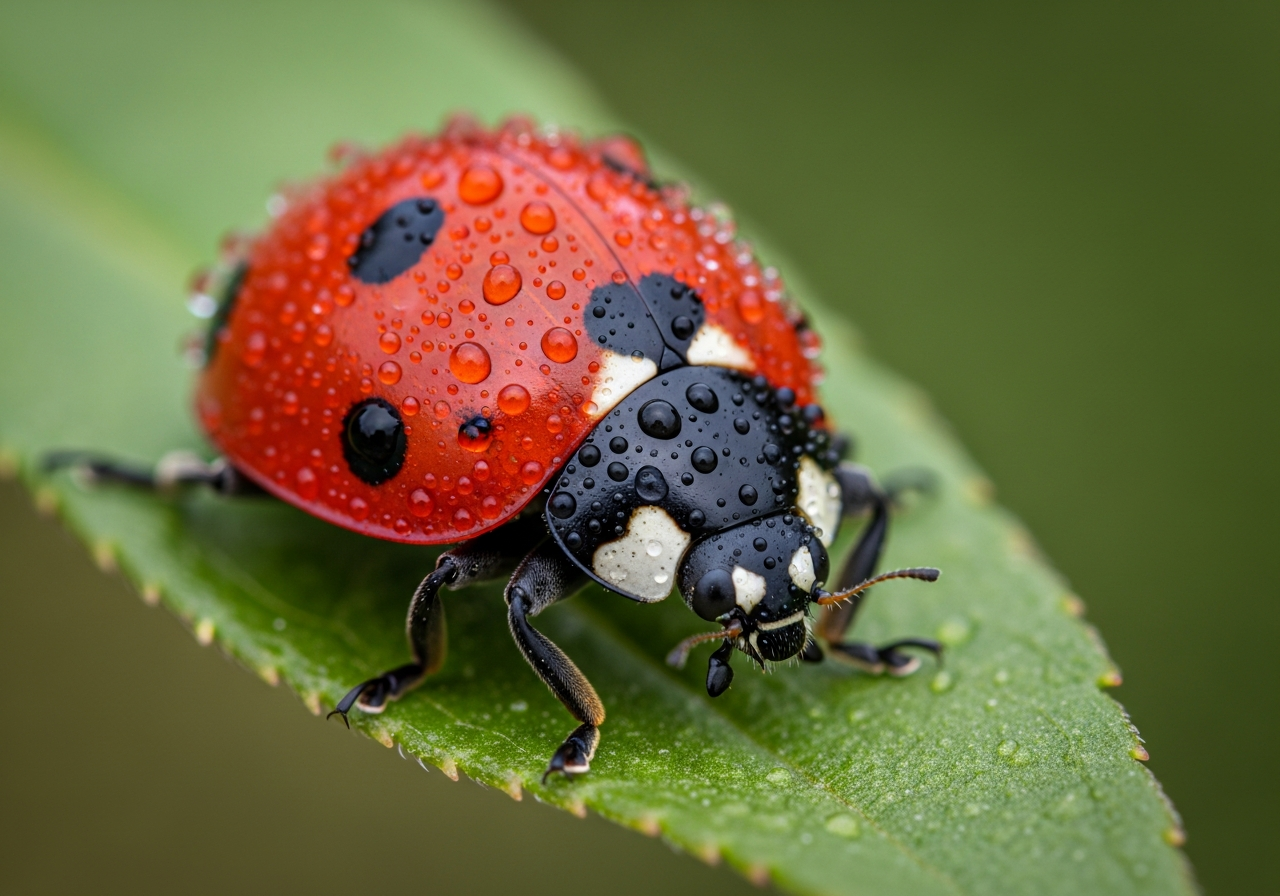
The seven-spot ladybird (Coccinella septempunctata) is a small, red-and-black beetle found in gardens, grasslands, woodlands, and farmland across Europe and beyond. Just 5–8 mm long, it is a voracious predator of aphids and a favourite of gardeners. Ladybirds fly at up to about 24 km/h, live for roughly a year, and use bright warning colours to deter would-be predators.
Top questions about the Ladybug
Ladybug facts at a glance
- Weight 0 g
- Length 1 cm
- Top speed 24 km/h
- Lifespan 1 years
| Scientific name | Coccinella septempunctata |
|---|---|
| Diet | Carnivore (mostly aphids) |
| Habitat | Gardens, grasslands, woodlands, farmland |
| Lifespan | About 1 year |
| Size | 5–8 mm (0.2–0.3 in) long |
| Top speed | ~24 km/h (15 mph) in flight |
| Conservation status | Least Concern (IUCN) |
| Kingdom | Animalia |
|---|---|
| Phylum | Arthropoda |
| Class | Insecta |
| Order | Coleoptera |
| Family | Coccinellidae |
Where it lives
The ladybug (Coccinella septempunctata) is native to Gardens, fields, and woodlands across most of the world, with many species native to Europe, Asia, and North America. — recorded across Africa, Asia, Europe, North America, South America, Oceania in this guide’s range summary.
For occurrence records, see GBIF species search and sources below.
How big is a ladybug?
An adult ladybug measures 1 cm long — a small fraction of the height of an average adult person (1.73 m) — and weighs around 0 g, a small fraction of an average adult’s body weight (70 kg).
Length vs an average adult’s height (to scale)
What is a group of ladybugs called?
Group name (collective noun)
A group of Ladybugs is called a loveliness.
Baby name
A baby Ladybug is called a larva.
Explore more animal collective nouns and baby animal names .
A gardener's ally
The ladybird is one of the most useful insects in any garden because of its appetite for aphids. Both adults and larvae are carnivores that hunt aphids, and a single ladybird can eat thousands of them over its lifetime. By keeping sap-sucking pests in check, ladybirds protect roses, vegetables, and crops without any need for chemicals. Gardeners and farmers actively welcome them as a natural form of pest control.
Warning colours and defence
A ladybird's bright red shell with seven black spots is a classic warning signal to predators that it tastes unpleasant. When threatened, the beetle can release a bitter, yellowish fluid from its leg joints, a defence known as reflex bleeding. This foul-tasting liquid, combined with the bold colours, teaches birds and other predators to leave ladybirds alone. Some species can also play dead to avoid being eaten.
Life cycle and larvae
Ladybirds go through complete metamorphosis, passing from egg to larva to pupa and finally to the familiar spotted adult. The larva looks nothing like the adult, resembling a tiny spiky alligator, and is an even hungrier aphid hunter. After feeding and growing, the larva pupates and emerges as a beetle with a soft, pale shell that hardens and darkens over the following hours. The whole cycle takes only a few weeks in warm weather, and adults live for around a year.
Flight and the spotted shell
The red shell most people notice is actually a pair of hardened wing cases, called elytra, that protect the delicate flying wings folded beneath. When a ladybird takes off, it lifts these covers and unfurls its membranous wings to fly at speeds of up to about 24 km/h. The elytra snap shut again when the beetle lands, shielding its body and giving the insect its rounded, armoured look. This clever arrangement lets ladybirds both fly and stay protected on the ground.
Winter survival and hibernation
As autumn arrives, seven-spot ladybirds seek sheltered spots to see out the cold months, often gathering together in large numbers. They tuck into leaf litter, hollow stems, cracks in bark, and sometimes the corners of window frames and sheds. Clustering conserves warmth and moisture through winter, and the beetles become active again in spring. Widespread and abundant, the seven-spot ladybird is listed as Least Concern and remains a common sight across the countryside.
Dig deeper into the Ladybug
- Ladybug: Key Facts
Ladybugs (Coccinella septempunctata) are insects found across Africa, Asia, Europe, North America, South America, Oceania.
- What Do Ladybugs Eat?
What ladybugs eat: Carnivore (mostly aphids), foraging style, and seasonal shifts in Gardens, grasslands, woodlands, farmland.
- Where Do Ladybugs Live?
Where ladybugs live: Gardens, grasslands, woodlands, farmland, native range cues, and human overlap. Status Least Concern.
Explore the Ladybug
Related Insects
Did you know? Ladybug facts
- Ladybugs, also called ladybirds, are small round beetles best known for their bright red wing cases and black spots.
- Most ladybugs are predators that eat aphids and other small soft-bodied insects. A single ladybug can eat thousands of aphids during its life, which is why gardeners value them.
- Most ladybugs live about one year. They spend the colder months in a dormant state and become active again when the weather warms in spring.
- A ladybug's bright colors and spots warn predators that it tastes bad. The pattern signals that eating the beetle would be unpleasant, helping it avoid being attacked.
- Yes. Ladybugs eat aphids and other plant pests, making them a natural form of pest control. Many gardeners welcome or even release ladybugs to protect their plants.
- Conservation: Least Concern (IUCN).
Diet & feeding
Ladybug feeds primarily as a carnivore (mostly aphids). Ladybugs are small, dome-shaped beetles with hard wing cases that are most often red or orange with black spots, though some species are yellow or black. The bright colors are a warning to predators that the beetle tastes unpleasant. When threatened, a ladybug can
Adaptations
- Ladybugs are small, dome-shaped beetles with hard wing cases that are most often red or orange with black spots, though some species are yellow or black. The bright colors are a warning to predators that the beetle tastes unpleasant. When threatened, a ladybug can release a foul-smelling fluid from its leg joints.
- Most ladybugs are predators that feed mainly on aphids and other soft-bodied plant pests. A single ladybug can eat thousands of aphids over its life, and the larvae are even hungrier hunters. This appetite makes ladybugs popular natural pest control in gardens and on farms.
Behaviour & ecology
- Ladybugs are small, dome-shaped beetles with hard wing cases that are most often red or orange with black spots, though some species are yellow or black. The bright colors are a warning to predators that the beetle tastes unpleasant. When threatened, a ladybug can release a foul-smelling fluid from its leg joints.
- Most ladybugs are predators that feed mainly on aphids and other soft-bodied plant pests. A single ladybug can eat thousands of aphids over its life, and the larvae are even hungrier hunters. This appetite makes ladybugs popular natural pest control in gardens and on farms.
- Ladybugs go through complete metamorphosis, passing from egg to larva to pupa to adult. The larvae look long and spiky, quite unlike the rounded adults, and spend their time crawling over plants hunting prey. The whole cycle can take just a few weeks in warm weather.
Communication
- Ladybug uses scent, posture, and vocal signals to mark territory and coordinate social behaviour.
- Communication intensity often peaks during breeding seasons and territorial disputes.
Habitat & range
Gardens, grasslands, woodlands, farmland
Ecological role
Ladybug acts as a predator that helps regulate prey populations and maintain balance in gardens, grasslands, woodlands, farmland.
Conservation status of the Ladybug
The ladybug (Coccinella septempunctata) is listed as Least Concern on the IUCN Red List. Least Concern (LC) is the IUCN's lowest-risk category, assigned to widespread, abundant species that have been evaluated and found not to be threatened. It does not mean a species faces no pressures — only that it is not currently at risk of extinction.
The ladybug (Coccinella septempunctata) is assessed on the IUCN Red List. Look up on the IUCN Red List .
Frequently asked questions about the Ladybug
What do ladybirds eat?
Ladybirds are carnivores that feed mainly on aphids, and both the adults and larvae are enthusiastic hunters. A single ladybird can eat thousands of aphids in its lifetime, which makes the beetle a valuable natural pest controller in gardens and on farms.
Why are ladybirds red with spots?
The bright red shell and black spots are a warning to predators that the ladybird tastes bad. Combined with a bitter fluid the beetle can release when threatened, these colours teach birds and other hunters to avoid eating it.
How long do ladybirds live?
Most ladybirds live for about a year. They spend the winter in hibernation and become active again in spring, feeding, breeding, and dying within a single yearly cycle.
Do ladybirds bite?
Ladybirds can give a small, harmless nip if handled, but they are not dangerous to people. They have no venom, and any pinch is far too weak to break the skin in a meaningful way.
Where do ladybirds go in winter?
In autumn ladybirds look for sheltered places to hibernate, such as leaf litter, hollow stems, bark crevices, and sometimes window frames and sheds. They often gather in large clusters, which helps them conserve warmth and moisture until spring.
How many spots does a seven-spot ladybird have?
As the name suggests, the seven-spot ladybird has seven black spots on its red wing cases. The number and pattern of spots vary between different ladybird species and are a useful way to tell them apart.
What is a group of ladybugs called?
A group of Ladybugs is called a loveliness.
What is a baby ladybug called?
A baby Ladybug is called a larva.
Sources & references
This guide is compiled and reviewed against established zoological and conservation references. Key sources for the Ladybug:
-
IUCN Red List of Threatened Species
Conservation status (Least Concern) reflects the IUCN Red List category for Coccinella septempunctata.
-
iNaturalist — observations & photos
Search citizen-science observations and community IDs for Coccinella septempunctata. Useful for range checks and recent sightings — not a substitute for formal Red List status.
-
GBIF — occurrence data
Global Biodiversity Information Facility species search for Coccinella septempunctata. Explore published occurrence records used in range research.
- IUCN Red List — Coccinella septempunctata.
Conservation status (Least Concern) and population trends.
- Animal Diversity Web — Coccinella septempunctata. University of Michigan Museum of Zoology.
Life history, morphology, and range.
- Wikipedia — Ladybug.
General taxonomy and overview (cross-check primary sources).
-
Global Animal Guide editorial standards
How we research, source, review, and update every guide for accuracy.