Magpie
Pica pica
Quick answer
Magpies (Pica pica) are birds found across Europe, Asia, Africa. The bold, brilliant problem-solver of the crow family. Adults typically weigh 200–250 g (7–9 oz), reach speeds of up to 30 km/h (19 mph), and live About 5 years (up to 21). They feed on omnivore (insects, scraps, fruit, eggs) and are listed as Least Concern on the IUCN Red List. Open countryside with trees, farmland, and towns across Europe, much of temperate Asia, and North Africa.
Magpie facts at a glance
| Scientific name | Pica pica |
|---|---|
| Diet | Omnivore (insects, scraps, fruit, eggs) |
| Habitat | Farmland, woodland edges, parks, suburbs |
| Lifespan | About 5 years (up to 21) |
| Weight | 200–250 g (7–9 oz) |
| Wingspan | 52–60 cm (20–24 in) |
| Conservation status | Least Concern (IUCN) |
| Kingdom | Animalia |
|---|---|
| Phylum | Chordata |
| Class | Aves |
| Order | Passeriformes |
| Family | Corvidae |
| Genus | Pica |
What is a group of magpies called?
Group name (collective noun)
A group of Magpies is called a tiding. It is also known as a mischief or a tittering.
Baby name
A baby Magpie is called a chick.
Explore more animal collective nouns and baby animal names .
Range and habitat
Magpies inhabit Open countryside with trees, farmland, and towns across Europe, much of temperate Asia, and North Africa. Their preferred habitat includes farmland, woodland edges, parks, suburbs, where they find food, shelter, and breeding sites. Population density varies with prey availability, water access, and human disturbance. Protected areas and intact corridors remain essential for long-term persistence across Europe, Asia, Africa.
Physical characteristics and behaviour
Adult magpies typically measure about 0.45 m in length and weigh 200–250 g (7–9 oz). They can sprint at up to 30 km/h (19 mph) when hunting or escaping predators. Magpies are known for the bold, brilliant problem-solver of the crow family — social structure, daily activity, and seasonal movements all reflect pressures in their native environment.
Diet and ecological role
Magpies feed primarily on omnivore (insects, scraps, fruit, eggs). Foraging strategy depends on season, local prey or plant abundance, and competition with other species. As birds, they play a measurable role in their ecosystem — controlling prey numbers, dispersing seeds, or shaping habitat through feeding and movement patterns that other wildlife depends on.
Conservation and human interaction
The IUCN lists magpies as Least Concern. Habitat loss, hunting, climate change, and conflict with people are among the main threats worldwide. Responsible ecotourism, anti-poaching patrols, and community-based conservation help in parts of their range. Never approach or feed wild magpies — observe from a safe distance and support reputable conservation organisations.
Dig deeper into the Magpie
- How Fast Is A Magpie
Dig deeper into magpie — how fast is a magpie.
- How Long do Magpie Live?
Dig deeper into magpie — how long do magpie live.
- Magpie Facts 5
Dig deeper into magpie — magpie facts 5.
- What do Magpie Eat
Dig deeper into magpie — what do magpie eat.
- Where do Magpie Live?
Dig deeper into magpie — where do magpie live.
Explore the Magpie
Related Birds
Range & geography
Did you know? Magpie facts
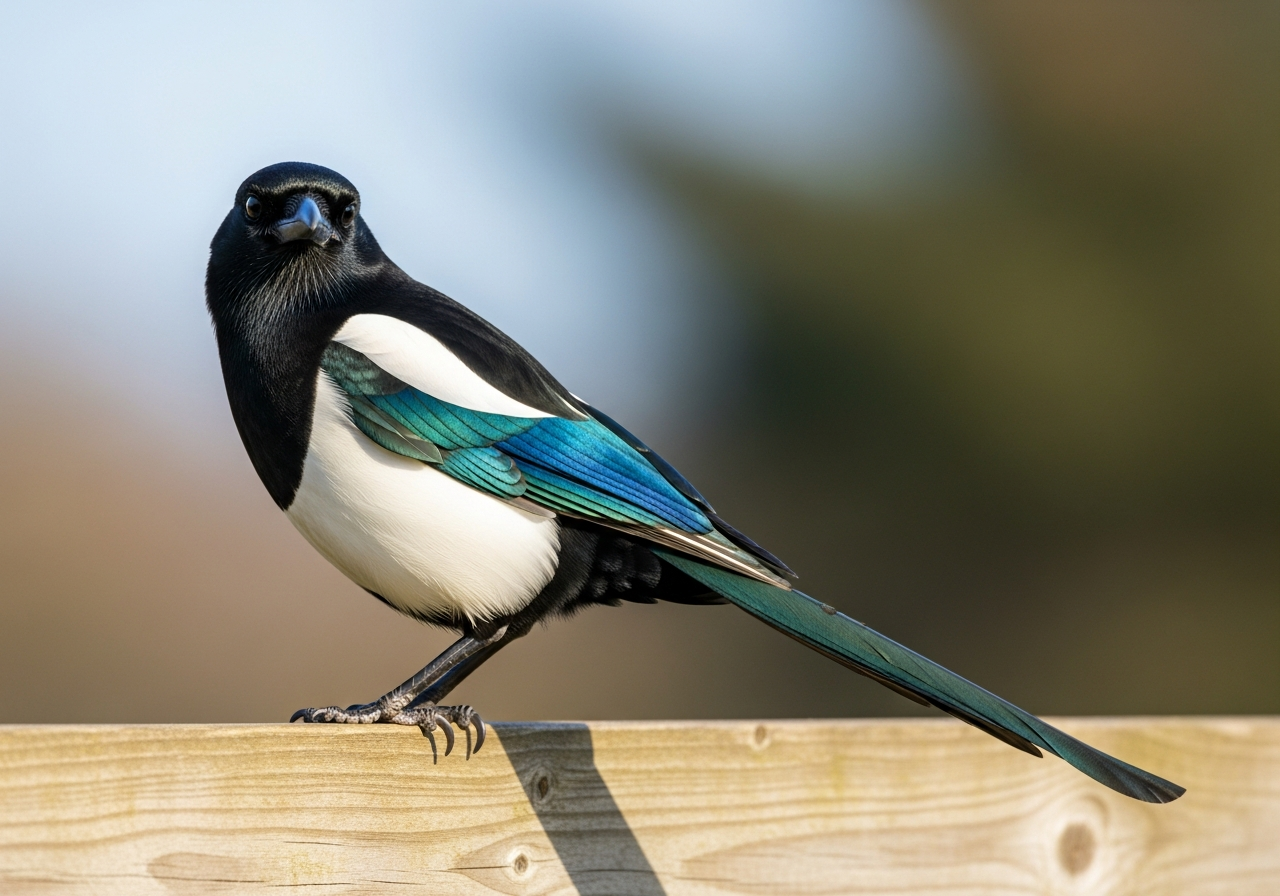
- The Eurasian magpie is a striking black-and-white member of the crow family with an iridescent blue-green sheen and a long tail.
- A group of magpies is called a parliament, and also a tiding, a mischief, or a tittering. A baby magpie is called a chick.
- Extremely. Magpies are corvids and among the smartest birds, able to solve problems, recognise human faces, and even pass the mirror self-recognition test — a sign of self-awareness rare in the animal kingdom.
- Mostly no. The idea is largely a myth; studies show magpies are often wary of unfamiliar shiny objects. The reputation comes from folklore and stories rather than from real hoarding behaviour.
- Magpies sometimes take eggs and nestlings in spring, which upsets some gardeners, but research shows this has little overall impact on songbird numbers, which are limited more by habitat and food.
- Conservation: Least Concern (IUCN).
Diet & feeding
Magpie feeds primarily as a omnivore (insects, scraps, fruit, eggs). Magpies are members of the corvid family, among the brainiest of all birds. In a famous experiment, magpies marked with a coloured spot tried to remove it while looking in a mirror — passing the 'mirror test' for self-recognition, something previously
Adaptations
- Magpies are members of the corvid family, among the brainiest of all birds. In a famous experiment, magpies marked with a coloured spot tried to remove it while looking in a mirror — passing the 'mirror test' for self-recognition, something previously seen only in great apes, dolphins, and elephants. They solve problems, remember individual human faces, and even appear to hold 'funerals', gathering around a dead magpie.
- Magpies are opportunistic omnivores that eat insects, worms, seeds, fruit, scraps, carrion, and sometimes the eggs and chicks of other birds — a habit that makes them controversial with gardeners, though studies show they have little effect on songbird populations overall. They are social outside the breeding season, sometimes gathering in noisy groups, and build large domed nests with a roof of twigs.
Behaviour & ecology
- Magpies are members of the corvid family, among the brainiest of all birds. In a famous experiment, magpies marked with a coloured spot tried to remove it while looking in a mirror — passing the 'mirror test' for self-recognition, something previously seen only in great apes, dolphins, and elephants. They solve problems, remember individual human faces, and even appear to hold 'funerals', gathering around a dead magpie.
- Magpies are opportunistic omnivores that eat insects, worms, seeds, fruit, scraps, carrion, and sometimes the eggs and chicks of other birds — a habit that makes them controversial with gardeners, though studies show they have little effect on songbird populations overall. They are social outside the breeding season, sometimes gathering in noisy groups, and build large domed nests with a roof of twigs.
- Few birds carry as much folklore as the magpie. The old rhyme 'one for sorrow, two for joy' reflects a long superstition, and many people still greet a lone magpie for luck. The belief that magpies steal and hoard shiny objects is largely a myth — research suggests they are actually wary of unfamiliar shiny things rather than attracted to them.
Communication
- Magpie uses calls and visual displays to communicate territory, alarm, and breeding status.
- Vocal repertoires vary by species and are often learned or refined during development.
Habitat & range
Farmland, woodland edges, parks, suburbs
Ecological role
Magpie contributes to seed dispersal, insect control, or nutrient cycling depending on diet and foraging habits.
Frequently asked questions about the Magpie
Where do magpies live?
Magpies are native to Europe, Asia, Africa. Open countryside with trees, farmland, and towns across Europe, much of temperate Asia, and North Africa.
What do magpies eat?
They feed on omnivore (insects, scraps, fruit, eggs), adjusting seasonally based on what is available in Farmland.
How long do magpies live?
About 5 years (up to 21). Captive individuals sometimes live longer with veterinary care and steady nutrition.
How big is a magpie?
Adults weigh 200–250 g (7–9 oz) and reach roughly 0.45 metres long; males are often larger than females.
Are magpies endangered?
Magpies are listed as Least Concern on the IUCN Red List. Threats include habitat loss, hunting, and human-wildlife conflict.
How fast can a magpie run?
Magpies can reach about 30 km/h (19 mph) in short bursts.
What is a group of magpies called?
A group of Magpies is called a tiding. It is also known as a mischief or a tittering.
What is a baby magpie called?
A baby Magpie is called a chick.
Sources & references
This guide is compiled and reviewed against established zoological and conservation references. Key sources for the Magpie:
-
IUCN Red List of Threatened Species
Conservation status (Least Concern) reflects the IUCN Red List category for Pica pica.
- IUCN Red List — Pica pica.
Conservation status (Least Concern) and population trends.
- Animal Diversity Web — Pica pica. University of Michigan Museum of Zoology.
Life history, morphology, and range.
- Wikipedia — Magpie.
General taxonomy and overview (cross-check primary sources).
-
Global Animal Guide editorial standards
How we research, source, review, and update every guide for accuracy.