Quick answer
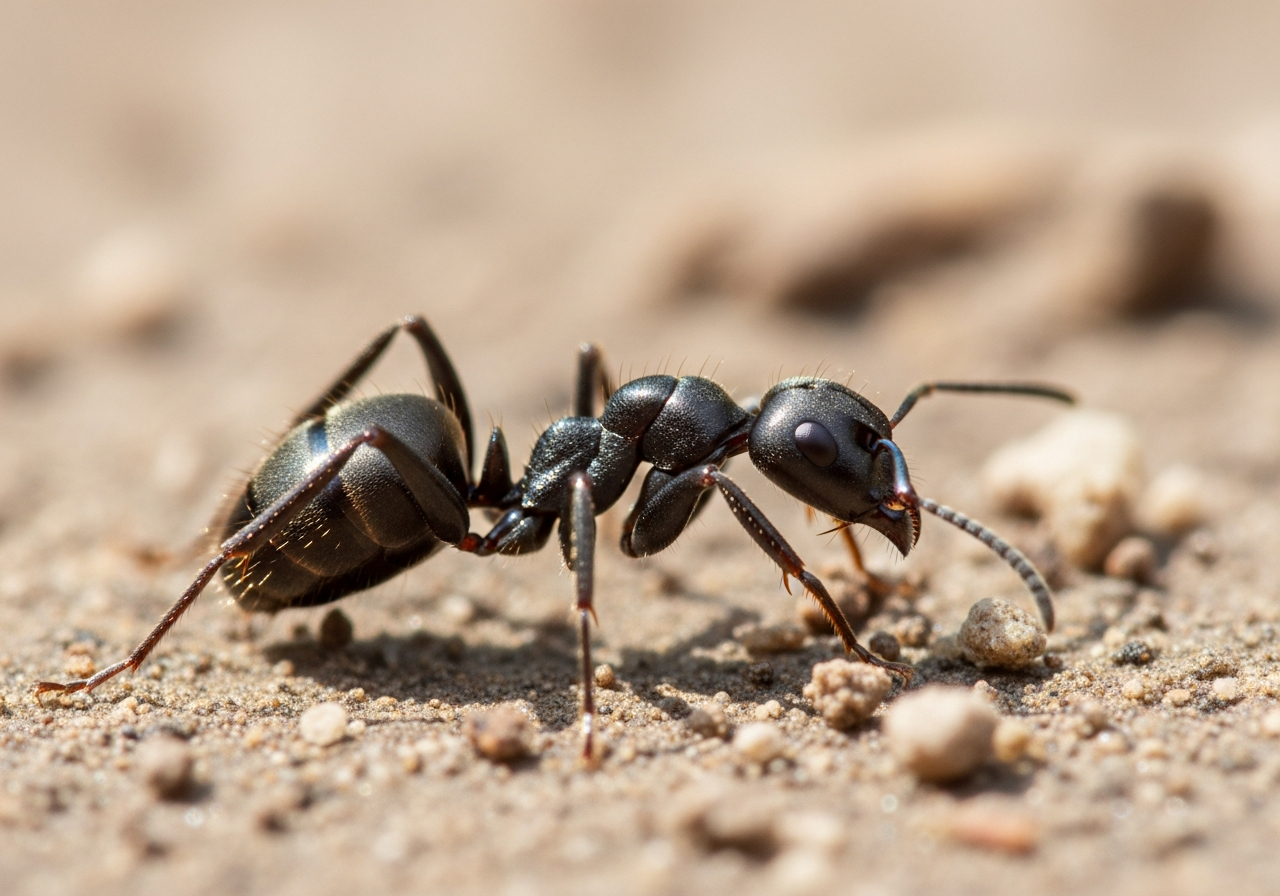
Ants are small social insects of the family Formicidae, found almost everywhere on Earth except the far polar regions. Ranging from 1 to 13 mm depending on species, they live in highly organised colonies of dozens to millions of individuals, each with a queen, workers, and cooperative roles. Famous for their strength and teamwork, ants can lift many times their own body weight and are one of the most successful animal groups on the planet.
Top questions about the Ant
Ant facts at a glance
- Weight 0 g
- Length 1 cm
- Top speed 0 km/h
- Lifespan 1 years
| Scientific name | Family Formicidae |
|---|---|
| Diet | Omnivore (varies by species) |
| Habitat | Almost everywhere except the far poles |
| Lifespan | Workers weeks to a year; queens up to 15+ years |
| Size | 1–13 mm depending on species |
| Colony size | Dozens to millions |
| Conservation status | Least Concern (IUCN) |
| Kingdom | Animalia |
|---|---|
| Phylum | Arthropoda |
| Class | Insecta |
| Order | Hymenoptera |
| Family | Formicidae |
Where it lives
The ant (Formicidae) is native to Found on every continent except Antarctica, in habitats from deserts and forests to cities. — recorded across Africa, Asia, Europe, North America, South America, Oceania in this guide’s range summary.
For occurrence records, see GBIF species search and sources below.
How big is a ant?
An adult ant measures 1 cm long — a small fraction of the height of an average adult person (1.73 m) — and weighs around 0 g, a small fraction of an average adult’s body weight (70 kg).
Length vs an average adult’s height (to scale)
What is a group of ants called?
Group name (collective noun)
A group of Ants is called a colony. It is also known as an army or a swarm.
Baby name
A baby Ant is called a larva.
Explore more animal collective nouns and baby animal names .
Colony life and castes
Ants are among the most social of all insects, living in colonies built around a strict division of labour. A colony centres on one or more egg-laying queens, supported by large numbers of sterile female workers who forage, build, and care for the young. Males exist mainly to mate, and a single colony can range from just a few dozen ants to several million. This teamwork lets a colony behave almost like a single organism.
Strength and teamwork
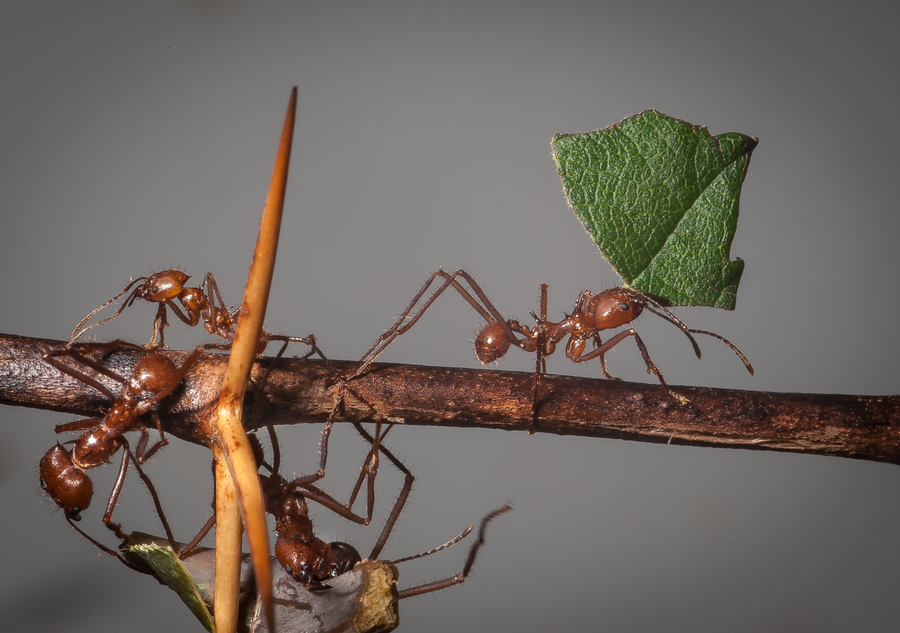
For their size, ants are astonishingly strong, and many species can carry objects many times their own body weight in their jaws. By working together, columns of ants can move loads and overcome obstacles far beyond the ability of any individual. Some species even link their bodies together to form living bridges and rafts, allowing the colony to cross gaps and floods.
Communication with scent
Ants rely heavily on chemical signals called pheromones to coordinate their colony. A forager that finds food lays a scent trail on the way home, and nestmates follow and reinforce it, which is why ants so often march in orderly lines. They also use touch and antenna-tapping to share information, and different scents can raise an alarm or identify intruders from another colony.
Diet and foraging
Most ants are omnivores whose exact diet varies widely by species. Many feed on seeds, nectar, and the sugary honeydew produced by aphids, which some ants tend and protect like livestock. Others are hunters that scavenge or capture insects and small invertebrates. Leafcutter ants take a different path, harvesting leaves to grow an underground fungus that the colony then eats.
Lifespan and the colony cycle
Lifespan varies enormously across the caste system. Worker ants may live only weeks to about a year, while a queen can survive for 15 years or more, laying eggs throughout her long life. New colonies begin when winged males and young queens leave the nest in a mating flight; after mating, a founding queen sheds her wings and starts a new colony largely on her own.
Diversity and success
There are more than 12,000 known ant species, occupying nearly every land habitat from tropical rainforest to city pavements, and absent only from the coldest polar regions. This diversity, combined with their social organisation, makes ants one of the most successful groups of animals on Earth. As a group they are common and listed as Least Concern by the IUCN, though some individual species are far rarer.
Dig deeper into the Ant
- Ant: Key Facts
Ants (Formicidae) are insects found across Africa, Asia, Europe, North America, South America, Oceania. The tireless team-working insect.
- What Do Ants Eat?
What ants eat: Omnivore (varies by species), foraging style, and seasonal shifts in Almost everywhere except the far poles.
- Where Do Ants Live?
Where ants live: Almost everywhere except the far poles, native range cues, and human overlap. Status Least Concern.
Explore the Ant
Related Insects
Did you know? Ant facts
- Ants are social insects that live in highly organized colonies built around one or more egg-laying queens.
- Ants are extremely strong for their size and can carry objects many times their own body weight. This strength comes from their light bodies and the efficient way their muscles work at a small scale.
- Ants communicate mainly with chemicals called pheromones. They lay scent trails to guide nestmates to food and use chemical signals to recognize colony members and raise alarms.
- Worker ants usually live from a few weeks to about a year, while queens can survive for many years, sometimes more than 15, laying eggs for the whole colony.
- Ants are mostly omnivores. Depending on the species they eat seeds, nectar, other insects, and sweet liquids, and many will take almost any food scraps they come across.
- Conservation: Least Concern (IUCN).
Diet & feeding
Ant feeds primarily as a omnivore (varies by species). Relative to their size, ants are remarkably strong and can carry objects many times their own body weight back to the nest. Diets vary widely by species, from seeds and nectar to other insects, with many ants being opportunistic omnivores that take whatever food th
Adaptations
- Ants live in cooperative colonies divided into castes. One or more queens lay the eggs, sterile female workers gather food and care for the young, and winged males and new queens leave to start fresh colonies. The whole colony behaves almost like a single organism, with each ant playing a role.
- Ants communicate mostly through chemicals called pheromones, laying scent trails that lead nestmates to food. By working together, ants can build elaborate nests, farm fungus, herd aphids for their sugary secretions, and even form living bridges and rafts with their own bodies.
Behaviour & ecology
- Ants live in cooperative colonies divided into castes. One or more queens lay the eggs, sterile female workers gather food and care for the young, and winged males and new queens leave to start fresh colonies. The whole colony behaves almost like a single organism, with each ant playing a role.
- Ants communicate mostly through chemicals called pheromones, laying scent trails that lead nestmates to food. By working together, ants can build elaborate nests, farm fungus, herd aphids for their sugary secretions, and even form living bridges and rafts with their own bodies.
- Relative to their size, ants are remarkably strong and can carry objects many times their own body weight back to the nest. Diets vary widely by species, from seeds and nectar to other insects, with many ants being opportunistic omnivores that take whatever food they find.
Communication
- Ant uses scent, posture, and vocal signals to mark territory and coordinate social behaviour.
- Communication intensity often peaks during breeding seasons and territorial disputes.
Habitat & range
Almost everywhere except the far poles
Ecological role
Ant participates in pollination, decomposition, or prey-base support for birds and other insectivores.
Conservation status of the Ant
The ant (Formicidae) is listed as Least Concern on the IUCN Red List. Least Concern (LC) is the IUCN's lowest-risk category, assigned to widespread, abundant species that have been evaluated and found not to be threatened. It does not mean a species faces no pressures — only that it is not currently at risk of extinction.
The ant (Formicidae) is assessed on the IUCN Red List. Look up on the IUCN Red List .
Frequently asked questions about the Ant
How much can an ant lift?
Ants are extremely strong for their size, and many species can carry objects many times their own body weight in their jaws. By cooperating, groups of ants can move loads far larger than any single ant could manage alone.
How do ants communicate?
Ants communicate mainly through chemical scents called pheromones. A forager lays a scent trail to guide nestmates to food, which is why ants march in lines, and other scents can sound an alarm or identify intruders from rival colonies.
How long do ants live?
It depends on their role. Worker ants generally live from a few weeks up to about a year, while queens are far longer-lived and can survive for 15 years or more, laying eggs throughout their lives.
What do ants eat?
Most ants are omnivores, and their diet varies by species. Common foods include seeds, nectar, and the sugary honeydew from aphids, while some ants hunt other insects and leafcutter ants farm fungus on harvested leaves.
How big can an ant colony get?
Colony size ranges enormously, from just a few dozen ants in small species to several million in large ones. Each colony is organised around one or more queens supported by many sterile female workers.
Where do ants live?
Ants are found almost everywhere on land, from tropical rainforests and deserts to gardens and city streets, and are absent only from the coldest polar regions. With over 12,000 species, they are one of the most widespread animal groups on Earth.
What is a group of ants called?
A group of Ants is called a colony. It is also known as an army or a swarm.
What is a baby ant called?
A baby Ant is called a larva.
Sources & references
This guide is compiled and reviewed against established zoological and conservation references. Key sources for the Ant:
-
IUCN Red List of Threatened Species
Conservation status (Least Concern) reflects the IUCN Red List category for Formicidae.
-
iNaturalist — observations & photos
Search citizen-science observations and community IDs for Formicidae. Useful for range checks and recent sightings — not a substitute for formal Red List status.
-
GBIF — occurrence data
Global Biodiversity Information Facility species search for Formicidae. Explore published occurrence records used in range research.
- IUCN Red List — Formicidae.
Conservation status (Least Concern) and population trends.
- Wikipedia — Ant.
General taxonomy and overview (cross-check primary sources).
-
Global Animal Guide editorial standards
How we research, source, review, and update every guide for accuracy.