Image sourcing: see credits & licences
Quick answer
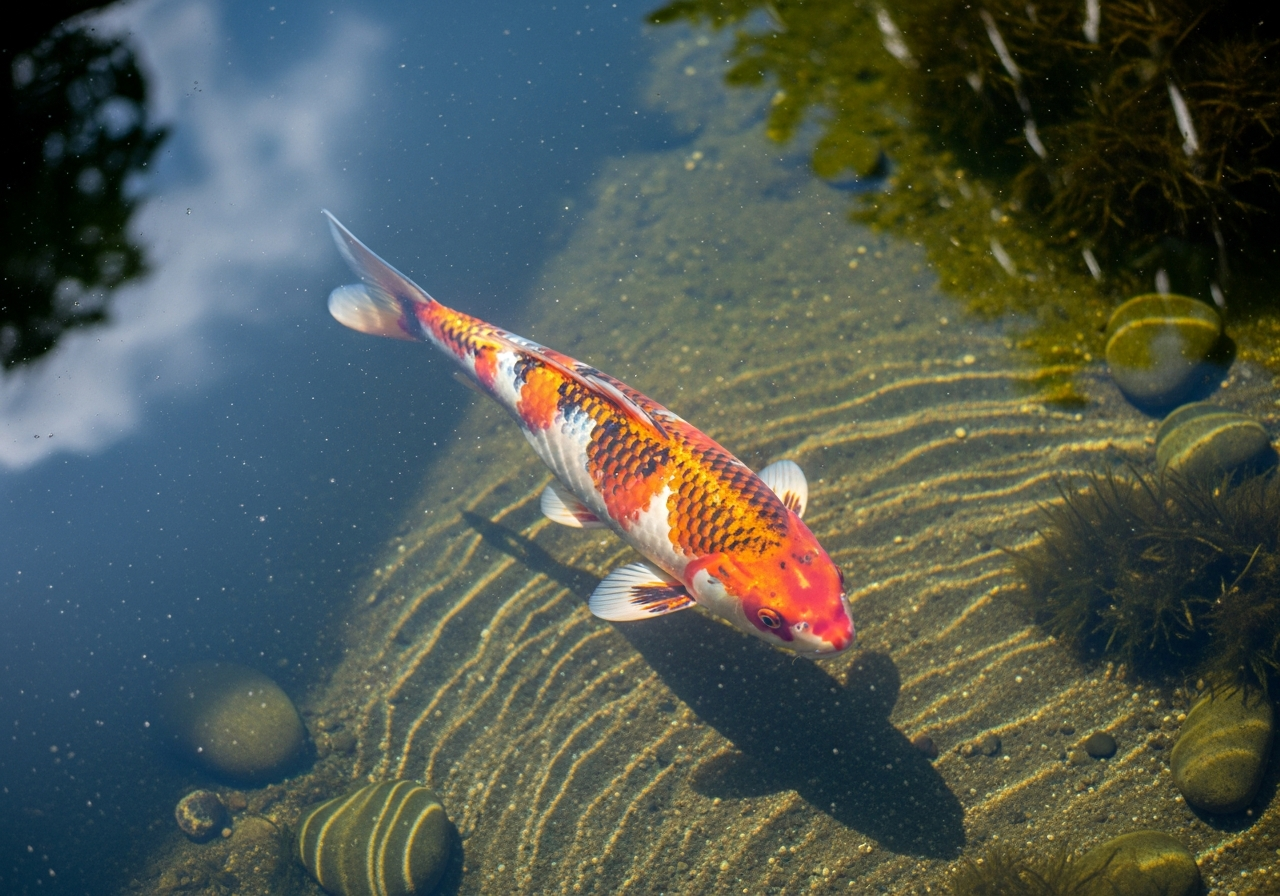
Koi are ornamental varieties of the common carp (Cyprinus rubrofuscus), bred over centuries in Japan and China for their vivid colours and patterns. Kept in garden ponds and water features around the world, they typically reach 60 to 90 cm (2 to 3 ft) and around 5 kg, swimming slowly and steadily near the surface. Well cared-for koi commonly live 25 to 35 years, and some famously far longer.
Top questions about the Koi
Koi facts at a glance
- Weight 5 kg
- Length 75 cm
- Top speed 10 km/h
- Lifespan 30 years
| Scientific name | Cyprinus rubrofuscus |
|---|---|
| Diet | Omnivore |
| Habitat | Garden ponds; wild carp in rivers and lakes |
| Lifespan | 25–35 years, sometimes much longer |
| Length | 60–90 cm (2–3 ft) |
| Top speed | Slow, steady swimmer |
| Conservation status | Least Concern (IUCN) |
| Kingdom | Animalia |
|---|---|
| Phylum | Chordata |
| Class | Actinopterygii |
| Order | Cypriniformes |
| Family | Cyprinidae |
| Genus | Cyprinus |
Where it lives
The koi (Cyprinus rubrofuscus) is native to Developed as an ornamental carp in Japan and kept in ponds worldwide; wild ancestors live in East Asian rivers and lakes. — recorded across Asia in this guide’s range summary.
For occurrence records, see GBIF species search and sources below.
How big is a koi?
An adult koi measures 75 cm long — about 43% of the height of an average adult person (1.73 m) — and weighs around 5.0 kg, about 7% of an average adult’s body weight (70 kg).
Length vs an average adult’s height (to scale)
What is a group of koi called?
Group name (collective noun)
A group of Koi is called a school.
Baby name
A baby Koi is called a fry.
Explore more animal collective nouns and baby animal names .
Origins and domestication
Koi are not a wild species but a domesticated form of carp, selectively bred from dark, plain-coloured fish first farmed for food. The tradition took hold in the rice-farming regions of Niigata, Japan, in the early nineteenth century, where farmers noticed and bred colour mutations in their pond stock. Over generations these were refined into the bright reds, whites, blacks, and metallics seen today. The wild ancestor still swims in rivers and lakes across East Asia, but the ornamental koi is entirely a product of human selection.
Colours and varieties
Enthusiasts recognise dozens of named varieties, classified by colour, pattern, and scale type. Kohaku (white with red markings), Sanke, and Showa are among the most prized, while metallic Ogon and the reflective, scaleless Doitsu koi are also popular. Judging at koi shows weighs the balance and sharpness of the pattern, the depth of colour, and the fish's overall body shape. A single top-grade koi can change hands for a very large sum among serious collectors.
Keeping koi in ponds
Koi are hardy but demand space, clean water, and good filtration, as they are large, messy fish that produce a lot of waste. A healthy pond needs strong biological filtration, aeration, and enough volume to dilute their output, which is why serious keepers build ponds of several thousand litres. They tolerate a wide temperature range and can overwinter beneath ice in temperate climates, becoming sluggish and barely feeding when the water turns cold. Because they can reach 60 to 90 cm, a small pond quickly becomes overcrowded.
Diet and feeding
Koi are omnivores that browse the pond bottom for insect larvae, algae, plant matter, and small invertebrates, rooting through sediment with their downturned mouths. In captivity they are usually given floating pellet food formulated for colour and growth, plus occasional treats such as lettuce, peas, or watermelon. Their appetite is closely tied to water temperature; keepers cut back or stop feeding as ponds cool because the fish can no longer digest food efficiently. Overfeeding is a common cause of poor water quality and health problems.
Behaviour and temperament
Koi are social, slow-moving fish that shoal together and settle into a calm daily routine in a stable pond. Many become remarkably tame, learning to recognise the person who feeds them and rising to take food from the hand. They are peaceful and curious rather than aggressive, though they will nudge and root around plants and pond edges. Their gentle, steady swimming and responsiveness are a large part of why they are kept as living ornaments.
Lifespan and longevity
With good water quality and care, koi routinely live 25 to 35 years, far outlasting most pond fish. Longevity depends heavily on pond size, filtration, and diet, and neglected fish in cramped or dirty water die young. The species is famous for exceptional individuals: a koi named Hanako in Japan was reported to have lived for well over two centuries, verified by growth rings on her scales. Such ages are extraordinary, but a well-kept koi living several decades is entirely normal.
Dig deeper into the Koi
- How Long Do Kois Live?
Koi lifespan is typically 25–35 years, sometimes much longer. What shortens or extends life, life stages, and status (Least Concern).
- Koi: Key Facts
Kois (Cyprinus rubrofuscus) are fish found across Asia. The ornamental carp of garden ponds.
- What Do Kois Eat?
What kois eat: Omnivore, foraging style, and seasonal shifts in Garden ponds; wild carp in rivers and lakes.
- Where Do Kois Live?
Where kois live: Garden ponds; wild carp in rivers and lakes, native range cues, and human overlap. Status Least Concern.
Explore the Koi
Related Fishs
Range & geography
Did you know? Koi facts
- Koi are colorful ornamental carp bred for decoration and kept in garden ponds and water gardens around the world.
- Well-kept koi commonly live 25 to 35 years, and in excellent conditions some have reportedly lived far longer, occasionally past 50 years.
- Koi are omnivores that eat algae, plants, insects, and worms, along with commercial koi pellets. They eat less in cold water because they digest slowly.
- Koi typically grow 60 to 90 cm (2 to 3 ft) long, with the largest individuals reaching about 1 m, depending on genetics, space, and care.
- No. Koi are ornamental carp, while goldfish are a separate domesticated species. Koi grow larger and have barbels around the mouth that goldfish lack.
- Conservation: Least Concern (IUCN).
Diet & feeding
Koi feeds primarily as a omnivore. Koi are social, calm fish that often become tame enough to be hand-fed and to recognize the people who care for them. They are bottom-feeders that browse along the floor of a pond and gather at the surface at feeding time. In cold weather they slow down and rest near the pond bottom,
Adaptations
- Koi are social, calm fish that often become tame enough to be hand-fed and to recognize the people who care for them. They are bottom-feeders that browse along the floor of a pond and gather at the surface at feeding time. In cold weather they slow down and rest near the pond bottom, becoming sluggish until the water warms again.
- Koi are omnivores that eat a wide range of foods, including algae, plants, insects, worms, and prepared koi pellets. Keepers often feed high-protein food in warm months and reduce feeding as temperatures drop, since the fish digest slowly in cold water. Overfeeding and poor water quality are common problems in ponds.
Behaviour & ecology
- Koi are social, calm fish that often become tame enough to be hand-fed and to recognize the people who care for them. They are bottom-feeders that browse along the floor of a pond and gather at the surface at feeding time. In cold weather they slow down and rest near the pond bottom, becoming sluggish until the water warms again.
- Koi are omnivores that eat a wide range of foods, including algae, plants, insects, worms, and prepared koi pellets. Keepers often feed high-protein food in warm months and reduce feeding as temperatures drop, since the fish digest slowly in cold water. Overfeeding and poor water quality are common problems in ponds.
- Koi were developed in Japan beginning in the 1800s, when farmers selected colorful mutations of common carp raised for food. Today there are many named varieties distinguished by color, pattern, and scale type, and prized show koi can sell for very high prices. Their wild ancestor, the East Asian carp, lives in rivers and lakes across East Asia.
Communication
- Lateral-line and visual cues coordinate schooling, courtship, or territorial behaviour.
- Some species produce low-frequency sounds or drumming for spawning or defence.
Habitat & range
Garden ponds; wild carp in rivers and lakes
Ecological role
Koi occupies a defined trophic level in aquatic food webs, linking plankton or smaller fish to larger predators.
Conservation status of the Koi
The koi (Cyprinus rubrofuscus) is listed as Least Concern on the IUCN Red List. Least Concern (LC) is the IUCN's lowest-risk category, assigned to widespread, abundant species that have been evaluated and found not to be threatened. It does not mean a species faces no pressures — only that it is not currently at risk of extinction.
The koi (Cyprinus rubrofuscus) is assessed on the IUCN Red List. Look up on the IUCN Red List .
Frequently asked questions about the Koi
Are koi just goldfish?
No. Koi are ornamental common carp (Cyprinus rubrofuscus), while goldfish are a separate domesticated species descended from the Prussian carp. Koi grow much larger, reaching 60 to 90 cm, and can be told apart by the pair of barbels or whiskers at the corners of their mouths, which goldfish lack.
How long do koi live?
Well cared-for koi commonly live 25 to 35 years, and some live considerably longer. Lifespan depends heavily on pond size, water quality, and diet, so fish kept in cramped or poorly filtered ponds tend to die much younger.
How big do koi get?
Adult koi typically reach 60 to 90 cm (2 to 3 ft) and weigh around 5 kg. Their eventual size depends on pond space and water quality, so a small or crowded pond will limit their growth.
What do koi eat?
Koi are omnivores that naturally eat insect larvae, algae, plants, and small invertebrates from the pond bottom. In ponds they are usually fed floating pellets, supplemented with treats such as peas, lettuce, or watermelon, with feeding reduced or stopped in cold weather.
Can koi survive winter outdoors?
Yes, koi are cold-tolerant and can overwinter in outdoor ponds in temperate climates, even beneath a layer of ice, provided the pond is deep enough not to freeze solid. They become sluggish and stop feeding in cold water, so keepers ensure part of the surface stays open for gas exchange.
Why are koi so expensive?
Prices reflect the rarity and quality of a fish's colour, pattern, and body shape, refined through generations of selective breeding. Top show-grade koi from prized bloodlines are judged like fine ornamental animals, and the very best examples can sell for enormous sums among collectors.
What is a group of koi called?
A group of Koi is called a school.
What is a baby koi called?
A baby Koi is called a fry.
Sources & references
This guide is compiled and reviewed against established zoological and conservation references. Key sources for the Koi:
-
IUCN Red List of Threatened Species
Conservation status (Least Concern) reflects the IUCN Red List category for Cyprinus rubrofuscus.
-
iNaturalist — observations & photos
Search citizen-science observations and community IDs for Cyprinus rubrofuscus. Useful for range checks and recent sightings — not a substitute for formal Red List status.
-
GBIF — occurrence data
Global Biodiversity Information Facility species search for Cyprinus rubrofuscus. Explore published occurrence records used in range research.
- IUCN Red List — Cyprinus rubrofuscus.
Conservation status (Least Concern) and population trends.
- Animal Diversity Web — Cyprinus rubrofuscus. University of Michigan Museum of Zoology.
Life history, morphology, and range.
- Wikipedia — Koi.
General taxonomy and overview (cross-check primary sources).
-
Global Animal Guide editorial standards
How we research, source, review, and update every guide for accuracy.