Badger
Meles meles
Quick answer
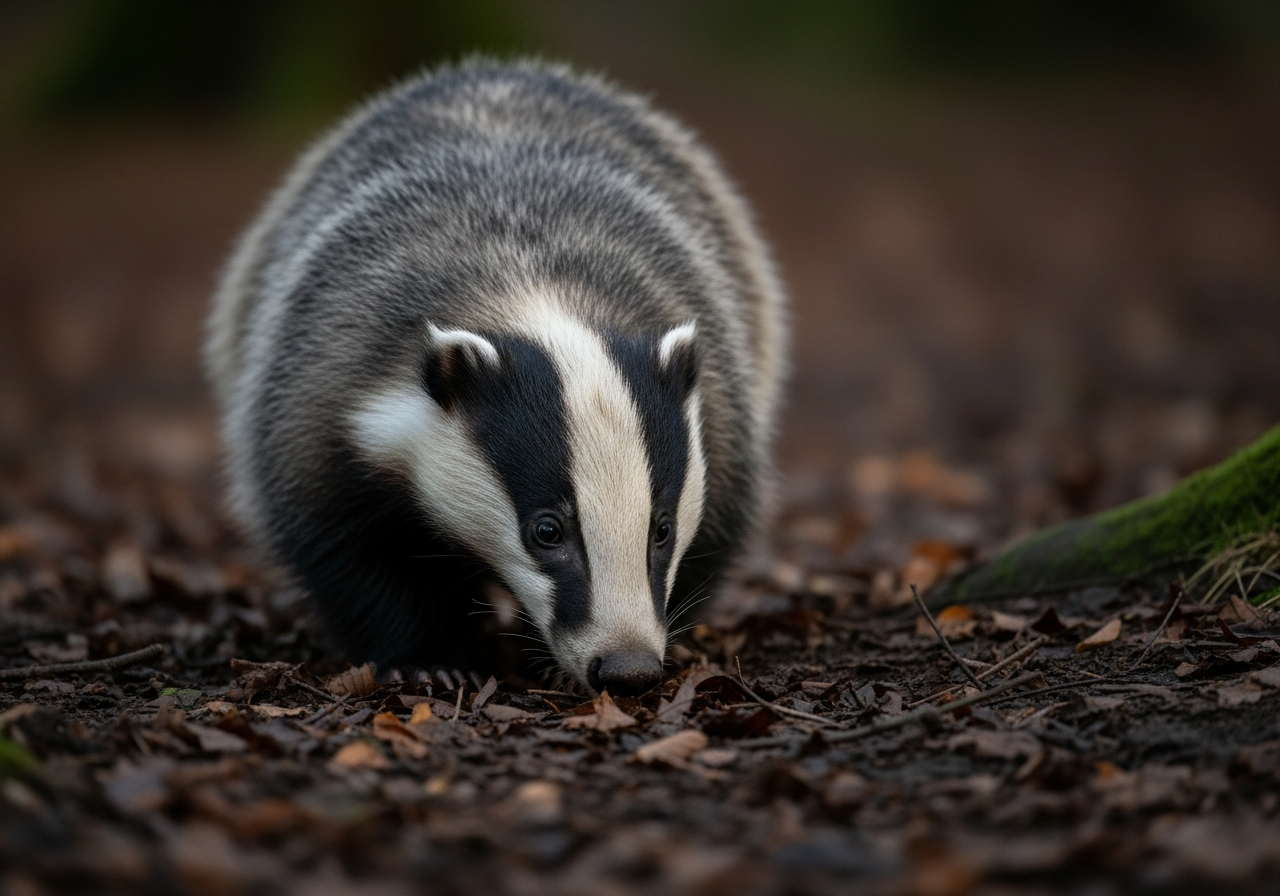
The European badger is a stocky, powerfully built mammal famous for the black-and-white stripes on its face. It is nocturnal, lives in family groups called clans inside large underground burrow systems known as setts, and feeds mainly on earthworms. Badgers weigh up to about 12 kg (26 lb) and typically live around 6 years in the wild.
Badger facts at a glance
| Scientific name | Meles meles |
|---|---|
| Diet | Omnivore (mostly earthworms) |
| Habitat | Woodland, hedgerows, farmland, grassland |
| Lifespan | Around 6 years wild (up to 14) |
| Weight | 9–12 kg (20–26 lb), heavier in autumn |
| Top speed | 30 km/h (19 mph) in short bursts |
| Conservation status | Least Concern (IUCN) |
| Kingdom | Animalia |
|---|---|
| Phylum | Chordata |
| Class | Mammalia |
| Order | Carnivora |
| Family | Mustelidae |
| Genus | Meles |
What is a group of badgers called?
Group name (collective noun)
A group of Badgers is called a clan. It is also known as a cete.
Baby name
A baby Badger is called a cub.
Explore more animal collective nouns and baby animal names .
Behaviour and the sett
Badgers are highly social and live in clans of up to a dozen animals that share a sett — a maze of tunnels and chambers dug into a bank or woodland floor, often used and enlarged by generations of badgers over decades. They are strongly nocturnal, emerging at dusk to forage and patrol well-worn paths, and they keep their setts scrupulously clean, regularly changing the dry grass and leaves they use as bedding.
Diet and feeding
The European badger is an omnivore, but earthworms make up the bulk of its diet — a single badger can eat several hundred in one night, snuffling them from damp grassland after rain. They also take insects, slugs, small mammals, amphibians, fruit, nuts, and cereals, and their powerful forelimbs and long claws let them dig out underground prey and excavate the sett.
Habitat and range
Badgers are found across most of Europe and into western Asia, favouring deciduous woodland and field edges with soft, well-drained soil for digging. In the United Kingdom they are widespread and legally protected, though they remain at the centre of a long-running debate over bovine tuberculosis and culling in parts of England.
Conservation
The badger is listed as Least Concern, with stable populations across much of its range. In Britain the main threats are road traffic, illegal persecution such as badger-baiting and sett interference, and habitat loss. Badgers and their setts are protected under the Protection of Badgers Act 1992, making it an offence to harm them or damage a sett.
Dig deeper into the Badger
- Badger Facts 5
Dig deeper into badger — badger facts 5.
- How Fast Is A Badger
Dig deeper into badger — how fast is a badger.
- How Long do Badger Live?
Dig deeper into badger — how long do badger live.
- What do Badger Eat
Dig deeper into badger — what do badger eat.
- Where do Badger Live?
Dig deeper into badger — where do badger live.
Explore the Badger
Collections
Did you know? Badger facts
- The European badger is a stocky, powerfully built mammal famous for the black-and-white stripes on its face.
- A group of badgers is called a clan or a cete, and the family-sized group that shares a sett is usually called a clan. A baby badger is called a cub.
- Badgers are omnivores whose favourite food is earthworms; they can eat several hundred in a single night. They also eat insects, slugs, small mammals, frogs, fruit, nuts, and cereal crops.
- Badgers are shy and avoid people, so attacks are extremely rare. However, a cornered badger has powerful jaws and claws and can defend itself fiercely, so it should never be handled or approached.
- Badgers live in underground burrow systems called setts, dug into banks, woodland, and hedgerows across Europe and western Asia. A sett can have many entrances and be used by generations of the same clan.
- Conservation: Least Concern (IUCN).
Diet & feeding
Badger feeds primarily as a omnivore (mostly earthworms). The European badger is an omnivore, but earthworms make up the bulk of its diet — a single badger can eat several hundred in one night, snuffling them from damp grassland after rain. They also take insects, slugs, small mammals, amphibians, fruit, nuts, and cere
Adaptations
- Badgers are highly social and live in clans of up to a dozen animals that share a sett — a maze of tunnels and chambers dug into a bank or woodland floor, often used and enlarged by generations of badgers over decades. They are strongly nocturnal, emerging at dusk to forage and patrol well-worn paths, and they keep their setts scrupulously clean, regularly changing the dry grass and leaves they use as bedding.
- The European badger is an omnivore, but earthworms make up the bulk of its diet — a single badger can eat several hundred in one night, snuffling them from damp grassland after rain. They also take insects, slugs, small mammals, amphibians, fruit, nuts, and cereals, and their powerful forelimbs and long claws let them dig out underground prey and excavate the sett.
Behaviour & ecology
- Badgers are highly social and live in clans of up to a dozen animals that share a sett — a maze of tunnels and chambers dug into a bank or woodland floor, often used and enlarged by generations of badgers over decades. They are strongly nocturnal, emerging at dusk to forage and patrol well-worn paths, and they keep their setts scrupulously clean, regularly changing the dry grass and leaves they use as bedding.
- The European badger is an omnivore, but earthworms make up the bulk of its diet — a single badger can eat several hundred in one night, snuffling them from damp grassland after rain. They also take insects, slugs, small mammals, amphibians, fruit, nuts, and cereals, and their powerful forelimbs and long claws let them dig out underground prey and excavate the sett.
- Badgers are found across most of Europe and into western Asia, favouring deciduous woodland and field edges with soft, well-drained soil for digging. In the United Kingdom they are widespread and legally protected, though they remain at the centre of a long-running debate over bovine tuberculosis and culling in parts of England.
Communication
- Badger uses scent, posture, and vocal signals to mark territory and coordinate social behaviour.
- Communication intensity often peaks during breeding seasons and territorial disputes.
Habitat & range
Woodland, hedgerows, farmland, grassland
Ecological role
Badger plays a recognised ecological role in woodland, hedgerows, farmland, grassland.
Frequently asked questions about the Badger
What is a group of badgers called?
A group of badgers is called a clan or a cete, and the family-sized group that shares a sett is usually called a clan. A baby badger is called a cub.
What do badgers eat?
Badgers are omnivores whose favourite food is earthworms; they can eat several hundred in a single night. They also eat insects, slugs, small mammals, frogs, fruit, nuts, and cereal crops.
Are badgers dangerous to humans?
Badgers are shy and avoid people, so attacks are extremely rare. However, a cornered badger has powerful jaws and claws and can defend itself fiercely, so it should never be handled or approached.
Where do badgers live?
Badgers live in underground burrow systems called setts, dug into banks, woodland, and hedgerows across Europe and western Asia. A sett can have many entrances and be used by generations of the same clan.
Are badgers nocturnal?
Yes. Badgers are mainly nocturnal, emerging from the sett at dusk to forage through the night and returning before dawn, though they are occasionally seen near their setts in the early evening.
What is a baby badger called?
A baby Badger is called a cub.
Sources & references
This guide is compiled and reviewed against established zoological and conservation references. Key sources for the Badger:
-
IUCN Red List of Threatened Species
Conservation status (Least Concern) reflects the IUCN Red List category for Meles meles.
- IUCN Red List — Meles meles.
Conservation status (Least Concern) and population trends.
- Animal Diversity Web — Meles meles. University of Michigan Museum of Zoology.
Life history, morphology, and range.
- Wikipedia — Badger.
General taxonomy and overview (cross-check primary sources).
-
Global Animal Guide editorial standards
How we research, source, review, and update every guide for accuracy.