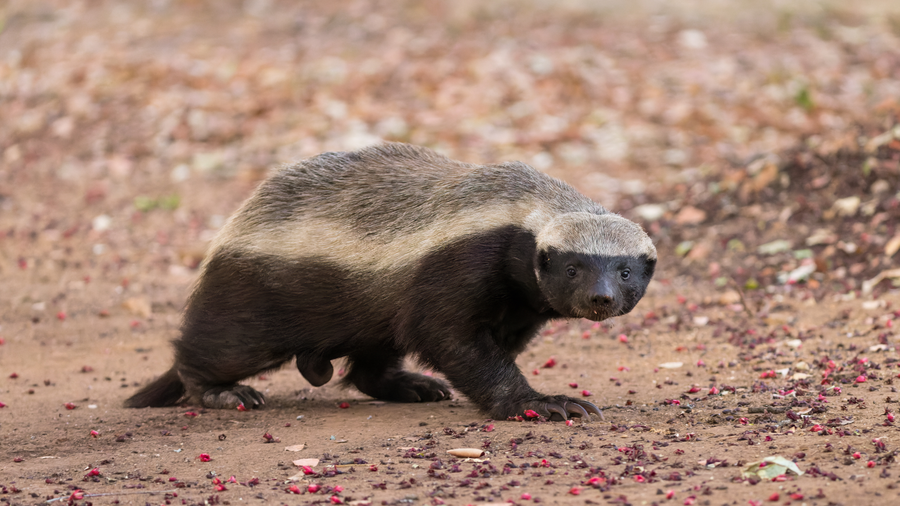
The honey badger (Mellivora capensis) is a mammal of the weasel family, Mustelidae, in the order Carnivora.
Quick answer
The honey badger (Mellivora capensis) is a famously fearless mustelid of Africa and Asia, armed with loose, rubbery skin, powerful digging claws, and a remarkable resistance to snake venom. It weighs 9–16 kg (20–35 lb), can run at up to 30 km/h, and lives around 7–8 years in the wild.
Top questions about the Honey Badger
Also available in Español (Tejón melero)
Honey Badger facts at a glance
- Weight 12 kg
- Length 95 cm
- Top speed 30 km/h
- Lifespan 8 years
| Scientific name | Mellivora capensis |
|---|---|
| Diet | Omnivore — honey and bee brood, rodents, snakes, scorpions, eggs, roots, and fruit |
| Habitat | Savanna, grassland, and dry scrub across sub-Saharan Africa, the Middle East, and South Asia |
| Lifespan | Around 7–8 years in the wild; up to 24 years in captivity |
| Weight | 9–16 kg (20–35 lb); males heavier than females |
| Top speed | Up to 30 km/h (19 mph); can dig a burrow and disappear in minutes |
| Conservation status | Least Concern (IUCN) |
| Kingdom | Animalia |
|---|---|
| Phylum | Chordata |
| Class | Mammalia |
| Order | Carnivora |
| Family | Mustelidae |
| Genus | Mellivora |
Where it lives
The honey badger (Mellivora capensis) is native to Savanna and dry scrub across sub-Saharan Africa, plus the Arabian Peninsula, Iran, Central Asia, and India. — recorded across Africa, Asia in this guide’s range summary.
For occurrence records, see GBIF species search and sources below.
How big is a honey badger?
An adult honey badger measures 95 cm long — about 55% of the height of an average adult person (1.73 m) — and weighs around 12 kg, about 17% of an average adult’s body weight (70 kg).
Length vs an average adult’s height (to scale)
Built like a tank
The honey badger is a stocky, low-slung member of the weasel family about a metre long including the tail, instantly recognised by the silvery-grey mantle running from its head to the base of its tail. Its skin is up to 6 mm thick and so loose that a bitten animal can twist around inside it and counter-attack with jaws and claws. Powerful foreclaws, strong jaws, and a dogged temperament complete the armoury.
Diet and the taste for honey
Honey badgers are opportunistic omnivores recorded eating more than sixty prey species, from dung-beetle larvae to porcupines and pythons. Their name comes from raiding beehives for honey and protein-rich bee brood, shrugging off hundreds of stings thanks to their thick skin. The greater honeyguide bird is famous for leading honey badgers (and people) to wild hives, then feeding on the scraps.
Fearless defence
The Guinness Book of Records has called the honey badger the world's most fearless animal, and with reason: individuals have been filmed confronting lions, leopards, and hyenas many times their size. When cornered they snarl, charge, and can release a choking scent from an anal pouch. They also possess a degree of immunity to neurotoxic snake venom, allowing them to survive cobra and puff adder bites that would kill far larger animals.
Behaviour and intelligence
Honey badgers are mostly solitary and range over enormous territories — males may cover hundreds of square kilometres. They are considered among the most intelligent mustelids: in captivity they have been filmed stacking and dragging objects to escape enclosures, a rare example of tool use in a carnivore. Much of their activity is nocturnal, especially near human settlement.
Habitat and range
The species occupies a huge range across sub-Saharan Africa (avoiding only the densest rainforest and the central Sahara) and east through the Middle East to Iran, Turkmenistan, and India. It thrives in dry savanna, thornscrub, and semi-desert, sheltering in burrows it digs itself or takes over from other animals.
Conservation
The honey badger is listed as Least Concern by the IUCN thanks to its wide range and adaptability, but numbers are declining locally. Beekeepers sometimes kill them in defence of hives, and they are caught in traps set for other animals, taken for bushmeat, and used in traditional medicine. Protected areas across Africa and parts of Asia hold healthy populations.
Explore the Honey Badger
Close relatives
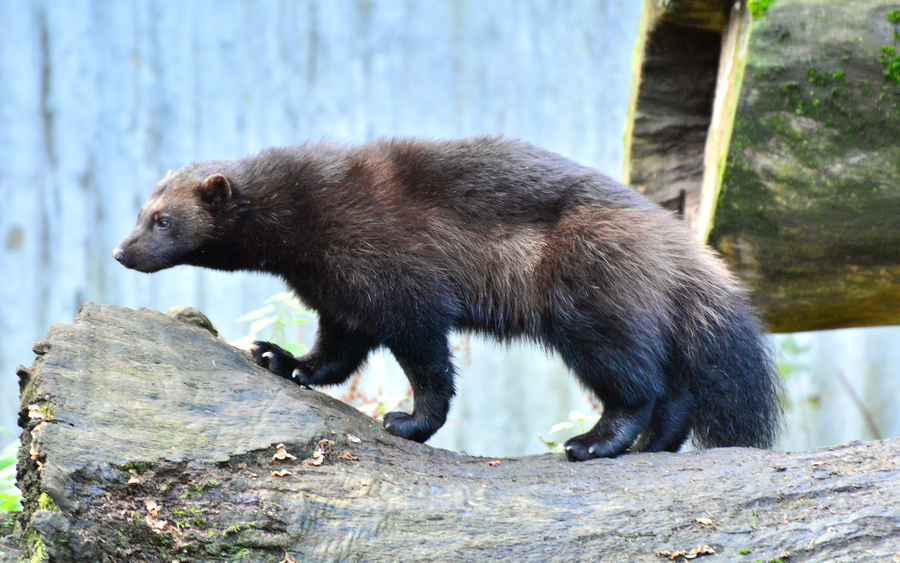
- Wolverine Same family
- Sea Otter Same family
- Ferret Same family
- American Mink Same family
Range & geography
Conservation status of the Honey Badger
The honey badger (Mellivora capensis) is listed as Least Concern on the IUCN Red List. Least Concern (LC) is the IUCN's lowest-risk category, assigned to widespread, abundant species that have been evaluated and found not to be threatened. It does not mean a species faces no pressures — only that it is not currently at risk of extinction.
The honey badger (Mellivora capensis) is assessed on the IUCN Red List. Look up on the IUCN Red List .
Frequently asked questions about the Honey Badger
Why is the honey badger so fearless?
Its defence package — skin up to 6 mm thick that hangs loose on the body, a high pain threshold, powerful jaws and claws, and resistance to snake venom — means most attacks cost a predator far more effort than the meal is worth. Standing its ground is usually the winning strategy.
Are honey badgers immune to snake venom?
Not fully immune, but highly resistant. Neurotoxins from cobras can temporarily incapacitate a honey badger, which then typically revives within hours and resumes feeding — often on the snake that bit it.
Do honey badgers really eat honey?
Yes. They raid wild and domestic beehives for honey and especially for the protein-rich larvae, enduring hundreds of stings. The greater honeyguide bird actively leads them to hives and feeds on the leftovers.
Where do honey badgers live?
Across most of sub-Saharan Africa, plus the Arabian Peninsula, Iran, Central Asia, and the Indian subcontinent — anywhere dry savanna, scrub, or semi-desert offers food and digging ground.
Can a honey badger kill a lion?
No — a healthy adult lion can kill a honey badger, and sometimes does. But the badger's ferocity, loose skin, and stamina make the fight so costly that lions and other big predators usually back off.
Sources & references
This guide is compiled and reviewed against established zoological and conservation references. Key sources for the Honey Badger:
-
IUCN Red List of Threatened Species
Conservation status (Least Concern) reflects the IUCN Red List category for Mellivora capensis.
-
iNaturalist — observations & photos
Search citizen-science observations and community IDs for Mellivora capensis. Useful for range checks and recent sightings — not a substitute for formal Red List status.
-
GBIF — occurrence data
Global Biodiversity Information Facility species search for Mellivora capensis. Explore published occurrence records used in range research.
-
Global Animal Guide editorial standards
How we research, source, review, and update every guide for accuracy.