Goliath Frog
Conraua goliath
Quick answer
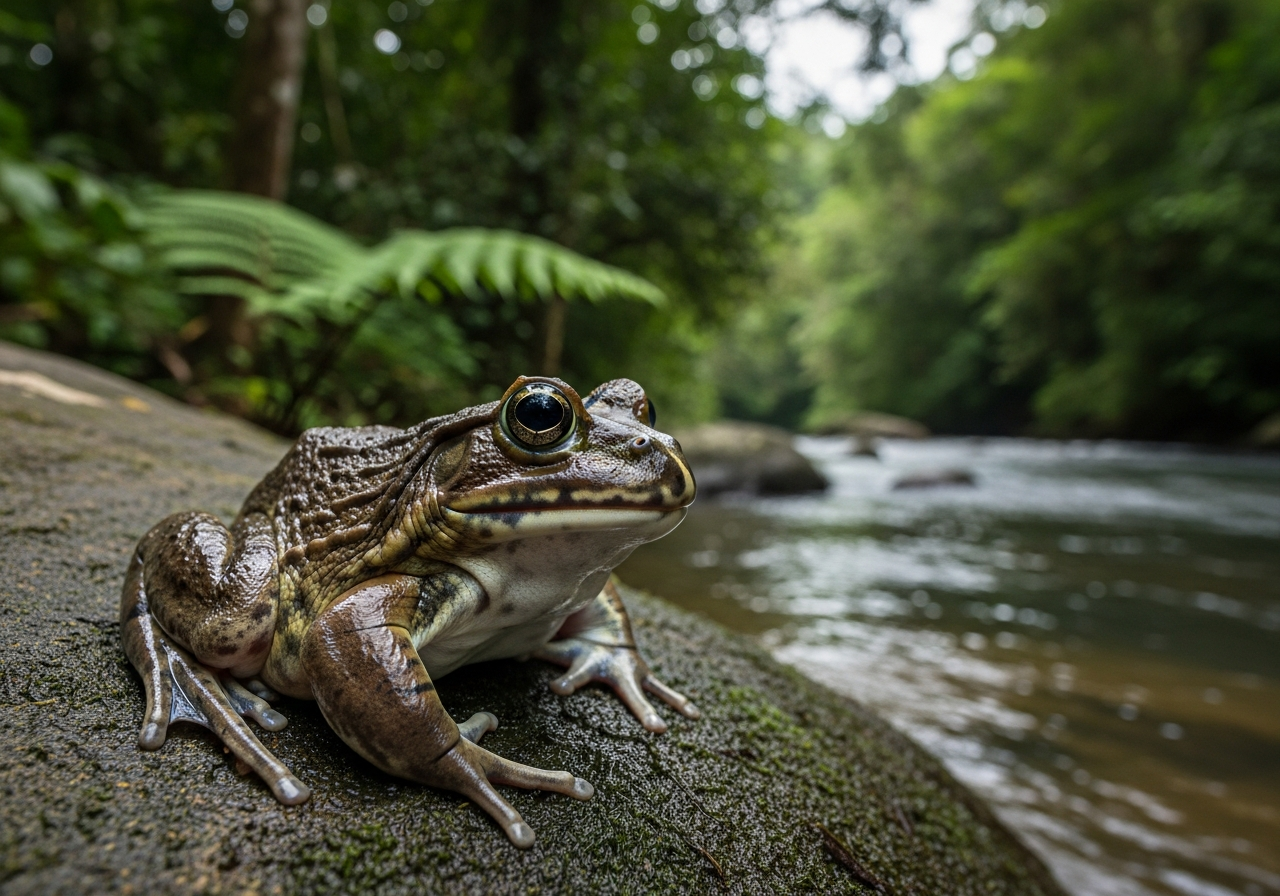
The Goliath frog is the largest living frog, growing up to 32 cm (13 in) long and weighing as much as 3.3 kg (7.3 lb). It lives only in fast-flowing rivers of Cameroon and Equatorial Guinea in West Africa. This powerful frog is endangered and can live around 15 years.
Goliath Frog facts at a glance
| Scientific name | Conraua goliath |
|---|---|
| Diet | Carnivore (insects, crustaceans, small animals) |
| Habitat | Fast-flowing rainforest rivers and waterfalls |
| Lifespan | About 15 years |
| Weight | Up to 3.3 kg (7.3 lb) |
| Size | Up to 32 cm (13 in) body length |
| Conservation status | Endangered (IUCN) |
| Kingdom | Animalia |
|---|---|
| Phylum | Chordata |
| Class | Amphibia |
| Order | Anura |
| Family | Conrauidae |
| Genus | Conraua |
Where it lives
Fast-flowing rainforest rivers of Cameroon and Equatorial Guinea in West Africa.
What is a group of goliath frogs called?
Group name (collective noun)
A group of Goliath Frogs is called an army.
Baby name
A baby Goliath Frog is called a tadpole.
Explore more animal collective nouns and baby animal names .
Behavior and strength
Despite their size, Goliath frogs are wary and quick to dive into rushing water when disturbed. They are remarkably strong and have been observed moving rocks weighing several kilograms to build small breeding pools at the river's edge. Lacking a vocal sac, they communicate with whistles and an open-mouthed call rather than a typical croak.
Diet and feeding
Goliath frogs are carnivores that ambush prey near and in fast water. Adults eat insects, crustaceans, worms, fish, and other amphibians, and large individuals can take small snakes or even baby turtles. Powerful hind legs let them lunge at prey and leap several meters.
Habitat and range
This giant frog has a small range in the rainforests of Cameroon and Equatorial Guinea, where it depends on clean, fast-flowing rivers and waterfalls. It needs well-oxygenated water and rocky riverbanks for breeding. Its narrow habitat makes it especially vulnerable to disturbance.
Conservation
The Goliath frog is listed as Endangered, with populations falling due to habitat destruction from logging and agriculture, river pollution, and collection for food and the pet trade. Its limited range and slow reproduction make recovery difficult. Protecting intact river forest is essential to its survival.
Dig deeper into the Goliath Frog
- Are Goliath Frog Endangered
Dig deeper into goliath frog — are goliath frog endangered.
- How Long do Goliath Frog Live?
Dig deeper into goliath frog — how long do goliath frog live.
- What do Goliath Frog Eat
Dig deeper into goliath frog — what do goliath frog eat.
- Where do Goliath Frog Live?
Dig deeper into goliath frog — where do goliath frog live.
Explore the Goliath Frog
Related Amphibians
Collections
Range & geography
Did you know? Goliath Frog facts
- The Goliath frog is the largest living frog, growing up to 32 cm (13 in) long and weighing as much as 3.3 kg (7.3 lb).
- The Goliath frog is the largest frog in the world, reaching up to 32 cm (13 in) in body length and weighing as much as 3.3 kg (7.3 lb).
- They live only in a small area of West Africa, in the fast-flowing rainforest rivers and waterfalls of Cameroon and Equatorial Guinea.
- Goliath frogs are carnivores that eat insects, crustaceans, worms, fish, and other amphibians. Large individuals can even take small snakes or baby turtles.
- Yes. The Goliath frog is listed as Endangered by the IUCN, mainly due to habitat loss, river pollution, and collection for food and the pet trade.
- Conservation: Endangered (IUCN).
Diet & feeding
Goliath Frog feeds primarily as a carnivore (insects, crustaceans, small animals). Goliath frogs are carnivores that ambush prey near and in fast water. Adults eat insects, crustaceans, worms, fish, and other amphibians, and large individuals can take small snakes or even baby turtles. Powerful hind legs let them lunge
Adaptations
- Despite their size, Goliath frogs are wary and quick to dive into rushing water when disturbed. They are remarkably strong and have been observed moving rocks weighing several kilograms to build small breeding pools at the river's edge. Lacking a vocal sac, they communicate with whistles and an open-mouthed call rather than a typical croak.
- Goliath frogs are carnivores that ambush prey near and in fast water. Adults eat insects, crustaceans, worms, fish, and other amphibians, and large individuals can take small snakes or even baby turtles. Powerful hind legs let them lunge at prey and leap several meters.
Behaviour & ecology
- Despite their size, Goliath frogs are wary and quick to dive into rushing water when disturbed. They are remarkably strong and have been observed moving rocks weighing several kilograms to build small breeding pools at the river's edge. Lacking a vocal sac, they communicate with whistles and an open-mouthed call rather than a typical croak.
- Goliath frogs are carnivores that ambush prey near and in fast water. Adults eat insects, crustaceans, worms, fish, and other amphibians, and large individuals can take small snakes or even baby turtles. Powerful hind legs let them lunge at prey and leap several meters.
- This giant frog has a small range in the rainforests of Cameroon and Equatorial Guinea, where it depends on clean, fast-flowing rivers and waterfalls. It needs well-oxygenated water and rocky riverbanks for breeding. Its narrow habitat makes it especially vulnerable to disturbance.
Communication
- Goliath Frog uses scent, posture, and vocal signals to mark territory and coordinate social behaviour.
- Communication intensity often peaks during breeding seasons and territorial disputes.
Habitat & range
Fast-flowing rainforest rivers and waterfalls
Ecological role
Goliath Frog acts as a predator that helps regulate prey populations and maintain balance in fast-flowing rainforest rivers and waterfalls.
Conservation status of the Goliath Frog
Endangered (EN) means a species faces a very high risk of extinction in the wild. Populations are usually declining sharply due to habitat loss, hunting, disease, or climate pressure. It sits one level below Critically Endangered on the IUCN Red List.
The goliath frog (Conraua goliath) is assessed on the IUCN Red List. Look up on the IUCN Red List .
Frequently asked questions about the Goliath Frog
How big is the Goliath frog?
The Goliath frog is the largest frog in the world, reaching up to 32 cm (13 in) in body length and weighing as much as 3.3 kg (7.3 lb).
Where do Goliath frogs live?
They live only in a small area of West Africa, in the fast-flowing rainforest rivers and waterfalls of Cameroon and Equatorial Guinea.
What do Goliath frogs eat?
Goliath frogs are carnivores that eat insects, crustaceans, worms, fish, and other amphibians. Large individuals can even take small snakes or baby turtles.
Are Goliath frogs endangered?
Yes. The Goliath frog is listed as Endangered by the IUCN, mainly due to habitat loss, river pollution, and collection for food and the pet trade.
Can Goliath frogs jump far?
Yes. Their powerful hind legs allow them to leap several meters in a single jump, helping them escape predators and capture prey.
What is a group of goliath frogs called?
A group of Goliath Frogs is called an army.
What is a baby goliath frog called?
A baby Goliath Frog is called a tadpole.
Sources & references
This guide is compiled and reviewed against established zoological and conservation references. Key sources for the Goliath Frog:
-
IUCN Red List of Threatened Species
Conservation status (Endangered) reflects the IUCN Red List category for Conraua goliath.
- IUCN Red List — Conraua goliath.
Conservation status (Endangered) and population trends.
- Animal Diversity Web — Conraua goliath. University of Michigan Museum of Zoology.
Life history, morphology, and range.
- Wikipedia — Goliath Frog.
General taxonomy and overview (cross-check primary sources).
-
Global Animal Guide editorial standards
How we research, source, review, and update every guide for accuracy.