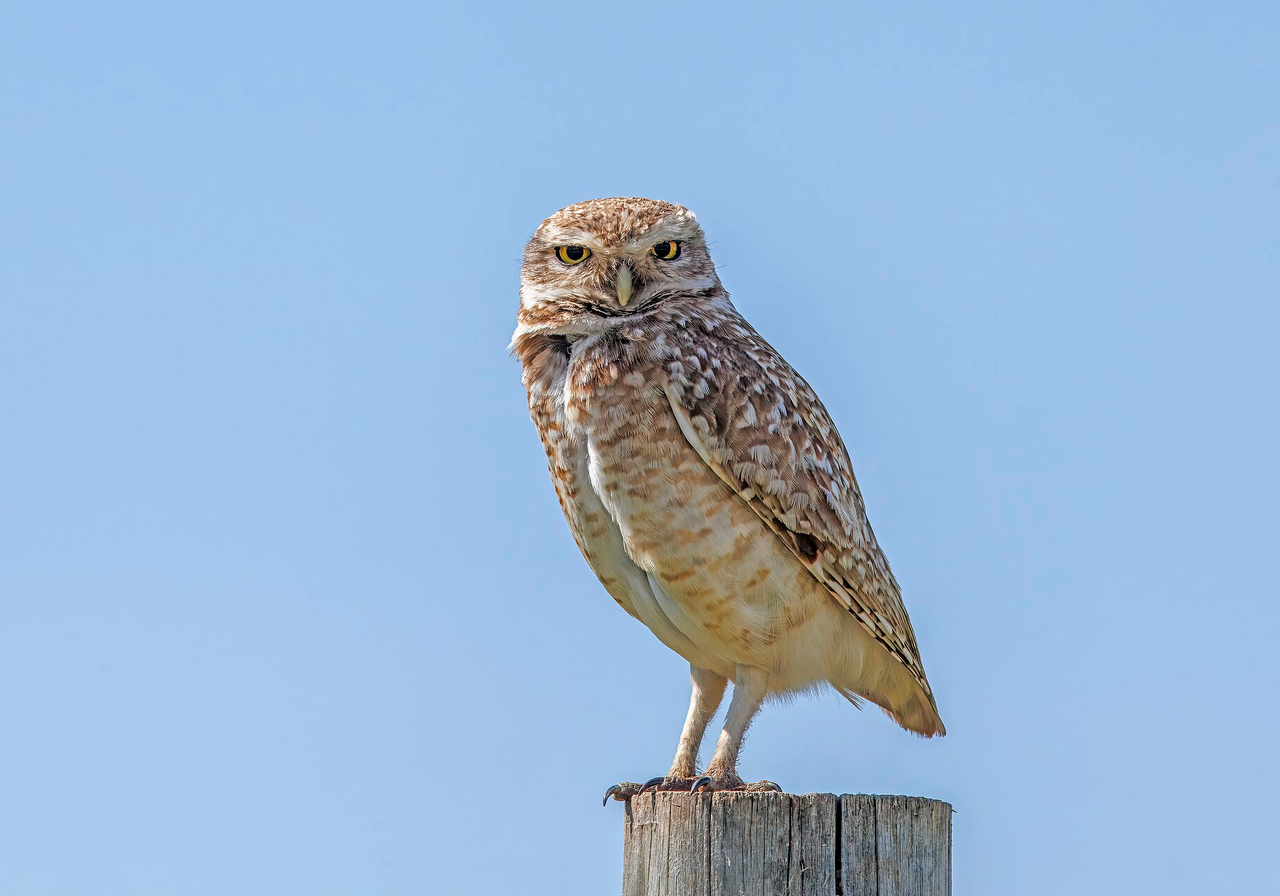
The burrowing owl (Athene cunicularia) is a bird of the family Strigidae, in the order Strigiformes.
Quick answer
The burrowing owl (Athene cunicularia) is a small, long-legged owl of the Americas that nests and roosts in underground burrows, often dug by prairie dogs, ground squirrels or tortoises. It is active by day, has bright yellow eyes and no ear tufts, and weighs 127–255 g. It hunts insects and small rodents. Overall it is listed as Least Concern, although some regional populations have declined.
Top questions about the Burrowing Owl
Burrowing Owl facts at a glance
- Weight 150 g
- Length 22 cm
- Lifespan 7 years
| Scientific name | Athene cunicularia |
|---|---|
| Diet | Insects, small mammals, lizards and small birds |
| Habitat | Grassland, prairie, desert, farmland and open urban land |
| Size | 19–25 cm tall; wingspan 53–61 cm |
| Weight | 127–255 g |
| Lifespan | 6–8 years in the wild; longest known 11 years |
| Conservation status | Least Concern (IUCN Red List, assessed 2025) |
| Kingdom | Animalia |
|---|---|
| Phylum | Chordata |
| Class | Aves |
| Order | Strigiformes |
| Family | Strigidae |
| Genus | Athene |
Where it lives
The burrowing owl (Athene cunicularia) is native to Open country from south-western Canada and the western United States through Mexico, Florida and the Caribbean to southern South America. — recorded across North America, South America in this guide’s range summary.
For occurrence records, see GBIF species search and sources below.
How big is a burrowing owl?
An adult burrowing owl measures 22 cm long — about 13% of the height of an average adult person (1.73 m) — and weighs around 150 g, a small fraction of an average adult’s body weight (70 kg).
Length vs an average adult’s height (to scale)
What is a group of burrowing owls called?
Group name (collective noun)
A group of Burrowing Owls is called a parliament.
Baby name
A baby Burrowing Owl is called an owlet.
Explore more animal collective nouns and baby animal names .
Life underground
Burrowing owls nest and shelter in holes in the ground. In North America they mostly take over burrows dug by prairie dogs, ground squirrels or tortoises; in Florida and much of South America they often dig their own. Living underground protects eggs and chicks from heat and predators.
Identification
This is a small, sandy-brown owl spotted and barred with white, with a round head, no ear tufts, bright yellow eyes under white 'eyebrows' and long, bare legs. It often stands upright on the ground or a post near its burrow and bobs its head when alarmed.
Hunting by day and night
Unlike most owls, burrowing owls are often active in daylight, especially around dawn and dusk. They catch beetles, grasshoppers and other insects on the ground or in the air, and take mice, voles, lizards and frogs.
Status
BirdLife International lists the burrowing owl as Least Concern (2025), estimating 1 to 10 million mature birds and a stable trend overall. In parts of Canada and the western United States, numbers have fallen sharply as prairie was ploughed and burrowing mammals were poisoned.
Explore the Burrowing Owl
Close relatives
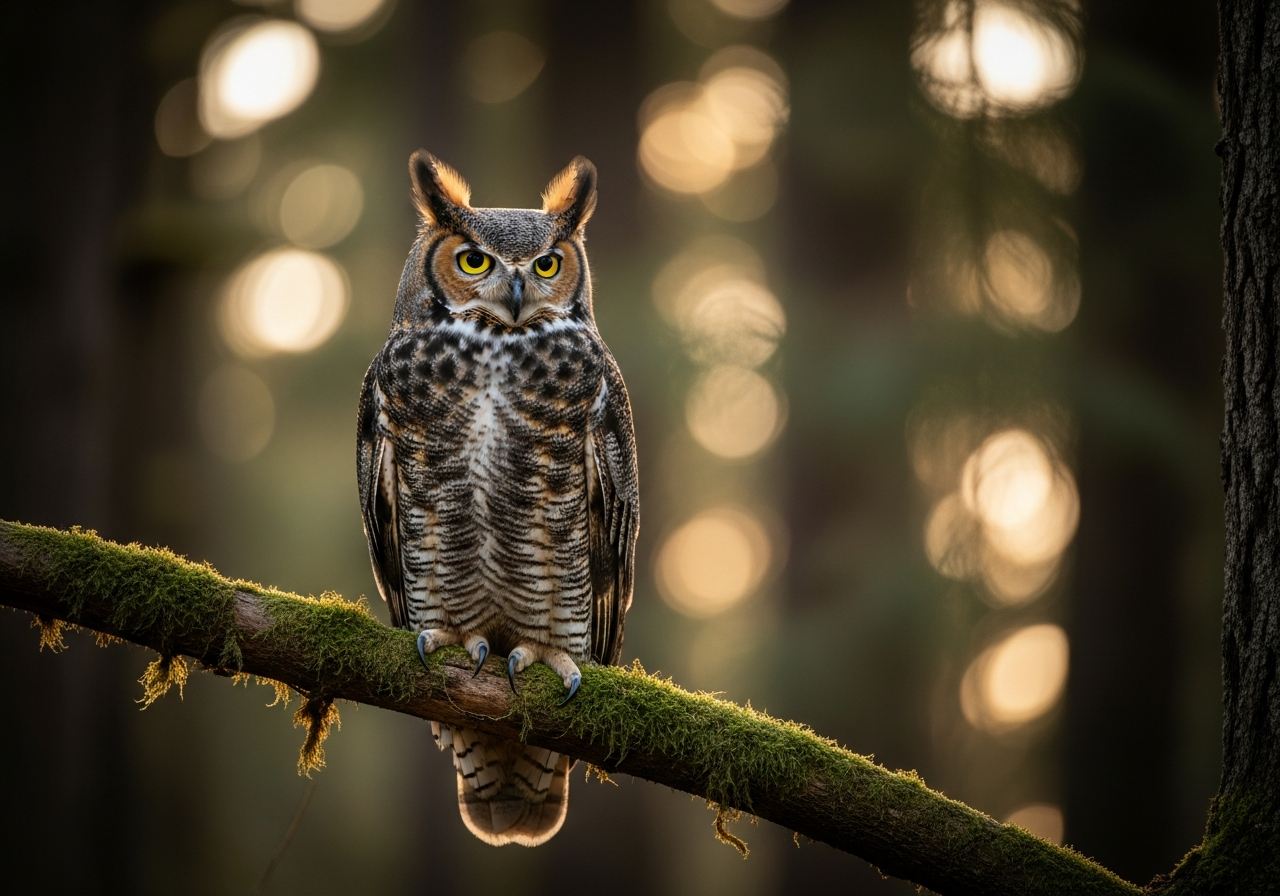
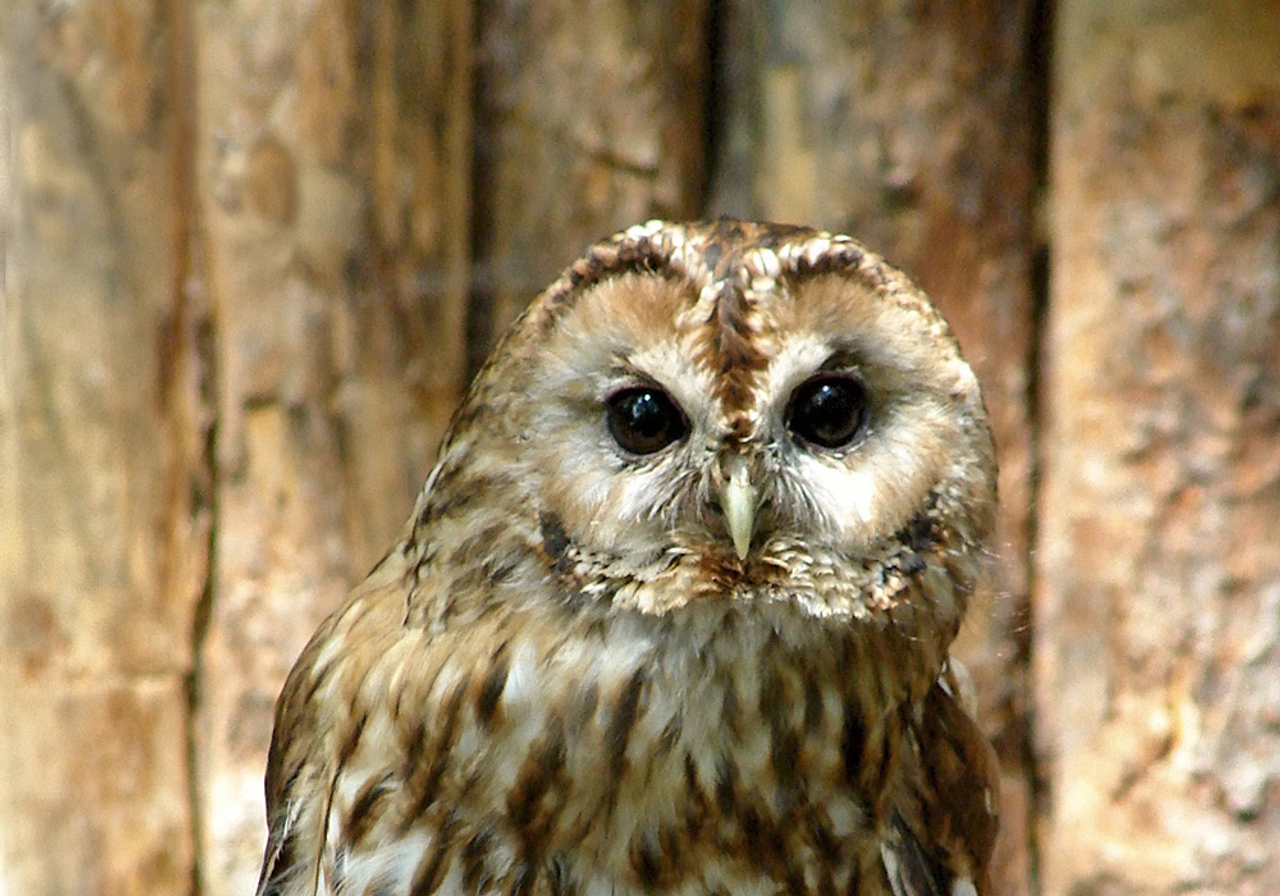
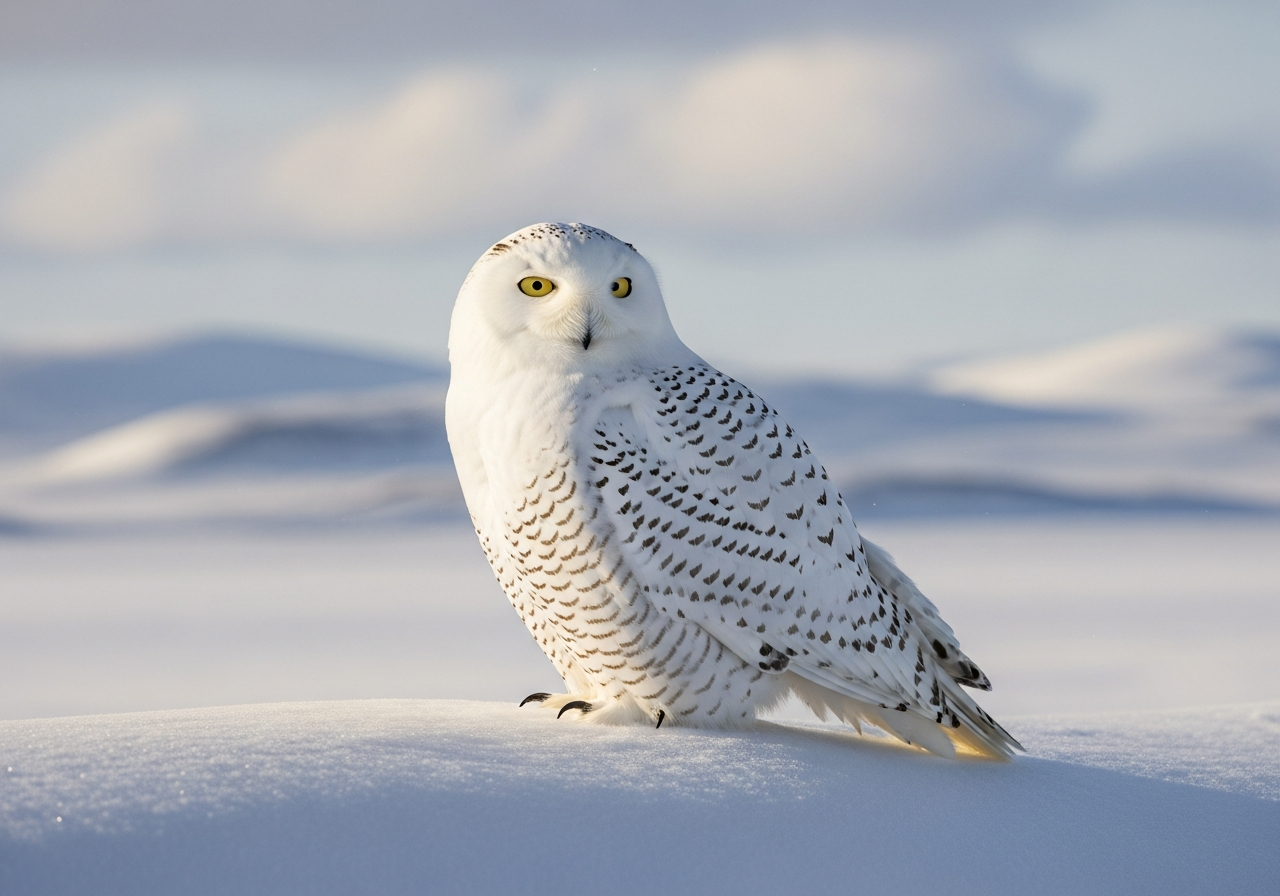
- Eurasian Eagle-Owl Same family
- Tawny Owl Same family
- Snowy Owl Same family
- Great Horned Owl Same family
Did you know? Burrowing Owl facts
- Young burrowing owls can make a hissing call that sounds like a rattlesnake when disturbed in the burrow.
- Burrowing owls sometimes scatter dung around the burrow entrance, which attracts dung beetles they can eat.
Conservation status of the Burrowing Owl
The burrowing owl (Athene cunicularia) is listed as Least Concern on the IUCN Red List. Least Concern (LC) is the IUCN's lowest-risk category, assigned to widespread, abundant species that have been evaluated and found not to be threatened. It does not mean a species faces no pressures — only that it is not currently at risk of extinction.
Burrowing Owl (Athene cunicularia) was most recently assessed for the IUCN Red List in 2025. Look up on the IUCN Red List .
Frequently asked questions about the Burrowing Owl
Do burrowing owls dig their own burrows?
Some do, especially in Florida and South America, but in much of North America they reuse burrows made by prairie dogs, ground squirrels or tortoises.
Are burrowing owls active during the day?
Yes. They are often seen in daylight standing at the burrow entrance, and they hunt by day as well as at night.
How big is a burrowing owl?
Only 19–25 cm tall and 127–255 g, with a wingspan of 53–61 cm.
Where do burrowing owls live?
In open country across the Americas, from western Canada and the United States through Central America and the Caribbean to southern South America.
What is a group of burrowing owls called?
A group of Burrowing Owls is called a parliament.
What is a baby burrowing owl called?
A baby Burrowing Owl is called an owlet.
Sources & references
This guide is compiled and reviewed against established zoological and conservation references. Key sources for the Burrowing Owl:
-
IUCN Red List of Threatened Species
Conservation status (Least Concern) reflects the IUCN Red List category for Athene cunicularia, most recently assessed in 2025.
-
iNaturalist — observations & photos
Search citizen-science observations and community IDs for Athene cunicularia. Useful for range checks and recent sightings — not a substitute for formal Red List status.
-
GBIF — occurrence data
Global Biodiversity Information Facility species search for Athene cunicularia. Explore published occurrence records used in range research.
-
eBird — bird observations
Cornell Lab eBird target search for Burrowing Owl. Check recent checklists and seasonal abundance where birders report this species.
- BirdLife International (2026). Species factsheet: Burrowing Owl Athene cunicularia. BirdLife DataZone. Checked 1 November 2026.
IUCN Red List category Least Concern (assessed 2025), population estimate and trend.
- Animal Diversity Web: Athene cunicularia. University of Michigan Museum of Zoology.
Size, lifespan and diet.
- Tobias, J. A. et al. (2022). AVONET: morphological, ecological and geographical data for all birds. Ecology Letters 25: 581–597. doi:10.1111/ele.13898
Average body mass.
- Gill, F., Donsker, D. & Rasmussen, P. (Eds). IOC World Bird List v15.2.
English and scientific name, classification and range.
-
Global Animal Guide editorial standards
How we research, source, review, and update every guide for accuracy.