Quick answer
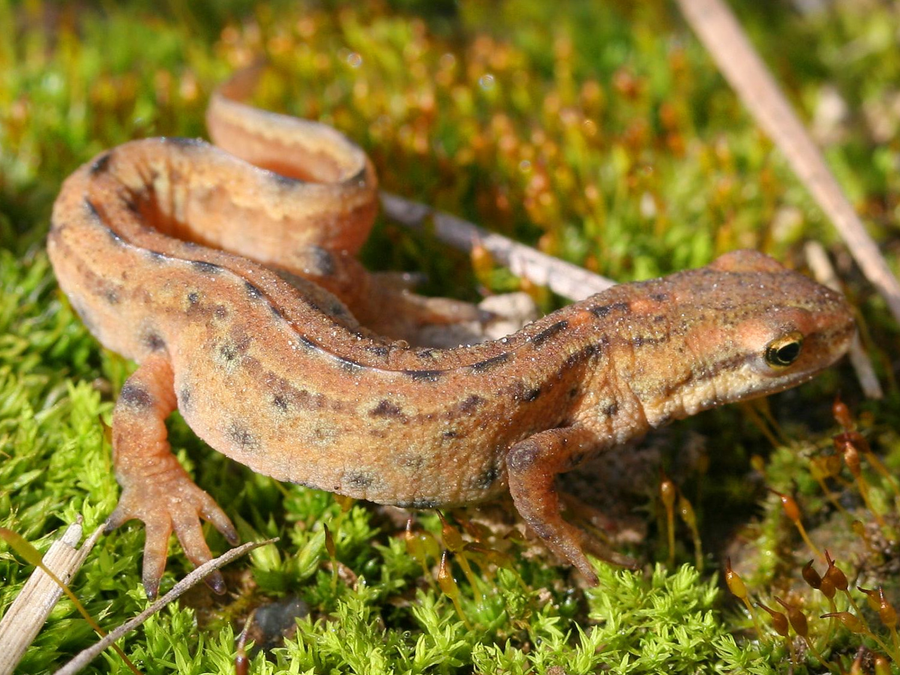
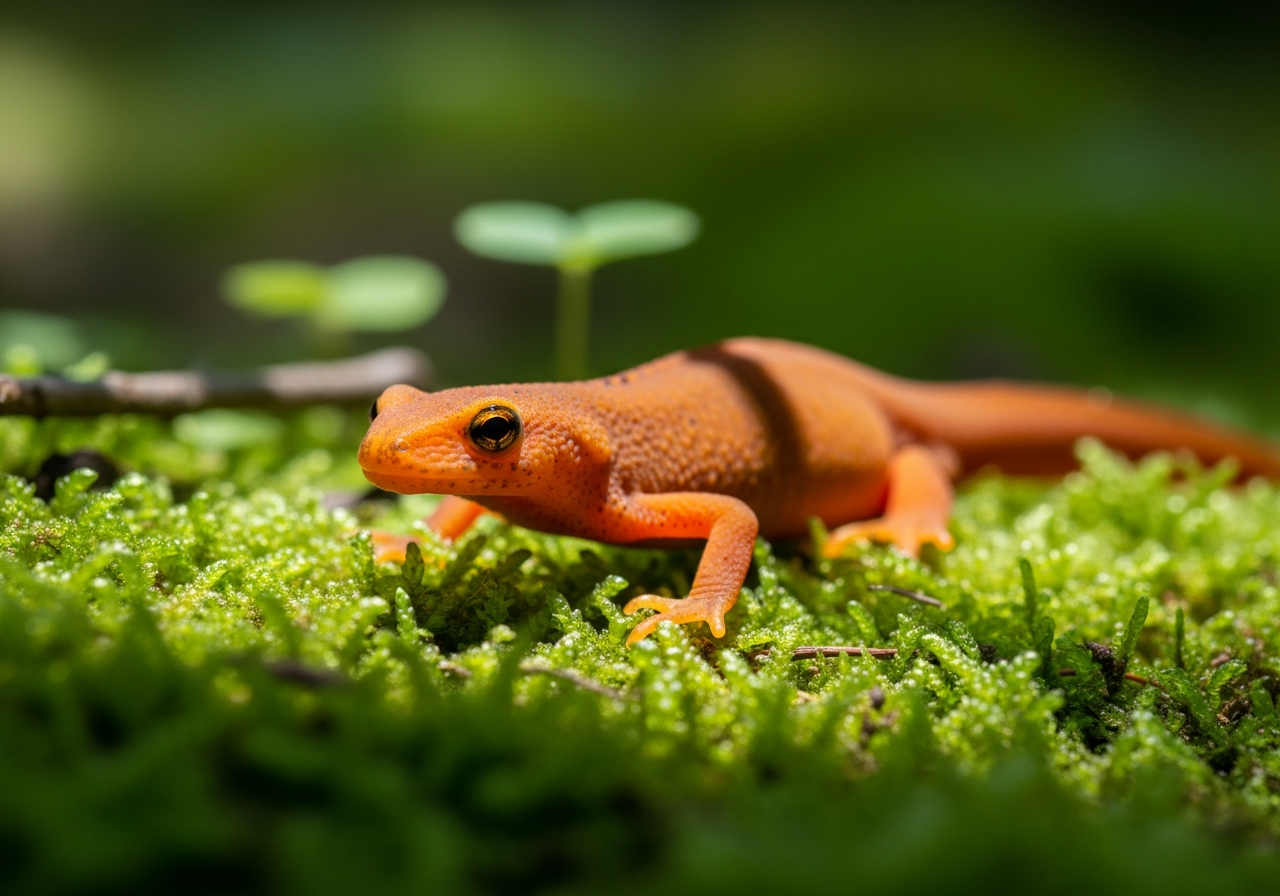
The eastern newt is a small North American amphibian with an unusual three-stage life cycle, including a brilliant orange land-dwelling juvenile called the red eft. Adults are olive-green and aquatic, and their skin contains a mild toxin for defense. Eastern newts can live up to 15 years.
Top questions about the Eastern Newt
Eastern Newt facts at a glance
- Weight 10 g
- Length 10 cm
- Top speed 3 km/h
- Lifespan 13 years
| Scientific name | Notophthalmus viridescens |
|---|---|
| Diet | Carnivore (insects, worms, small invertebrates) |
| Habitat | Ponds, lakes, and surrounding moist woodland |
| Lifespan | Up to 15 years |
| Weight | Around 10 g (0.35 oz) |
| Size | 7–12 cm (2.8–4.7 in) body length |
| Conservation status | Least Concern (IUCN) |
| Kingdom | Animalia |
|---|---|
| Phylum | Chordata |
| Class | Amphibia |
| Order | Urodela |
| Family | Salamandridae |
| Genus | Notophthalmus |
Where it lives
The eastern newt (Notophthalmus viridescens) is native to Ponds, lakes, and moist woodlands across eastern North America, from Canada to the southeastern United States. — recorded across North America in this guide’s range summary.
For occurrence records, see GBIF species search and sources below.
How big is a eastern newt?
An adult eastern newt measures 10 cm long — about 6% of the height of an average adult person (1.73 m) — and weighs around 10 g, a small fraction of an average adult’s body weight (70 kg).
Length vs an average adult’s height (to scale)
What is a group of eastern newts called?
Group name (collective noun)
A group of Eastern Newts is called a knot.
Baby name
A baby Eastern Newt is called an eft. It may also be called a larva.
Explore more animal collective nouns and baby animal names .
Behavior and life cycle
Eastern newts have a striking three-stage life. After hatching as aquatic larvae, many transform into bright orange juveniles called red efts that live on land for several years. The efts then return to water and mature into olive-green, semi-aquatic adults. The vivid orange of the eft stage warns predators of toxins in the skin.
Diet and feeding
Eastern newts are carnivores at every stage. They eat insects, worms, small crustaceans, snails, and amphibian eggs, including those of frogs. Adults forage in the water while red efts hunt small invertebrates on the moist forest floor.
Habitat and range
The eastern newt is widespread across eastern North America, from Canada to the southeastern United States. Adults live in ponds, lakes, and slow streams, while red efts roam the surrounding damp woodlands. The species needs both healthy wetlands and intact forest to complete its life cycle.
Conservation
Eastern newts are listed as Least Concern and remain common across much of their range. Their main threats are wetland loss, forest clearing, road mortality during migrations, and pollution. Protecting both breeding ponds and the surrounding forest is important because the species depends on both.
Dig deeper into the Eastern Newt
- How Long Do Eastern Newts Live?
Eastern Newt lifespan is typically Up to 15 years. What shortens or extends life, life stages, and status (Least Concern).
- What Do Eastern Newts Eat?
What eastern newts eat: Carnivore (insects, worms, small invertebrates), foraging style, and seasonal shifts in Ponds, lakes, and surrounding moist woodland.
- Where Do Eastern Newts Live?
Where eastern newts live: Ponds, lakes, and surrounding moist woodland, native range cues, and human overlap. Status Least Concern.
Explore the Eastern Newt
Related Amphibians
Collections
Range & geography
Did you know? Eastern Newt facts
- The eastern newt is a small North American amphibian with an unusual three-stage life cycle, including a brilliant orange land-dwelling juvenile called the red eft.
- A red eft is the bright orange, land-dwelling juvenile stage of the eastern newt. After living on land for a few years, the eft returns to water and matures into an olive-green adult.
- Yes, mildly. Eastern newts have toxins in their skin that deter predators. The bright orange color of the red eft stage is a warning, but they are not dangerous to handle briefly, though you should wash your hands afterward.
- Eastern newts are carnivores that eat insects, worms, small crustaceans, snails, and amphibian eggs at all stages of their life.
- Eastern newts are long-lived for their size and can live up to about 15 years in the wild.
- Conservation: Least Concern (IUCN).
Diet & feeding
Eastern Newt feeds primarily as a carnivore (insects, worms, small invertebrates). Eastern newts are carnivores at every stage. They eat insects, worms, small crustaceans, snails, and amphibian eggs, including those of frogs. Adults forage in the water while red efts hunt small invertebrates on the moist forest floor.
Adaptations
- Eastern newts have a striking three-stage life. After hatching as aquatic larvae, many transform into bright orange juveniles called red efts that live on land for several years. The efts then return to water and mature into olive-green, semi-aquatic adults. The vivid orange of the eft stage warns predators of toxins in the skin.
- Eastern newts are carnivores at every stage. They eat insects, worms, small crustaceans, snails, and amphibian eggs, including those of frogs. Adults forage in the water while red efts hunt small invertebrates on the moist forest floor.
Behaviour & ecology
- Eastern newts have a striking three-stage life. After hatching as aquatic larvae, many transform into bright orange juveniles called red efts that live on land for several years. The efts then return to water and mature into olive-green, semi-aquatic adults. The vivid orange of the eft stage warns predators of toxins in the skin.
- Eastern newts are carnivores at every stage. They eat insects, worms, small crustaceans, snails, and amphibian eggs, including those of frogs. Adults forage in the water while red efts hunt small invertebrates on the moist forest floor.
- The eastern newt is widespread across eastern North America, from Canada to the southeastern United States. Adults live in ponds, lakes, and slow streams, while red efts roam the surrounding damp woodlands. The species needs both healthy wetlands and intact forest to complete its life cycle.
Communication
- Eastern Newt uses scent, posture, and vocal signals to mark territory and coordinate social behaviour.
- Communication intensity often peaks during breeding seasons and territorial disputes.
Habitat & range
Ponds, lakes, and surrounding moist woodland
Ecological role
Eastern Newt acts as a predator that helps regulate prey populations and maintain balance in ponds, lakes, and surrounding moist woodland.
Conservation status of the Eastern Newt
The eastern newt (Notophthalmus viridescens) is listed as Least Concern on the IUCN Red List. Least Concern (LC) is the IUCN's lowest-risk category, assigned to widespread, abundant species that have been evaluated and found not to be threatened. It does not mean a species faces no pressures — only that it is not currently at risk of extinction.
The eastern newt (Notophthalmus viridescens) is assessed on the IUCN Red List. Look up on the IUCN Red List .
Frequently asked questions about the Eastern Newt
What is a red eft?
A red eft is the bright orange, land-dwelling juvenile stage of the eastern newt. After living on land for a few years, the eft returns to water and matures into an olive-green adult.
Are eastern newts poisonous?
Yes, mildly. Eastern newts have toxins in their skin that deter predators. The bright orange color of the red eft stage is a warning, but they are not dangerous to handle briefly, though you should wash your hands afterward.
What do eastern newts eat?
Eastern newts are carnivores that eat insects, worms, small crustaceans, snails, and amphibian eggs at all stages of their life.
How long do eastern newts live?
Eastern newts are long-lived for their size and can live up to about 15 years in the wild.
Where do eastern newts live?
They live across eastern North America. Adults inhabit ponds, lakes, and slow streams, while the juvenile red efts live in the surrounding moist woodlands.
What is a group of eastern newts called?
A group of Eastern Newts is called a knot.
What is a baby eastern newt called?
A baby Eastern Newt is called an eft. It may also be called a larva.
Sources & references
This guide is compiled and reviewed against established zoological and conservation references. Key sources for the Eastern Newt:
-
IUCN Red List of Threatened Species
Conservation status (Least Concern) reflects the IUCN Red List category for Notophthalmus viridescens.
-
iNaturalist — observations & photos
Search citizen-science observations and community IDs for Notophthalmus viridescens. Useful for range checks and recent sightings — not a substitute for formal Red List status.
-
GBIF — occurrence data
Global Biodiversity Information Facility species search for Notophthalmus viridescens. Explore published occurrence records used in range research.
- IUCN Red List — Notophthalmus viridescens.
Conservation status (Least Concern) and population trends.
- Animal Diversity Web — Notophthalmus viridescens. University of Michigan Museum of Zoology.
Life history, morphology, and range.
- Wikipedia — Eastern Newt.
General taxonomy and overview (cross-check primary sources).
-
Global Animal Guide editorial standards
How we research, source, review, and update every guide for accuracy.