Image sourcing: see credits & licences
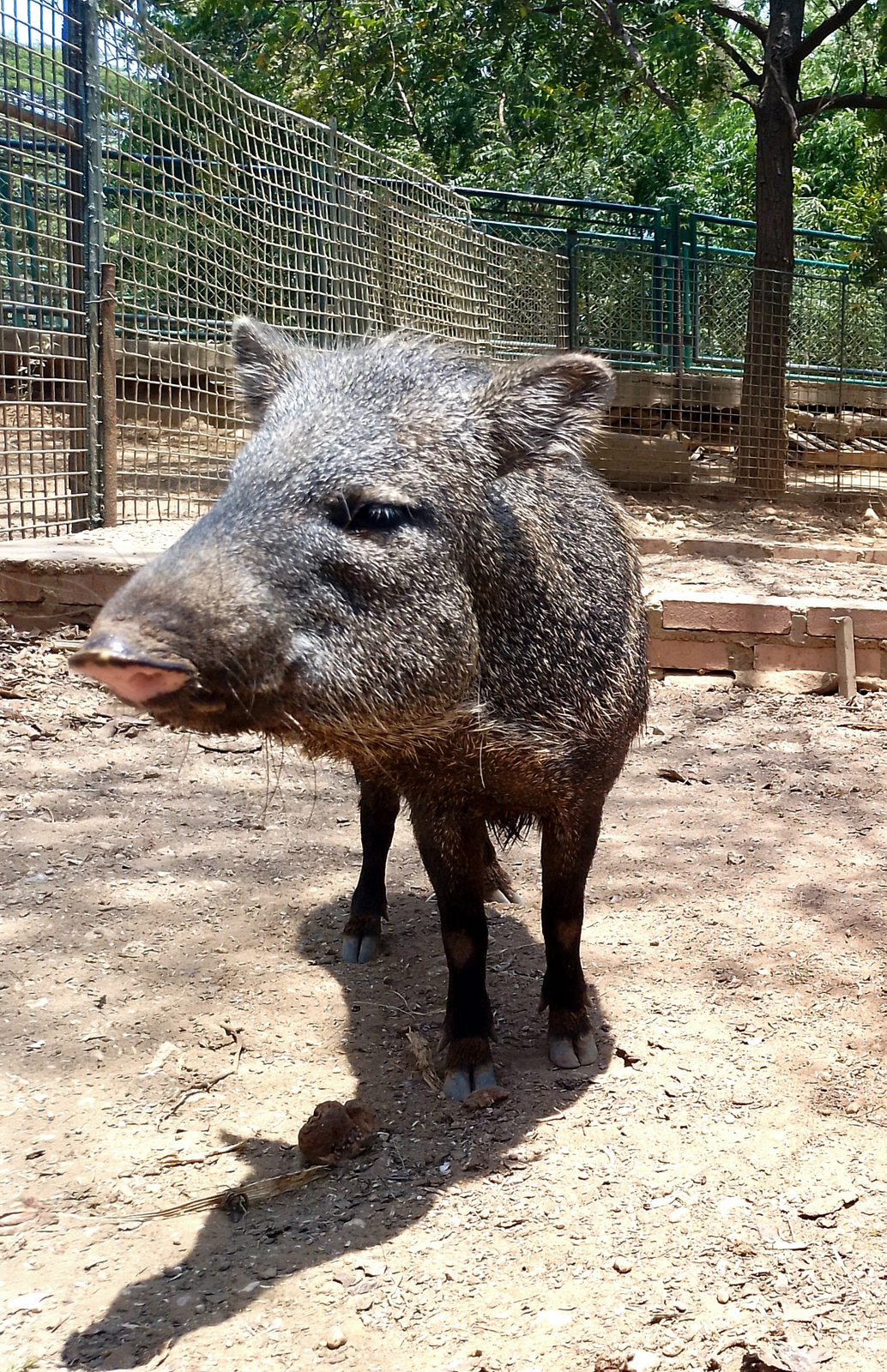
The collared peccary (Dicotyles tajacu) is a mammal of the family Tayassuidae, in the order Artiodactyla.
Quick answer
The collared peccary (Dicotyles tajacu) is a small pig-like mammal of the Americas with a whitish neck collar and sharp scent glands. Adults weigh about 20 kg, travel in herds, and are listed Least Concern.
Top questions about the Collared Peccary
Collared Peccary facts at a glance
- Weight 20 kg
- Length 90 cm
- Top speed 35 km/h
- Lifespan 12 years
| Scientific name | Dicotyles tajacu |
|---|---|
| Diet | Omnivore |
| Habitat | Desert scrub, woodland, and rainforest |
| Lifespan | 10–15 years |
| Weight | 15–25 kg |
| Top speed | up to 35 km/h |
| Conservation status | Least Concern (IUCN) |
| Kingdom | Animalia |
|---|---|
| Phylum | Chordata |
| Class | Mammalia |
| Order | Artiodactyla |
| Family | Tayassuidae |
| Genus | Dicotyles |
Where it lives
The collared peccary (Dicotyles tajacu) is native to Southwestern US through Central America into South America. — recorded across North America, South America in this guide’s range summary.
For occurrence records, see GBIF species search and sources below.
How big is a collared peccary?
An adult collared peccary measures 90 cm long — about 52% of the height of an average adult person (1.73 m) — and weighs around 20 kg, about 29% of an average adult’s body weight (70 kg).
Length vs an average adult’s height (to scale)
What is a group of collared peccaries called?
Group name (collective noun)
A group of Collared Peccaries is called a herd.
Baby name
A baby Collared Peccary is called a shoat.
Explore more animal collective nouns and baby animal names .
Not a pig — a peccary
Peccaries are New World relatives of pigs with straight canines and a dorsal scent gland used for herd marking. A pale collar contrasts with dark bristly fur.
Roots, fruit, and cactus
Omnivorous diet includes roots, tubers, fruit, agave, insects, and small vertebrates. Herds of 5–20 share trails and waterholes in dry country.
Desert scrub to rainforest
Southwestern US through Central America into South American forests. Adaptable to thornscrub, oak woodland, and tropical edges.
Resilient edge species
Least Concern and common in many protected areas. Roadkill and hunting pressure exist locally, but herds persist near suburbs in parts of Arizona and Texas.
Explore the Collared Peccary
Close relatives
- Giraffe Same order
- Pygmy Hippopotamus Same order
- Blue Whale Same order
- Cow Same order
Range & geography
Conservation status of the Collared Peccary
The collared peccary (Dicotyles tajacu) is listed as Least Concern on the IUCN Red List. Least Concern (LC) is the IUCN's lowest-risk category, assigned to widespread, abundant species that have been evaluated and found not to be threatened. It does not mean a species faces no pressures — only that it is not currently at risk of extinction.
The collared peccary (Dicotyles tajacu) is assessed on the IUCN Red List. Look up on the IUCN Red List .
Frequently asked questions about the Collared Peccary
What is the difference between peccaries and pigs?
Peccaries are native American taxa with scent glands on the back and different dental anatomy; feral pigs are Old World suids.
Why do peccaries smell musky?
A dorsal scent gland secretes a strong odour used to mark herd members and territory.
Do collared peccaries attack people?
They can bite if cornered, but usually flee; dogs sometimes provoke defensive herds.
What is a baby peccary called?
A shoat or piglet — young travel with the herd from birth.
Where do collared peccaries live in the US?
Arizona, Texas, and New Mexico deserts and scrublands, plus introduced areas in the Caribbean.
What is a group of collared peccaries called?
A group of Collared Peccaries is called a herd.
What is a baby collared peccary called?
A baby Collared Peccary is called a shoat.
Sources & references
This guide is compiled and reviewed against established zoological and conservation references. Key sources for the Collared Peccary:
-
IUCN Red List of Threatened Species
Conservation status (Least Concern) reflects the IUCN Red List category for Dicotyles tajacu.
-
iNaturalist — observations & photos
Search citizen-science observations and community IDs for Dicotyles tajacu. Useful for range checks and recent sightings — not a substitute for formal Red List status.
-
GBIF — occurrence data
Global Biodiversity Information Facility species search for Dicotyles tajacu. Explore published occurrence records used in range research.
-
Global Animal Guide editorial standards
How we research, source, review, and update every guide for accuracy.