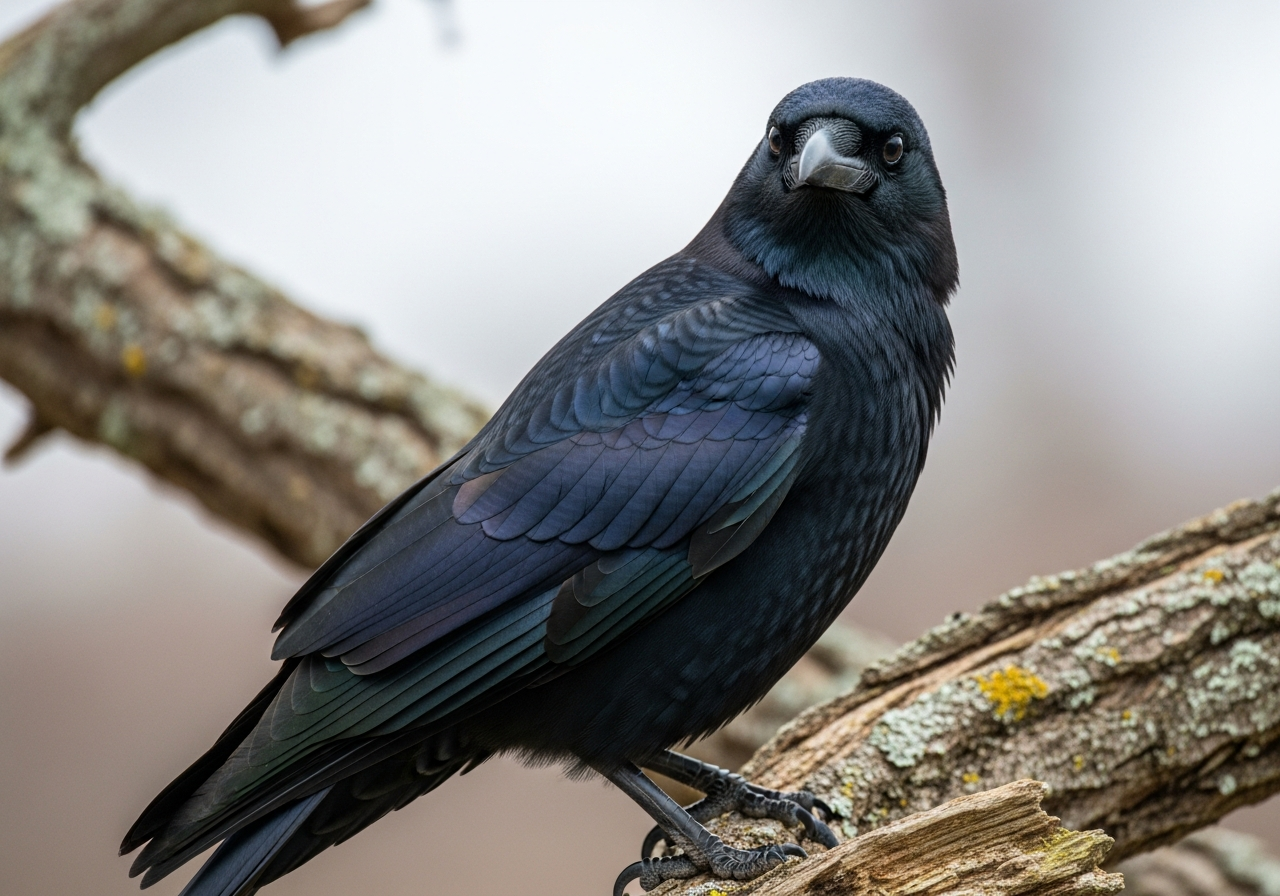
Crow
Corvus brachyrhynchos
Quick answer
The American crow is a large, all-black bird and one of the most intelligent animals on Earth, capable of using tools, solving puzzles, and recognising individual human faces. Highly social and adaptable, crows live across North America in fields, forests, and cities, often roosting in flocks of thousands. They are omnivores, can live up to about 16 years in the wild, and belong to the same clever family as ravens and magpies.
Crow facts at a glance
| Scientific name | Corvus brachyrhynchos |
|---|---|
| Diet | Omnivore (grain, insects, carrion, scraps) |
| Habitat | Farmland, woodland, parks, cities |
| Lifespan | 7–8 years wild (up to 16+) |
| Weight | 300–600 g (11–21 oz) |
| Wingspan | 85–100 cm (33–39 in) |
| Conservation status | Least Concern (IUCN) |
| Kingdom | Animalia |
|---|---|
| Phylum | Chordata |
| Class | Aves |
| Order | Passeriformes |
| Family | Corvidae |
| Genus | Corvus |
Where it lives
Fields, woodlands, parks, and cities across the United States and Canada.
What is a group of crows called?
Group name (collective noun)
A group of Crows is called a murder. It is also known as a horde.
Baby name
A baby Crow is called a chick.
Explore more animal collective nouns and baby animal names .
Intelligence and tool use
Crows are corvids, ranking among the most intelligent of all animals. They use and even shape simple tools, drop hard-shelled food onto roads for cars to crack, and plan ahead for future needs. Crows also recognise and remember individual human faces for years, holding grudges against people who have threatened them and passing that wariness on to other crows.
Diet and adaptability
As opportunistic omnivores, crows eat grain, fruit, insects, small animals, eggs, carrion, and human food waste. This flexible diet, paired with their intelligence, lets them thrive almost anywhere, from farmland to busy city centres. They are bold scavengers and quick to exploit new food sources.
Crows versus ravens
Crows are often confused with ravens, but ravens are noticeably larger, with shaggy throat feathers, a heavier bill, and a wedge-shaped tail, and they make a deep croak rather than a sharp caw. In Europe and Asia the equivalent of the American crow is the carrion crow, a very similar all-black relative.
Frequently asked questions about the Crow
What is a group of crows called?
A group of crows is famously called a murder. Crows are highly social and also gather in huge communal roosts, and a baby crow is called a chick.
Are crows really that intelligent?
Yes. Crows are among the smartest animals, using tools, solving multi-step problems, planning ahead, and recognising individual human faces for years, remembering those who have threatened them.
What is the difference between a crow and a raven?
Ravens are larger than crows, with shaggy throat feathers, a heavier curved bill, and a wedge-shaped tail. Ravens give a deep croak, while crows make a sharper, higher cawing call.
Do crows remember faces?
Yes. Studies show crows recognise and remember specific human faces, react to people who have harmed them, and can pass that information to other crows, so a whole local group may scold a remembered threat.
What do crows eat?
Crows are omnivores that eat grain, fruit, insects, small animals, eggs, carrion, and food waste. Their varied diet and intelligence let them thrive in farmland, woodland, and cities alike.
What is a baby crow called?
A baby Crow is called a chick.
Sources & references
This guide is compiled and reviewed against established zoological and conservation references. Key sources for the Crow:
-
IUCN Red List of Threatened Species
Conservation status (Least Concern) reflects the IUCN Red List category for Corvus brachyrhynchos.
-
Global Animal Guide editorial standards
How we research, source, review, and update every guide for accuracy.


Social life and roosts
Crows are highly social and communicate with a wide vocabulary of caws and rattles. Families often stay together, with older offspring helping to raise the next brood — a behaviour called cooperative breeding. Outside the breeding season, crows gather in enormous communal roosts that can number in the tens of thousands, especially in winter and near towns.