Betta Fish
Betta splendens
Quick answer
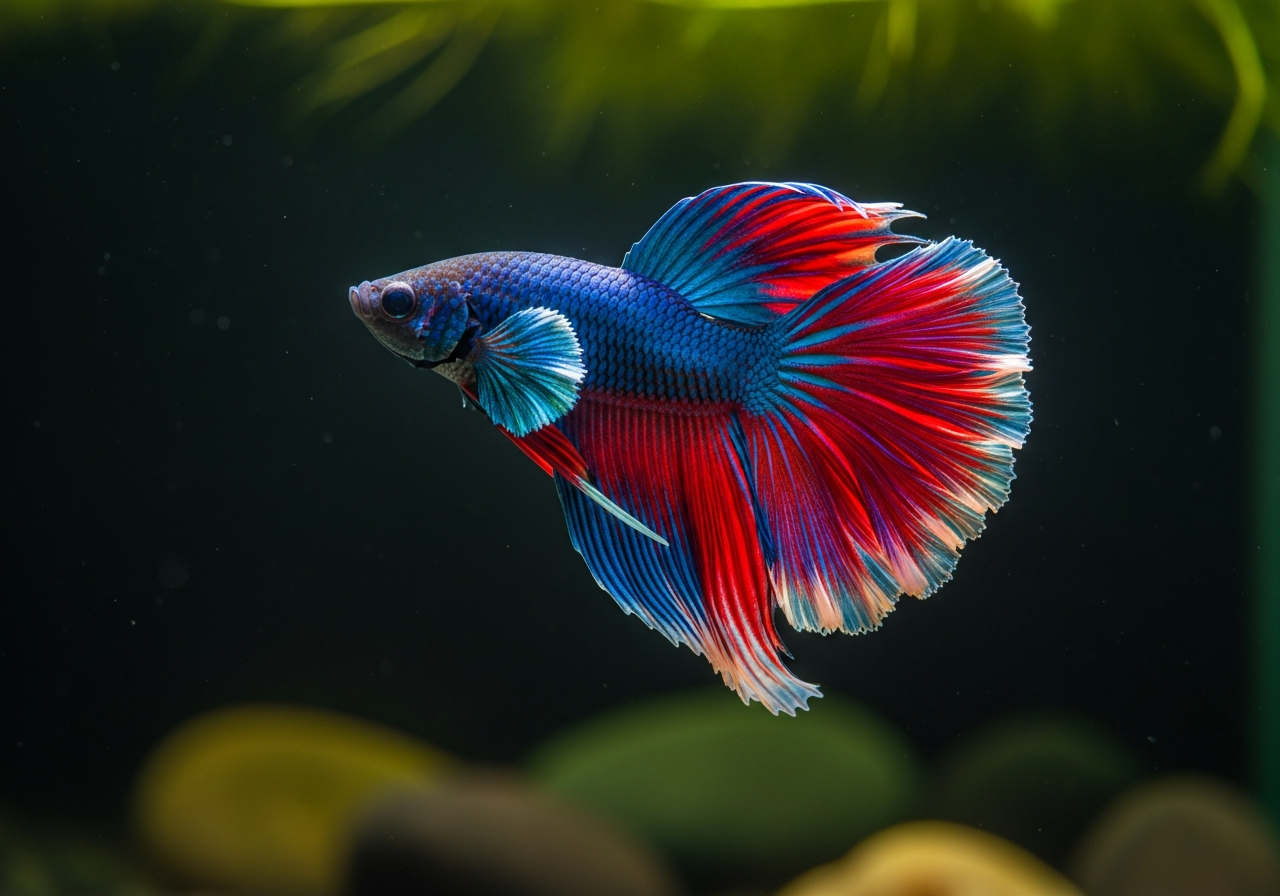
The betta, or Siamese fighting fish (Betta splendens), is a small, brilliantly coloured freshwater fish originally from the shallow ponds, rice paddies, and slow streams of Southeast Asia. Domesticated for centuries, it is now one of the world's most popular aquarium fish, prized for flowing fins and vivid colours. Bettas grow to about 6–8 cm and usually live 2–4 years in home aquariums.
Betta Fish facts at a glance
| Scientific name | Betta splendens |
|---|---|
| Diet | Carnivore |
| Habitat | Shallow freshwater of Southeast Asia |
| Lifespan | 2–4 years |
| Length | 6–8 cm (2.4–3.1 in) |
| Top speed | Slow; short darting movements |
| Conservation status | Vulnerable (IUCN) |
| Kingdom | Animalia |
|---|---|
| Phylum | Chordata |
| Class | Actinopterygii |
| Order | Anabantiformes |
| Family | Osphronemidae |
| Genus | Betta |
Where it lives
Shallow rice paddies, ditches, and slow streams of Thailand, Cambodia, and neighboring Southeast Asia.
What is a baby betta fish called?
Baby name
A baby Betta Fish is called a fry.
Explore more animal collective nouns and baby animal names .
Origins and domestication
Betta splendens has been kept and bred in Thailand for well over a century, first for the sport of fish fighting and later for its ornamental beauty. Selective breeding has transformed the plain, dull-brown wild fish into hundreds of colour and fin varieties, from crimson veiltails to iridescent blue halfmoons. The name "Siamese fighting fish" comes from the males' natural aggression toward one another. Today the domesticated betta is a global aquarium staple, quite different in appearance from its wild ancestors in Southeast Asia. While the pet betta is everywhere, the wild Betta splendens is listed as Vulnerable by the IUCN, as the shallow wetlands it depends on are lost to farming and development.
The labyrinth organ and breathing air
Bettas possess a special breathing structure called the labyrinth organ, which lets them gulp oxygen directly from the air at the water's surface. This adaptation evolved for life in warm, shallow, oxygen-poor water such as rice paddies and stagnant pools. It means a betta must have access to the surface to breathe and cannot rely on gills alone. The same trait allows the fish to survive in conditions that would suffocate many other species.
Temperament and territory
Male bettas are famously territorial and will flare their gills and fins, or fight, when they meet another male. In an aquarium two males should never be housed together, as confrontations can be fatal. Bettas swim in short, darting bursts rather than long steady cruises, patrolling and defending their patch of water. Many become surprisingly responsive to their keepers, learning to follow a finger and rise to the surface at feeding time.
Feeding and care
The betta is a carnivore that in the wild eats insects, larvae, and tiny aquatic invertebrates. In captivity it thrives on protein-rich pellets, frozen or live bloodworms, brine shrimp, and daphnia. Bettas need warm water, ideally around 24–27 °C, and do best in a heated, gently filtered tank rather than an unheated bowl. Good water quality and a varied diet are key to keeping the fish healthy through its 2–4 year lifespan.
Breeding and bubble nests
Breeding bettas is a striking process centred on the bubble nest, a raft of saliva-coated air bubbles the male builds at the surface. After an elaborate courtship, the male wraps around the female to fertilise her eggs, then gathers them in his mouth and places each one in the nest. He alone guards the nest and tends the eggs and newly hatched fry, chasing the female away. This devoted paternal care is one of the most fascinating aspects of keeping the species.
Dig deeper into the Betta Fish
- Are Betta Fish Endangered
Dig deeper into betta fish — are betta fish endangered.
- Betta Fish Guide 5
Dig deeper into betta fish — betta fish guide 5.
- How Long do Betta Fish Live?
Dig deeper into betta fish — how long do betta fish live.
- What do Betta Fish Eat
Dig deeper into betta fish — what do betta fish eat.
- Where do Betta Fish Live?
Dig deeper into betta fish — where do betta fish live.
Explore the Betta Fish
Compare
Related Fishs
Collections
Range & geography
Did you know? Betta Fish facts
- The betta fish, or Siamese fighting fish, is a small, vividly colored freshwater fish from Southeast Asia known for its flowing fins and bold temperament.
- Betta fish usually live 2 to 4 years in a well-maintained aquarium. Warm, clean, filtered water and a good diet help them reach the upper end of that range.
- Male bettas are intensely territorial and will flare and fight other males on sight, a trait that earned them the name Siamese fighting fish. Because of this, males are kept on their own.
- Two male bettas should never share a tank because they will fight. A single male can sometimes live with peaceful tankmates of other species, but females and males are only put together briefly for breeding.
- Yes. Bettas are tropical fish that need warm water around 24 to 28°C (75 to 82°F), so a heated, filtered tank is far better for them than an unheated bowl.
- Conservation: Vulnerable (IUCN).
Diet & feeding
Betta Fish feeds primarily as a carnivore. Bettas are carnivores built to eat small live prey. In the wild they take insects, larvae, and tiny aquatic invertebrates from near the surface. In aquariums they do best on betta-specific pellets supplemented with frozen or live foods such as bloodworms and brine shrimp.
Adaptations
- Male bettas are famously territorial and will spread their gills and fins in a dramatic display, or fight, when they see another male. For this reason males are kept alone. Despite the aggression toward rivals, bettas are intelligent and can learn to recognize their owner and follow a finger across the glass.
- Bettas have a special organ called the labyrinth that lets them gulp air from the surface, so they can survive in warm, oxygen-poor water that would suffocate many other fish. This adaptation suits the shallow rice paddies, ditches, and slow streams they come from, but they still need clean, warm water to thrive.
Behaviour & ecology
- Male bettas are famously territorial and will spread their gills and fins in a dramatic display, or fight, when they see another male. For this reason males are kept alone. Despite the aggression toward rivals, bettas are intelligent and can learn to recognize their owner and follow a finger across the glass.
- Bettas have a special organ called the labyrinth that lets them gulp air from the surface, so they can survive in warm, oxygen-poor water that would suffocate many other fish. This adaptation suits the shallow rice paddies, ditches, and slow streams they come from, but they still need clean, warm water to thrive.
- Bettas are carnivores built to eat small live prey. In the wild they take insects, larvae, and tiny aquatic invertebrates from near the surface. In aquariums they do best on betta-specific pellets supplemented with frozen or live foods such as bloodworms and brine shrimp.
Communication
- Lateral-line and visual cues coordinate schooling, courtship, or territorial behaviour.
- Some species produce low-frequency sounds or drumming for spawning or defence.
Habitat & range
Shallow freshwater of Southeast Asia
Ecological role
Betta Fish acts as a predator that helps regulate prey populations and maintain balance in shallow freshwater of southeast asia.
Conservation status of the Betta Fish
Vulnerable (VU) means a species faces a high risk of extinction in the medium-term future. It is the lowest-risk of the three 'threatened' IUCN categories — one step below Endangered, which is itself below Critically Endangered — and is often an early warning that a population is in trouble.
The betta fish (Betta splendens) is assessed on the IUCN Red List. Look up on the IUCN Red List .
Frequently asked questions about the Betta Fish
How long do betta fish live?
Betta fish usually live 2–4 years in a home aquarium. Good water quality, a heated tank, and a varied protein-rich diet give a betta the best chance of reaching the upper end of that range.
Can two betta fish live together?
Two male bettas should never share a tank, as they are highly territorial and will fight, sometimes to the death. Females can sometimes be kept together in a group, but pairs are only brought together briefly for breeding.
Do betta fish really breathe air?
Yes. Bettas have a special organ called the labyrinth that lets them gulp oxygen from the air at the surface. This is why they can survive in warm, shallow, low-oxygen water, but it also means they must be able to reach the surface to breathe.
What do betta fish eat?
Bettas are carnivores. In the wild they eat insects and small aquatic invertebrates, and in aquariums they do best on high-protein betta pellets supplemented with frozen or live bloodworms, brine shrimp, and daphnia.
Do betta fish need a heater?
Yes. Bettas are tropical fish that need warm, stable water of roughly 24–27 °C. An unheated bowl at room temperature is too cold and stressful, so a heated, gently filtered tank is far better for their health.
Why is the betta called a fighting fish?
The name comes from the intense aggression male bettas show toward one another, flaring and fighting on sight. In Thailand this behaviour was once the basis of an organised betting sport, which drove the fish's early domestication and breeding.
What is a baby betta fish called?
A baby Betta Fish is called a fry.
Sources & references
This guide is compiled and reviewed against established zoological and conservation references. Key sources for the Betta Fish:
-
IUCN Red List of Threatened Species
Conservation status (Vulnerable) reflects the IUCN Red List category for Betta splendens.
- IUCN Red List — Betta splendens.
Conservation status (Vulnerable) and population trends.
- Animal Diversity Web — Betta splendens. University of Michigan Museum of Zoology.
Life history, morphology, and range.
- Wikipedia — Betta Fish.
General taxonomy and overview (cross-check primary sources).
-
Global Animal Guide editorial standards
How we research, source, review, and update every guide for accuracy.