Quick answer
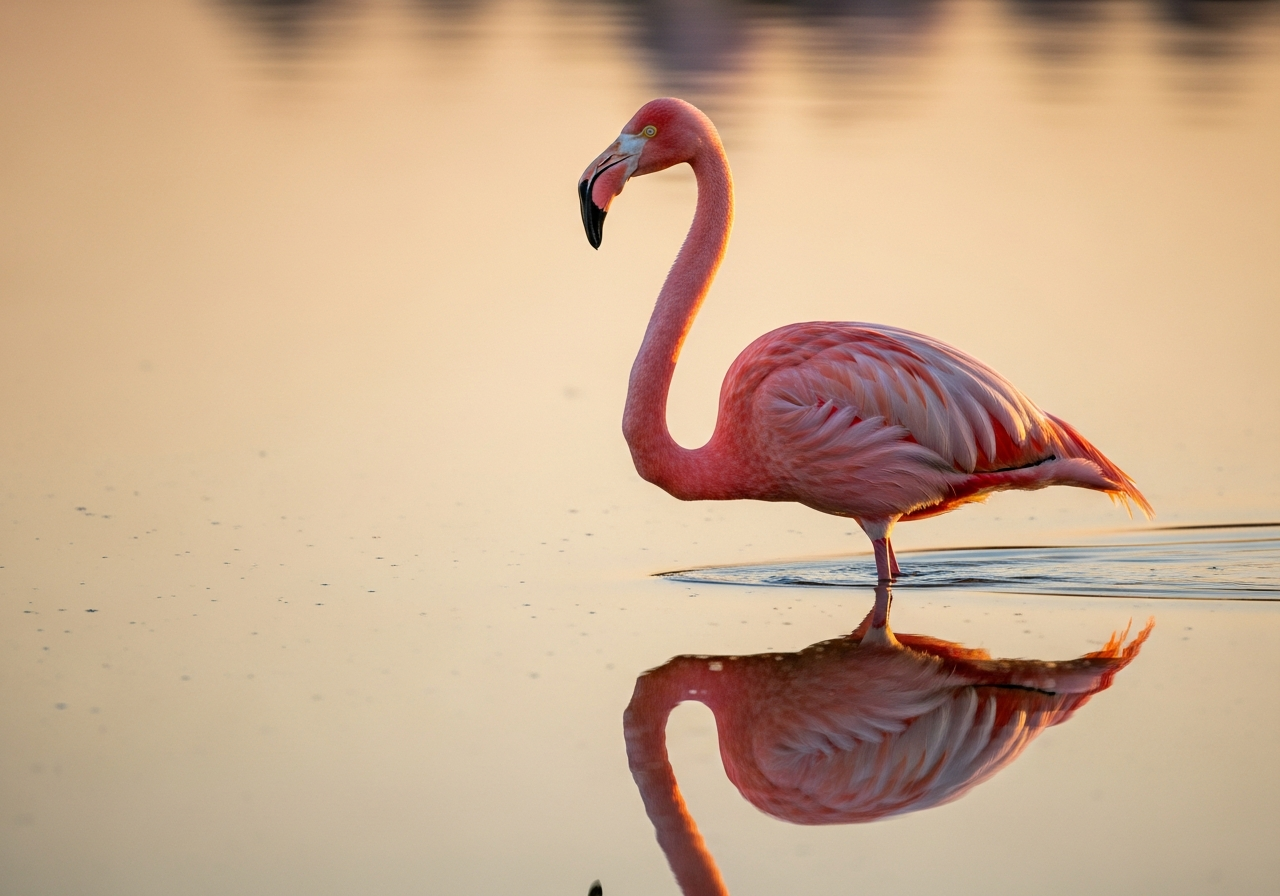
The flamingo is a tall wading bird famous for its vivid pink plumage, long legs, and habit of standing on one leg. Its color comes from pigments in the algae and brine shrimp it eats, filtered from the water with a specially shaped, upside-down bill. Flamingos live in large flocks in shallow lakes and lagoons, and some can reach 40 years or more.
Top questions about the Flamingo
Also available in Español (Flamenco)
Flamingo facts at a glance
- Weight 3.5 kg
- Length 1.4 m
- Top speed 60 km/h
- Lifespan 40 years
| Scientific name | Phoenicopterus roseus |
|---|---|
| Diet | Filter feeder (algae and brine shrimp) |
| Habitat | Shallow lakes, lagoons, and estuaries |
| Lifespan | 20–40+ years |
| Height | 1.1–1.5 m (3.6–5 ft) |
| Top speed | Up to 60 km/h (37 mph) in flight |
| Conservation status | Least Concern (IUCN) |
| Kingdom | Animalia |
|---|---|
| Phylum | Chordata |
| Class | Aves |
| Order | Phoenicopteriformes |
| Family | Phoenicopteridae |
| Genus | Phoenicopterus |
Where it lives
The flamingo (Phoenicopterus roseus) is native to Shallow lakes and lagoons across Africa, southern Europe, Asia, and the Americas. — recorded across Africa, Asia, Europe, South America in this guide’s range summary.
For occurrence records, see GBIF species search and sources below.
How big is a flamingo?
An adult flamingo measures 1.4 m long — about 81% of the height of an average adult person (1.73 m) — and weighs around 3.5 kg, about 5% of an average adult’s body weight (70 kg).
Length vs an average adult’s height (to scale)
What is a group of flamingos called?
Group name (collective noun)
A group of Flamingos is called a flamboyance. It is also known as a stand or a colony.
Baby name
A baby Flamingo is called a chick.
Explore more animal collective nouns and baby animal names .
Why flamingos are pink
Flamingos are not born pink; chicks hatch grey. Their famous color comes from pigments called carotenoids in the algae and tiny crustaceans they eat, which their bodies process and deposit in the feathers. A flamingo's exact shade reflects its diet, and the pinkest birds are often the best fed and most attractive mates.
Upside-down feeding
A flamingo feeds with its head upside down in the water, sweeping its uniquely shaped bill from side to side. Comb-like plates called lamellae filter algae, brine shrimp, and tiny organisms from the mud and water, much like a baleen whale, while pumping out the excess water.
Standing on one leg
Flamingos often rest on a single leg, even while asleep. Research suggests this posture is remarkably stable and requires almost no muscular effort, and tucking one leg up against the body may help conserve heat in cold water. They can hold the pose effortlessly for long periods.
Flock life
Flamingos are intensely social, gathering in colonies that can number tens of thousands. Large flocks, fittingly called a flamboyance, perform synchronized group displays before breeding. Nesting on mud mounds, both parents feed the chick a nutritious 'crop milk' produced in the throat.
Dig deeper into the Flamingo
- Flamingo: Key Facts
The flamingo is a tall wading bird famous for its vivid pink plumage, long legs, and habit of standing on one leg.
- How Fast Is A Flamingo?
Flamingo top speed is up to about 60 km/h (37 mph) in flight. Sprint vs endurance and what limits pace.
- How Long Do Flamingos Live?
Flamingo lifespan is typically 20–40+ years. What shortens or extends life, life stages, and status (Least Concern).
- What Do Flamingos Eat?
What flamingos eat: Filter feeder (algae and brine shrimp), foraging style, and seasonal shifts in Shallow lakes, lagoons, and estuaries.
- Where Do Flamingos Live?
Where flamingos live: Shallow lakes, lagoons, and estuaries, native range cues, and human overlap. Status Least Concern.
Explore the Flamingo
Compare
Related Birds
Range & geography
Did you know? Flamingo facts
- Flamingos get their pink colour from pigments in the algae and shrimp they eat.
- They feed with their heads upside down, filtering food from the water.
- Flamingos often stand on one leg, which may help conserve body heat.
- They gather in huge colonies that can number in the hundreds of thousands.
- Both parents feed chicks a nutritious 'crop milk'.
- A flamingo's bill has comb-like structures that strain tiny food from water.
Diet & feeding
Flamingos filter-feed on algae, diatoms, small crustaceans such as brine shrimp, and other invertebrates, whose pigments give the birds their pink colour.
Adaptations
- A specialised downturned bill with comb-like lamellae filters small food from water.
- Long legs and neck let flamingos feed in deeper water than many waders.
- Pigments from their diet produce and maintain the pink plumage.
- Standing on one leg may reduce heat loss in cool water.
Behaviour & ecology
- Flamingos feed in shallow water, sweeping the bill upside down to filter prey.
- They breed in dense colonies, performing synchronised group displays.
- Parents feed chicks crop milk produced by both sexes.
- Large flocks move between wetlands as conditions change.
Communication
- Loud, goose-like calls maintain contact in vast, noisy colonies.
- Synchronised group displays coordinate breeding readiness.
- Calls help parents and chicks reunite in the crowd.
Habitat & range
Flamingos inhabit shallow saline and alkaline lakes, lagoons, and estuaries across parts of Africa, the Americas, southern Europe, and Asia, often in harsh, salty wetlands.
Ecological role
As filter-feeding specialists of saline wetlands, flamingos influence algae and invertebrate communities and are indicators of fragile wetland ecosystems.
Conservation status of the Flamingo
The flamingo (Phoenicopterus roseus) is listed as Least Concern on the IUCN Red List. Least Concern (LC) is the IUCN's lowest-risk category, assigned to widespread, abundant species that have been evaluated and found not to be threatened. It does not mean a species faces no pressures — only that it is not currently at risk of extinction.
Main threats to the flamingo
- Wetland degradation and water extraction
- Disturbance at breeding colonies
- Pollution of saline lakes
- Climate-driven changes to nesting sites
Flamingo (Phoenicopterus roseus) was most recently assessed for the IUCN Red List in 2019. View the full IUCN assessment .
Frequently asked questions about the Flamingo
Why are flamingos pink?
Flamingos get their pink color from carotenoid pigments in the algae and brine shrimp they eat. Chicks are born grey and gradually turn pink as their diet builds up the pigment in their feathers.
Why do flamingos stand on one leg?
Standing on one leg is thought to be highly stable and energy-efficient for flamingos, and tucking the other leg against the body may help them conserve body heat while standing in cool water.
What do flamingos eat?
Flamingos are filter feeders. They eat algae, brine shrimp, and other tiny organisms, straining them from the water and mud with comb-like structures in their specially shaped, downturned bills.
How long do flamingos live?
Flamingos are long-lived birds, commonly reaching 20 to 30 years in the wild and even longer in captivity, with some individuals recorded at over 40 and even into their 70s.
What is a group of flamingos called?
A group of flamingos is called a flamboyance. These colonies can number in the tens of thousands and perform striking synchronized displays before breeding.
What is a baby flamingo called?
A baby Flamingo is called a chick.
Sources & references
This guide is compiled and reviewed against established zoological and conservation references. Key sources for the Flamingo:
-
IUCN Red List of Threatened Species
Conservation status (Least Concern) reflects the IUCN Red List category for Phoenicopterus roseus, most recently assessed in 2019.
-
iNaturalist — observations & photos
Search citizen-science observations and community IDs for Phoenicopterus roseus. Useful for range checks and recent sightings — not a substitute for formal Red List status.
-
GBIF — occurrence data
Global Biodiversity Information Facility species search for Phoenicopterus roseus. Explore published occurrence records used in range research.
-
eBird — bird observations
Cornell Lab eBird target search for Flamingo. Check recent checklists and seasonal abundance where birders report this species.
- BirdLife International (2018). Phoenicopterus roseus. IUCN Red List of Threatened Species.
Status (Least Concern) for greater flamingo.
- Billerman, S. M. et al. (eds.). Birds of the World. Cornell Lab of Ornithology.
Feeding and breeding biology.
- Animal Diversity Web — Phoenicopterus (flamingo). University of Michigan Museum of Zoology.
Life history, morphology, and range.
-
Global Animal Guide editorial standards
How we research, source, review, and update every guide for accuracy.