Image sourcing: see credits & licences
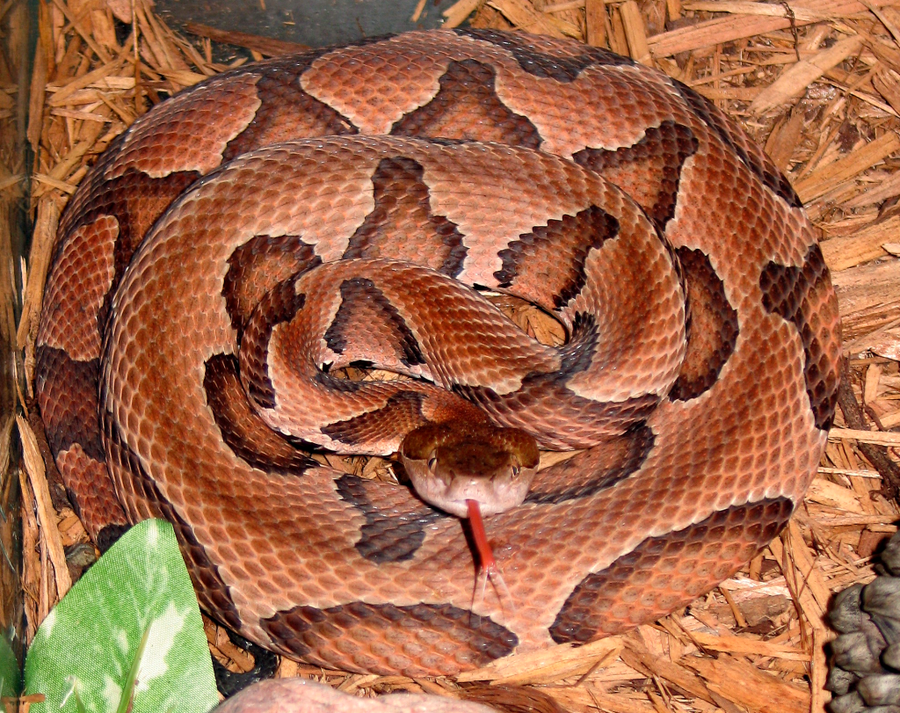
The copperhead (Agkistrodon contortrix) is a reptile of the viper family, Viperidae, in the order Squamata.
Quick answer
The copperhead (Agkistrodon contortrix) is a common pit viper of eastern and central United States forests, marked with chestnut hourglass bands. Adults average about 0.75 m and eat rodents, frogs, and cicadas. Venom is rarely fatal to healthy adults; IUCN lists the species Least Concern.
Top questions about the Copperhead
Also available in Español (Serpiente cabeza de cobre)
Copperhead facts at a glance
- Weight 300 g
- Length 75 cm
- Top speed 5 km/h
- Lifespan 18 years
| Scientific name | Agkistrodon contortrix |
|---|---|
| Diet | Carnivore (rodents and amphibians) |
| Habitat | Deciduous forest, rocky hillsides, and suburbs |
| Lifespan | Around 18 years in the wild (varies by population and captivity). |
| Weight | About 0.3 kg typical adult mass (sex and region vary). |
| Top speed | Up to roughly 5 km/h when moving at speed. |
| Conservation status | Least Concern (IUCN) |
| Kingdom | Animalia |
|---|---|
| Phylum | Chordata |
| Class | Reptilia |
| Order | Squamata |
| Family | Viperidae |
| Genus | Agkistrodon |
Where it lives
The copperhead (Agkistrodon contortrix) is native to Eastern and central United States from New England to Texas. — recorded across North America in this guide’s range summary.
For occurrence records, see GBIF species search and sources below.
How big is a copperhead?
An adult copperhead measures 75 cm long — about 43% of the height of an average adult person (1.73 m) — and weighs around 300 g, a small fraction of an average adult’s body weight (70 kg).
Length vs an average adult’s height (to scale)
What is a group of copperheads called?
Group name (collective noun)
A group of Copperheads is called a bed.
Baby name
A baby Copperhead is called a neonate.
Explore more animal collective nouns and baby animal names .
Hourglass bands and heat pits
Copperheads are heavy-bodied pit vipers with facial heat-sensing pits and elliptical pupils. Pattern blends with leaf litter — a classic ambush camouflage. Young have bright yellow tail tips used as caudal lures.
Rodents, frogs, and cicadas
Diet shifts with age and season: juveniles take more amphibians and insects; adults favour mice and other small mammals. In parts of their range they gorge on periodical cicadas during emergence years.
New England to Texas woodlands
Deciduous forest, rocky hillsides, and suburban edges from New England across the Midwest to Texas. They often shelter under logs, stone walls, and woodpiles near people.
Bites common, deaths rare
Copperheads cause many US venomous snakebites because they live near suburbs, yet fatalities are uncommon with prompt medical care. Leaving them alone and keeping yards tidy of cover reduces encounters.
Explore the Copperhead
Close relatives
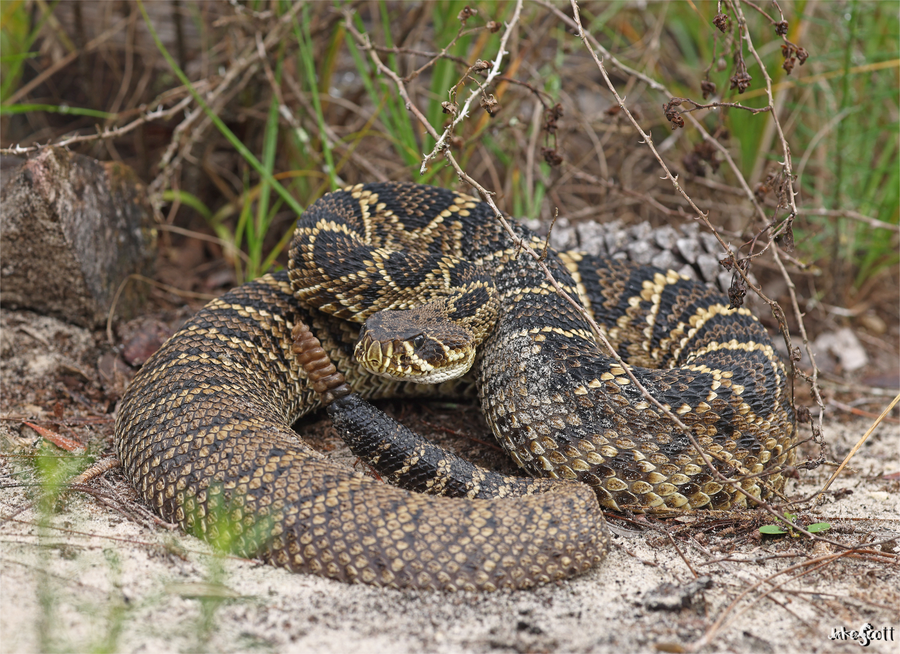
- Eastern Diamondback Rattlesnake Same family
- Puff Adder Same family
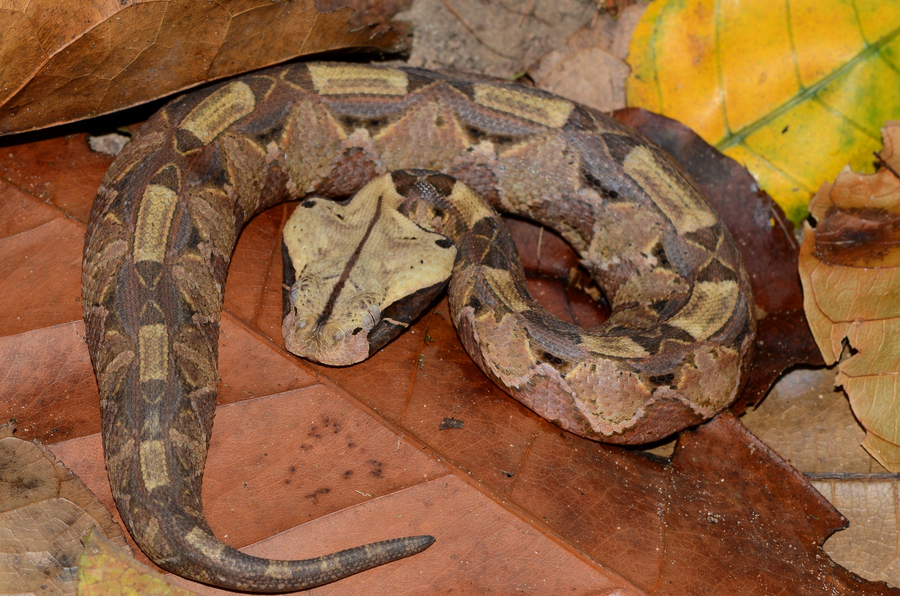
- Gaboon Viper Same family
- Sidewinder Same family
Range & geography
Conservation status of the Copperhead
The copperhead (Agkistrodon contortrix) is listed as Least Concern on the IUCN Red List. Least Concern (LC) is the IUCN's lowest-risk category, assigned to widespread, abundant species that have been evaluated and found not to be threatened. It does not mean a species faces no pressures — only that it is not currently at risk of extinction.
The copperhead (Agkistrodon contortrix) is assessed on the IUCN Red List. Look up on the IUCN Red List .
Frequently asked questions about the Copperhead
Is a copperhead bite deadly?
Serious, but rarely fatal to healthy adults with hospital treatment. Seek medical care immediately; do not cut or suck the wound.
How do you identify a copperhead?
Look for coppery head colour and dark chestnut bands that are narrow on the spine and wider on the sides (hourglass or "Hershey's Kiss" shapes on the back).
Do baby copperheads have yellow tails?
Yes — the bright tip is waved as a lure to attract frogs and lizards — that is the usual English name for a young copperhead.
Are copperheads protected?
They are Least Concern and generally not federally protected; some local rules discourage killing native snakes.
Where do copperheads live?
Eastern and central United States from New England to Texas in forests, rocky slopes, and suburban edges.
What is a group of copperheads called?
A group of Copperheads is called a bed.
What is a baby copperhead called?
A baby Copperhead is called a neonate.
Sources & references
This guide is compiled and reviewed against established zoological and conservation references. Key sources for the Copperhead:
-
IUCN Red List of Threatened Species
Conservation status (Least Concern) reflects the IUCN Red List category for Agkistrodon contortrix.
-
iNaturalist — observations & photos
Search citizen-science observations and community IDs for Agkistrodon contortrix. Useful for range checks and recent sightings — not a substitute for formal Red List status.
-
GBIF — occurrence data
Global Biodiversity Information Facility species search for Agkistrodon contortrix. Explore published occurrence records used in range research.
-
Global Animal Guide editorial standards
How we research, source, review, and update every guide for accuracy.