Image sourcing: see credits & licences
The Gaboon viper (Bitis gabonica) is a reptile of the viper family, Viperidae, in the order Squamata.
Quick answer
The Gaboon viper (Bitis gabonica) is a heavy rainforest viper of Central and West Africa with the longest fangs of any venomous snake — often over 3 cm. Adults may weigh 8 kg or more, ambush mammals in leaf litter, and are listed Least Concern, though bites are medical emergencies.
Top questions about the Gaboon Viper
Gaboon Viper facts at a glance
- Weight 8 kg
- Length 1.5 m
- Top speed 3 km/h
- Lifespan 20 years
| Scientific name | Bitis gabonica |
|---|---|
| Diet | Carnivore |
| Habitat | Forest floor leaf litter |
| Lifespan | Around 20 years in the wild (varies by population and captivity). |
| Weight | About 8 kg typical adult mass (sex and region vary). |
| Top speed | Up to roughly 3 km/h when moving at speed. |
| Conservation status | Least Concern (IUCN) |
| Kingdom | Animalia |
|---|---|
| Phylum | Chordata |
| Class | Reptilia |
| Order | Squamata |
| Family | Viperidae |
| Genus | Bitis |
Where it lives
The gaboon viper (Bitis gabonica) is native to Rainforests and woodland of Central and West Africa. — recorded across Africa in this guide’s range summary.
For occurrence records, see GBIF species search and sources below.
How big is a gaboon viper?
An adult gaboon viper measures 1.5 m long — about 87% of the height of an average adult person (1.73 m) — and weighs around 8.0 kg, about 11% of an average adult’s body weight (70 kg).
Length vs an average adult’s height (to scale)
What is a group of gaboon vipers called?
Group name (collective noun)
A group of Gaboon Vipers is called a coil.
Baby name
A baby Gaboon Viper is called a neonate.
Explore more animal collective nouns and baby animal names .
Fangs and leaf-litter camouflage
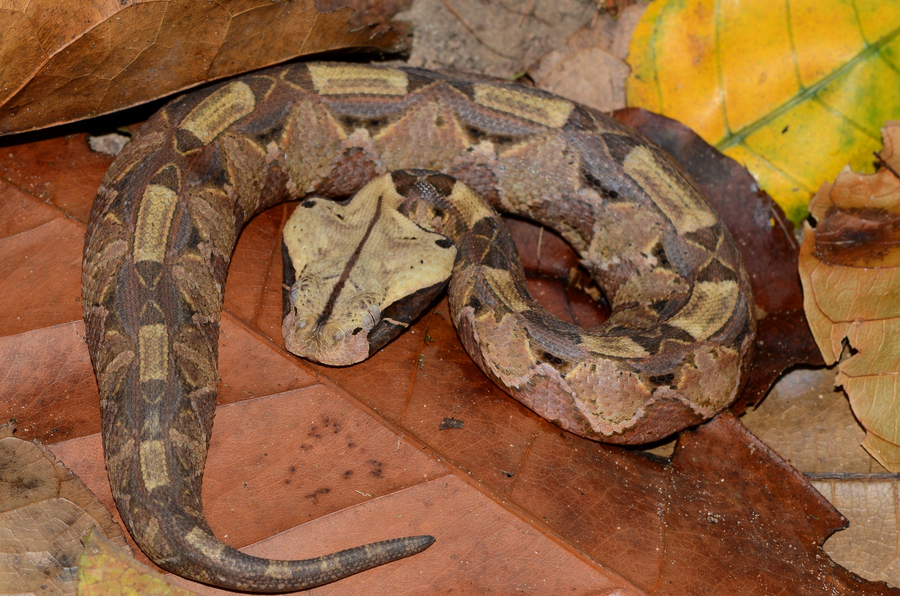
Geometric tan-and-purple patterns vanish against dead leaves. Horn-like nasal projections tip some individuals' snouts. Extremely long fangs inject large venom doses in a single strike.
Ambush of the forest floor
Sit-and-wait predation targets rodents and other small mammals that pass within strike range; they rarely chase. Strike speed is high despite a sluggish daytime reputation.
Central and West African forests
Rainforest and woodland leaf litter across Central and West Africa. Across its range it is tied to forest floor leaf litter, and field accounts emphasise this species’ distinctive ecology rather than generic habitat labels.
Feared, not vanishing
Least Concern owing to a wide forest range, but logging reduces ambush habitat and snakebite remains a serious rural health issue where antivenom access is limited.
Explore the Gaboon Viper
Close relatives
- Puff Adder Same genus
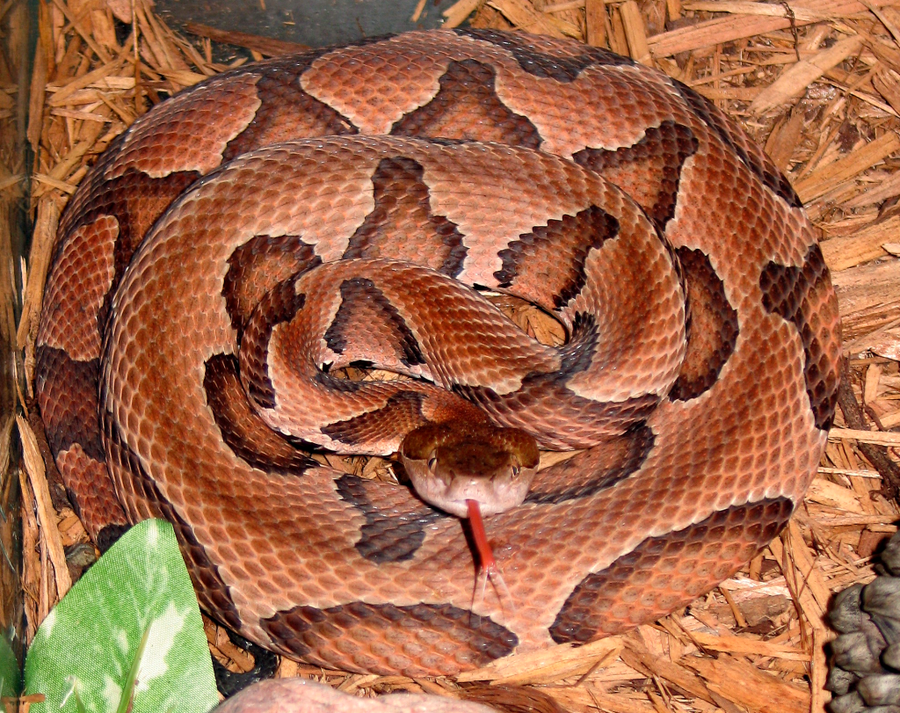
- Copperhead Same family
- Eastern Diamondback Rattlesnake Same family
- Sidewinder Same family
Range & geography
Conservation status of the Gaboon Viper
The gaboon viper (Bitis gabonica) is listed as Least Concern on the IUCN Red List. Least Concern (LC) is the IUCN's lowest-risk category, assigned to widespread, abundant species that have been evaluated and found not to be threatened. It does not mean a species faces no pressures — only that it is not currently at risk of extinction.
The gaboon viper (Bitis gabonica) is assessed on the IUCN Red List. Look up on the IUCN Red List .
Frequently asked questions about the Gaboon Viper
Which snake has the longest fangs?
Gaboon vipers hold the record among venomous snakes, with fangs often exceeding 3 cm.
Is Gaboon viper venom usually fatal?
Untreated bites can be life-threatening due to venom yield and tissue effects; hospital care and antivenom are essential.
Do Gaboon vipers chase people?
No — they rely on camouflage and strike only when trodden on or threatened at close range.
How heavy can a Gaboon viper get?
Large adults may approach 8–10 kg, making them among the heaviest vipers.
Where do Gaboon vipers live?
Forest floors of Central and West Africa. Native range summary: Rainforests and woodland of Central and West Africa.
What is a group of gaboon vipers called?
A group of Gaboon Vipers is called a coil.
What is a baby gaboon viper called?
A baby Gaboon Viper is called a neonate.
Sources & references
This guide is compiled and reviewed against established zoological and conservation references. Key sources for the Gaboon Viper:
-
IUCN Red List of Threatened Species
Conservation status (Least Concern) reflects the IUCN Red List category for Bitis gabonica.
-
iNaturalist — observations & photos
Search citizen-science observations and community IDs for Bitis gabonica. Useful for range checks and recent sightings — not a substitute for formal Red List status.
-
GBIF — occurrence data
Global Biodiversity Information Facility species search for Bitis gabonica. Explore published occurrence records used in range research.
-
Global Animal Guide editorial standards
How we research, source, review, and update every guide for accuracy.