Image sourcing: see credits & licences
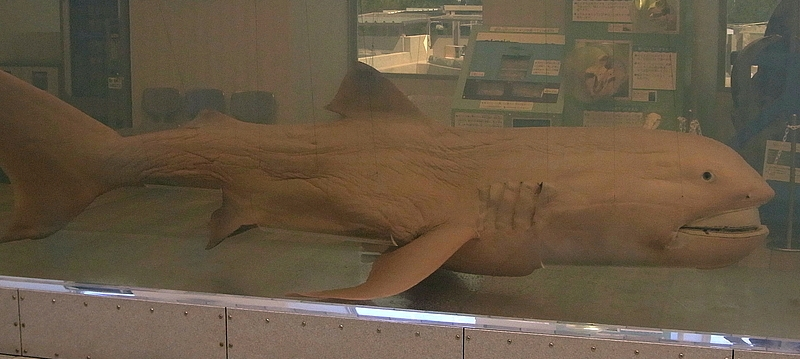
The basking shark (Cetorhinus maximus) is a cartilaginous fish of the family Cetorhinidae, in the order Lamniformes.
Quick answer
The basking shark (Cetorhinus maximus) is the world's second-largest fish, a gentle filter feeder that swims open-mouthed through plankton blooms in cool temperate seas including the UK, Ireland, California, and New Zealand. Adults may reach 8 m and several tonnes and are listed Endangered after historic fisheries and slow reproduction.
Top questions about the Basking Shark
Also available in Español (Tiburón peregrino)
Basking Shark facts at a glance
- Weight 4000 kg
- Length 8 m
- Top speed 20 km/h
- Lifespan 50 years
| Scientific name | Cetorhinus maximus |
|---|---|
| Diet | Filter feeder (plankton) |
| Habitat | Coastal and shelf surface waters |
| Lifespan | Around 50 years in the wild (varies by population and captivity). |
| Weight | About 4000 kg typical adult mass (sex and region vary). |
| Top speed | Up to roughly 20 km/h when moving at speed. |
| Conservation status | Endangered (IUCN) |
| Kingdom | Animalia |
|---|---|
| Phylum | Chordata |
| Class | Chondrichthyes |
| Order | Lamniformes |
| Family | Cetorhinidae |
| Genus | Cetorhinus |
Where it lives
The basking shark (Cetorhinus maximus) is native to Cool temperate oceans worldwide, including the UK, Ireland, California, and New Zealand. — recorded across North America, Europe, Asia, Oceania in this guide’s range summary.
For occurrence records, see GBIF species search and sources below.
How big is a basking shark?
An adult basking shark measures 8 m long — about 4.6× the height of an average adult person (1.73 m) — and weighs around 4000 kg, about 57× an average adult’s body weight (70 kg).
Length vs an average adult’s height (to scale)
What is a group of basking sharks called?
Group name (collective noun)
A group of Basking Sharks is called a school.
Baby name
A baby Basking Shark is called a pup.
Explore more animal collective nouns and baby animal names .
Ocean sun-filterer
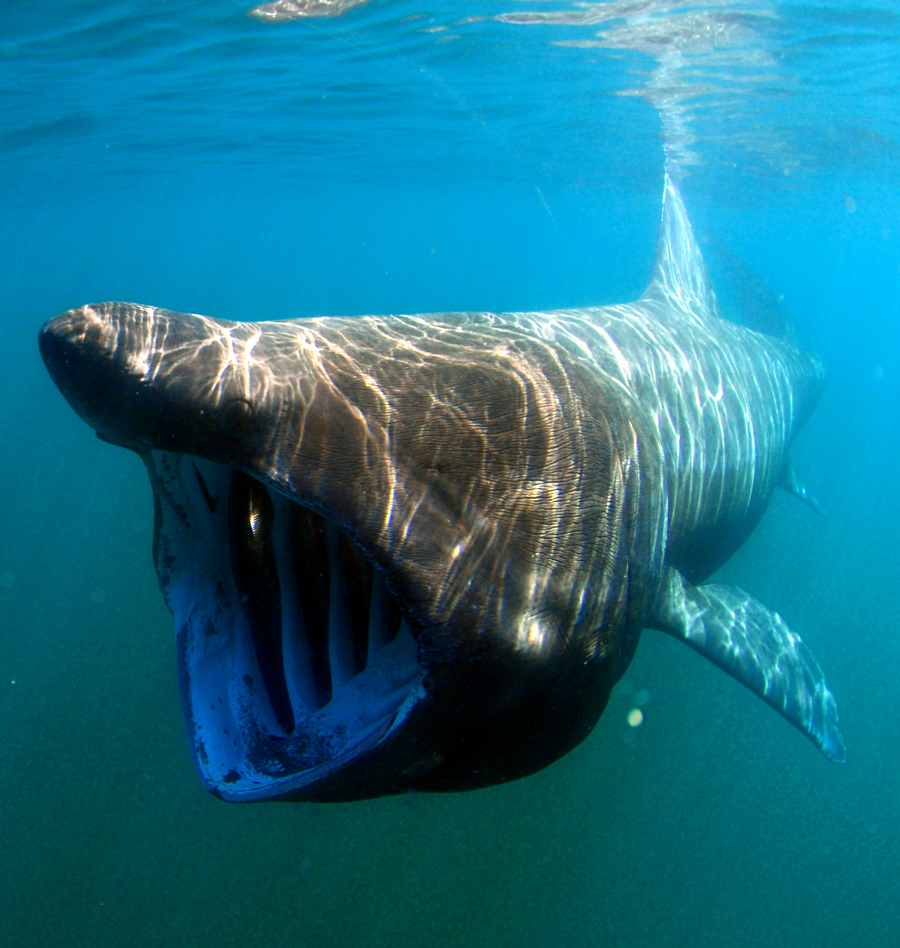
Enormous gill rakers strain zooplankton while the shark cruises at the surface — the habit that inspired the name. Dorsal fins breaking the surface are often mistaken for great whites at a distance.
Plankton, not seals
Diet is copepods and other zooplankton; teeth are tiny and unused for biting large prey. They may dive deep between surface feeding bouts. Across its range it is tied to coastal and shelf surface waters, and field accounts emphasise this species’ distinctive ecology rather than generic habitat labels.
Cool coastal shelves worldwide
Temperate coastal and shelf waters including the UK, Ireland, California, New Zealand, and other cool seas where plankton aggregations form.
Endangered slow breeder
Targeted historically for liver oil and meat. Late maturity and long gestation keep recovery slow; IUCN lists basking sharks Endangered. Many range states now protect them.
Explore the Basking Shark
Close relatives
- Great White Shark Same order
- Thresher Shark Same order
- Sand Tiger Shark Same order
- Goblin Shark Same order
Collections
Conservation status of the Basking Shark
The basking shark (Cetorhinus maximus) is listed as Endangered on the IUCN Red List. Endangered (EN) means a species faces a very high risk of extinction in the wild. Populations are usually declining sharply due to habitat loss, hunting, disease, or climate pressure. It sits one level below Critically Endangered on the IUCN Red List.
Main threats to the basking shark
- Historical overfishing for liver oil and fins
- Bycatch in fishing gear
- Boat strikes
- Slow reproduction limiting population recovery
Basking Shark (Cetorhinus maximus) was most recently assessed for the IUCN Red List in 2018. Look up on the IUCN Red List .
Frequently asked questions about the Basking Shark
Do basking sharks eat people?
No — they filter plankton and pose virtually no predatory threat to humans.
How big do basking sharks get?
Commonly 6–8 m; only the whale shark grows larger among fish.
Why are basking sharks Endangered?
Past commercial hunting and very slow life history left depleted populations.
Where can you see basking sharks in the UK?
Summer surface feeding off western Scotland, Isle of Man, Cornwall, and other plankton-rich coasts.
Are basking sharks related to great whites?
Both are lamniform sharks, but basking sharks are filter feeders, not active seal hunters.
What is a group of basking sharks called?
A group of Basking Sharks is called a school.
What is a baby basking shark called?
A baby Basking Shark is called a pup.
Sources & references
This guide is compiled and reviewed against established zoological and conservation references. Key sources for the Basking Shark:
-
IUCN Red List of Threatened Species
Conservation status (Endangered) reflects the IUCN Red List category for Cetorhinus maximus, most recently assessed in 2018.
-
iNaturalist — observations & photos
Search citizen-science observations and community IDs for Cetorhinus maximus. Useful for range checks and recent sightings — not a substitute for formal Red List status.
-
GBIF — occurrence data
Global Biodiversity Information Facility species search for Cetorhinus maximus. Explore published occurrence records used in range research.
-
Global Animal Guide editorial standards
How we research, source, review, and update every guide for accuracy.