Image sourcing: see credits & licences
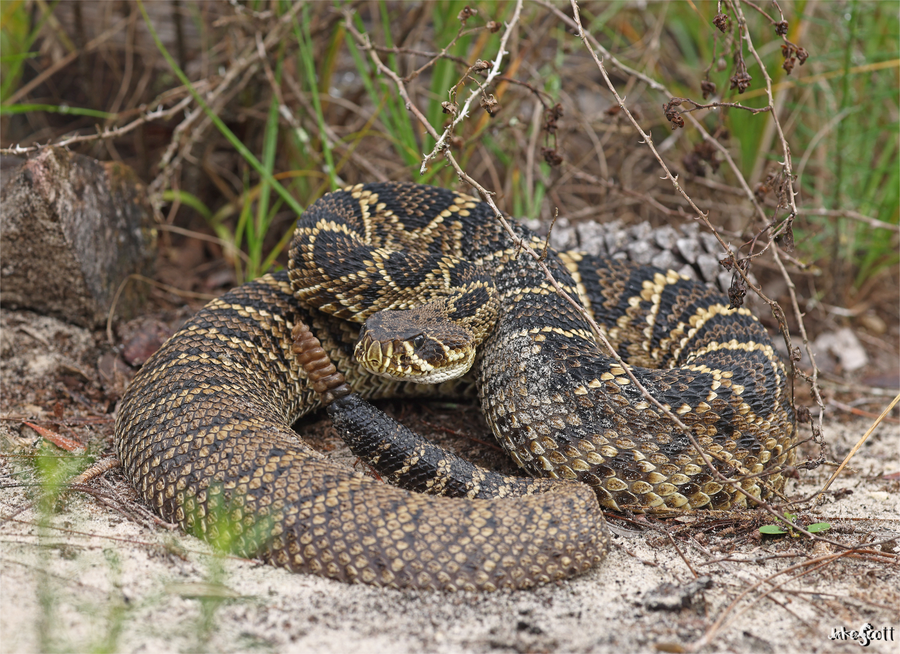
The eastern diamondback rattlesnake (Crotalus adamanteus) is a reptile of the viper family, Viperidae, in the order Squamata.
Quick answer
The eastern diamondback rattlesnake (Crotalus adamanteus) is North America's largest rattlesnake, inhabiting pine flatwoods and coastal islands from North Carolina to eastern Louisiana. Adults may approach 1.8 m and 5 kg, ambush rabbits and rodents, and are listed Least Concern — yet many US states report long-term declines from habitat loss and persecution.
Top questions about the Eastern Diamondback Rattlesnake
Also available in Español (Cascabel diamante oriental)
Eastern Diamondback Rattlesnake facts at a glance
- Weight 5 kg
- Length 1.8 m
- Top speed 5 km/h
- Lifespan 20 years
| Scientific name | Crotalus adamanteus |
|---|---|
| Diet | Carnivore |
| Habitat | Pine flatwoods, scrub, and coastal islands |
| Lifespan | Around 20 years in the wild (varies by population and captivity). |
| Weight | About 5 kg typical adult mass (sex and region vary). |
| Top speed | Up to roughly 5 km/h when moving at speed. |
| Conservation status | Least Concern (IUCN) |
| Kingdom | Animalia |
|---|---|
| Phylum | Chordata |
| Class | Reptilia |
| Order | Squamata |
| Family | Viperidae |
| Genus | Crotalus |
Where it lives
The eastern diamondback rattlesnake (Crotalus adamanteus) is native to Coastal plains of the southeastern United States from North Carolina to eastern Louisiana. — recorded across North America in this guide’s range summary.
For occurrence records, see GBIF species search and sources below.
How big is a eastern diamondback rattlesnake?
An adult eastern diamondback rattlesnake measures 1.8 m long — about 1.0× the height of an average adult person (1.73 m) — and weighs around 5.0 kg, about 7% of an average adult’s body weight (70 kg).
Length vs an average adult’s height (to scale)
What is a group of eastern diamondback rattlesnakes called?
Group name (collective noun)
A group of Eastern Diamondback Rattlesnakes is called a bed.
Baby name
A baby Eastern Diamondback Rattlesnake is called a neonate.
Explore more animal collective nouns and baby animal names .
Largest US rattlesnake
Heavy-bodied with dark diamonds outlined in cream or yellow and a loud rattle. Heat-sensing pits guide strikes toward warm prey. Large fangs deliver substantial venom yields.
Rabbits and rodents from ambush
Diet centres on cottontails, cotton rats, and other mammals, plus occasional birds. Sit-and-wait tactics beside mammal runways are typical. Across its range it is tied to pine flatwoods, scrub, and coastal islands, and field accounts emphasise this species’ distinctive ecology rather than generic habitat labels.
Southeast coastal plain
Pine flatwoods, scrub, and coastal islands of the southeastern United States from North Carolina to eastern Louisiana — longleaf pine ecosystems are classic habitat.
Declining despite LC label
Still categorised Least Concern globally, but habitat conversion, road mortality, and intentional killing have thinned populations; some states grant protection.
Explore the Eastern Diamondback Rattlesnake
Close relatives
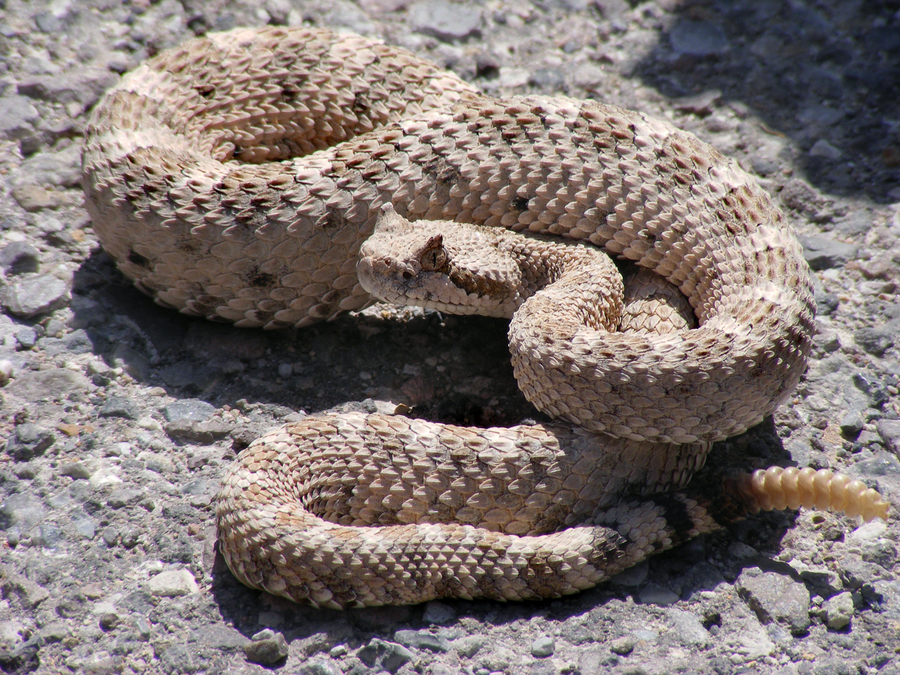
- Sidewinder Same genus
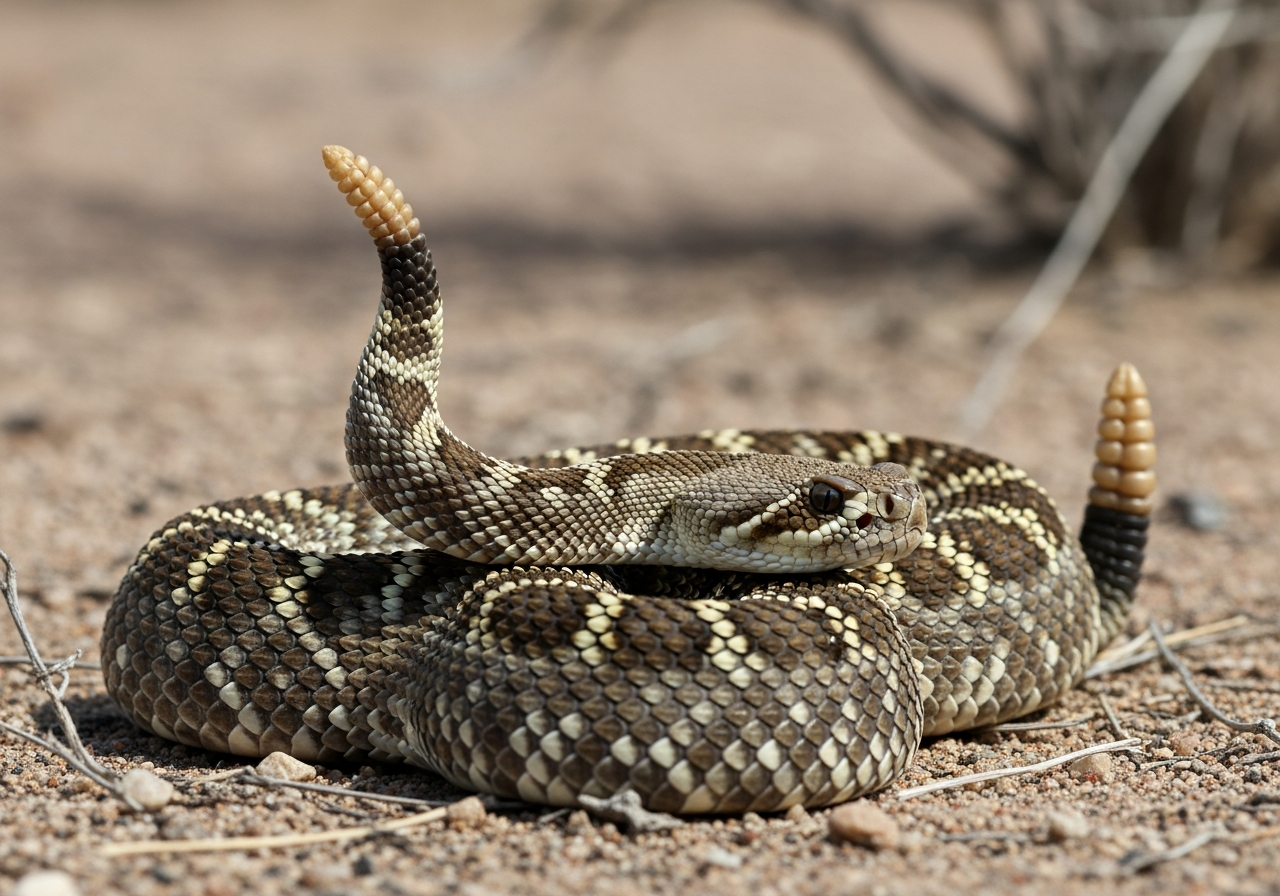
- Western Diamondback Rattlesnake Same genus
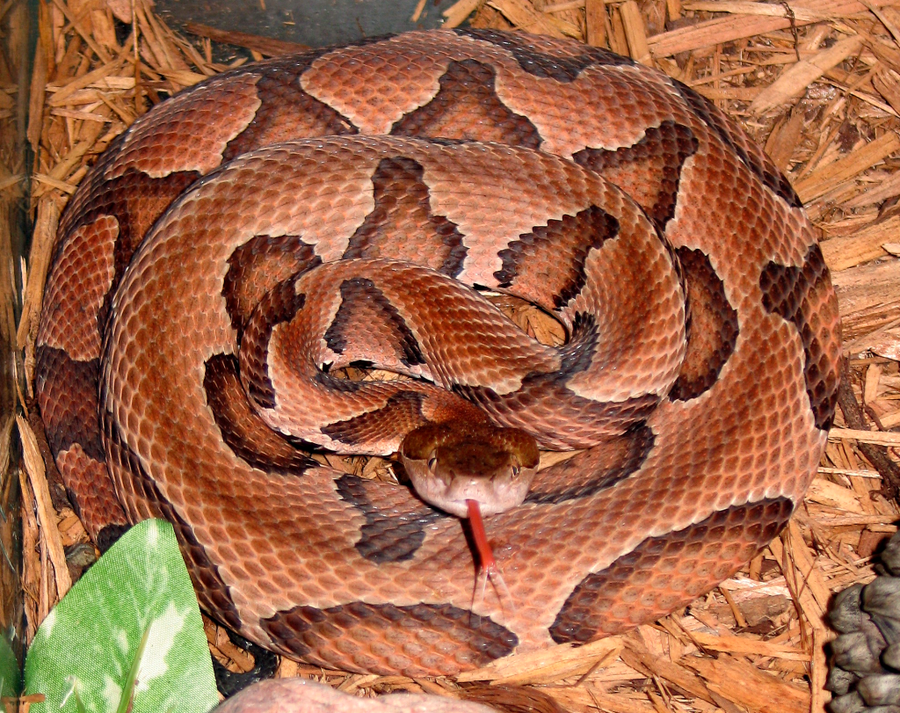
- Copperhead Same family
- Puff Adder Same family
Range & geography
Conservation status of the Eastern Diamondback Rattlesnake
The eastern diamondback rattlesnake (Crotalus adamanteus) is listed as Least Concern on the IUCN Red List. Least Concern (LC) is the IUCN's lowest-risk category, assigned to widespread, abundant species that have been evaluated and found not to be threatened. It does not mean a species faces no pressures — only that it is not currently at risk of extinction.
The eastern diamondback rattlesnake (Crotalus adamanteus) is assessed on the IUCN Red List. Look up on the IUCN Red List .
Frequently asked questions about the Eastern Diamondback Rattlesnake
How big do eastern diamondbacks get?
Large adults commonly 1.2–1.8 m; exceptional individuals exceed that, making them the heaviest rattlesnakes.
Is an eastern diamondback bite fatal?
Potentially serious without treatment; modern antivenom and hospital care greatly reduce mortality.
Do diamondbacks always rattle before striking?
Often, but not always — never rely on a warning.
What do eastern diamondbacks eat?
Mainly rabbits and rodents ambushed along trails.
Where do eastern diamondbacks live?
Southeastern US coastal plains from North Carolina to eastern Louisiana.
What is a group of eastern diamondback rattlesnakes called?
A group of Eastern Diamondback Rattlesnakes is called a bed.
What is a baby eastern diamondback rattlesnake called?
A baby Eastern Diamondback Rattlesnake is called a neonate.
Sources & references
This guide is compiled and reviewed against established zoological and conservation references. Key sources for the Eastern Diamondback Rattlesnake:
-
IUCN Red List of Threatened Species
Conservation status (Least Concern) reflects the IUCN Red List category for Crotalus adamanteus.
-
iNaturalist — observations & photos
Search citizen-science observations and community IDs for Crotalus adamanteus. Useful for range checks and recent sightings — not a substitute for formal Red List status.
-
GBIF — occurrence data
Global Biodiversity Information Facility species search for Crotalus adamanteus. Explore published occurrence records used in range research.
-
Global Animal Guide editorial standards
How we research, source, review, and update every guide for accuracy.