Image sourcing: see credits & licences
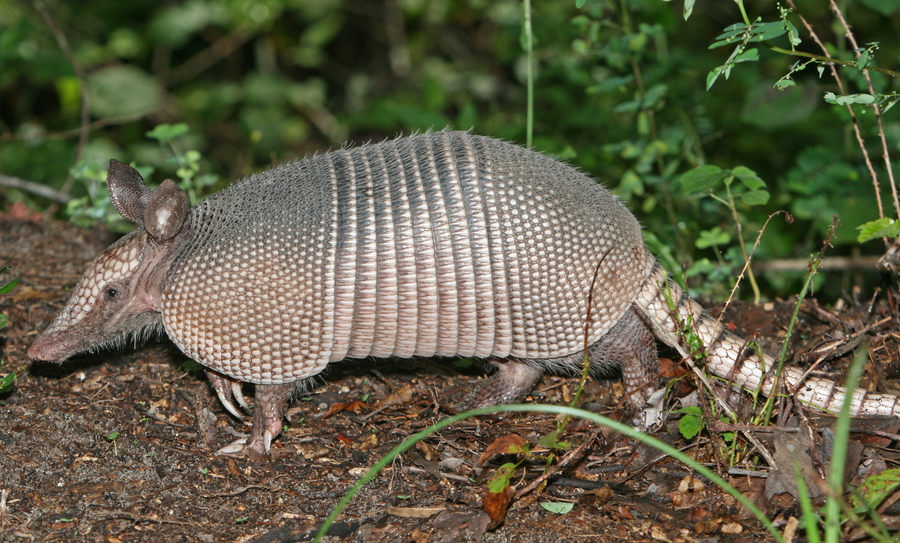
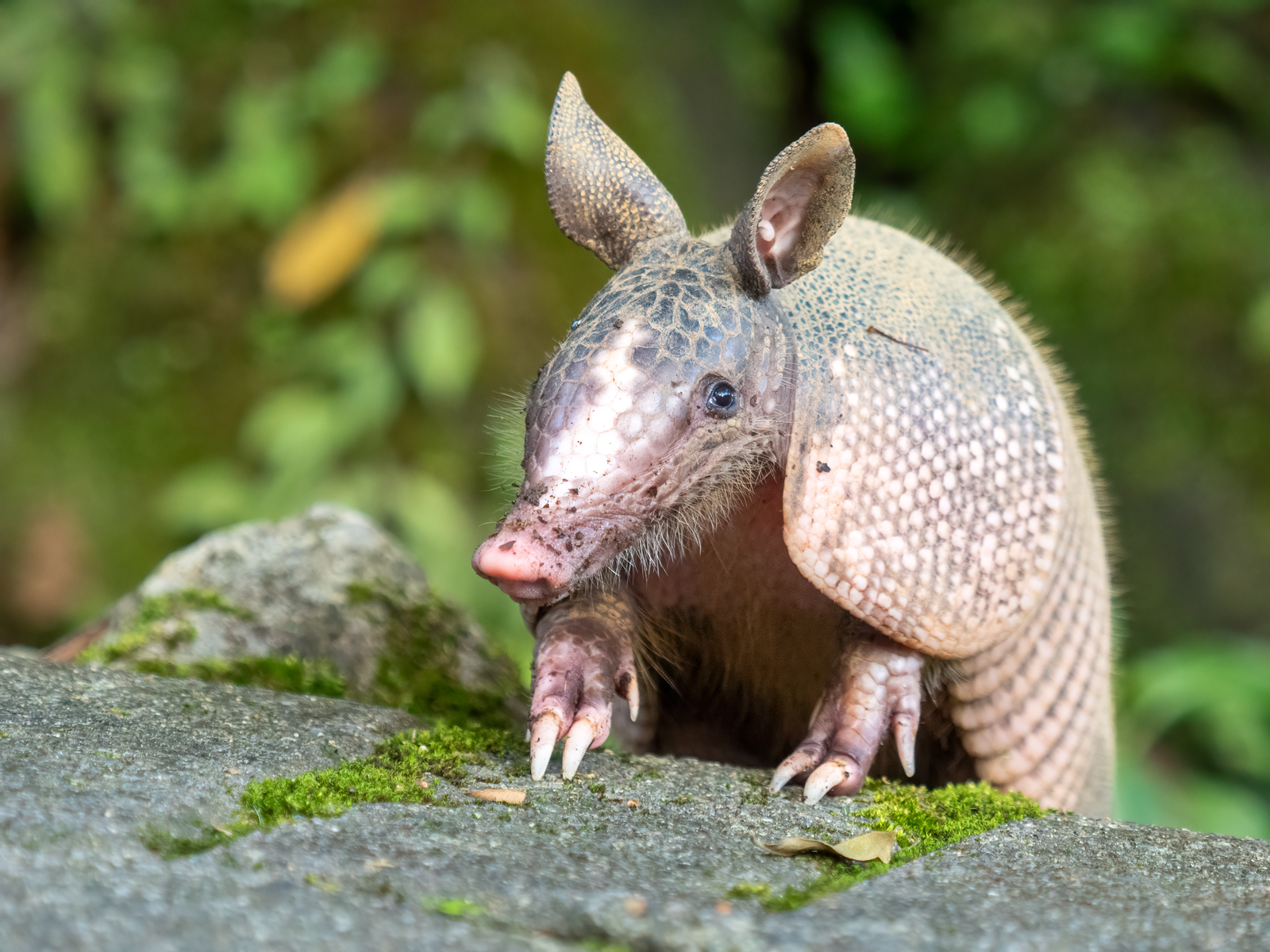
The nine-banded armadillo (Dasypus novemcinctus) is a mammal of the family Dasypodidae, in the order Cingulata.
Quick answer
The nine-banded armadillo (Dasypus novemcinctus) is a bony-plated mammal of the Americas that can jump vertically when startled. Adults weigh about 4 kg, spread north into the US, and are listed Least Concern.
Top questions about the Nine-banded Armadillo
Nine-banded Armadillo facts at a glance
- Weight 4 kg
- Length 50 cm
- Top speed 48 km/h
- Lifespan 10 years
| Scientific name | Dasypus novemcinctus |
|---|---|
| Diet | Insectivore |
| Habitat | Forest, scrub, and grassland |
| Lifespan | 7–12 years |
| Weight | 3–5 kg |
| Top speed | up to 48 km/h |
| Conservation status | Least Concern (IUCN) |
| Kingdom | Animalia |
|---|---|
| Phylum | Chordata |
| Class | Mammalia |
| Order | Cingulata |
| Family | Dasypodidae |
| Genus | Dasypus |
Where it lives
The nine-banded armadillo (Dasypus novemcinctus) is native to Southern US through Central America into South America. — recorded across North America, South America in this guide’s range summary.
For occurrence records, see GBIF species search and sources below.
How big is a nine-banded armadillo?
An adult nine-banded armadillo measures 50 cm long — about 29% of the height of an average adult person (1.73 m) — and weighs around 4.0 kg, about 6% of an average adult’s body weight (70 kg).
Length vs an average adult’s height (to scale)
What is a group of nine-banded armadillos called?
Group name (collective noun)
A group of Nine-banded Armadillos is called a herd.
Baby name
A baby Nine-banded Armadillo is called a pup.
Explore more animal collective nouns and baby animal names .
Plated digger of the night
Overlapping bony plates protect the back; flexible bands let the animal curl partway but not into a full ball. Strong claws excavate soil for insects and burrows.
Ants, grubs, and carrion
Ants, beetle larvae, and other soil invertebrates are located by smell and dug out. Carrion and small vertebrates are eaten opportunistically.
Southern US to Argentina
Expanded north through Texas and the Gulf states in the twentieth century. Forest, scrub, and lawns with sandy soil suit burrowing.
Leprosy host and roadkill
Least Concern and spreading. They are a natural reservoir for Mycobacterium leprae in some regions and suffer heavy vehicle mortality due to jumping reflex when alarmed.
Explore the Nine-banded Armadillo
Close relatives
- Nine-Banded Armadillo Same genus
- Lion Same class
- Dog Same class
- Tiger Same class
Range & geography
Conservation status of the Nine-banded Armadillo
The nine-banded armadillo (Dasypus novemcinctus) is listed as Least Concern on the IUCN Red List. Least Concern (LC) is the IUCN's lowest-risk category, assigned to widespread, abundant species that have been evaluated and found not to be threatened. It does not mean a species faces no pressures — only that it is not currently at risk of extinction.
The nine-banded armadillo (Dasypus novemcinctus) is assessed on the IUCN Red List. Look up on the IUCN Red List .
Frequently asked questions about the Nine-banded Armadillo
Can nine-banded armadillos roll into a ball?
No — unlike three-banded species, they only curl partially; the name refers to nine flexible bands on the shell.
Why do armadillos jump when scared?
A vertical leap can launch them into vehicle undercarriages — a fatal reflex on roads.
Do armadillos carry leprosy?
Some populations harbour the bacteria; human infection is rare and linked to close contact, not casual sightings.
How many babies do armadillos have?
Litters are typically identical quadruplets from a single fertilised egg.
Are armadillos spreading north in the US?
Yes — warming winters helped them expand into states where they were once absent.
What is a group of nine-banded armadillos called?
A group of Nine-banded Armadillos is called a herd.
What is a baby nine-banded armadillo called?
A baby Nine-banded Armadillo is called a pup.
Sources & references
This guide is compiled and reviewed against established zoological and conservation references. Key sources for the Nine-banded Armadillo:
-
IUCN Red List of Threatened Species
Conservation status (Least Concern) reflects the IUCN Red List category for Dasypus novemcinctus.
-
iNaturalist — observations & photos
Search citizen-science observations and community IDs for Dasypus novemcinctus. Useful for range checks and recent sightings — not a substitute for formal Red List status.
-
GBIF — occurrence data
Global Biodiversity Information Facility species search for Dasypus novemcinctus. Explore published occurrence records used in range research.
-
Global Animal Guide editorial standards
How we research, source, review, and update every guide for accuracy.