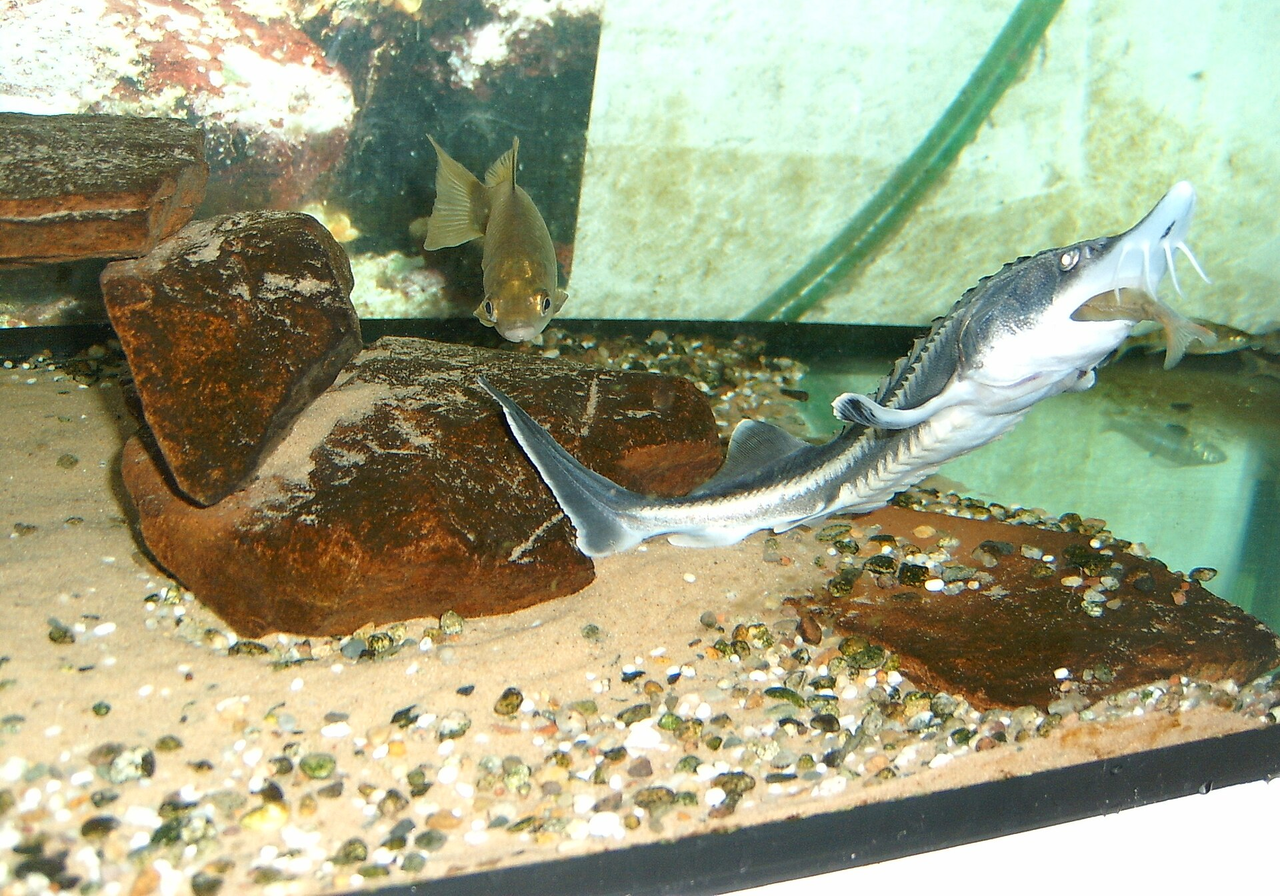
The beluga sturgeon (Huso huso) is a ray-finned fish of the family Acipenseridae, in the order Acipenseriformes.
Quick answer
The beluga sturgeon (Huso huso) is a very large, long-lived fish of the Caspian Sea, Black Sea and Sea of Azov, reaching up to 6 m in length. It moves between salt water and rivers, where it spawns, and adults feed mainly on other fish. It is listed as Critically Endangered on the IUCN Red List (assessed 2019), with a decreasing population. It is not related to the beluga whale.
Top questions about the Beluga Sturgeon
Beluga Sturgeon facts at a glance
- Length 6 m
- Lifespan 56 years
| Scientific name | Huso huso |
|---|---|
| Diet | Adults eat mainly fish |
| Habitat | Seas and estuaries; rivers for spawning |
| Length | Up to 6 m |
| Lifespan | Up to 56 years recorded in the wild; reportedly over 100 |
| Range | Caspian Sea, Black Sea and Sea of Azov and their rivers |
| Conservation status | Critically Endangered (IUCN Red List, assessed 2019) |
| Kingdom | Animalia |
|---|---|
| Phylum | Chordata |
| Class | Actinopterygii |
| Order | Acipenseriformes |
| Family | Acipenseridae |
| Genus | Huso |
Where it lives
The beluga sturgeon (Huso huso) is native to The Caspian Sea, Black Sea and Sea of Azov and the rivers that flow into them; extinct in Austria, Croatia, Germany, Hungary and Slovakia. — recorded across Europe, Asia in this guide’s range summary.
For occurrence records, see GBIF species search and sources below.
An ancient kind of fish
Sturgeons belong to the order Acipenseriformes, whose fossil record goes back about 200 million years. They combine features of bony fish with a largely cartilaginous skeleton, more like that of sharks.
Between sea and river
Beluga sturgeon can move freely between salt water, estuaries and fresh water, and they enter rivers to spawn. They gather only at spawning time.
A fish-eating sturgeon
Unlike most sturgeons, which feed on invertebrates on the bottom, adult belugas swim at middle depths and eat mainly other fish.
Why belugas are critically endangered
The species matures late and is among the longest-lived of all vertebrates, so it recovers slowly from fishing. Because males and females look alike, both are caught in the fishery for roe. The IUCN Red List classes the beluga as Critically Endangered and records it as extinct in Austria, Croatia, Germany, Hungary and Slovakia.
Explore the Beluga Sturgeon
Close relatives
- Great White Shark Same class
- Ocean Sunfish Same class
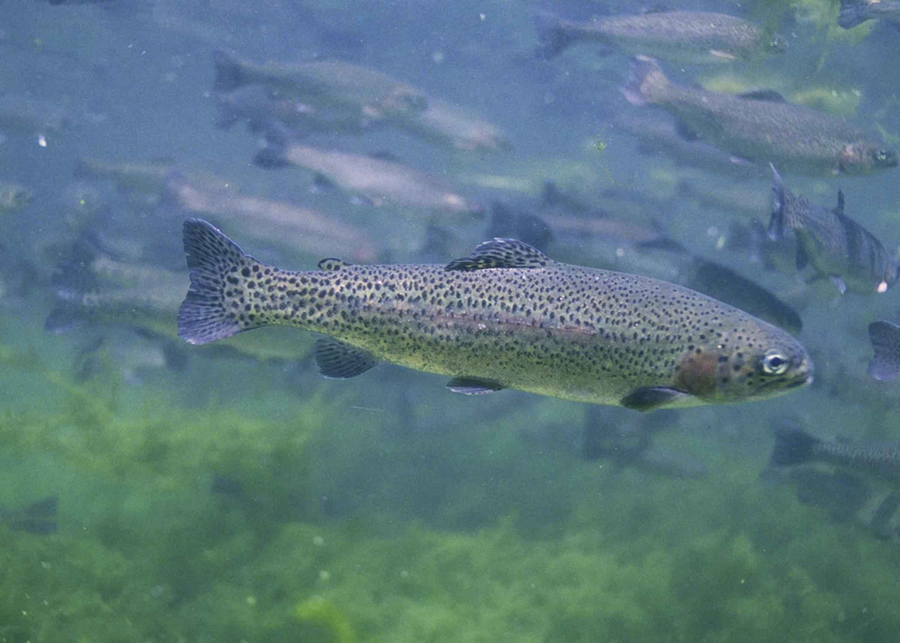
- Rainbow Trout Same class
- Thresher Shark Same class
Collections
Range & geography
Did you know? Beluga Sturgeon facts
- Sturgeons have a fossil record going back about 200 million years.
- Unlike most sturgeons, adult belugas hunt fish in mid-water.
Conservation status of the Beluga Sturgeon
The beluga sturgeon (Huso huso) is listed as Critically Endangered on the IUCN Red List. Critically Endangered (CR) is the highest-risk category the IUCN Red List assigns to a wild species before Extinct in the Wild. It means a species faces an extremely high probability of extinction — usually because its population has collapsed, its range has shrunk drastically, or very few mature individuals remain. Species at this level typically depend on active conservation to survive.
Main threats to the beluga sturgeon
- Fishing, including for roe
Beluga Sturgeon (Huso huso) was most recently assessed for the IUCN Red List in 2019. View the full IUCN assessment .
Frequently asked questions about the Beluga Sturgeon
How big do beluga sturgeon get?
Up to about 6 metres long.
Is a beluga sturgeon related to a beluga whale?
No. The sturgeon is a fish; the beluga whale is a mammal. They share only the name.
Are beluga sturgeon endangered?
Yes. They are listed as Critically Endangered on the IUCN Red List (assessed 2019), and the population is decreasing.
Sources & references
This guide is compiled and reviewed against established zoological and conservation references. Key sources for the Beluga Sturgeon:
-
IUCN Red List of Threatened Species
Conservation status (Critically Endangered) reflects the IUCN Red List category for Huso huso, most recently assessed in 2019.
-
iNaturalist — observations & photos
Search citizen-science observations and community IDs for Huso huso. Useful for range checks and recent sightings — not a substitute for formal Red List status.
-
GBIF — occurrence data
Global Biodiversity Information Facility species search for Huso huso. Explore published occurrence records used in range research.
- IUCN Red List of Threatened Species: Huso huso (assessed 2019). Checked 16 November 2026.
IUCN Red List category Critically Endangered, assessed 2019; population trend decreasing; native range.
- Animal Diversity Web: Huso huso. University of Michigan Museum of Zoology.
Size, lifespan, range, diet and behaviour.
-
Global Animal Guide editorial standards
How we research, source, review, and update every guide for accuracy.