Image sourcing: see credits & licences
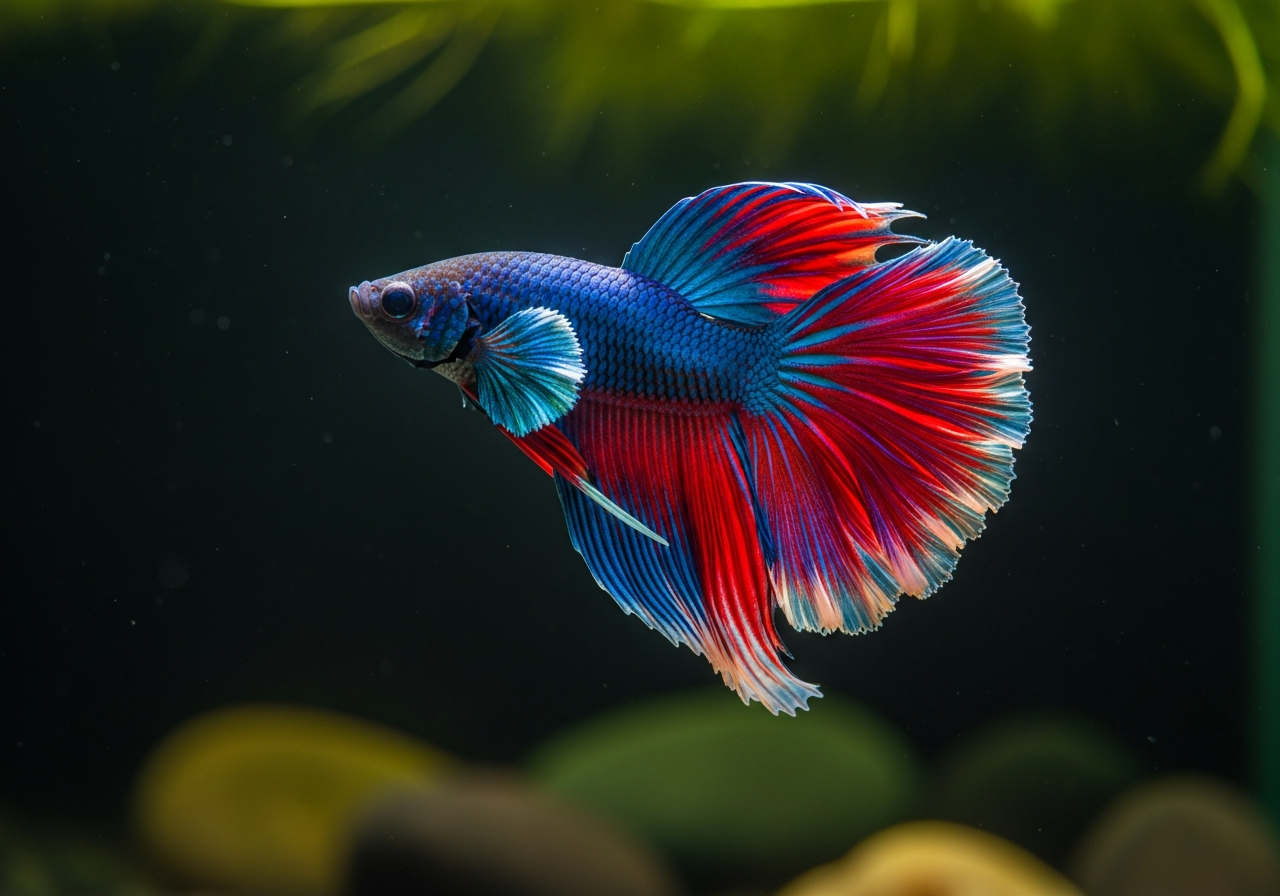
The betta (Betta splendens) is a ray-finned fish of the family Osphronemidae, in the order Anabantiformes.
Quick answer
The betta or Siamese fighting fish (Betta splendens) is a labyrinth fish from shallow Mekong-basin waters in Thailand, Cambodia, Laos, and Vietnam. Wild fish breathe air at the surface and eat insects and zooplankton; males build bubble nests. Captive strains are famous for vivid fins, while wild populations are listed Vulnerable.
Top questions about the Betta
Also available in Español (Betta)
Betta facts at a glance
- Weight 3 g
- Length 7 cm
- Top speed 5 km/h
- Lifespan 3 years
| Scientific name | Betta splendens |
|---|---|
| Diet | Carnivore (insects and zooplankton) |
| Habitat | Rice paddies, ponds, and slow streams |
| Lifespan | Around 3 years in the wild (varies by population and captivity). |
| Weight | About 0.003 kg typical adult mass (sex and region vary). |
| Top speed | Up to roughly 5 km/h when moving at speed. |
| Conservation status | Vulnerable (IUCN) |
| Kingdom | Animalia |
|---|---|
| Phylum | Chordata |
| Class | Actinopterygii |
| Order | Anabantiformes |
| Family | Osphronemidae |
| Genus | Betta |
Where it lives
The betta (Betta splendens) is native to Shallow freshwater of the lower Mekong basin in Thailand, Cambodia, Laos, and Vietnam. — recorded across Asia in this guide’s range summary.
For occurrence records, see GBIF species search and sources below.
How big is a betta?
An adult betta measures 7 cm long — about 4% of the height of an average adult person (1.73 m) — and weighs around 3 g, a small fraction of an average adult’s body weight (70 kg).
Length vs an average adult’s height (to scale)
What is a group of bettas called?
Group name (collective noun)
A group of Bettas is called a school.
Baby name
A baby Betta is called a fry.
Explore more animal collective nouns and baby animal names .
Labyrinth organ and bubble nests
Bettas gulp air into a labyrinth organ, surviving oxygen-poor rice paddies and ditches. Males build floating bubble nests and fiercely guard eggs and fry. Long-finned aquarium forms were selectively bred; wild-type fish have shorter fins.
Insects in still water
Wild diet centres on mosquito larvae, other aquatic insects, and zooplankton. They are carnivores, not algae eaters — overfeeding plant matter in captivity causes health problems.
Lower Mekong shallows
Native range is shallow freshwater of the lower Mekong basin across Thailand, Cambodia, Laos, and Vietnam — rice paddies, ponds, and slow streams with dense vegetation.
Vulnerable wild stocks
IUCN lists wild Betta splendens Vulnerable. Urbanisation, water pollution, and hybridisation with released aquarium fish threaten remaining wild populations even as captive fish remain globally common.
Explore the Betta
Close relatives
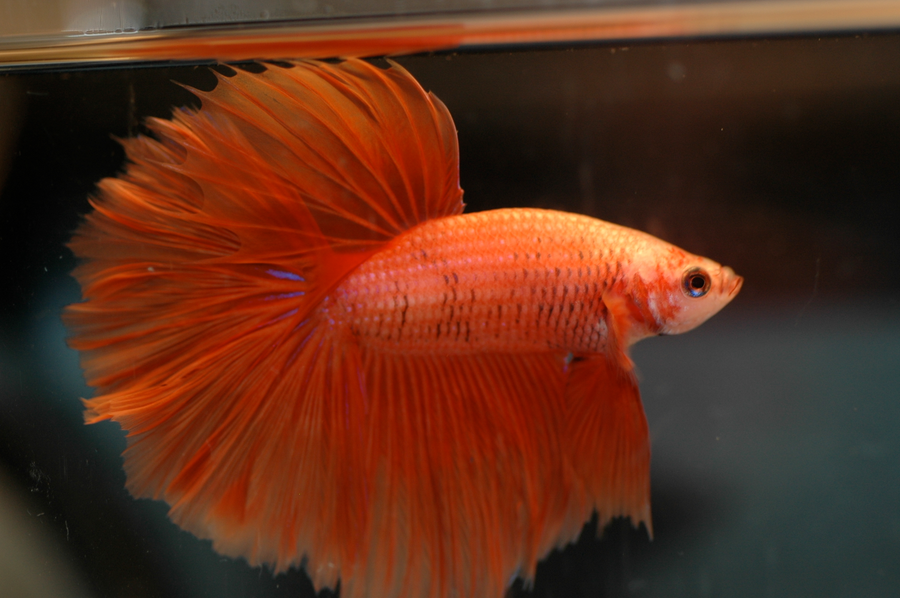
- Betta Fish Same genus
- Great White Shark Same class
- Ocean Sunfish Same class
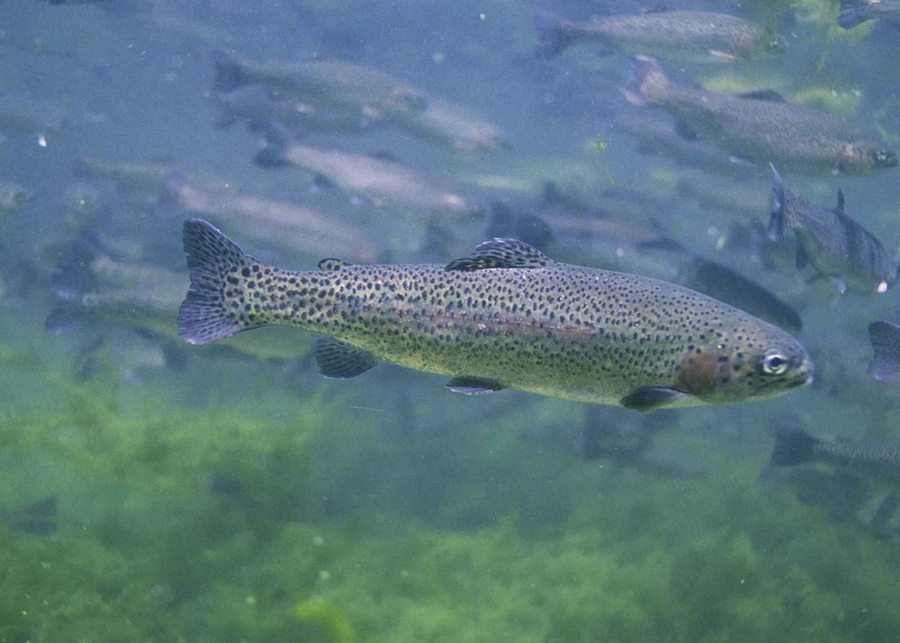
- Rainbow Trout Same class
Collections
Range & geography
Conservation status of the Betta
The betta (Betta splendens) is listed as Vulnerable on the IUCN Red List. Vulnerable (VU) means a species faces a high risk of extinction in the medium-term future. It is the lowest-risk of the three 'threatened' IUCN categories — one step below Endangered, which is itself below Critically Endangered — and is often an early warning that a population is in trouble.
Main threats to the betta
- Wetland drainage in Southeast Asia
- Pollution of lowland streams and rice paddies
- Overcollection for the aquarium trade
- Hybridisation with released domestic strains
The betta (Betta splendens) is assessed on the IUCN Red List. Look up on the IUCN Red List .
Frequently asked questions about the Betta
Why do bettas breathe air?
A labyrinth organ lets them extract oxygen from air, which is vital in warm, stagnant paddies where dissolved oxygen is low.
Do male bettas really fight?
Yes — territorial males flare gills and fins and will bite rivals; that is why they are usually kept singly in home aquaria.
What should wild-type bettas eat?
Insects and zooplankton — mosquito larvae and similar prey — not flake food alone.
Are wild bettas endangered?
Wild Betta splendens is Vulnerable; colourful pet-shop fish are captive-bred and not a substitute for wild conservation.
Where do bettas come from originally?
Shallow freshwaters of the lower Mekong region in Thailand, Cambodia, Laos, and Vietnam.
What is a group of bettas called?
A group of Bettas is called a school.
What is a baby betta called?
A baby Betta is called a fry.
Sources & references
This guide is compiled and reviewed against established zoological and conservation references. Key sources for the Betta:
-
IUCN Red List of Threatened Species
Conservation status (Vulnerable) reflects the IUCN Red List category for Betta splendens.
-
iNaturalist — observations & photos
Search citizen-science observations and community IDs for Betta splendens. Useful for range checks and recent sightings — not a substitute for formal Red List status.
-
GBIF — occurrence data
Global Biodiversity Information Facility species search for Betta splendens. Explore published occurrence records used in range research.
-
Global Animal Guide editorial standards
How we research, source, review, and update every guide for accuracy.