Image sourcing: see credits & licences
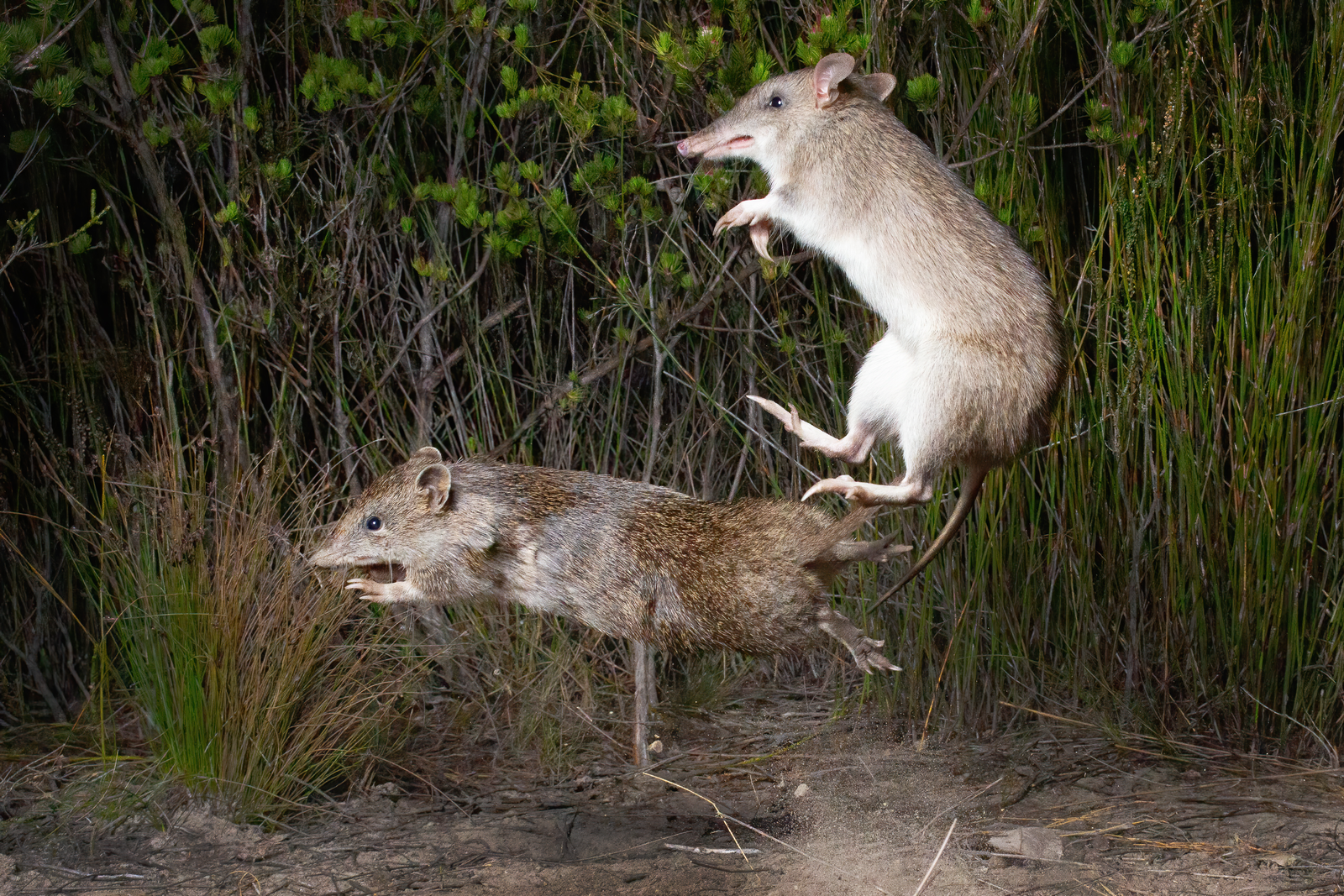
The long-nosed bandicoot (Perameles nasuta) is a mammal of the family Peramelidae, in the order Peramelemorphia.
Quick answer
The long-nosed bandicoot (Perameles nasuta) is a rabbit-sized marsupial that digs for worms and fungi in eastern Australian gardens and forests. Adults weigh about 1 kg and are listed Least Concern.
Top questions about the Long-nosed Bandicoot
Long-nosed Bandicoot facts at a glance
- Weight 1 kg
- Length 35 cm
- Top speed 25 km/h
- Lifespan 3 years
| Scientific name | Perameles nasuta |
|---|---|
| Diet | Omnivore |
| Habitat | Forest, woodland, and suburbs |
| Lifespan | 2–4 years |
| Weight | 0.8–1.2 kg |
| Top speed | up to 25 km/h |
| Conservation status | Least Concern (IUCN) |
| Kingdom | Animalia |
|---|---|
| Phylum | Chordata |
| Class | Mammalia |
| Order | Peramelemorphia |
| Family | Peramelidae |
| Genus | Perameles |
Where it lives
The long-nosed bandicoot (Perameles nasuta) is native to Eastern Australian forests and gardens. — recorded across Oceania in this guide’s range summary.
For occurrence records, see GBIF species search and sources below.
How big is a long-nosed bandicoot?
An adult long-nosed bandicoot measures 35 cm long — about 20% of the height of an average adult person (1.73 m) — and weighs around 1.0 kg, about 1% of an average adult’s body weight (70 kg).
Length vs an average adult’s height (to scale)
What is a group of long-nosed bandicoots called?
Group name (collective noun)
A group of Long-nosed Bandicoots is called a colony.
Baby name
A baby Long-nosed Bandicoot is called a joey.
Explore more animal collective nouns and baby animal names .
Pointed snout, rapid pregnancy
Bandicoots have short gestation of about 12 days — among the shortest of any mammal. A long snout and strong claws excavate soil for food at night.
Worms, fungi, and insects
Earthworms, insect larvae, fungi, and plant material are dug from leaf litter. Conical diggings in lawns betray their suburban visits.
Eastern forests to backyards
Coastal forests and gardens from Queensland to Victoria. They tolerate fragmented habitat better than many native mammals.
Roadkill and foxes
Least Concern but declining locally from fox predation and road mortality. Cat-free suburbs with dense ground cover still support populations.
Explore the Long-nosed Bandicoot
Close relatives
- Greater Bilby Same order
- Lion Same class
- Dog Same class
- Tiger Same class
Range & geography
Conservation status of the Long-nosed Bandicoot
The long-nosed bandicoot (Perameles nasuta) is listed as Least Concern on the IUCN Red List. Least Concern (LC) is the IUCN's lowest-risk category, assigned to widespread, abundant species that have been evaluated and found not to be threatened. It does not mean a species faces no pressures — only that it is not currently at risk of extinction.
The long-nosed bandicoot (Perameles nasuta) is assessed on the IUCN Red List. Look up on the IUCN Red List .
Frequently asked questions about the Long-nosed Bandicoot
Are bandicoots rodents?
No — they are marsupials with pouches, unrelated to rabbits or rats despite similar size.
Why do bandicoots dig holes in lawns?
They probe soil for worms and larvae, leaving small conical pits overnight.
How fast do bandicoots breed?
Gestation lasts only about 12 days; joeys then develop in the pouch.
What is a baby bandicoot called?
A joey — like other marsupials.
Do bandicoots live in Sydney suburbs?
Yes — long-nosed bandicoots persist in some Sydney reserves and gardens with cover.
What is a group of long-nosed bandicoots called?
A group of Long-nosed Bandicoots is called a colony.
What is a baby long-nosed bandicoot called?
A baby Long-nosed Bandicoot is called a joey.
Sources & references
This guide is compiled and reviewed against established zoological and conservation references. Key sources for the Long-nosed Bandicoot:
-
IUCN Red List of Threatened Species
Conservation status (Least Concern) reflects the IUCN Red List category for Perameles nasuta.
-
iNaturalist — observations & photos
Search citizen-science observations and community IDs for Perameles nasuta. Useful for range checks and recent sightings — not a substitute for formal Red List status.
-
GBIF — occurrence data
Global Biodiversity Information Facility species search for Perameles nasuta. Explore published occurrence records used in range research.
-
Global Animal Guide editorial standards
How we research, source, review, and update every guide for accuracy.