Image sourcing: see credits & licences
Quick answer
The Atlantic salmon (Salmo salar) is a powerful migratory fish of the North Atlantic, hatching in rivers, maturing at sea, and returning upstream to spawn. Adults typically weigh 3 to 15 kg (7 to 33 lb) and can swim in bursts of around 40 km/h (25 mph), leaping waterfalls on their way home. Wild salmon usually live 4 to 8 years and are listed as Least Concern, though many local populations are in serious decline.
Top questions about the Atlantic Salmon
Atlantic Salmon facts at a glance
- Weight 4.5 kg
- Length 90 cm
- Top speed 40 km/h
- Lifespan 8 years
| Scientific name | Salmo salar |
|---|---|
| Diet | Carnivore |
| Habitat | North Atlantic rivers and ocean |
| Lifespan | 4–8 years |
| Weight | 3–15 kg (7–33 lb) |
| Top speed | Around 40 km/h (25 mph) in bursts |
| Conservation status | Least Concern (IUCN) |
| Kingdom | Animalia |
|---|---|
| Phylum | Chordata |
| Class | Actinopterygii |
| Order | Salmoniformes |
| Family | Salmonidae |
| Genus | Salmo |
Where it lives
The atlantic salmon (Salmo salar) is native to Rivers and coastal waters of the North Atlantic, from northeastern North America to Europe. — recorded across North America, Europe, Oceans in this guide’s range summary.
For occurrence records, see GBIF species search and sources below.
How big is a atlantic salmon?
An adult atlantic salmon measures 90 cm long — about 52% of the height of an average adult person (1.73 m) — and weighs around 4.5 kg, about 6% of an average adult’s body weight (70 kg).
Length vs an average adult’s height (to scale)
What is a group of atlantic salmon called?
Group name (collective noun)
A group of Atlantic Salmon is called a run. It is also known as a school.
Baby name
A baby Atlantic Salmon is called a fry. It may also be called an alevin or a smolt.
Explore more animal collective nouns and baby animal names .
The upstream migration
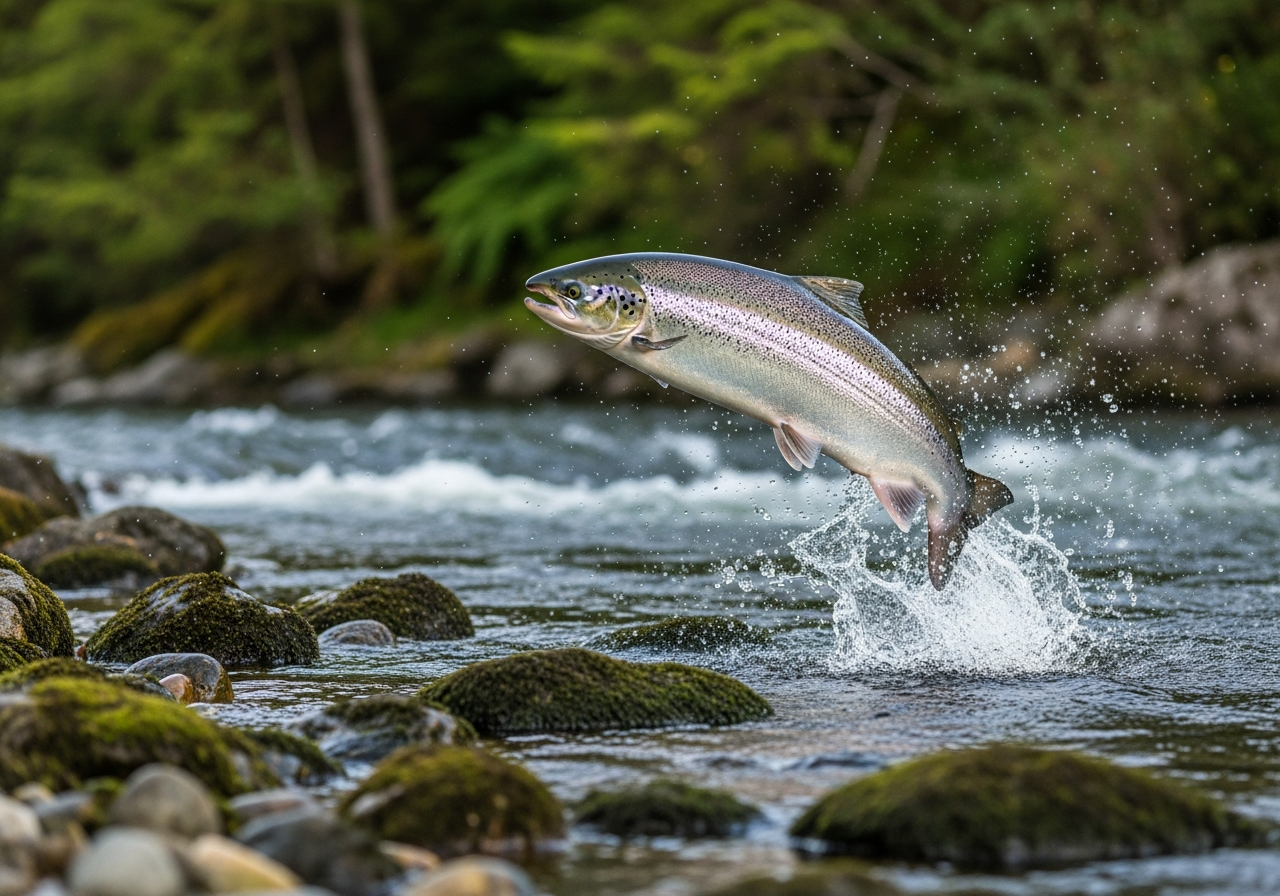
Atlantic salmon are famous for returning from the ocean to spawn in the very river where they hatched, often the exact stretch of gravel. To reach the spawning grounds they swim upriver against strong currents and leap over waterfalls and rapids, reaching burst speeds of around 40 km/h (25 mph). They appear to navigate using the Earth's magnetic field on the open ocean and then their sense of smell to pick out their home river.
From freshwater to sea and back
Salmon begin life in freshwater, where young fish called parr spend one to several years before a bodily transformation, called smolting, prepares them to survive in salt water. They then migrate downstream and out into the North Atlantic to feed and grow. After one or more years at sea they return as mature adults to spawn, completing a life cycle that spans both river and ocean.
Diet and feeding
Atlantic salmon are carnivores whose diet changes with age. Young fish in rivers eat aquatic insects, larvae, and other small invertebrates. At sea, adults feed on small fish such as herring, sand eels, and capelin, along with crustaceans that help give their flesh its pink colour. Once they enter their home river to spawn, adults largely stop feeding and live off stored reserves.
Spawning and the next generation
On the spawning grounds, the female uses her tail to dig a gravel nest called a redd, where she lays her eggs for the male to fertilise. Unlike Pacific salmon, some Atlantic salmon survive spawning and return to the sea to breed again in later years. The buried eggs hatch into tiny alevins that live off their yolk sac before emerging as fry to begin the cycle anew.
Size and lifespan
Adult Atlantic salmon typically weigh 3 to 15 kg (7 to 33 lb) and can reach around 0.9 m (3 ft) in length, with the largest specimens considerably bigger. Their lifespan is usually 4 to 8 years, split between their years in the river and their time feeding at sea. Fish that survive to spawn more than once tend to be among the largest and oldest individuals.
Conservation and threats
Although the Atlantic salmon is listed as Least Concern globally by the IUCN, many wild populations have fallen sharply. Dams that block migration routes, pollution, warming waters, overfishing, and interbreeding and disease from fish farms all put pressure on wild stocks. Removing river barriers, improving water quality, and managing fisheries are key to helping these iconic migratory fish recover.
Dig deeper into the Atlantic Salmon
- How Fast Is An Atlantic Salmon?
Atlantic Salmon top speed is about Around 40 km/h (25 mph) in bursts. Sprint vs endurance and what limits pace.
- How Long Do Atlantic Salmons Live?
Atlantic Salmon lifespan is typically 4–8 years. What shortens or extends life, life stages, and status (Least Concern).
- Atlantic Salmon: Key Facts
Atlantic Salmons (Salmo salar) are fish found across North America, Europe. The fish that swims upriver to spawn.
- What Do Atlantic Salmons Eat?
What atlantic salmons eat: Carnivore, foraging style, and seasonal shifts in North Atlantic rivers and ocean.
- Where Do Atlantic Salmons Live?
Where atlantic salmons live: North Atlantic rivers and ocean, native range cues, and human overlap. Status Least Concern.
Explore the Atlantic Salmon
Related Fishs
Range & geography
Did you know? Atlantic Salmon facts
- The Atlantic salmon is a powerful migratory fish that hatches in freshwater rivers, matures in the ocean, and then swims back upstream to the river where it was born to spawn.
- Salmon swim upstream to return to the freshwater rivers where they hatched in order to spawn. The clean, gravelly riverbeds give their eggs the cool, oxygen-rich conditions they need to develop.
- Salmon navigate using the Earth's magnetic field to reach the right coastline, then rely on their keen sense of smell to recognize the unique scent of the river where they were born.
- At sea, salmon are carnivores that eat small fish, squid, and crustaceans. Once they enter freshwater to spawn, they mostly stop eating and live off energy stored in their bodies.
- Atlantic salmon typically weigh 3 to 15 kg (7 to 33 lb) and reach around 70 to 90 cm long, though exceptional fish can grow larger after several years at sea.
- Conservation: Least Concern (IUCN).
Diet & feeding
Atlantic Salmon feeds primarily as a carnivore. At sea, salmon are active predators that feed on small fish, squid, and crustaceans, building the rich, oily flesh they are known for. Once they enter freshwater to spawn, they largely stop feeding and rely on stored energy. This fasting leaves them weakened after the dem
Adaptations
- Atlantic salmon are anadromous, meaning they live in both fresh and salt water at different life stages. Young salmon hatch in cool, gravelly rivers, then migrate to the sea to grow for one to several years. Guided by smell and the Earth's magnetic field, adults return to their birth river to spawn, often leaping waterfalls along the way.
- At sea, salmon are active predators that feed on small fish, squid, and crustaceans, building the rich, oily flesh they are known for. Once they enter freshwater to spawn, they largely stop feeding and rely on stored energy. This fasting leaves them weakened after the demanding upstream journey.
Behaviour & ecology
- Atlantic salmon are anadromous, meaning they live in both fresh and salt water at different life stages. Young salmon hatch in cool, gravelly rivers, then migrate to the sea to grow for one to several years. Guided by smell and the Earth's magnetic field, adults return to their birth river to spawn, often leaping waterfalls along the way.
- At sea, salmon are active predators that feed on small fish, squid, and crustaceans, building the rich, oily flesh they are known for. Once they enter freshwater to spawn, they largely stop feeding and rely on stored energy. This fasting leaves them weakened after the demanding upstream journey.
- Atlantic salmon are native to the rivers and coastal waters of the North Atlantic, from northeastern North America to Europe. They need clean, cool, well-oxygenated rivers to spawn successfully. Unlike Pacific salmon, some Atlantic salmon survive spawning and return to the sea to breed again.
Communication
- Lateral-line and visual cues coordinate schooling, courtship, or territorial behaviour.
- Some species produce low-frequency sounds or drumming for spawning or defence.
Habitat & range
North Atlantic rivers and ocean
Ecological role
Atlantic Salmon acts as a predator that helps regulate prey populations and maintain balance in north atlantic rivers and ocean.
Conservation status of the Atlantic Salmon
The atlantic salmon (Salmo salar) is listed as Least Concern on the IUCN Red List. Least Concern (LC) is the IUCN's lowest-risk category, assigned to widespread, abundant species that have been evaluated and found not to be threatened. It does not mean a species faces no pressures — only that it is not currently at risk of extinction.
The atlantic salmon (Salmo salar) is assessed on the IUCN Red List. Look up on the IUCN Red List .
Frequently asked questions about the Atlantic Salmon
Why do salmon swim upstream?
Salmon swim upstream to return to the freshwater rivers where they hatched in order to spawn. Reaching clean, oxygen-rich gravel beds gives their eggs the best chance of survival, so the fish battle currents and leap waterfalls to get there.
How do salmon find their home river?
Salmon are thought to navigate the open ocean using the Earth's magnetic field, then switch to their acute sense of smell as they near the coast. This lets them home in on the unique scent of the river, and often the exact stream, where they were born.
How big do Atlantic salmon get?
Adult Atlantic salmon typically weigh 3 to 15 kg (7 to 33 lb) and grow to around 0.9 m (3 ft) long. The very largest fish, which have spent longer at sea, can be considerably heavier.
What do Atlantic salmon eat?
They are carnivores. Young salmon in rivers eat insects and small invertebrates, while adults at sea feed on small fish such as herring and sand eels, plus crustaceans. Adults largely stop eating once they enter their home river to spawn.
How long do salmon live?
Wild Atlantic salmon usually live 4 to 8 years, divided between their early years in freshwater and their feeding years at sea. Unlike Pacific salmon, some Atlantic salmon survive spawning and return to breed again.
Are Atlantic salmon endangered?
Globally the Atlantic salmon is listed as Least Concern, but many individual wild populations have declined severely. Dams, pollution, warming rivers, overfishing, and impacts from fish farms are the main threats to wild stocks.
What is a group of atlantic salmon called?
A group of Atlantic Salmon is called a run. It is also known as a school.
What is a baby atlantic salmon called?
A baby Atlantic Salmon is called a fry. It may also be called an alevin or a smolt.
Sources & references
This guide is compiled and reviewed against established zoological and conservation references. Key sources for the Atlantic Salmon:
-
IUCN Red List of Threatened Species
Conservation status (Least Concern) reflects the IUCN Red List category for Salmo salar.
-
iNaturalist — observations & photos
Search citizen-science observations and community IDs for Salmo salar. Useful for range checks and recent sightings — not a substitute for formal Red List status.
-
GBIF — occurrence data
Global Biodiversity Information Facility species search for Salmo salar. Explore published occurrence records used in range research.
- IUCN Red List — Salmo salar.
Conservation status (Least Concern) and population trends.
- Animal Diversity Web — Salmo salar. University of Michigan Museum of Zoology.
Life history, morphology, and range.
- Wikipedia — Atlantic Salmon.
General taxonomy and overview (cross-check primary sources).
-
Global Animal Guide editorial standards
How we research, source, review, and update every guide for accuracy.