Image sourcing: see credits & licences
The wood stork (Mycteria americana) is a bird of the family Ciconiidae, in the order Ciconiiformes.
Quick answer
The wood stork (Mycteria americana) is a large bald-headed wading bird of southeastern US swamps that hunts by touch in muddy water. Adults weigh about 2.5 kg, breed in cypress swamps, and are listed Least Concern after recovering from drought-related nest failures.
Top questions about the Wood Stork
Wood Stork facts at a glance
- Weight 2.5 kg
- Length 90 cm
- Top speed 35 km/h
- Lifespan 18 years
| Scientific name | Mycteria americana |
|---|---|
| Diet | Carnivore |
| Habitat | Cypress swamps and freshwater marshes |
| Lifespan | 15–20 years |
| Weight | 2.0–3.0 kg |
| Top speed | up to 35 km/h |
| Conservation status | Least Concern (IUCN) |
| Kingdom | Animalia |
|---|---|
| Phylum | Chordata |
| Class | Aves |
| Order | Ciconiiformes |
| Family | Ciconiidae |
| Genus | Mycteria |
Where it lives
The wood stork (Mycteria americana) is native to Wetlands of the southeastern US, Central America, and South America. — recorded across North America, South America in this guide’s range summary.
For occurrence records, see GBIF species search and sources below.
How big is a wood stork?
An adult wood stork measures 90 cm long — about 52% of the height of an average adult person (1.73 m) — and weighs around 2.5 kg, about 4% of an average adult’s body weight (70 kg).
Length vs an average adult’s height (to scale)
What is a group of wood storks called?
Group name (collective noun)
A group of Wood Storks is called a mustering.
Baby name
A baby Wood Stork is called a chick.
Explore more animal collective nouns and baby animal names .
Tactile bill in turbid water
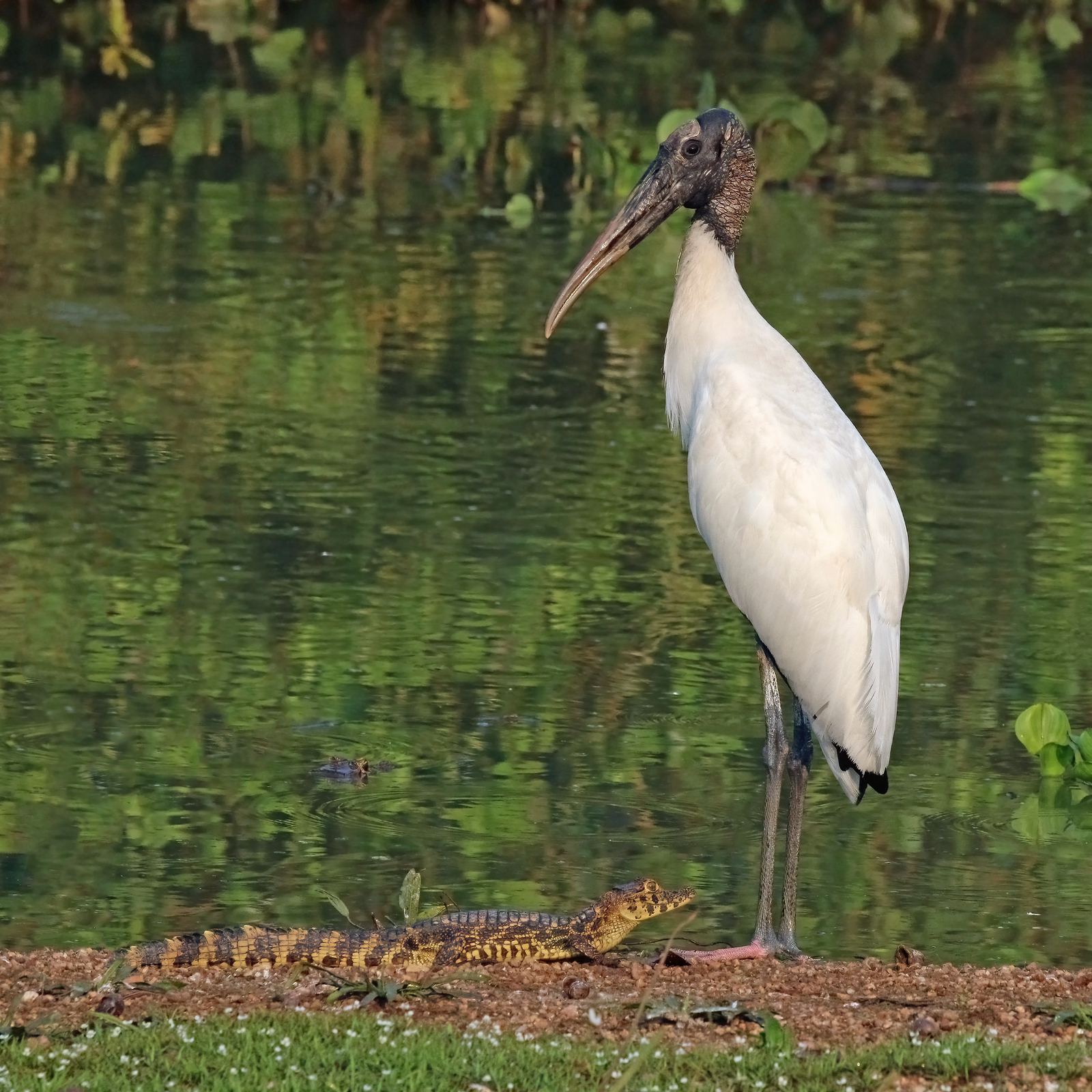
Wood storks feed by holding the bill open in murky water and snapping shut when prey touches it — ideal where sight-hunting fails. They stand 0.8–1 m tall with dark, featherless heads.
Fish, frogs, and crayfish
Small fish, amphibians, insects, and crustaceans are taken in shallow wetlands. Parents regurgitate food into open begging mouths at the nest.
Cypress swamps and Everglades
Freshwater and brackish wetlands of the southeastern United States, Central America, and South America. Florida's cypress domes and Everglades marshes are strongholds.
Drought cycles and recovery
Least Concern after rebounding when wetland restoration improved prey concentrations. Nest success still collapses in drought years when falling water levels strand fish beyond chick-rearing reach.
Explore the Wood Stork
Close relatives
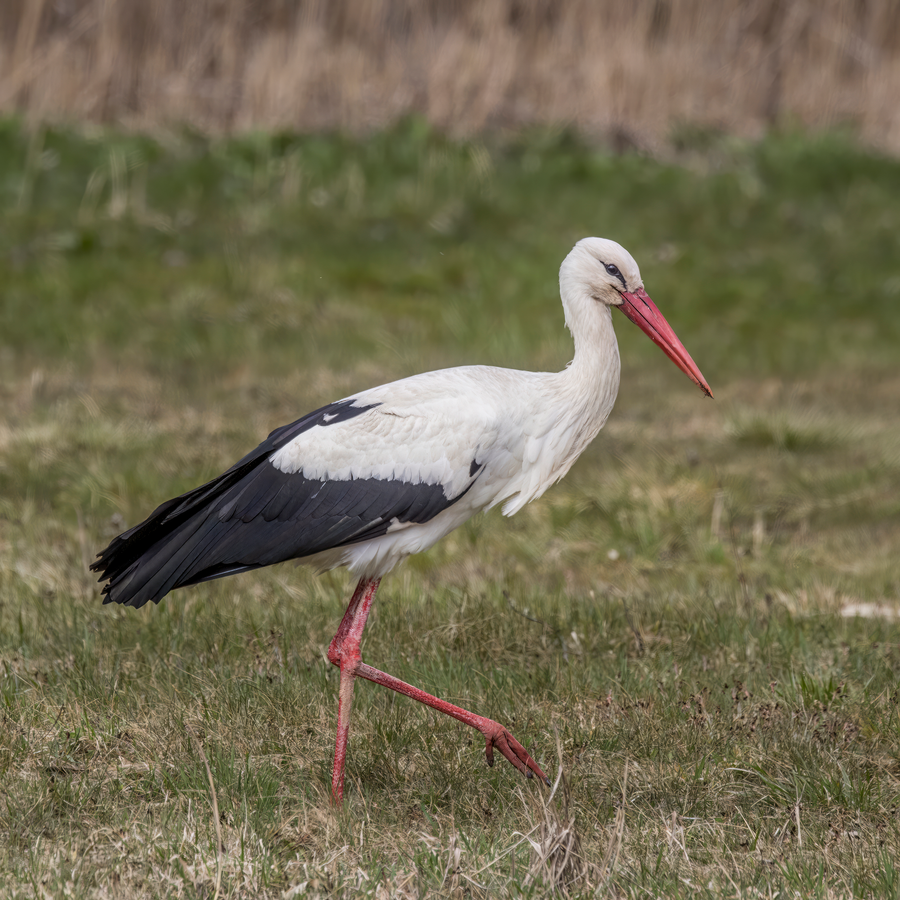
- White Stork Same family
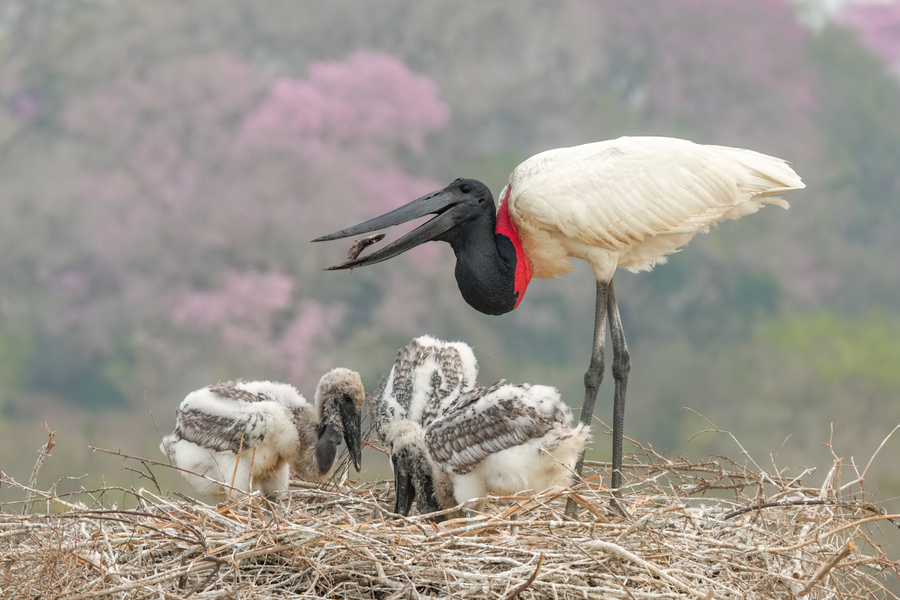
- Jabiru Same family
- Chicken Same class
- Wandering Albatross Same class
Range & geography
Conservation status of the Wood Stork
The wood stork (Mycteria americana) is listed as Least Concern on the IUCN Red List. Least Concern (LC) is the IUCN's lowest-risk category, assigned to widespread, abundant species that have been evaluated and found not to be threatened. It does not mean a species faces no pressures — only that it is not currently at risk of extinction.
The wood stork (Mycteria americana) is assessed on the IUCN Red List. Look up on the IUCN Red List .
Frequently asked questions about the Wood Stork
How do wood storks catch fish in muddy water?
They grope with open bills and snap shut on contact — a tactile hunt that does not need clear water.
Why is the wood stork's head bald?
Featherless skin stays cleaner when feeding in muddy, fishy water and may help with heat loss.
Where do wood storks nest?
In tall trees over water — often cypress or mangroves — in colonies with other wading birds.
Are wood storks endangered?
IUCN lists them Least Concern after US recovery, though drought and wetland loss still threaten local nesting.
How tall is a wood stork?
About 0.8–1 m tall — among the largest wading birds in North America.
What is a group of wood storks called?
A group of Wood Storks is called a mustering.
What is a baby wood stork called?
A baby Wood Stork is called a chick.
Sources & references
This guide is compiled and reviewed against established zoological and conservation references. Key sources for the Wood Stork:
-
IUCN Red List of Threatened Species
Conservation status (Least Concern) reflects the IUCN Red List category for Mycteria americana.
-
iNaturalist — observations & photos
Search citizen-science observations and community IDs for Mycteria americana. Useful for range checks and recent sightings — not a substitute for formal Red List status.
-
GBIF — occurrence data
Global Biodiversity Information Facility species search for Mycteria americana. Explore published occurrence records used in range research.
-
eBird — bird observations
Cornell Lab eBird target search for Wood Stork. Check recent checklists and seasonal abundance where birders report this species.
-
Global Animal Guide editorial standards
How we research, source, review, and update every guide for accuracy.