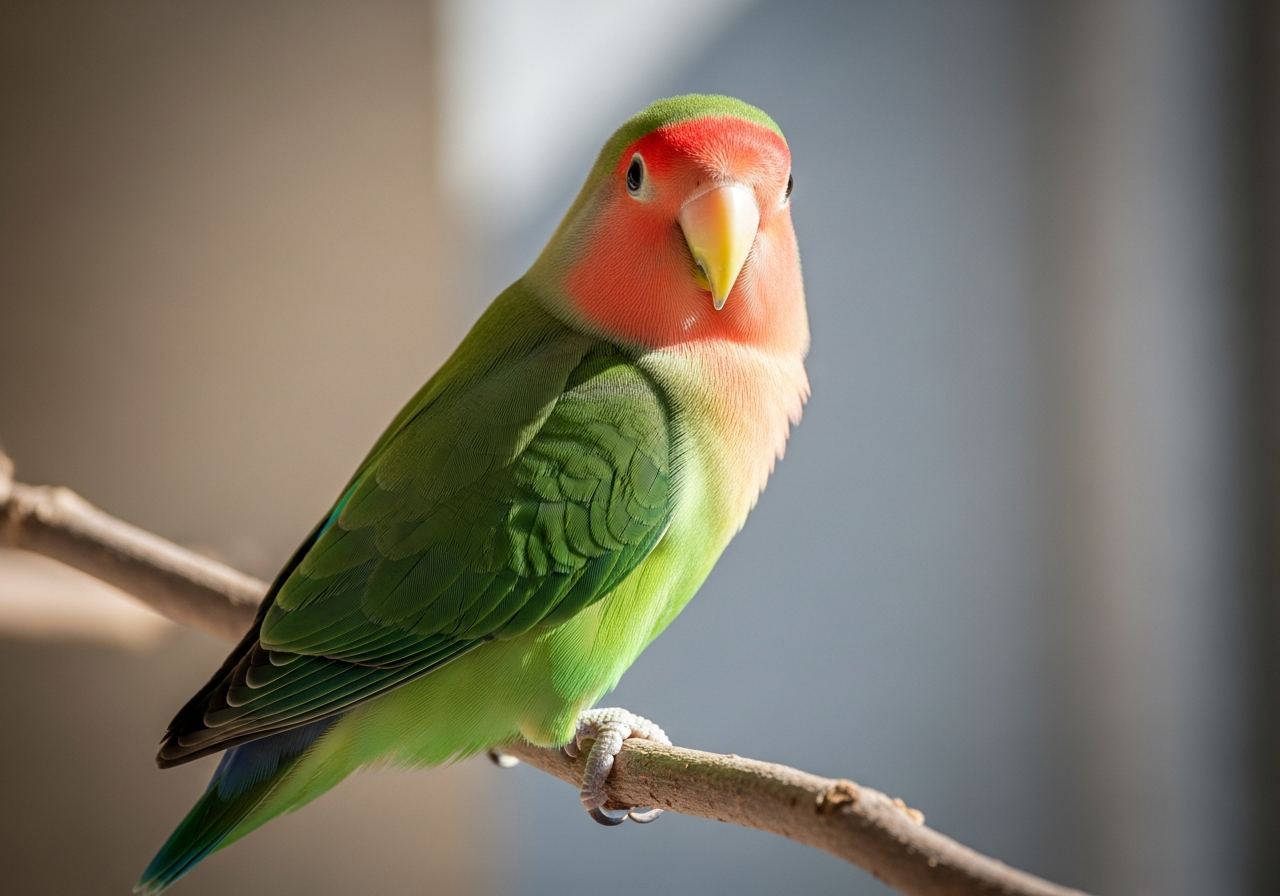
Lovebird
Quick answer
The lovebird is a small, vividly colored parrot from Africa, named for the strong bonds it forms with a partner. It is playful and affectionate but can be feisty, so it needs patient handling and plenty of enrichment.
Lovebird at a glance
| Origin | Africa |
|---|---|
| Size | Small (about 13–17 cm) |
| Weight | 40–60 g |
| Lifespan | 10–15 years |
| Plumage | Vivid plumage, often green-bodied with a peach, masked, or colorful face depending on species; many bred mutations exist; enjoys regular bathing |
| Temperament | Bold, affectionate, energetic |
| Good with | Patient owners, experienced beginners, active households |
History of the Lovebird
Lovebirds come from the woodlands and savannas of Africa and nearby Madagascar, where several species live in small, busy flocks. They reached the pet trade in the 1800s and became popular for their dazzling colors and bold personalities. The peach-faced, masked, and Fischer's lovebirds are among the most commonly kept, and breeders have developed many color mutations. Despite their tiny size, lovebirds are confident, active birds that thrive on company and stimulation.
Interesting facts about the Lovebird
- Lovebirds are named for the close, affectionate pairs they form.
- Some species tuck nesting material into their rump feathers to carry it.
- They are among the smallest true parrots kept as pets.
- Despite their size, lovebirds are bold and full of personality.
Common health issues in the Lovebird and how to help
Like all bird breeds, the Lovebird can be more prone to a few specific health conditions. Knowing the early signs helps you act quickly — always consult a qualified vet for diagnosis and treatment.
Feather plucking
What it is: Bored or stressed lovebirds may pluck their own feathers, leaving bare patches that can become a hard habit to break.
How to help: Plenty of toys, activity, and company help prevent it, and an avian vet should rule out medical causes if plucking begins.
Respiratory infections
What it is: Lovebirds can be susceptible to respiratory infections, shown by sneezing, nasal discharge, tail bobbing, or labored breathing.
How to help: Keep the air clean and the bird warm, and see an avian vet promptly, as breathing problems can worsen quickly in small birds.
Egg binding
What it is: Female lovebirds can struggle to pass an egg, a serious condition shown by straining, fluffed feathers, and weakness.
How to help: This is an emergency that needs an avian vet right away, and a balanced diet with adequate calcium helps lower the risk.
This is general information for owners, not veterinary advice. If you are worried about your bird's health, contact your vet.
Frequently asked questions about the Lovebird
Do lovebirds need to be kept in pairs?
Lovebirds are very social and often do well in bonded pairs, but a single lovebird can thrive with lots of daily attention from its owner. A lone bird left alone too much can become stressed or nippy.
Are lovebirds aggressive?
Lovebirds are bold and can be territorial or nippy, especially without regular handling. With patient, consistent interaction from a young age, they become affectionate and tame.
Can lovebirds talk?
Lovebirds are not strong talkers, though a few learn the odd word or sound. They are far more known for their chatter, whistles, and lively calls.