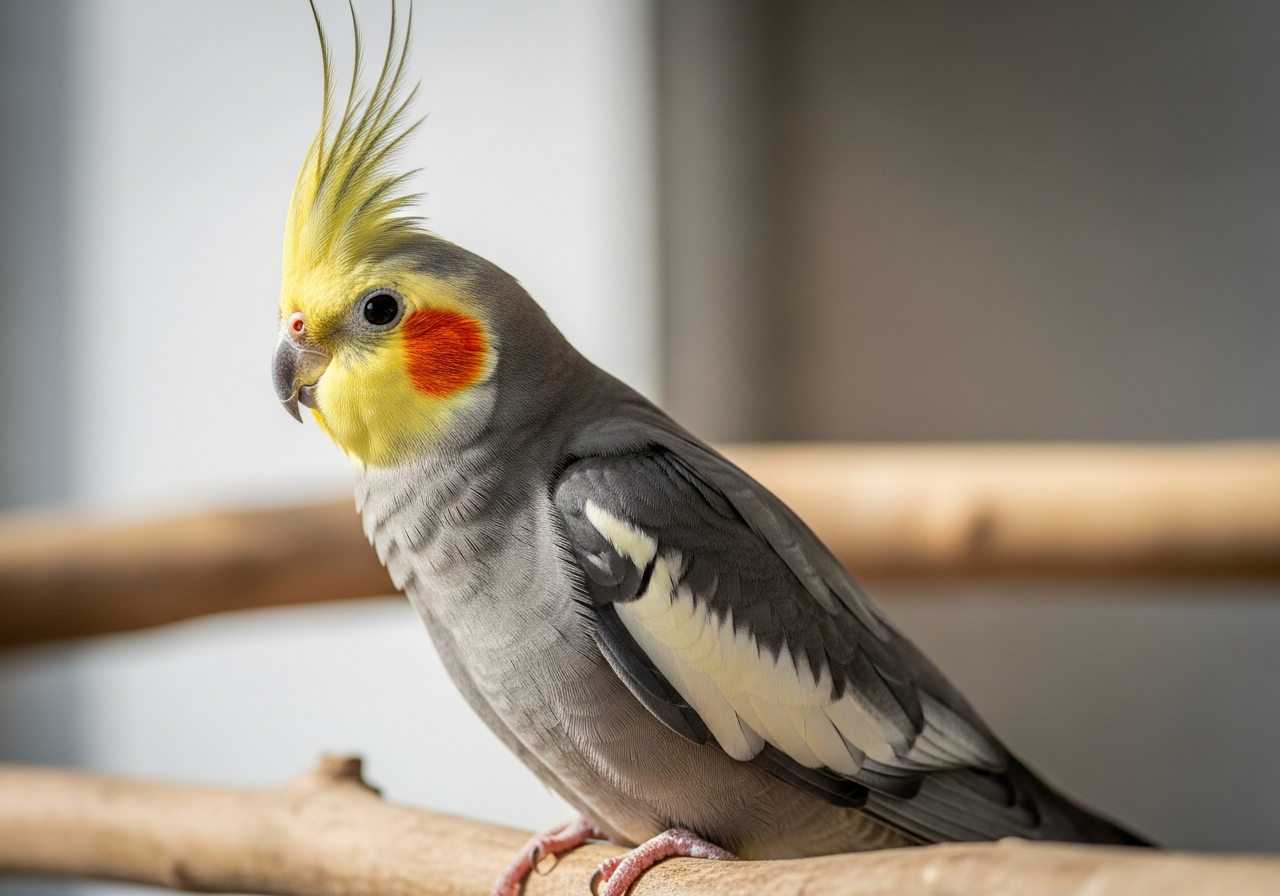
Cockatiel
Quick answer
The cockatiel is a small Australian parrot known for its expressive crest, orange cheek patches, and friendly nature. It bonds closely with people, whistles tunes more readily than it talks, and is one of the easiest larger birds for beginners.
Cockatiel at a glance
| Origin | Australia |
|---|---|
| Size | Medium-small (about 30–33 cm) |
| Weight | 80–120 g |
| Lifespan | 15–20 years |
| Plumage | Soft grey plumage with a yellow face and bright orange cheek patches, topped by a tall crest; pet varieties include lutino, pied, and pearl; benefits from regular bathing |
| Temperament | Affectionate, gentle, whistly |
| Good with | Beginners, families, owners wanting an affectionate companion |
History of the Cockatiel
The cockatiel is native to the open country and wetlands of inland Australia, where flocks follow the rains in search of seeding grasses. The smallest member of the cockatoo family, it was first kept abroad in the 1800s and grew into one of the world's most beloved pet birds. Breeders developed many color varieties, including the popular grey, lutino, pied, and pearl forms. Its calm, affectionate temperament has made it a long-standing favorite for families and first-time parrot keepers.
Interesting facts about the Cockatiel
- The cockatiel is the smallest member of the cockatoo family.
- Its crest is expressive and can show curiosity, alarm, or contentment.
- Males often whistle and learn tunes more readily than they talk.
- The bright orange cheek patch is a signature feature of the species.
Common health issues in the Cockatiel and how to help
Like all bird breeds, the Cockatiel can be more prone to a few specific health conditions. Knowing the early signs helps you act quickly — always consult a qualified vet for diagnosis and treatment.
Night frights
What it is: Cockatiels are prone to sudden panic in the dark, thrashing in the cage and risking injury to wings or feet.
How to help: A dim night light and a calm, stable sleeping spot help reduce frights, and an avian vet should check any injury caused by thrashing.
Respiratory problems
What it is: Cockatiels produce feather dust and are sensitive to fumes and poor air, which can lead to wheezing, sneezing, or labored breathing.
How to help: Keep the air clean and free of smoke and aerosols, and see an avian vet promptly if breathing changes or nasal discharge appears.
Fatty liver disease
What it is: A high-fat, seed-heavy diet can lead to fatty liver disease, often shown by weight gain, an overgrown beak, or low energy.
How to help: Feed a balanced diet with pellets and fresh vegetables, and ask an avian vet to monitor weight and overall health.
This is general information for owners, not veterinary advice. If you are worried about your bird's health, contact your vet.
Frequently asked questions about the Cockatiel
Do cockatiels talk or whistle?
Cockatiels are better known for whistling than talking, and many learn catchy tunes. Some, especially males, do pick up a few words with patient repetition.
Are cockatiels good for beginners?
Yes, cockatiels are one of the most beginner-friendly larger birds because they are gentle, affectionate, and relatively easy to tame. They do need daily interaction and space to stay happy.
How long do cockatiels live?
With good care, cockatiels often live 15 to 20 years, and some reach even older. Their long lifespan means adopting one is a lasting commitment.